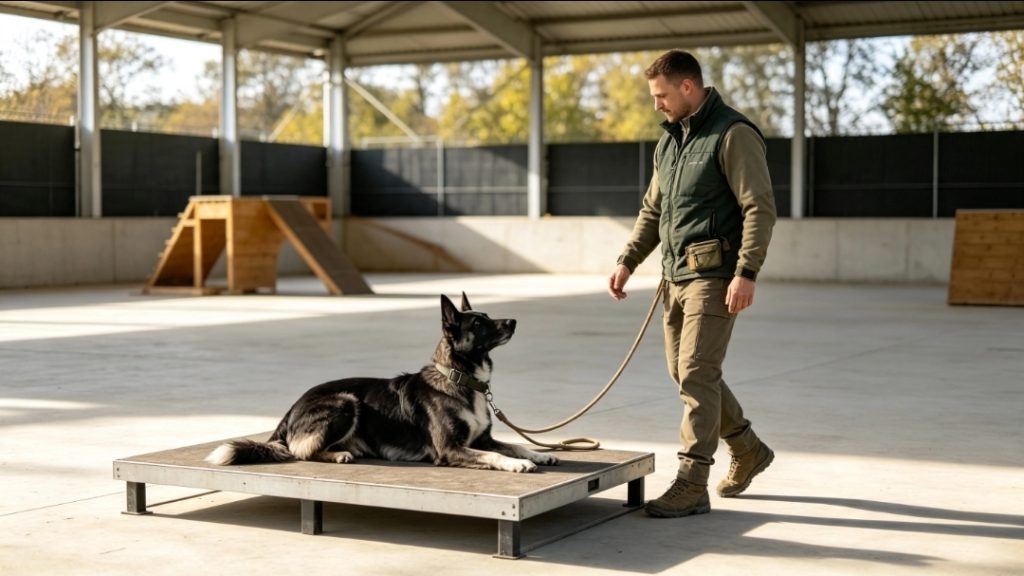
How do I get my dog to focus on me?
Getting your dog to focus on you starts with creating the right conditions for engagement. A dog may struggle to focus because the environment is distracting, the training is too difficult, motivation is not appropriate for that individual dog, or the dog has too much freedom for its current level of behavioural responsibility. Start in an environment where your dog can concentrate, use positive reinforcement and food motivation where appropriate, and gradually increase the difficulty as your dog’s engagement improves.
RECOMMENDED PRODUCTS — Puppy Training
Start somewhere your dog can focus
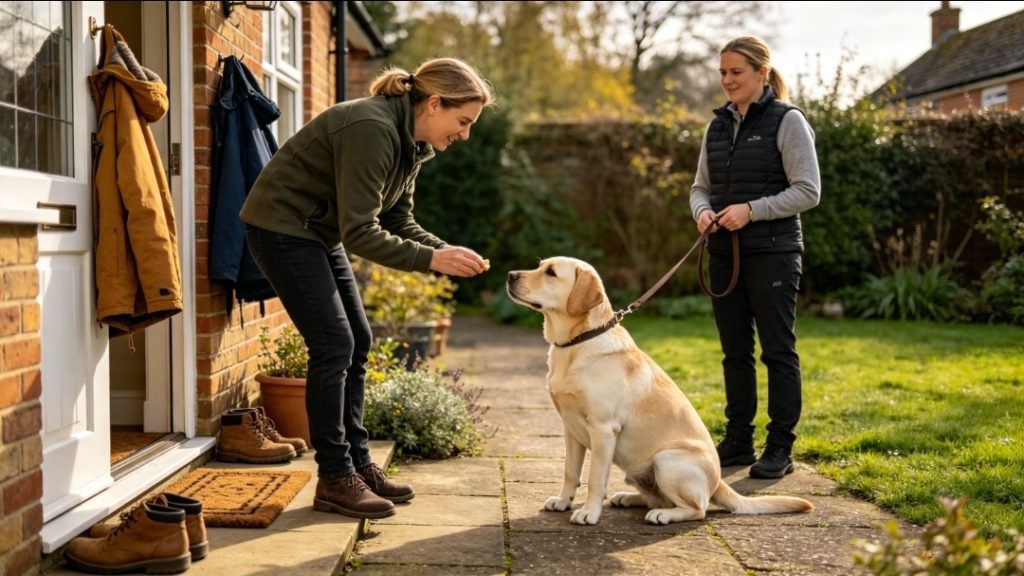
Begin in a calm environment with minimal distractions. Your dog needs an opportunity to notice and engage with you before you introduce more difficult surroundings.
If your dog can focus in the home but struggles outside, do not assume that the dog has lost its training. The environment has changed, and the level of difficulty has increased.
Build engagement in a manageable environment first, then gradually introduce additional distractions.
Use food motivation
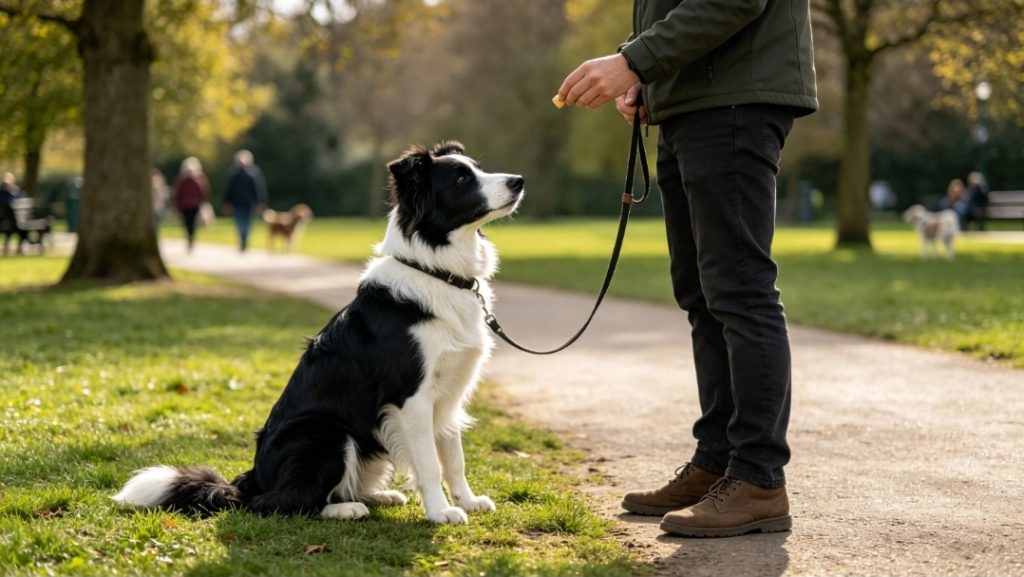
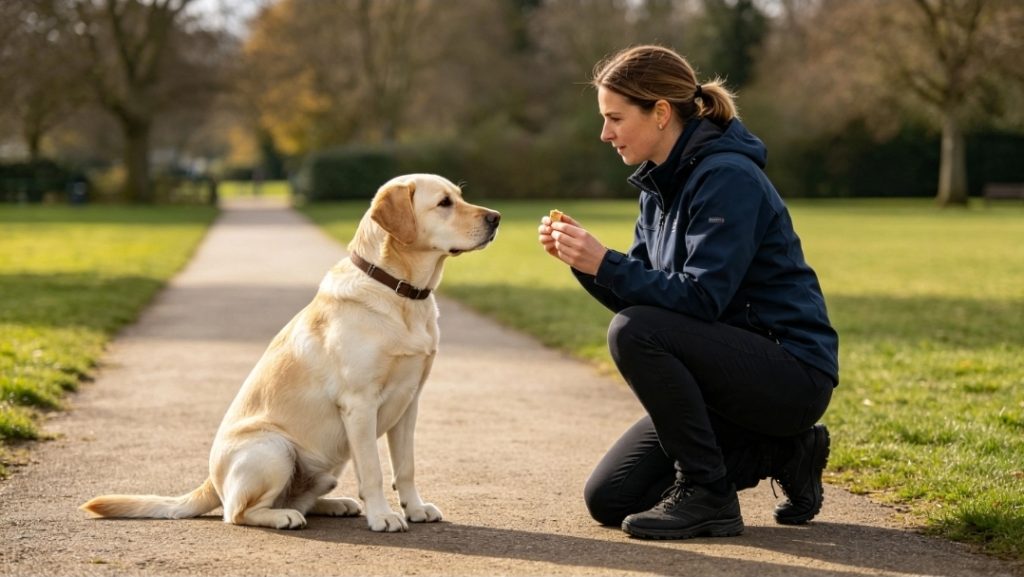
Individual dogs have different levels of food drive. Food can be used as positive reinforcement to encourage engagement and help your dog understand that focusing on the handler leads to something rewarding.
Keep the training structured and use food appropriately for the individual dog.
A dog that is highly distracted may need the environment and training difficulty adjusted before it can concentrate effectively.
RECOMMENDED PRODUCTS — Training Treats
Make it easier for your dog to succeed
If your dog is continually looking away, becoming distracted or failing to engage, reduce the difficulty.
Consider:
- The number of distractions in the environment.
- The distance between you and your dog.
- How long you expect the dog to remain engaged.
- How much freedom the dog has.
- Whether the training is appropriate for the dog’s current ability.
Once your dog can focus successfully, increase the difficulty gradually.
Use appropriate control
The GPK9 Professional Training System uses different forms of control depending on the training situation.
These can include a short line, harness, long line and free roam.
A short line can provide closer control during structured training. A harness can provide an appropriate connection during training. A long line can allow greater freedom while maintaining a level of control. Free roam should be introduced when appropriate for the dog’s behaviour and environment.
The principle is simple: more freedom requires more behavioural responsibility.
RECOMMENDED PRODUCTS — Leads & Long Lines
Increase distractions gradually
Once your dog can focus in a quiet environment, gradually introduce more challenging situations.
Do not move directly from a quiet room to a highly distracting environment and expect exactly the same level of focus.
Progress through manageable changes in:
Distance → Duration → Environmental Difficulty → Freedom
If your dog’s focus decreases significantly, reassess the situation and reduce the difficulty before progressing again.
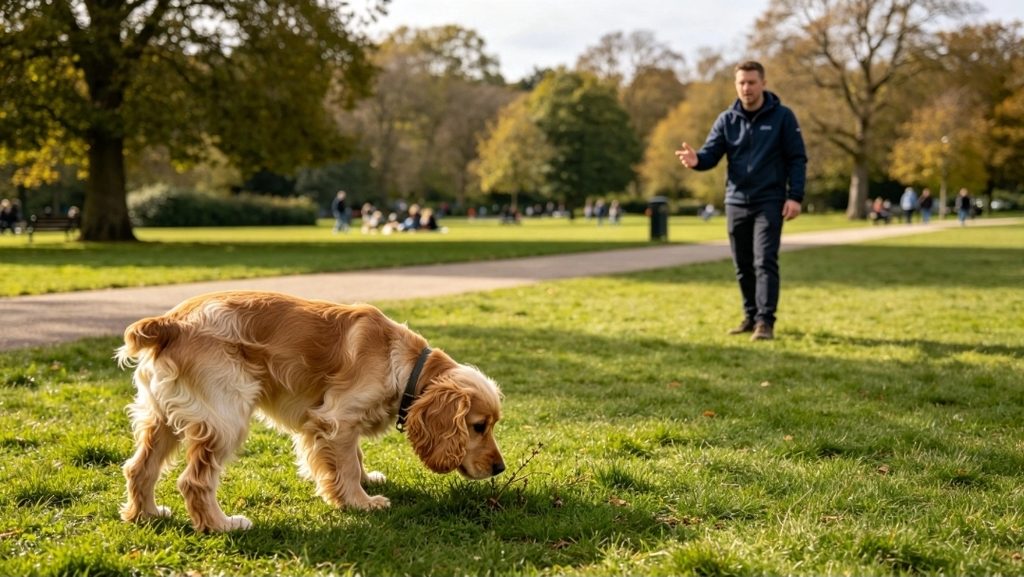
What if my dog suddenly loses focus?
If your dog stops engaging appropriately, stop and observe.
Assess what has changed. There may be a new distraction, increased environmental difficulty, excessive freedom or a change in the dog’s level of engagement.
Remove unnecessary distractions where possible and allow your dog to calm if necessary. Then reassess.
If your dog returns to an appropriate training state, continue at a level it can manage.
If the dog cannot reduce or calm, return to an appropriate management and reset process before attempting to continue.
If there are serious behavioural concerns, aggression or a risk of biting, professional assessment and support should be sought.
Build focus through consistent training
Focus is developed through repeated opportunities to engage successfully with the handler.
Use positive reinforcement, food motivation where appropriate, suitable control and carefully managed environments. Observe your dog’s response and adjust the difficulty rather than simply repeating the same approach.
As your dog’s engagement improves, gradually increase the distance, duration, environmental difficulty and appropriate freedom.
The objective is not simply to make your dog look at you in a quiet room. It is to develop the dog’s ability to remain engaged with you as the training environment becomes progressively more challenging.
RECOMMENDED COURSES
GOLDEN RULE 2 — OBEDIENCE
Golden Rule 2 — Obedience is directly relevant to developing focus and engagement with your handler. It covers structured obedience, food motivation, control, engagement, progression and suitable training environments.
The GPK9 PROFESSIONAL TRAINING SYSTEM provides a structured process for understanding the dog’s current situation and deciding what should happen next.
The status process is:
GREEN → OBSERVE → CONTINUE → PROGRESS
If the dog begins struggling:
AMBER → OBSERVE → ASSESS → REMOVE FROM DISTRACTION → CALM → REASSESS
If the dog returns to a suitable state:
GREEN → CALM → CONTINUE → PROGRESS
If the dog cannot reduce or calm:
RED → CANNOT REDUCE → CANNOT CALM → RETURN TO CRATE
This gives the handler a structured way to recognise when the dog can continue, when the situation needs adjusting and when a reset is necessary.
GOLDEN RULE 1 — HOME AND SOCIAL
Golden Rule 1 — Home and Social can also support focus when the dog’s engagement is affected by the home environment, boundaries, settling or level of freedom.
The course covers the structured use of the crate, placemat and playpen, helping create appropriate boundaries and controlled freedom within the home.
The GPK9 system is structured so that first-time dog owners and professional trainers can follow the same basic process: observe the dog, assess the situation, take appropriate action and reassess.
GPK9’S FIVE GOLDEN RULES
The GPK9’S FIVE GOLDEN RULES are broken down into bite-sized, easy-to-understand sections. Each Golden Rule is a separate part of one connected GPK9 PROFESSIONAL TRAINING SYSTEM, so no single Golden Rule course teaches the complete system. An individual course can provide useful information for a particular training requirement or problem, but understanding the complete system requires all five Golden Rules. For a question such as how to get a dog to focus on its handler, one area may be particularly relevant, but it remains only one part of the wider system. Learning all five provides a broader understanding of how the different areas connect and gives both first-time owners and professional trainers a complete framework for understanding and responding to different training situations.