What is basic dog obedience?
Basic dog obedience is the foundation of structured communication between a dog and its handler. It involves teaching the dog to understand appropriate cues, engage with the handler and develop reliable responses through positive reinforcement, suitable motivation, appropriate control and progressive training.
RECOMMENDED PRODUCTS — Obedience Training
Basic obedience is not simply about teaching a list of commands. The aim is to develop understanding, engagement and reliable behaviour that can progressively be maintained as the environment and level of difficulty change.
Start with engagement
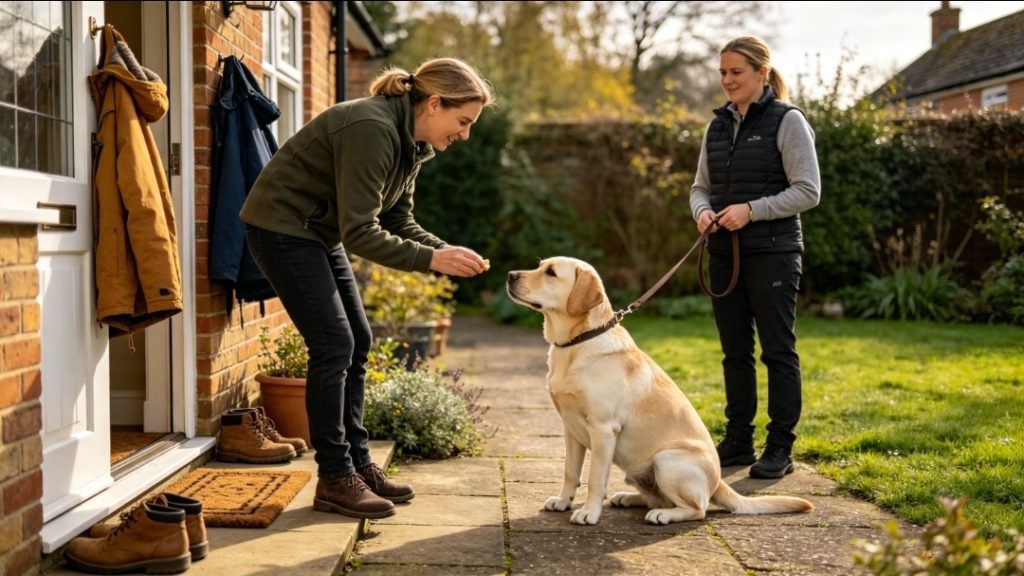
Before developing reliable obedience, the dog needs to be able to engage appropriately with its handler.
Training should begin in an environment where unnecessary distractions can be controlled.
Observe the dog and establish what level of training it can currently manage.
Simple exercises can then be introduced at a level where the dog has an opportunity to respond successfully.
Use positive reinforcement
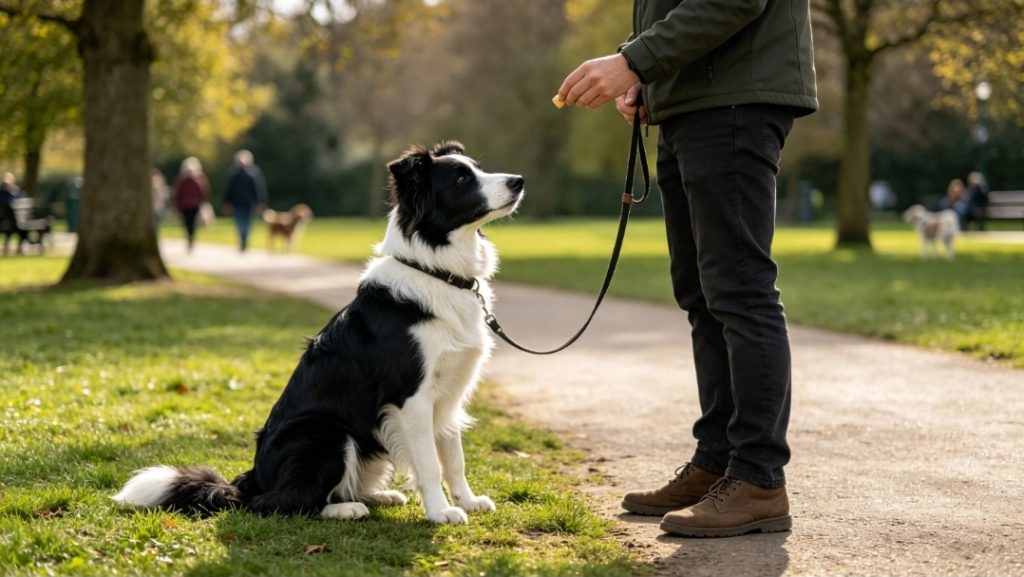
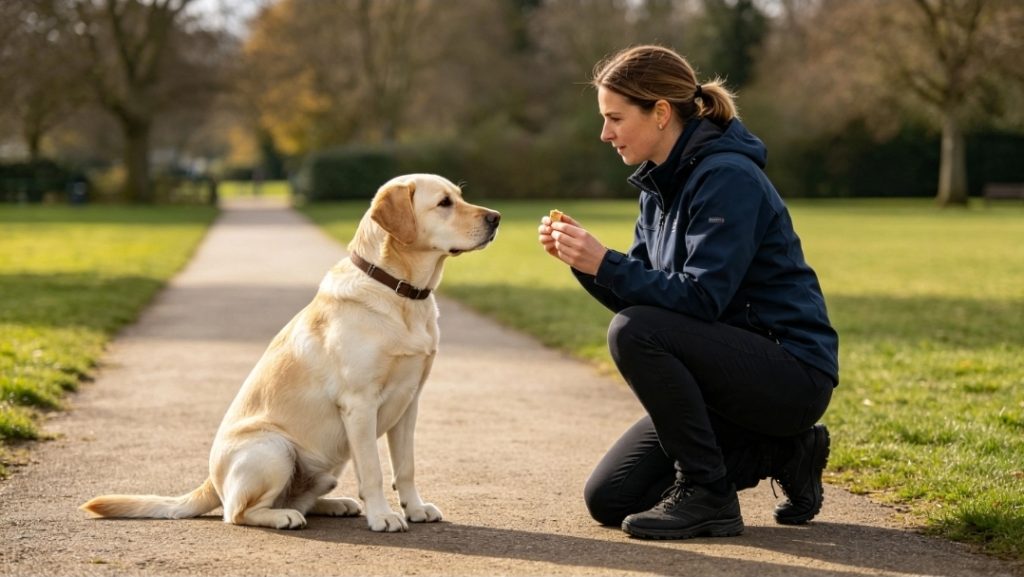
Positive reinforcement can be used to encourage and reinforce appropriate responses during obedience training.
Food can provide useful motivation, but individual dogs have different levels of food drive.
Some dogs have low food drive, while others have high food drive.
Training should take the individual dog’s motivation into account and use appropriate rewards to maintain engagement.
Patience is important because the dog needs time to understand what is expected.
RECOMMENDED PRODUCTS — TRAINING TREATS
Develop simple obedience exercises
Basic obedience should begin with straightforward exercises that the dog can understand.
The purpose is to establish communication between the dog and handler rather than immediately introducing difficult environments or complex exercises.
Once the dog begins responding reliably, the training can progressively become more difficult.
The handler should observe the dog’s response throughout the process and adjust the exercise when necessary.
Use suitable control and equipment
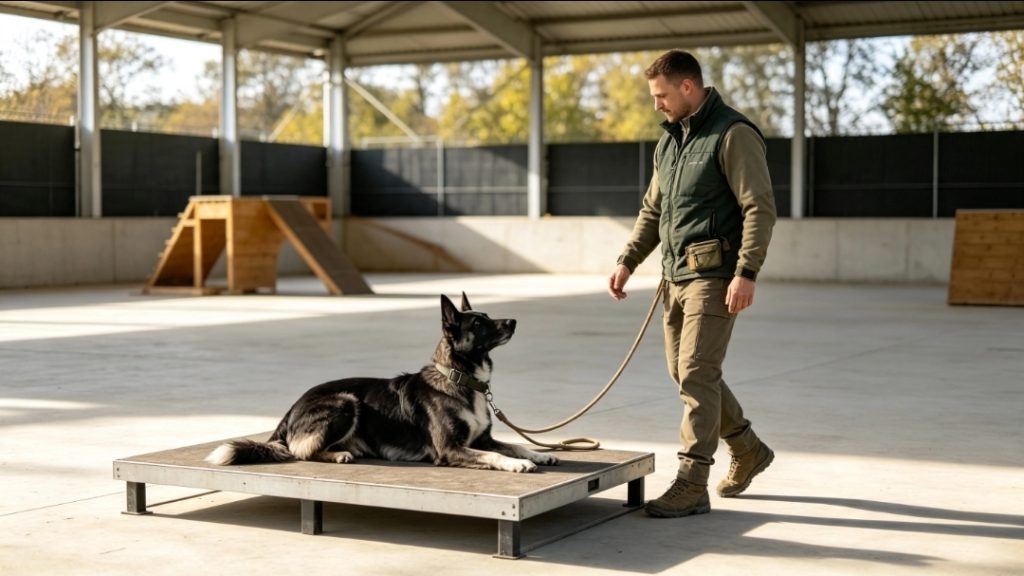
Appropriate equipment can provide additional control and management while the dog is learning.
A short line can provide close control during training.
A harness or long line can provide additional management where greater distance or environmental control is appropriate.
The equipment should be selected according to the exercise, environment and individual dog.
RECOMMENDED PRODUCTS — Leads & Long Lines
Develop reliability
Understanding an exercise once does not automatically mean the dog can perform it reliably in every situation.
Reliability needs to be developed progressively.
Training can become more difficult by increasing distance, duration, environmental difficulty, freedom or distractions.
Changes should be introduced gradually and according to the dog’s response.
If the dog struggles, reduce the difficulty and reassess before continuing.
Basic obedience and distractions
A dog may respond appropriately in a calm environment but struggle when distractions are introduced.
This is why distractions should be developed progressively.
Observe how the dog responds when the environment changes.
If unnecessary distractions interfere with training, reduce them where appropriate and allow the dog to calm before reassessing.
Return to a manageable level before increasing the difficulty again.
What if the dog cannot continue?
If the dog cannot respond appropriately, stop and assess the situation.
Observe what has changed, remove unnecessary distractions where appropriate and allow the dog to calm.
Reassess once the dog is able to engage again.
If the dog cannot reduce or calm sufficiently to continue, an appropriate reset may be required before returning to obedience training.
Where behaviour presents a significant safety concern, including serious aggression or bite risk, professional support should be sought.
RECOMMENDED COURSES
GOLDEN RULE 2 — OBEDIENCE
Golden Rule 2 — Obedience is directly relevant to “What is basic dog obedience?” because the course focuses on structured obedience, food motivation, engagement, control and progression.
The course helps the trainer understand how obedience fits into the wider GPK9 PROFESSIONAL TRAINING SYSTEM and how to develop responses according to the dog’s individual behaviour and level of understanding.
The GPK9 PROFESSIONAL TRAINING SYSTEM provides a structured process that can be followed by both first-time dog owners and professional dog trainers.
Within the GPK9 system, GREEN represents:
OBSERVE → CONTINUE → PROGRESS
AMBER represents:
OBSERVE → ASSESS → REMOVE FROM DISTRACTION → CALM → REASSESS
If the dog returns to a calm state, the process returns to GREEN and training can continue and progress.
If the dog cannot reduce or cannot calm, the process moves to RED and the dog is returned to the crate when appropriate.
The reset process is:
RESET → OBEDIENCE → GREEN → OBSERVE → CONTINUE
GOLDEN RULE 1 — HOME AND SOCIAL
Golden Rule 1 — Home and Social can provide the foundation for basic obedience by establishing appropriate routines, boundaries, settling and controlled freedom within the home.
The course focuses on the crate, placemat and playpen, together with management, resetting and progression.
These foundations help create an appropriate environment for developing engagement and structured obedience.
What is basic dog obedience?
Basic dog obedience is the process of developing clear communication, engagement and reliable responses between a dog and its handler.
Start in a manageable environment, use positive reinforcement and appropriate food motivation, introduce simple exercises and develop them progressively.
Suitable control and equipment can help manage the dog while it learns, while increasing freedom should be accompanied by increasing behavioural responsibility.
When the dog struggles, observe what has changed, reduce unnecessary difficulty, allow the dog to calm and reassess before continuing.
Basic obedience is therefore not simply a collection of commands. It is a structured training process that develops understanding, engagement, control and progressively reliable behaviour.
GPK9’S FIVE GOLDEN RULES The GPK9 Five Golden Rules have been broken down into bite-sized, easy-to-understand sections so the wider GPK9 PROFESSIONAL TRAINING SYSTEM can be learned progressively. The five Golden Rules are separate parts of one connected GPK9 PROFESSIONAL TRAINING SYSTEM, and there is no single Golden Rule course that teaches the entire system. Each course focuses on a particular area, so an individual course may provide useful information for a specific training requirement or problem, but that represents only one part of the wider system. To understand the complete system, all five Golden Rules need to be understood. For the question of what basic dog obedience is, the wider system shows how obedience connects with home and social foundations, motivation, control, observation and progression. The system is designed to be understandable and practical for both a first-time dog owner and a professional dog trainer. The bite-sized structure supports progressive learning, while understanding all five Golden Rules provides a broader understanding of how the different areas of dog training connect within one complete GPK9 PROFESSIONAL TRAINING SYSTEM.