Introduction
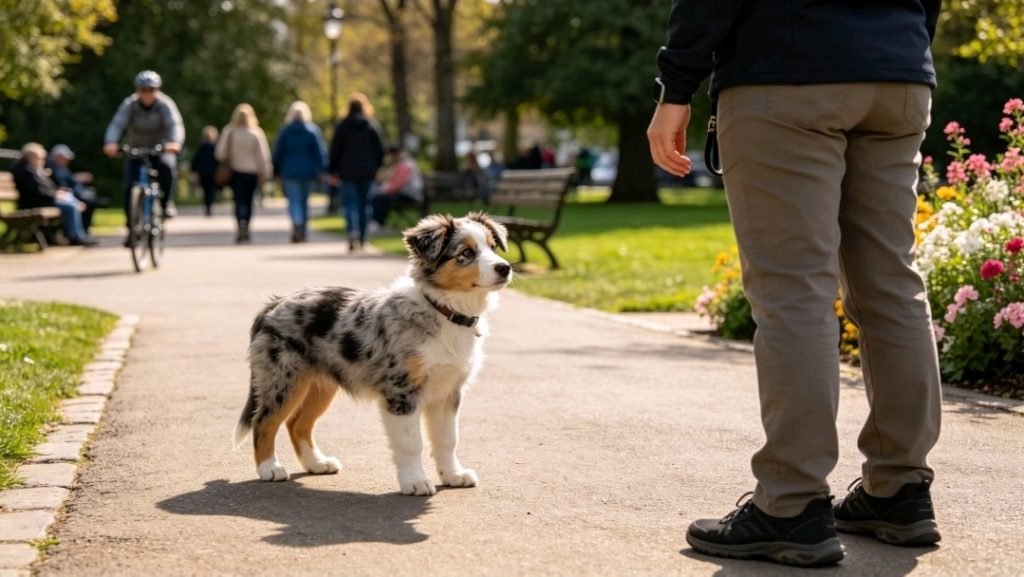
How to socialise your puppy the correct way is one of the most important topics in puppy development. Proper socialisation helps puppies become confident, stable, and adaptable adults, while poor socialisation can contribute to fear, anxiety, reactivity, and behavioural problems later in life.
Many people believe socialisation simply means allowing puppies to meet as many people and dogs as possible. In reality, how to socialise your puppy the correct way involves controlled exposure, confidence building, and teaching puppies how to remain calm in different environments.
The goal is not to overwhelm the puppy with experiences. The goal is to create positive learning opportunities that build confidence and resilience.
What Is Puppy Socialisation?
When discussing how to socialise your puppy the correct way, it is important to understand what socialisation actually means.
Socialisation is the process of exposing a puppy to:
- Different people.
- Different dogs.
- Different environments.
- Different sounds.
- Different surfaces.
- Different objects.
- Different situations.
The purpose of socialisation is to teach the puppy that new experiences are normal and nothing to fear.
How to socialise your puppy the correct way focuses on building confidence rather than forcing interaction.
Why Proper Socialisation Is Important
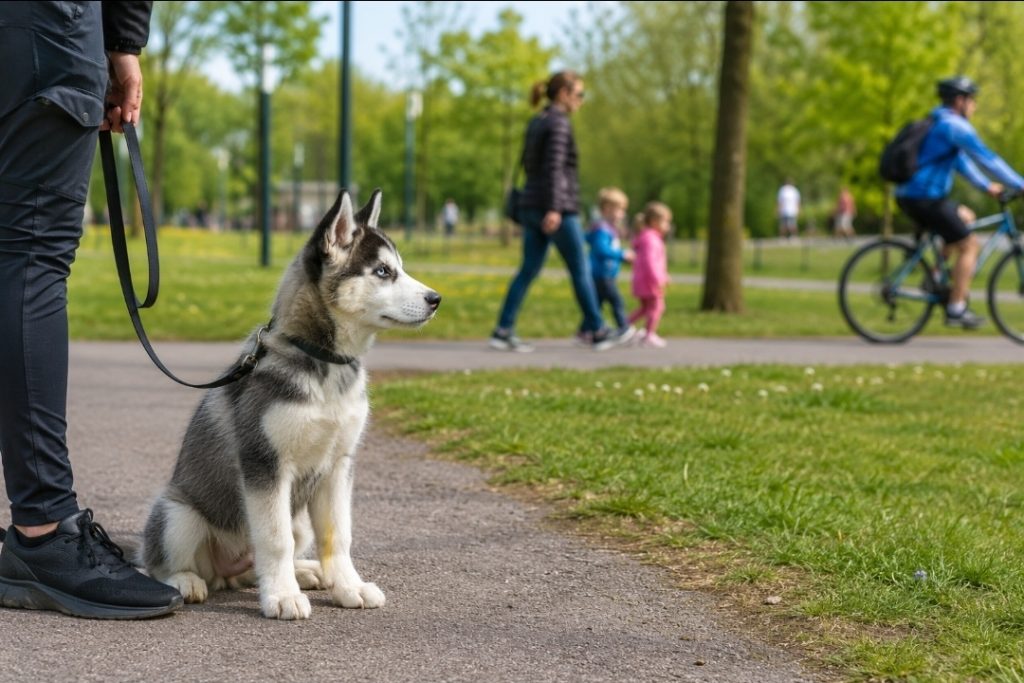
How to socialise your puppy the correct way can have a significant impact on behaviour throughout the dog’s life.
Proper socialisation helps puppies develop:
- Confidence.
- Environmental stability.
- Sound confidence.
- Surface confidence.
- Better emotional control.
- Reduced fear responses.
- Improved adaptability.
Poor socialisation often leads to behavioural problems because the puppy never learns how to cope with unfamiliar situations.
Many behavioural issues seen in adult dogs can often be traced back to inadequate socialisation during puppyhood.
Environmental Exposure and Confidence Building
A major part of how to socialise your puppy the correct way involves environmental exposure.
Puppies should gradually experience:
- Parks.
- Pavements.
- Woodland areas.
- Urban environments.
- Rural environments.
- Public spaces.
- Different weather conditions.
Each new experience should be introduced carefully and at a pace the puppy can handle.
Confidence develops when the puppy successfully experiences new environments without becoming overwhelmed.
Image
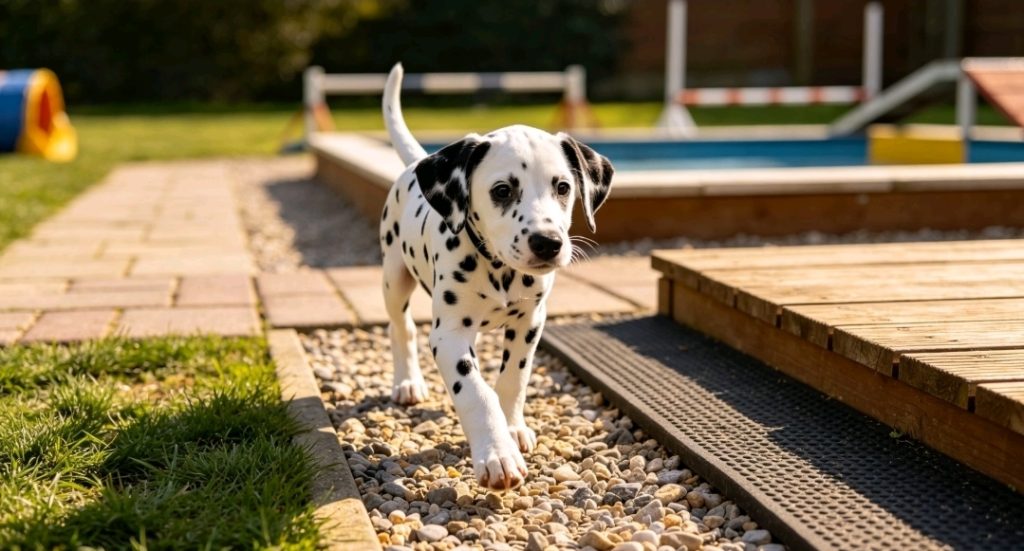
Create an image of a young Dalmatian puppy confidently exploring different outdoor surfaces. The puppy is walking between grass, gravel, paving slabs, wooden decking, and rubber matting while remaining relaxed and engaged with the handler. Background includes a structured training environment with natural daylight and realistic details. Professional dog training photography, emphasis on environmental confidence and curiosity.
Building Sound Confidence
Sound confidence is another important part of how to socialise your puppy the correct way.
Puppies should gradually become comfortable around common sounds such as:
- Traffic.
- Household appliances.
- Children playing.
- Construction noise.
- Public announcements.
- Vehicles.
- Everyday environmental sounds.
Exposure should be controlled and positive.
The objective is not to force the puppy to tolerate noise but to help the puppy develop confidence around normal daily sounds.
How to socialise your puppy the correct way always prioritises confidence over intensity.
Surface Confidence and Environmental Stability
Many puppies become uncertain when walking on unfamiliar surfaces.
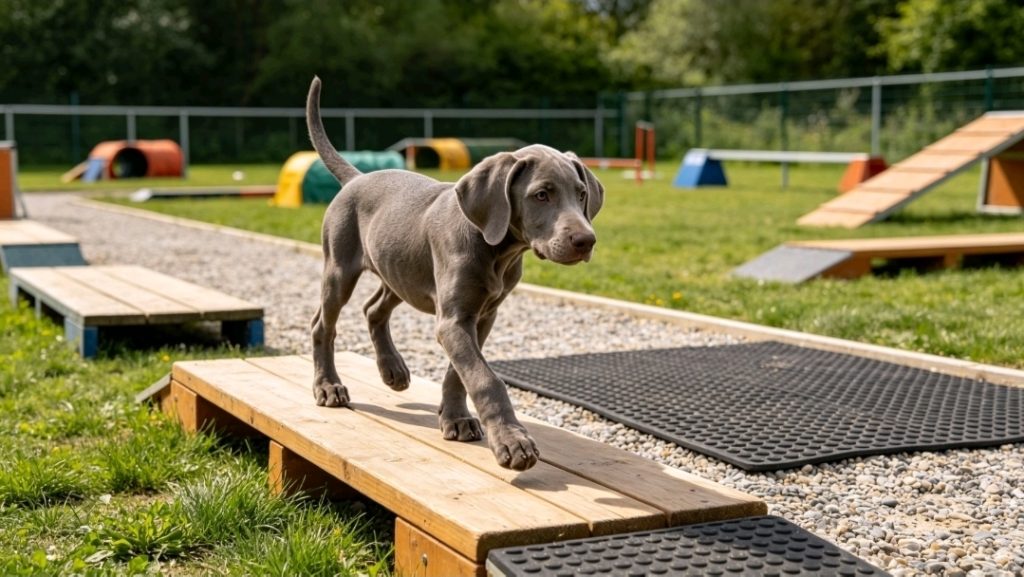
How to socialise your puppy the correct way should include exposure to different textures and footing.
Examples include:
- Grass.
- Concrete.
- Gravel.
- Sand.
- Wooden surfaces.
- Metal surfaces.
- Rubber flooring.
Gradual exposure helps develop confidence and teaches the puppy to navigate new environments successfully.
Surface confidence often contributes significantly to overall environmental stability.
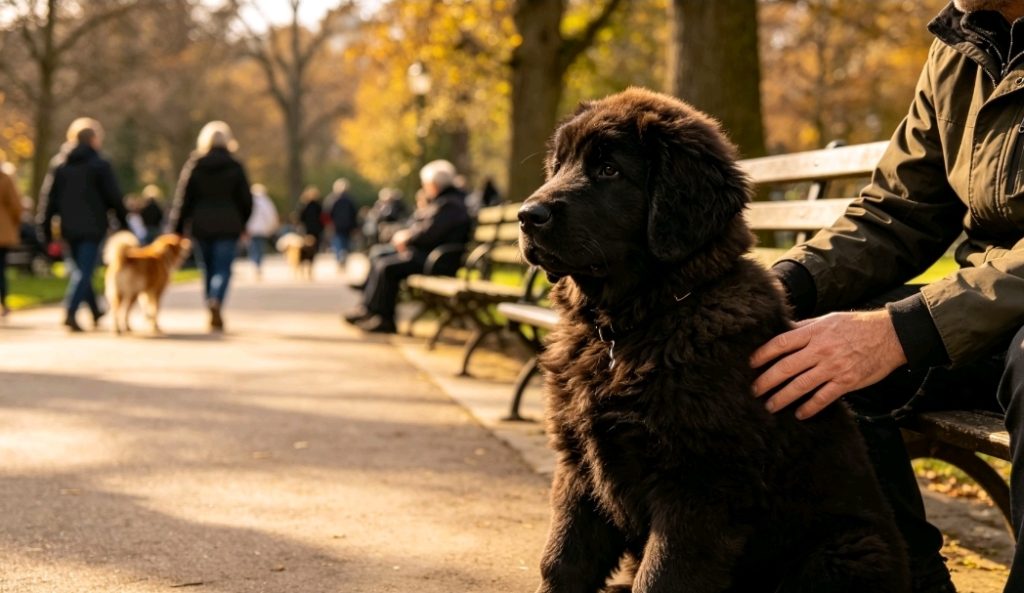
Controlled Interactions With People and Dogs
Many people mistakenly believe that socialisation means allowing every person and dog to interact with the puppy.
How to socialise your puppy the correct way focuses on quality interactions rather than quantity.
Controlled interactions should teach the puppy:
- Calm behaviour.
- Neutrality.
- Confidence.
- Appropriate social skills.
The puppy does not need to greet everyone it encounters. Learning to remain calm around people and dogs is often more valuable than constant interaction.
Controlled exposure creates stability and prevents excitement, frustration, and over-dependence on social interaction.
Avoiding Overstimulation
One of the most overlooked aspects of how to socialise your puppy the correct way is avoiding overstimulation.
Too much exposure too quickly can overwhelm the puppy and create negative associations.
Signs of overstimulation may include:
- Excessive excitement.
- Inability to focus.
- Avoidance behaviour.
- Fear responses.
- Frustration.
- Stress signals.
Successful socialisation should leave the puppy feeling confident rather than exhausted or overwhelmed.
Conclusion
How to socialise your puppy the correct way is about building confidence, stability, and positive experiences. Proper socialisation involves environmental exposure, sound confidence, surface confidence, controlled interactions, and gradual progression through new situations.
When done correctly, socialisation helps puppies develop into confident adult dogs that can cope with everyday life without fear or uncertainty. How to socialise your puppy the correct way is not about exposing your puppy to everything at once. It is about creating successful experiences that build confidence for life.
Course Recommendation
Fundamentals 1 covers puppy socialisation, environmental exposure, sound confidence, surface confidence, engagement development, obedience foundations, confidence building, and early behavioural development for puppies aged 6 weeks to 6 months.
Continue Your Training Journey With Our Online Courses
Now that you have started building strong foundations with your puppy, the next stage of development is continuing that training through our structured online courses.
Fundamentals 2 is designed for adolescent dogs between 6 and 18 months of age and focuses on real-world obedience, lead walking around distractions, engagement, confidence building, recall development, and managing common teenage dog behaviours. This online course helps owners navigate one of the most challenging stages of dog ownership while continuing to build reliability and control.
Fundamentals 3 is designed for adult dogs and takes training to an advanced level. This online course covers advanced obedience, off-lead control, engagement, handler communication, calmness, environmental neutrality, distraction proofing, and real-world dog training. Fundamentals 3 helps owners create reliable, confident, and well-balanced dogs capable of performing successfully in everyday situations.
Explore Fundamentals 2 and Fundamentals 3 to continue your dog’s training progression and build the skills needed for long-term success.