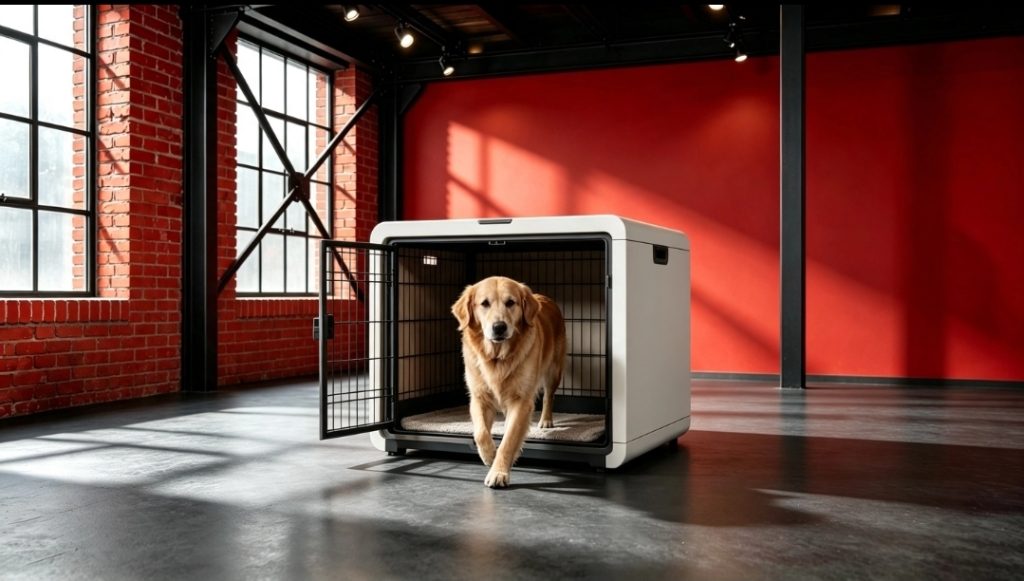
When Should You Use a Dog Crate? Practical Crate Training
When Should You Use a Dog Crate?
When should you use a dog crate? A crate can be a valuable part of structured dog training when it is introduced correctly and used as a safe, familiar space rather than simply somewhere to put a dog away. For puppies and adult dogs, appropriate crate use can support rest, routine, household management and calm behaviour.
RECOMMENDED PRODUCTS
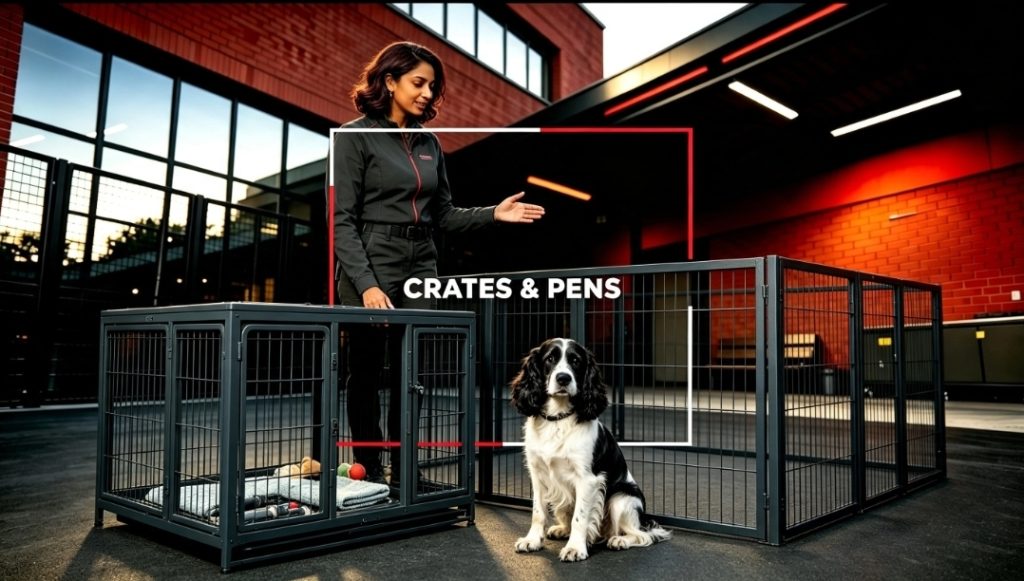
Crates and Pens
Choose a suitable dog crate that provides enough space for your dog to stand, turn around and settle comfortably.
When Should You Use a Dog Crate?
A dog crate can be useful at different points throughout a dog’s development and daily routine. The important consideration is not simply having a crate, but understanding when it is appropriate to use one.
A crate may be useful when your dog needs a period of rest, when the household becomes busy, during certain training routines or when you need to create a controlled environment.
The crate should form part of an overall training approach rather than becoming the only method used to manage your dog.
Using a Dog Crate for Puppies
Puppies are still learning how to behave within the home. They can become distracted easily, become tired quickly and may not yet understand household boundaries.
A correctly introduced crate can provide puppies with a consistent place to rest and settle.
As the puppy develops, the way you use the crate can also change. What is appropriate for a young puppy may not be necessary for an older dog that has developed greater confidence and understanding.
RECOMMENDED PRODUCTS
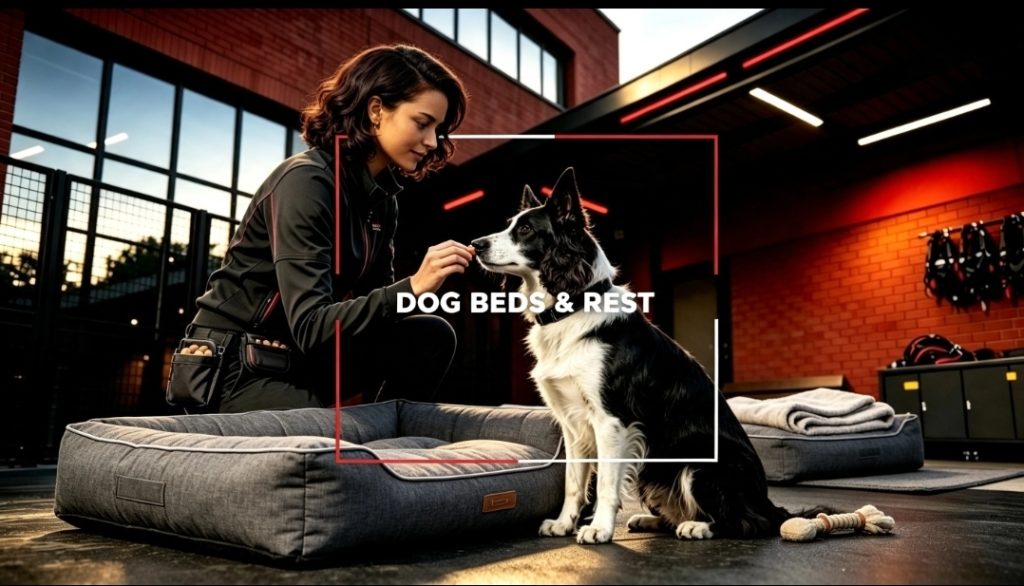
Puppy Crates and Crate Bedding
A suitable crate and comfortable bedding can help create a consistent resting environment for a growing puppy.
When Your Dog Needs to Rest
Dogs need periods of rest, particularly puppies and young dogs.
A busy household can provide constant stimulation through people moving around, sounds, children playing, visitors arriving and other everyday activity.
A crate can provide a familiar environment where your dog can settle away from unnecessary stimulation.
The aim is to help your dog understand that rest is a normal part of daily life.
When the Home Becomes Busy
There are times when a household becomes more active than usual.
Visitors may arrive, deliveries may come to the door, children may be playing or several people may be moving around the home at the same time.
In these situations, a crate can help provide a controlled area while you manage the activity around your dog.
This is particularly useful when your dog is still learning how to remain calm around household distractions.
Using a Dog Crate During Training
A crate can also support a wider training routine.
Dog training is not only about teaching individual commands. It is also about helping the dog understand different states, environments and expectations.
At GPK9, this forms part of a wider approach built around the Five Golden Rules, connecting home structure, obedience, play, toilet training and social walking.
When Your Dog Needs a Calm Environment
Some dogs become overexcited when there is too much activity around them.
Rather than allowing excitement to continually build, creating an appropriate calm environment can help the dog learn that periods of activity are followed by periods of rest.
A crate can be one part of this overall structure when used appropriately.
The handler should always consider the individual dog, its age, training experience and behaviour before deciding how and when to use the crate.
RECOMMENDED PRODUCTS
When You Need Controlled Household Management
There are situations where temporary separation is practical.
For example, you may need to clean an area, move equipment, prepare food, manage a delivery or carry out another household task where allowing your dog unrestricted access would not be appropriate.
A suitable crate can provide a controlled environment during these situations.
However, crate use should always be balanced with exercise, interaction, training, enrichment and appropriate freedom.
Using a Dog Crate During Toilet Training
Crate training and toilet training can sometimes work alongside each other because puppies benefit from consistent routines and controlled environments.
The crate can provide a predictable resting space while the owner establishes appropriate toilet routines.
Toilet training still requires regular opportunities, observation and consistency. The crate should not be treated as a substitute for proper toilet training.
The GPK9 approach places toilet training within the wider structure of the Five Golden Rules, helping owners understand how different areas of training can connect.
RECOMMENDED PRODUCTS

Puppy Essentials and Cleaning Products
Useful puppy-care products can help owners maintain a clean, organised and consistent training environment during the early stages of development.
When Travelling With Your Dog
A correctly introduced crate can also be useful for travel and transportation where appropriate.
Some dogs become more settled when they have access to a familiar environment while travelling.
The crate should always be suitable for the journey, securely positioned and used in accordance with appropriate animal welfare and transport requirements.
Your dog should already be comfortable with the crate before expecting it to cope with a new environment or journey.
When Your Dog Is Around Children
A crate can provide your dog with a separate resting area within a busy family environment.
Children should be taught to respect the dog’s space and should not interfere with a dog that is resting.
The crate should never become a place where children enter to play with the dog.
Teaching everyone in the household how to respect the dog’s space is an important part of responsible dog ownership.
RECOMMENDED PRODUCTS
Dog Crates, Covers and Rest Equipment
Suitable crate accessories can help create a consistent resting area while supporting a structured home environment.
When Visitors Arrive
Visitors can create excitement for some dogs.
A dog may become highly stimulated by people entering the home, movement around the house or attention from unfamiliar visitors.
A crate can be useful as part of a wider household-management plan while the owner manages the situation.
As training develops, the dog can gradually learn how to cope with different levels of household activity.
The objective is not simply to contain the dog. The wider goal is to develop understanding, calmness and appropriate behaviour.
When You Should Not Rely on the Crate
A crate should not be used as a permanent solution to every behaviour problem.
If a dog is showing significant fear, anxiety, aggression or distress, simply placing the dog into a crate does not address the underlying issue.
In these situations, professional assessment may be appropriate.
A qualified GPK9 Dog Training Instructor can help assess the dog’s behaviour and determine an appropriate training approach.
Common Dog Crate Training Mistakes
Several common mistakes can make crate training more difficult.
These can include:
- Using the crate as punishment
- Expecting too much too quickly
- Ignoring signs of distress
- Making the crate uncomfortable
- Using the crate for excessive periods
- Failing to provide appropriate exercise and interaction
- Expecting the crate to solve every behaviour problem
- Changing routines constantly
- Allowing children to disturb a resting dog
Good crate training depends on consistency, patience and understanding.
RECOMMENDED PRODUCTS
Dog Beds and Rest Equipment
Comfortable rest equipment can help create a positive and consistent environment for your dog to relax.
How Crate Use Changes as Your Dog Develops
The role of the crate does not necessarily remain the same throughout a dog’s life.
A young puppy may need more structure and supervision than an established adult dog.
As your dog develops confidence, understanding and appropriate household behaviour, the amount of freedom available to the dog may change.
This is why crate training should be viewed as part of development rather than simply a piece of equipment.
The handler should continually observe the dog’s behaviour and adjust the training environment appropriately.
The Dog Crate as Part of a Bigger Training System
The most effective training does not usually exist as isolated exercises.
Home structure can influence obedience. Obedience can influence communication. Play can influence engagement. Toilet training requires routine. Social walking requires the dog to manage its environment.
The GPK9 Five Golden Rules bring these areas together into a broader training framework designed to help owners understand the How, Why and When of dog training.
Building the Right Relationship With the Crate
The way a handler uses a crate can have a significant influence on how the dog experiences it.
A crate should become a familiar part of the dog’s environment rather than something that only appears when something inconvenient happens.
Calm handling, consistency and appropriate timing all contribute to creating positive associations.
The crate is a tool. The handler’s understanding of when and how to use that tool is what makes it useful.
When Should You Use a Dog Crate? Practical Crate Training in Everyday Life
When should you use a dog crate? The answer depends on the individual dog, its age, training stage and the situation you are managing.
A crate can support rest, household structure, toilet training, travel and controlled periods within a busy environment.
Used as part of a wider training system, it can help owners create clearer routines while allowing their dog to develop confidence and appropriate freedom.
The GPK9 approach places crate training within the wider Five Golden Rules, giving owners a structured way to understand how home life, training, play, toilet routines and social walking can work together.
RECOMMENDED PRODUCTS
Crates and Pens
Explore suitable crate and pen equipment to help create a structured environment for puppy and dog training.
Related GPK9 Articles
- What Is a Dog Crate? How Crate Training Works
- Why Use a Dog Crate? Understanding Crate Training
- How to Introduce Your Dog to a Crate Step by Step
- How to Use a Dog Crate to Create Structure at Home
- How to Use a Dog Crate When Visitors Arrive
- How to Use a Dog Crate When the Postman Arrives
- How to Use a Dog Crate When Someone Comes to the Door
- How to Use a Dog Crate During Busy Household Activity
- How to Use a Dog Crate Safely Around Children
- How to Use a Dog Crate Around Other Animals
- Common Dog Crate Training Mistakes and How to Avoid Them
- How to Use a Dog Crate, Training Mat and Playpen Together
- How Much Freedom Should You Give a Puppy at Home?
- Dog Crate vs Training Mat vs Playpen: What Is the Difference?