
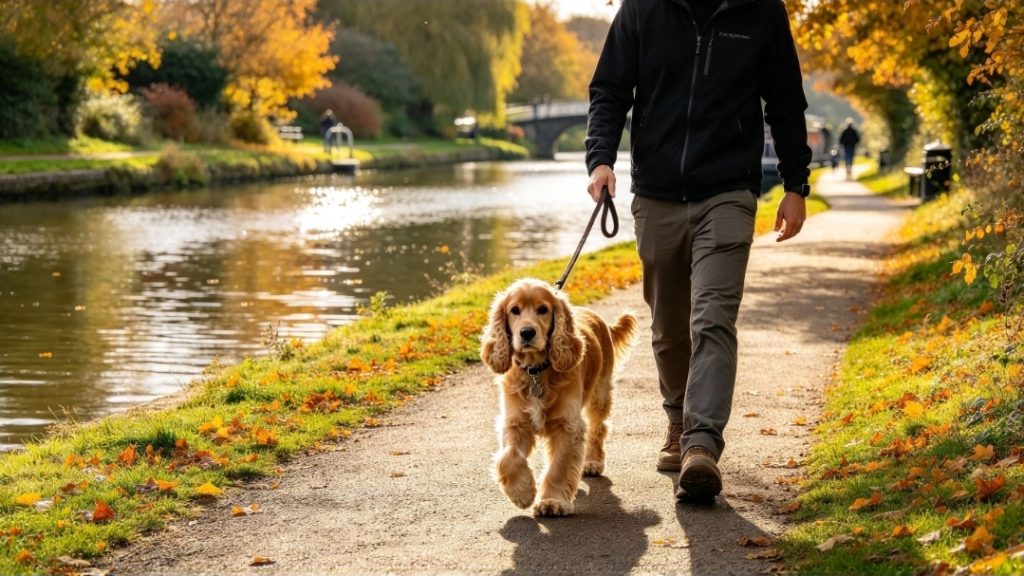
What Is the Best Way to Stop a Dog Pulling?
What is the best way to stop a dog pulling? The most effective approach is to teach your dog that walking with a loose lead is rewarding and that pulling does not help it reach what it wants. Start in an environment where your dog can concentrate, reward the behaviour you want, stop or change direction when the lead becomes tight, and gradually increase distractions as your dog improves.
RECOMMENDED PRODUCTS

Why Does My Dog Pull?
Dogs pull for different reasons.
Your dog may want to investigate a smell, reach another dog or person, explore the environment, move towards something exciting, or simply move faster than you.
Pulling can also become a learned habit. If pulling consistently allows your dog to reach something interesting, your dog learns that pulling works.
Understanding the reason for the pulling can help you decide how difficult the training environment should be.
What Is the Best Way to Teach Loose Lead Walking?
Start somewhere quiet with minimal distractions.
Take a few steps with your dog. If your dog stays near you and the lead remains loose, reward immediately.
Continue with short periods of walking and reward frequently at first.
If the lead becomes tight, stop moving or change direction. Wait for your dog to create slack in the lead or return attention towards you.
When the lead is loose again, continue walking and reward.
Your dog learns a simple relationship:
Loose lead = movement continues and rewards are available.
Tight lead = movement pauses or changes.
How Do I Stop Pulling From Becoming a Habit?
Consistency is important.
If your dog pulls and sometimes gets to continue towards another dog, person, smell or interesting location, pulling can remain rewarding.
Try to avoid allowing pulling to be the behaviour that consistently produces access.
Instead, wait for your dog to return to an appropriate walking position or create slack in the lead before continuing.
Everyone who regularly walks the dog should follow the same basic approach.
How Do I Train My Dog Step by Step?
Step 1: Start Somewhere Easy
Choose an environment where your dog can concentrate.
A quiet area is usually easier than a busy park or crowded street.
Step 2: Reward the Behaviour You Want
Reward your dog while the lead is loose.
Use food, a toy, praise or another appropriate reward that motivates your dog.
Good timing is important. Reward while your dog is demonstrating the desired behaviour.
Step 3: Stop When the Lead Becomes Tight
When your dog pulls, stop moving.
Wait for the lead to become loose again before continuing.
If necessary, change direction to help your dog move away from the distraction.
Step 4: Gradually Increase the Difficulty
Once your dog can walk without pulling in an easy environment, gradually introduce more distractions.
Increase difficulty one step at a time rather than expecting your dog to cope with everything immediately.
Step 5: Reward Less Frequently Over Time
As your dog’s behaviour becomes reliable, gradually increase the distance between rewards.
You are building a behaviour that continues even when a reward is not immediately available.
Should I Stop Walking When My Dog Pulls?
Yes, stopping can be a simple way to teach your dog that pulling does not make the walk move forward.
As soon as your dog creates slack in the lead, you can continue.
The timing matters. The dog should experience the difference between pulling and walking with a loose lead.
If stopping is not practical or safe in a particular situation, changing direction and increasing distance from the distraction may be more appropriate.
Should I Change Direction When My Dog Pulls?
Changing direction can be useful when your dog is strongly focused on something ahead.
Rather than allowing your dog to pull directly towards the distraction, calmly move away and regain your dog’s attention.
Once your dog can walk with a loose lead again, you can continue training.
This is particularly useful when the environment is becoming too difficult.
What Equipment Is Best for a Dog That Pulls?
A correctly fitted harness can provide comfortable control while you teach loose-lead walking.
A suitable standard lead can be used for normal controlled walking.
A short line can provide closer control where additional management is required.
A long line can be useful in an appropriate safe environment when your dog has developed enough control for greater freedom.
Equipment should make training and management safer. It should not be treated as a replacement for teaching the dog how to walk.
Can Equipment Stop a Dog Pulling?
Equipment can help you manage a dog, but equipment alone does not teach the dog why it should walk with a loose lead.
The underlying behaviour still needs to be trained.
Use suitable equipment alongside positive reinforcement, good timing and gradual progression.
Avoid relying on physical restraint as the main training method.
How Do I Stop My Dog Pulling Towards Other Dogs?
Create enough distance for your dog to remain able to respond to you.
Reward your dog for noticing another dog without immediately pulling towards it.
If your dog begins to pull, increase the distance rather than allowing the behaviour to escalate.
Gradually work closer as your dog’s ability to remain calm and responsive improves.
If your dog is lunging, showing aggression or becoming impossible to control around other dogs, seek professional assessment.
RECOMMENDED PRODUCTS
How Do I Stop My Dog Pulling Towards People?
Teach your dog that calm behaviour and a loose lead provide access to people when greeting is appropriate.
If your dog pulls towards someone, stop or increase distance.
Once the lead is loose and your dog is under control, continue walking or allow an appropriate interaction.
This prevents pulling from becoming the behaviour that gets your dog attention.
What If My Dog Pulls Because It Wants to Sniff?
Sniffing is a normal and important part of a dog’s interaction with its environment.
The aim is not to prevent your dog from sniffing.
Instead, teach your dog that it can access appropriate smells and areas without pulling.
For example, you can walk calmly to an appropriate location and then allow your dog time to investigate once the lead is loose.
This turns access to the environment into part of the reward.
What Are the Biggest Mistakes When Trying to Stop Pulling?
Pulling Back Constantly
Constantly pulling against your dog can turn lead training into a physical contest.
Teach the dog what behaviour produces the result it wants instead.
Starting Somewhere Too Difficult
If your dog cannot concentrate because the environment is too exciting, learning becomes much harder.
Start somewhere easier.
Expecting Immediate Results
A dog that has pulled for years may not change the behaviour after one or two walks.
Build the behaviour gradually and consistently.
Rewarding Too Late
Reward the dog while it is walking appropriately.
Poor timing can make it harder for the dog to understand what behaviour you are reinforcing.
Being Inconsistent
If pulling sometimes works, the dog has a reason to keep trying it.
Consistency makes the expected behaviour clearer.
How Do I Make the Training More Difficult?
Once your dog is reliable in a quiet environment, gradually introduce more challenging situations.
You can increase:
- Walking duration
- Distance between rewards
- Different walking routes
- Environmental distractions
- People nearby
- Other dogs at an appropriate distance
- More exciting locations
Increase difficulty gradually.
If your dog starts pulling repeatedly, reduce the difficulty and return to a level where your dog can succeed.
How Long Does It Take to Stop a Dog Pulling?
There is no fixed timeframe.
A dog with a new pulling habit may improve quickly, while a dog that has been pulling for years may need much more practice.
Progress depends on the dog’s motivation, previous learning, environment and consistency.
Look for gradual improvements such as longer periods of loose-lead walking, less tension and faster responses when distractions appear.
When Should I Get Professional Help?
Professional help is appropriate when pulling is accompanied by serious reactivity, aggression, fear, lunging or behaviour that you cannot safely manage.
If your dog repeatedly becomes overwhelmed and cannot regain calm behaviour, increasing training difficulty is not the answer.
Reduce the situation to a manageable level and seek appropriate professional assessment.
Conclusion
The best way to stop a dog pulling is to teach the dog what to do instead of simply trying to prevent the pulling.
Reward loose-lead walking, stop or change direction when the lead becomes tight, prevent pulling from consistently producing access to rewarding distractions, and gradually increase the difficulty.
With consistent training and appropriate progression, your dog can learn that walking calmly with a loose lead is the most effective way to continue the walk and access the environment.




