
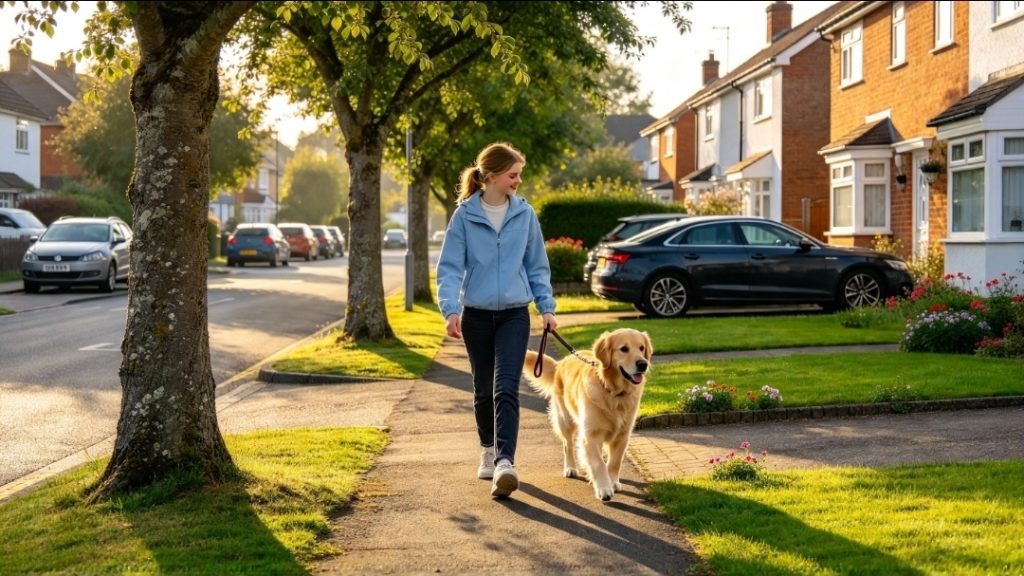
How Do I Train My Dog to Walk Calmly?
How do I train my dog to walk calmly? Start by rewarding calm walking, teaching your dog to respond to you, and gradually increasing the level of distraction. Begin in an environment where your dog can succeed, reinforce loose-lead walking and calm choices, and only make the walk more difficult when your dog is ready.
RECOMMENDED PRODUCTS

What Does Calm Walking Look Like?
Calm walking does not mean your dog must stare at you or walk perfectly beside you for the entire walk.
A calm dog should be able to walk without continually pulling, rushing, jumping, barking or becoming overwhelmed by everything around them. They should also be able to explore appropriately, sniff and respond when you need their attention.
The goal is controlled, relaxed walking rather than constant obedience.
How Do I Start Training My Dog to Walk Calmly?
Start somewhere quiet with few distractions.
Before walking any distance, reward your dog for standing or sitting calmly while you prepare to leave. Once you begin walking, reward moments when your dog stays near you, keeps the lead loose or checks in with you.
Keep the initial sessions short and successful. There is no benefit in continuing until your dog becomes frustrated or overstimulated.
How Do I Teach My Dog Not to Pull?
When your dog walks with a loose lead, reward them and continue moving.
If the lead becomes tight, stop or change direction rather than allowing your dog to pull you towards whatever they want to reach. As soon as your dog returns their attention to you or the lead becomes loose again, reward them and continue.
Your dog learns that calm walking keeps the walk moving forward, while pulling does not provide access to what they want.
How Do I Teach My Dog to Pay Attention While Walking?
Reward natural check-ins rather than constantly demanding your dog’s attention.
You can also teach a simple attention cue, such as your dog’s name. Say it once and reward your dog when they turn towards you.
Practise this during normal walking and around mild distractions. Gradually increase the difficulty as your dog becomes more reliable.
Your dog should be able to focus on you when necessary while still being allowed to investigate their surroundings.
How Do I Keep My Dog Calm Around Distractions?
Introduce distractions gradually.
Start far enough away from another dog, person, vehicle or other trigger that your dog can notice it without becoming overwhelmed.
When your dog remains calm or chooses to check in with you, reward the behaviour. Continue walking or allow the distraction to pass.
If your dog starts pulling, barking, lunging or becomes unable to respond, increase the distance and make the situation easier.
Do not wait until your dog has completely lost control before creating distance.
How Should I Progress the Training?
Increase only one aspect of difficulty at a time where possible.
You might progress from:
- A quiet area with few distractions.
- A slightly busier route.
- Mild distractions at a comfortable distance.
- More people, dogs or environmental activity.
- Busier walking environments.
- Longer periods of calm walking.
If your dog’s behaviour becomes worse, return to an easier level. Progress means your dog can successfully cope with more difficulty, not simply being exposed to more distractions.
Should I Let My Dog Sniff?
Yes. Sniffing is a normal and valuable part of walking.
Allowing your dog to investigate appropriate areas can provide mental stimulation and make the walk more rewarding.
Calm walking does not require your dog to remain beside you throughout the entire walk. Teach your dog when they need to walk with you and when they have appropriate freedom to explore.
What Equipment Should I Use?
Use equipment that gives you safe and appropriate control while you train.
A suitable harness and lead can be useful for everyday walking. A short line may be appropriate when you need closer control, while a long line can provide additional freedom in a suitable safe area when your dog has developed enough control.
Equipment should support the training rather than force your dog into calm behaviour.
If your dog has a genuine bite risk or severe reactivity, appropriate safety equipment may be necessary alongside professional guidance. A muzzle should not be introduced as a quick solution to a behavioural problem.
What Should I Do If My Dog Gets Too Excited?
If your dog becomes increasingly excited, stop making the situation harder.
Create more distance from the distraction, slow down or move somewhere quieter. Give your dog time to settle before asking for further work.
Do not repeatedly issue commands when your dog is too distracted to respond. First make the environment easier, then reward the behaviour you want.
RECOMMENDED PRODUCTS
What Mistakes Make Calm Walking More Difficult?
One common mistake is expecting too much too soon.
Other mistakes include walking straight into busy environments, allowing repeated pulling, constantly correcting the dog, forcing greetings with people or dogs, and continuing when the dog is clearly overwhelmed.
Another mistake is only training calm walking during difficult situations. Practise when your dog is already capable of succeeding so that the behaviour becomes familiar before you introduce greater challenges.
How Long Does It Take to Train a Dog to Walk Calmly?
There is no fixed timeframe.
Some dogs develop calmer walking habits relatively quickly, while others need consistent training over several weeks or months. The speed of progress depends on your dog’s previous learning, motivation, distractions and ability to cope with the environment.
Short, successful training sessions are generally more productive than repeatedly allowing your dog to become overwhelmed.
What If My Dog Still Cannot Walk Calmly?
If your dog cannot remain calm even when you reduce distractions and increase distance, stop increasing the difficulty.
Persistent barking, lunging, severe fear, aggression or attempts to escape may require professional assessment. A qualified professional can help identify the cause of the behaviour and create an appropriate training plan.
Do not deliberately expose a dog to situations they cannot cope with simply to make them “get used to it”.
Conclusion
Training your dog to walk calmly is about rewarding the behaviour you want, preventing repeated pulling and overexcitement, and gradually building your dog’s ability to cope with distractions.
Start somewhere manageable, reward calm choices, allow appropriate exploration and increase difficulty gradually. When your dog struggles, make the environment easier rather than demanding more from them.




