
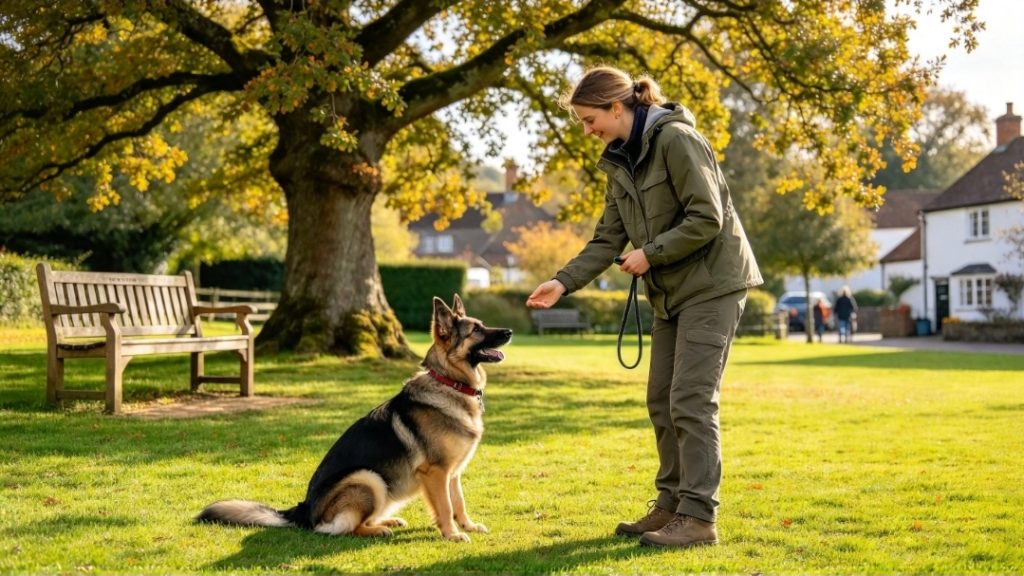
How Do I Teach My Dog Basic Commands?
To teach your dog basic commands, start in a quiet environment, use clear and consistent cues, reward correct responses and practise each skill in short sessions. Begin with attention, sit, down, wait and recall, then gradually introduce distractions as your dog becomes more reliable.
Basic obedience is not simply about teaching a dog to perform individual actions. It is about developing clear communication so your dog can understand what you are asking and respond appropriately in everyday situations.
Every dog learns at a different pace. Focus on teaching one skill at a time, rewarding progress and building reliability gradually rather than expecting your dog to respond perfectly straight away.
What Basic Commands Should I Teach My Dog First?
Start with the commands and behaviours that are most useful in your daily life. You do not need to teach everything at once.
Useful foundations include:
- Name recognition and attention: Teaching your dog to look towards you when you call their name.
- Sit: Encouraging your dog to sit when asked.
- Down: Teaching your dog to lie down on cue.
- Wait: Helping your dog pause before moving towards something they want.
- Recall: Teaching your dog to return when called.
- Leave it: Teaching your dog to disengage from an item or situation when appropriate.
- Settle: Encouraging your dog to relax in a suitable place.
Choose a small number of behaviours to begin with. Once your dog understands each one, you can practise them in different situations and gradually develop more reliable responses.
How Do I Teach My Dog to Pay Attention?
Attention is an important starting point because your dog needs to notice your communication before they can respond to a cue.
Begin somewhere quiet, with few distractions. Say your dog’s name once in a friendly, clear voice. When they look towards you, reward them with something they value, such as a small food reward, praise or play.
Repeat this exercise in short sessions. As your dog becomes more responsive, practise in different rooms and gradually introduce mild distractions.
Avoid repeating your dog’s name over and over when they are not responding. Instead, make the exercise easier by reducing distractions or increasing the distance from anything that is competing for their attention.
The aim is to teach your dog that responding to you is worthwhile. This foundation can make it easier to introduce other commands and maintain communication in everyday situations.
How Do I Teach My Dog to Sit?
Sit is a useful first command because it can help your dog learn to pause and respond to a clear cue.
Step 1: Encourage the Position
In a quiet environment, hold a suitable reward near your dog’s nose and move it gently upwards. Many dogs will naturally move into a sitting position as they follow the reward.
You can also reward your dog when they sit naturally, without using food to guide the movement.
Step 2: Reward the Correct Response
As soon as your dog sits, mark the correct behaviour with a consistent word such as “yes” and give the reward.
Repeat the exercise until your dog begins to understand which behaviour earns the reward.
Step 3: Introduce the Verbal Cue
Once your dog understands the movement, say “sit” immediately before they perform it. Practise until the word becomes a useful signal for the behaviour.
Gradually reduce your reliance on guiding the movement with food. The reward should reinforce the response, rather than becoming something your dog must see before they are willing to listen.
How Do I Teach My Dog to Lie Down?
Begin in a quiet environment where your dog can concentrate.
If your dog already understands sit, you can use that position as a starting point. Encourage your dog to move their nose towards the ground and slightly forwards using a suitable reward, allowing them to follow it into a down position.
Mark and reward the moment your dog lies down. Repeat the exercise in short sessions and introduce the verbal cue once the movement becomes familiar.
If your dog struggles, make the movement easier or try again later. Avoid physically forcing your dog into position, particularly if they appear uncomfortable.
Once your dog understands the cue, practise in different locations and reward calm, accurate responses.
How Do I Teach My Dog to Wait?
Wait teaches your dog to pause briefly before moving towards something they want. It can be useful around doors, before meals and during other everyday activities.
Start with a situation where your dog can succeed easily.
- Ask your dog to pause in a suitable position.
- Give your wait cue.
- Pause briefly, beginning with just a moment.
- Reward your dog for remaining in position.
- Release them using a consistent word or signal.
Gradually increase the duration as your dog becomes more reliable. Introduce distance and distractions separately rather than making the exercise much harder all at once.
Practise with safe, controlled situations first. Around roads, open gates or other hazards, use suitable physical management rather than relying on a developing wait cue to prevent danger.
How Do I Teach My Dog to Come When Called?
Recall is one of the most valuable everyday skills because it helps you bring your dog back towards you when needed.
Begin indoors or in a secure, low-distraction area. Move a short distance away, call your dog using a clear cue and encourage them to come towards you. When they arrive, reward them promptly.
Build Recall Gradually
Start with short distances and easy situations. As your dog becomes more responsive, practise in different safe environments and gradually increase the distractions.
A long line can help you manage risk when practising outdoors, provided it is used safely and appropriately.
Avoid calling your dog repeatedly when they are unlikely to respond. Reduce the difficulty and practise in a situation where you can reward success.
Whenever possible, make returning to you a positive experience. If recall frequently predicts the end of fun or something unpleasant, your dog may become less willing to return.
Never rely on recall alone in an unsafe environment. Until the response is reliable, use secure areas, suitable leads and appropriate management.
How Do I Teach My Dog to Leave Something Alone?
A leave-it cue can help your dog disengage from an item or situation when you need them to do so.
Start with a safe, low-value item and reward your dog for turning away from it or choosing to focus on you instead. Gradually introduce the cue as your dog begins to understand the behaviour.
Practise in manageable situations before using the skill around more distracting objects.
Do not use training exercises that expose your dog to dangerous substances or objects. If your dog picks up something potentially harmful, prioritise safety and seek veterinary advice where appropriate.
How Do I Use Rewards Effectively?
Rewards help your dog understand which behaviour you want to encourage. They may include food, praise, play, toys or access to a suitable activity.
The best reward depends on the individual dog and the situation. A small food reward may work well during a quiet indoor exercise, while a short game or an opportunity to sniff may be more motivating in another context.
The Food, Rewards and Food Motivation course explores how reward value, timing and motivation can support learning and engagement.
Reward at the Right Time
Deliver the reward as soon as practical after the correct response. This helps your dog connect the outcome with the behaviour you are teaching.
For example, when teaching sit, reward the moment your dog reaches the sitting position rather than waiting until they have stood up again.
Avoid Showing the Reward Too Early Every Time
Using a reward to guide a new behaviour can be helpful. However, as your dog begins to understand the cue, practise asking for the behaviour before producing the reward.
This helps your dog learn to respond to your communication rather than only following visible food.
Adapt the Reward to Your Dog
Observe what your dog finds rewarding. Some dogs work enthusiastically for food, while others may respond particularly well to play, toys, praise or opportunities to explore.
Keep rewards appropriate and training sessions manageable. The goal is to build understanding and reliable responses, not to overwhelm your dog with constant activity.
How Do I Make Basic Commands More Reliable?
A dog may respond to a cue in the kitchen but struggle in the garden or around other dogs. This does not necessarily mean they have forgotten the command. The environment may simply be more difficult.
Build reliability gradually by changing one aspect of the exercise at a time.
For example:
- Begin in a quiet room.
- Practise in another familiar room.
- Move to the garden or another suitable low-distraction area.
- Introduce mild distractions.
- Gradually practise in more challenging environments.
If your dog stops responding, return to an easier stage. Reward successful responses and increase difficulty when your dog is ready.
Reliability develops through repetition and appropriate progression. Knowing a command is the beginning; responding to it under different conditions takes continued practice.
What Is the Difference Between Basic Commands and Structured Obedience Training?
Basic commands introduce useful behaviours, but structured obedience training develops those behaviours into a more consistent system of communication.
This includes practising attention, improving response timing, developing engagement and gradually increasing the difficulty of exercises. It also involves learning when to progress and when to simplify a task.
The Fundamentals 1 course provides a structured starting point for developing obedience, engagement, recall, focus and early lead skills.
For the wider principles behind clear cues, consistent practice and reliable responses, Golden Rule 2 — Obedience explores the obedience foundation within the GPK9 training system.
These resources complement basic command training by helping you move from teaching individual behaviours towards developing more consistent responses in everyday life.
What Mistakes Should I Avoid When Teaching Commands?
Teaching too many commands at once: Focus on one skill at a time so your dog can understand what is expected.
Repeating cues unnecessarily: Give a clear cue and adjust the exercise if your dog is struggling to respond.
Increasing distractions too quickly: Build reliability in easier environments before moving to more challenging situations.
Using rewards inconsistently: Reward correct responses at the right moment, particularly while your dog is learning.
Expecting immediate reliability: A dog that understands a command in one setting may need more practice elsewhere.
Using physical force or intimidation: Teach the desired behaviour through clear guidance and appropriate reinforcement rather than frightening your dog.
Ignoring discomfort or confusion: If your dog struggles repeatedly, check whether the exercise is suitable, whether they understand the cue and whether they may be uncomfortable.
Frequently Asked Questions
How Long Does It Take to Teach a Dog Basic Commands?
There is no fixed timescale. Some dogs learn individual behaviours quickly, but reliable responses take ongoing practice. Age, previous experience, motivation and distractions can all affect progress.
What Is the Easiest Command to Teach a Dog?
Sit is often a convenient starting point, but name recognition and attention are also valuable early skills. Choose an exercise your dog can perform comfortably and build from there.
Should I Use Food Every Time I Give a Command?
Food can be useful while teaching a new behaviour. As your dog becomes more reliable, you can vary suitable rewards, including praise, play and access to activities your dog enjoys. Continue reinforcing good responses rather than abruptly removing all rewards.
Why Does My Dog Listen at Home but Not Outside?
Outdoor environments often contain more distractions, smells and competing activities. Practise at a manageable distance from distractions and gradually build difficulty rather than expecting the same response everywhere immediately.
What If My Dog Does Not Respond to a Command?
Avoid assuming your dog is being stubborn. Consider whether they understand the cue, whether the environment is too difficult, whether they are distracted or uncomfortable and whether the reward is suitable. Simplify the exercise and reward successful responses.
Build Reliable Obedience Through Consistent Practice
Teaching your dog basic commands starts with clear communication, appropriate rewards and manageable training sessions. Begin with attention, simple positions, wait and recall, then gradually practise in different environments as your dog develops.
Explore Basic Obedience and Commands for the core skills, Golden Rule 2 — Obedience for the wider obedience foundation, Fundamentals 1 for structured progression and Food, Rewards and Food Motivation for guidance on using rewards effectively.
Keep training clear, reward progress and build difficulty gradually. The aim is to develop commands your dog understands and can use reliably in the situations that matter in everyday life.




