
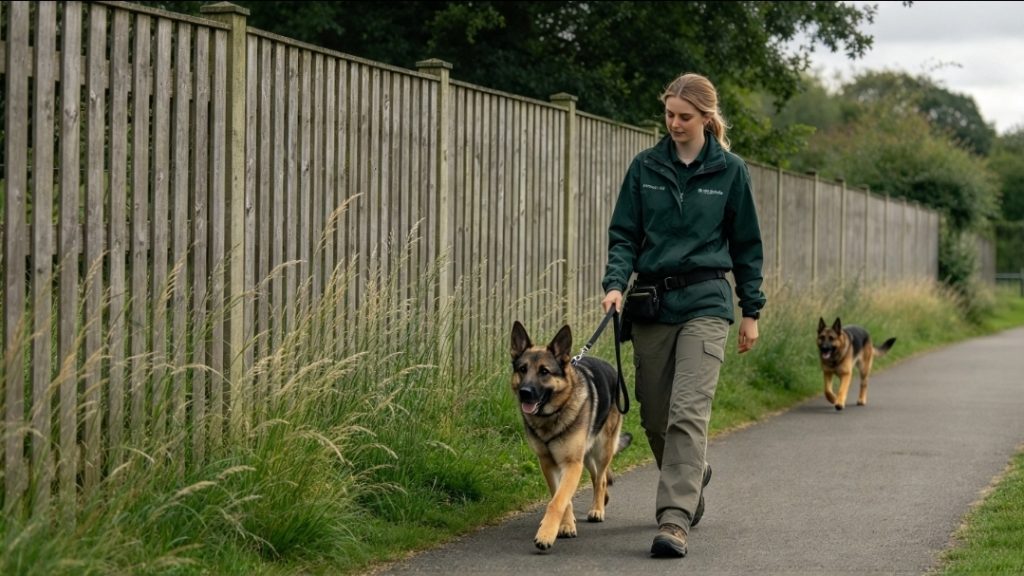
How Do I Stop My Dog Reacting on the Lead?
How do I stop my dog reacting on the lead? Start by identifying what triggers your dog, create enough distance for your dog to remain calm and responsive, then reward appropriate behaviour while gradually reducing the distance over time. Do not wait until your dog is already barking, lunging or pulling before taking action.
RECOMMENDED PRODUCTS

Why Does My Dog React on the Lead?
Lead reactivity can have several causes.
Your dog may react because it is frightened, frustrated, overexcited, wants to reach another dog or person, or feels uncomfortable when it cannot move freely.
The lead can also prevent your dog from creating its preferred distance from something it finds worrying. This can make the reaction stronger.
The first step is therefore to identify what your dog is reacting to and what its body language is telling you.
What Does Lead Reactivity Look Like?
A reactive dog may:
- Pull towards a trigger.
- Bark or growl.
- Lunge.
- Stare intensely.
- Become stiff or tense.
- Whine or vocalise.
- Jump around.
- Try to move away.
- Stop responding to familiar commands.
These behaviours do not all mean the same thing. A dog pulling towards another dog may be excited or frustrated, while another dog may react because it feels threatened.
What Is the Best Way to Stop Lead Reactivity?
The most effective approach is to work at a distance where your dog can notice the trigger without losing control.
When your dog sees the trigger, reward calm behaviour and appropriate attention to you. If your dog becomes increasingly focused or starts reacting, create more distance.
Gradually teach your dog that seeing the trigger does not automatically result in barking, lunging or pulling.
How Do I Train My Dog to Stay Calm on the Lead?
Step 1: Identify the Trigger
Work out exactly what causes the reaction.
It could be:
- Other dogs.
- People.
- Cars or bicycles.
- Wildlife.
- Children.
- Noises.
- Particular locations.
- Certain types of movement.
Knowing the trigger allows you to control the training environment.
Step 2: Find the Right Distance
Start far enough away that your dog can notice the trigger while still responding to you.
This distance is important. If your dog is already barking, lunging or completely focused on the trigger, you are probably too close for effective learning.
Step 3: Let Your Dog Notice the Trigger
Allow your dog to see the trigger without immediately moving towards it.
Remain calm and observe your dog’s response.
If your dog remains relaxed or can redirect its attention towards you, reward that behaviour.
Step 4: Reward the Behaviour You Want
Reward your dog for staying calm, looking towards you, continuing to walk or disengaging from the trigger.
Timing is important. Reward while your dog is still capable of making a good decision.
Step 5: Increase Distance When Necessary
If your dog begins to become tense, stare intensely, pull or struggle to respond, create more distance.
Do not keep moving closer in the hope that your dog will simply get used to the trigger.
Step 6: Gradually Increase the Difficulty
As your dog becomes more reliable, gradually work closer to the trigger or practise in more difficult environments.
Do not increase every difficulty at once. Change one factor at a time where possible.
RECOMMENDED PRODUCTS
What Should I Do When My Dog Starts Reacting?
If your dog starts reacting, your priority is to create space and regain control.
Stop moving towards the trigger and calmly increase the distance. You may need to turn around, cross the road or move behind a physical barrier.
Once your dog is able to focus again, continue at an easier level.
Trying to force your dog to remain close to a trigger while it is already highly aroused can make the situation worse.
Should I Correct My Dog for Reacting?
The aim should not be to punish your dog for showing a reaction.
Instead, manage the environment, prevent unnecessary rehearsal of the behaviour and teach your dog a more appropriate response through positive reinforcement.
Your timing matters. Reward calm behaviour before the reaction becomes intense rather than waiting until your dog has already lost control.
How Do I Stop My Dog Reacting to Other Dogs?
Start at a distance where your dog can see another dog without reacting.
Reward your dog for remaining calm and responding to you. Gradually practise around different dogs while maintaining an appropriate distance.
Do not allow your dog to pull towards another dog and then reach it as a reward for pulling.
If your dog becomes too focused, increase the distance and allow it to settle before continuing.
How Do I Stop My Dog Reacting to People?
Use the same principle.
Start far enough away that your dog can see people without becoming overwhelmed. Reward calm walking and attention towards you.
Gradually practise around different people and environments.
Your dog does not need to greet every person it sees. Learning to calmly pass people is an important part of walking.
What Equipment Should I Use?
A suitable harness or collar and lead should provide safe, appropriate control while you train.
A short line can be useful when you need your dog to remain closer to you, particularly around known triggers.
Equipment should support management and communication rather than physically forcing your dog through a reaction.
A muzzle may be appropriate for a dog with a genuine bite risk, but it should be introduced gradually and positively. A muzzle does not resolve the underlying behaviour and should not be used as a substitute for professional assessment and training.
What Should I Do If My Dog Cannot Stay Calm?
If your dog reacts regardless of the distance you create, stop trying to increase the difficulty.
Return to an easier environment where your dog can respond to you and rebuild the behaviour gradually.
If the reaction is severe, unpredictable or presents a safety risk, seek professional help rather than continuing to expose your dog to difficult situations without appropriate guidance.
What Are the Biggest Mistakes?
Common mistakes include:
- Getting too close to the trigger.
- Waiting until the dog is already reacting.
- Repeatedly giving commands when the dog cannot respond.
- Allowing the dog to rehearse lunging or pulling.
- Moving closer too quickly.
- Expecting immediate results.
- Using equipment as the entire solution.
- Training for too long.
- Failing to recognise early signs of rising arousal.
Successful behaviour change depends on managing the situation before your dog reaches the point where it can no longer make an appropriate decision.
How Long Does It Take to Stop Lead Reactivity?
There is no fixed timeframe.
The time required depends on why your dog reacts, how intense the behaviour is, how frequently it occurs and how consistently you can manage the triggers.
Some dogs improve relatively quickly with appropriate training, while others require a longer period of gradual behaviour change.
Focus on steady progress rather than expecting your dog to become completely reliable after a few sessions.
When Should I Get Professional Help?
Professional help is recommended if your dog regularly lunges, snaps, bites, shows serious aggression or becomes impossible to control on the lead.
You should also seek professional assessment if you are unsure whether your dog’s behaviour is caused by fear, frustration, excitement or another issue.
Do not deliberately place your dog close to a trigger to test its reaction when there is a risk of injury.
Conclusion
To stop your dog reacting on the lead, identify the trigger, create enough distance for your dog to remain responsive, reward calm behaviour and gradually increase the difficulty.
The key is to manage the distance before the reaction becomes intense. Your dog needs to learn that it can notice difficult situations without automatically pulling, barking or lunging.
Consistent handling, positive reinforcement, appropriate timing and gradual progression provide the foundation for calmer and more reliable lead behaviour.




