How Do I Stop My Dog Destroying Things When Alone?
How do I stop my dog destroying things when alone? The most effective approach is to prevent access to things your dog can destroy, teach calm independent behaviour, and gradually increase the amount of time your dog can comfortably spend alone. If the destruction is caused by separation-related distress, simply providing toys or restricting access to furniture will not solve the underlying problem.
Why Does My Dog Destroy Things When Alone?
Before trying to stop the destruction, consider why it happens.
Your dog may be bored, frustrated, seeking stimulation, chewing out of habit, or struggling with being separated from you.
Look at what your dog does before and after the destruction occurs.
Signs that separation may be contributing include:
- Barking or whining after you leave
- Pacing
- Scratching doors or windows
- Attempting to escape
- Toileting indoors
- Excessive drooling
- Inability to settle
- Following you constantly when you are home
Destruction by itself does not automatically mean separation anxiety.
How Do I Stop My Dog Destroying Things When Alone?
Use management and gradual training together.
Step 1: Remove Things Your Dog Can Destroy
Before leaving, remove access to anything your dog could chew, swallow or damage.
Put away:
- Shoes and clothing
- Rubbish
- Food
- Cables
- Children’s toys
- Household objects
- Valuable items
This prevents your dog from repeatedly practising destructive behaviour while you work on the underlying cause.
Step 2: Give Your Dog an Appropriate Area
Create a safe, comfortable area where your dog can settle.
This might be a suitable room, gated area, playpen or crate, depending on what your dog is already comfortable with.
Do not suddenly confine a dog that becomes distressed when restricted.
The area should be introduced positively and used as a place where your dog can relax.
Step 3: Teach Your Dog to Settle While You Are Home
Do not make being alone the only time your dog has to practise independence.
Encourage your dog to settle while you move around the house.
Reward calm behaviour and gradually increase the amount of time your dog can relax without following you.
This teaches your dog that you moving away does not always mean something important is happening.
Step 4: Start With Very Short Separations
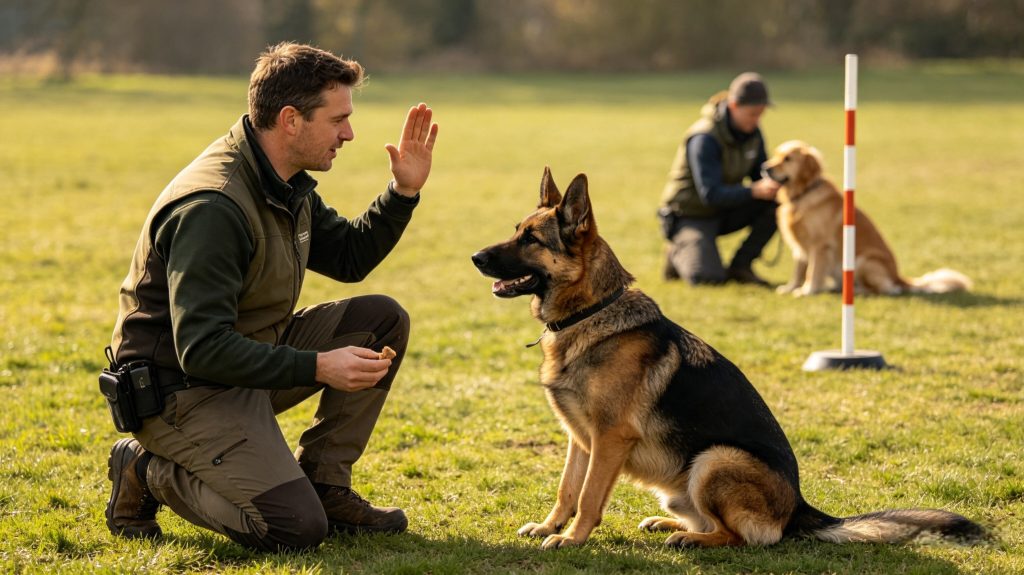
Leave the room for a few seconds and return before your dog becomes distressed.
Repeat the exercise and gradually increase the duration.
If your dog gets up, becomes anxious or starts looking for something to destroy, the exercise is too difficult.
Reduce the duration and build up again.
Step 5: Practise Leaving the House
Once your dog can cope with you leaving different rooms, begin practising very short departures from the house.
Leave calmly and return calmly.
Start with a duration your dog can manage successfully.
Do not immediately leave for an hour simply because your dog managed a few minutes.
Step 6: Gradually Increase the Time
Increase the duration in small, manageable stages.
For example, if your dog comfortably manages a short absence, repeat similar successful sessions before making the next increase.
If destruction or distress returns, reduce the duration.
The aim is to increase your dog’s ability to cope, not repeatedly test its limits.
Should I Exercise My Dog Before Leaving?
Appropriate exercise can help your dog settle, especially if it has unused energy.
Mental activity can also provide useful stimulation.
However, exercise is not a cure for separation-related distress.
A dog can be physically tired and still become distressed when left alone.
Use exercise as part of your dog’s overall routine while continuing to teach independent behaviour.
Should I Leave Toys or Chews?
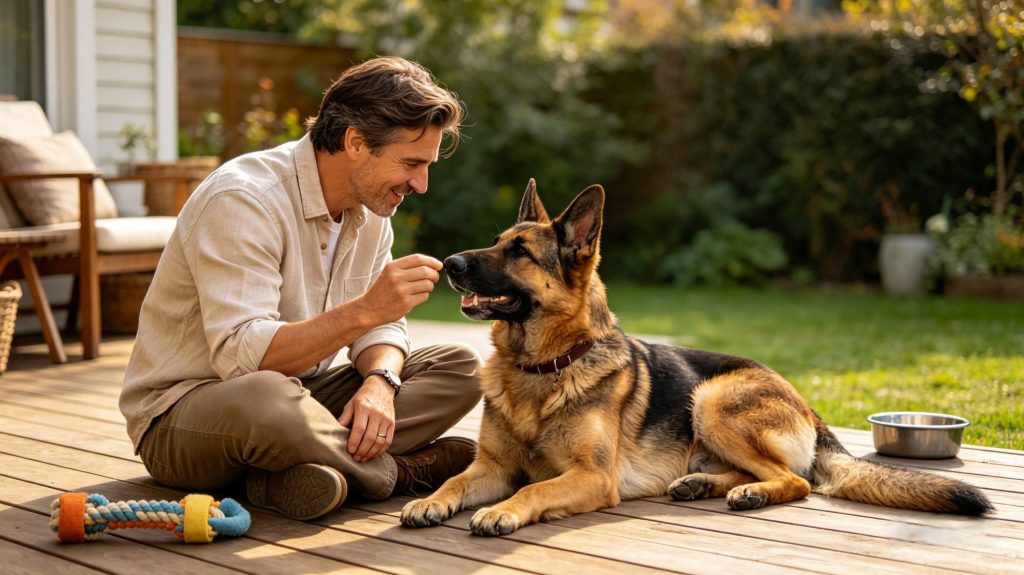
Suitable toys and chews can give your dog an appropriate activity and reduce opportunities to chew household objects.
Introduce them while your dog is calm and choose items that are appropriate and safe for your individual dog.
If your dog refuses food or toys when you leave, do not assume that it simply needs a better toy.
A dog that is highly distressed may be unable to engage with enrichment.
Can a Crate Stop My Dog Destroying Things?
A crate can help prevent access to dangerous objects if your dog is already comfortable and relaxed using one.
It should not be used to force a distressed dog to remain confined.
If your dog panics, attempts to escape or becomes more distressed in the crate, stop using it for that purpose and work on the underlying issue.
A crate should be a safe resting area, not a punishment or emergency solution for destructive behaviour.
What If My Dog Destroys the Door or Windows?
Destruction around doors and windows can be particularly important.
If your dog scratches, bites or attempts to break through an exit after you leave, it may be trying to reach you or escape.
This can indicate significant separation-related distress.
Do not punish the behaviour when you return.
Reduce the length of the separation and seek professional support if your dog cannot cope with short absences.
Should I Punish My Dog for Destroying Things?
No.
Punishing your dog after you return will not teach it what to do while you are away.
Your dog may not connect the punishment with the earlier destruction.
If the behaviour is caused by anxiety or distress, punishment can also make the problem worse.
Instead, prevent access to objects, teach appropriate behaviour and gradually build your dog’s ability to cope with being alone.
What If My Dog Still Destroys Things After Training?
Review the difficulty of the training rather than simply increasing the amount of exercise or adding more toys.
Ask:
- How quickly does the destruction begin?
- What does my dog do immediately after I leave?
- Does my dog bark or whine?
- Does it pace or scratch at exits?
- Can it settle when I am at home?
- Does it eat or play while alone?
- Is the destruction limited to particular objects or areas?
These observations can help identify what is driving the behaviour.
How Long Does It Take to Stop a Dog Destroying Things When Alone?
There is no fixed timeframe.
Some dogs improve relatively quickly when the problem is managed and training is consistent. Others need a much slower progression, particularly when separation causes significant distress.
Do not rush the process.
A shorter period of calm behaviour is more valuable than a longer period followed by panic and destruction.
What Mistakes Should I Avoid?
Avoid leaving your dog with unrestricted access to things it repeatedly destroys.
Avoid suddenly increasing the length of time your dog is left alone.
Avoid repeatedly allowing your dog to become highly distressed during training.
Avoid assuming that more exercise will solve the problem.
Avoid using a crate as a punishment or forcing a distressed dog to remain confined.
Avoid punishing your dog when you return.
When Should I Get Professional Help?
Get professional help if your dog becomes highly distressed when alone, attempts to escape, injures itself, damages doors or windows, cannot cope with very short absences or continues destroying things despite gradual training.
A vet should also be considered if the behaviour has appeared suddenly or changed significantly.
Conclusion
To stop your dog destroying things when alone, first prevent access to dangerous and valuable objects, then teach your dog to settle independently and gradually increase separation time.
Use appropriate enrichment and equipment where suitable, but do not rely on them to solve an underlying separation problem.
The aim is to teach your dog that being alone is safe and manageable, rather than simply preventing it from reaching the things it wants to destroy.