
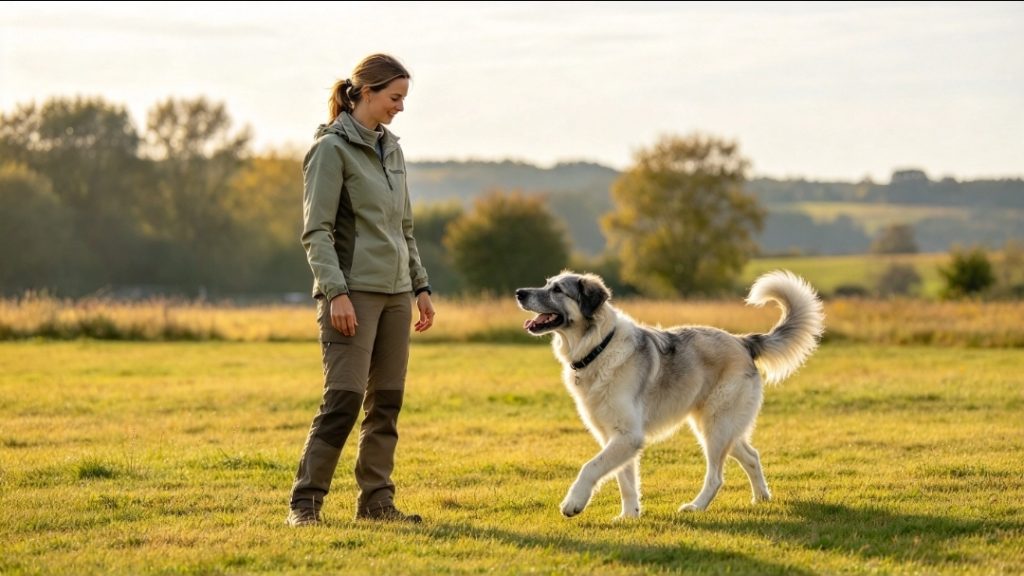
Can I Teach an Older Dog Recall?
Can I teach an older dog recall? Yes, you can teach an older dog to come back when called. Age does not prevent a dog from learning recall, although an older dog may need time to develop a reliable response, particularly if recall has never been trained or has become unreliable over the years.
RECOMMENDED PRODUCTS

Can an older dog learn recall?
Yes. Older dogs can learn new commands and behaviours.
The key is to make returning to you worthwhile, start in an environment where your dog can succeed and gradually increase the difficulty.
If your dog already has poor recall, avoid immediately testing it in situations where it can run away.
How do I teach an older dog recall?
Step 1: Choose a clear recall cue
Choose one word or cue that you will use consistently.
Avoid repeatedly changing the command or calling your dog over and over when it is unlikely to respond.
Step 2: Start somewhere quiet
Begin indoors or in another secure, low-distraction environment.
Call your dog from a short distance using your chosen cue.
When your dog turns towards you and comes to you, reward it immediately.
Step 3: Make coming to you worthwhile
Use a reward your dog genuinely values.
Food, play, praise or another suitable reward can be used depending on your dog’s motivation.
The reward should follow the correct response quickly so your dog can understand why it has been rewarded.
Step 4: Increase the distance
Once your dog reliably comes from a short distance, gradually increase the distance between you.
Do not increase the difficulty too quickly.
If your dog starts ignoring the recall, make the exercise easier again.
Step 5: Add distractions gradually
Practise in different locations and gradually introduce distractions.
You can progress from a quiet garden or secure area to more challenging environments.
Your dog should become reliable at one level before you make the next level more difficult.
Can I teach recall if my older dog has never had recall training?
Yes.
Start from the beginning rather than assuming your dog should already understand the command.
Teach your dog that responding to the recall cue and returning to you consistently leads to something worthwhile.
Can I teach recall if my older dog ignores me?
Yes, but you should first reduce the difficulty.
If your dog ignores you when there are distractions, calling repeatedly is unlikely to solve the problem.
Move to a quieter environment, shorten the distance and use a more motivating reward.
Build reliability before returning to the more difficult situation.
Should I use a long line for an older dog’s recall?
A long line can be useful when rebuilding recall in a suitable safe environment.
It gives your dog more freedom to move while providing additional control if the recall is not yet reliable.
Use it responsibly and avoid allowing the line to become tangled around people, dogs or objects.
A long line is a training aid, not a replacement for teaching reliable recall.
Can I train recall outside?
Yes, but begin somewhere secure.
An enclosed garden, secure field or other appropriate controlled environment can allow you to practise without relying on an unreliable off-lead recall.
Gradually introduce more realistic distractions as your dog’s response improves.
When can I let my older dog off lead?
Only when you have good reason to believe your dog’s recall is reliable enough for the environment.
Do not judge reliability from a few successful recalls in the garden.
Your dog should be able to respond around appropriate levels of distraction before you consider giving it greater freedom.
Even then, consider the environment, traffic, livestock, other dogs and other potential hazards.
What if my older dog runs away when called?
Do not chase your dog if doing so is likely to turn the situation into a game.
Use your established recall cue and make returning to you worthwhile.
Where possible, prevent the situation from happening again by using secure areas or a long line while recall is being rebuilt.
If your dog regularly runs away, seek professional help with recall training and management.
What if my dog comes back but immediately runs off again?
Reward the return and avoid making every recall mean that something enjoyable is ending.
Practise calling your dog, rewarding the response and then allowing it to return to what it was doing when appropriate.
This can help prevent your dog from learning that coming back always means losing its freedom.
How long does it take to teach an older dog recall?
There is no fixed timeframe.
A dog with some previous recall training may progress relatively quickly, while an older dog with years of unreliable recall may require considerably more practice.
Progress gradually and judge success by reliability in increasingly difficult environments.
Can an older dog learn recall around other dogs?
Yes, but other dogs can be a significant distraction.
Start at a distance where your dog can still respond to you.
Reward successful recalls and gradually reduce the distance or increase the difficulty as your dog becomes more reliable.
Do not allow your dog to repeatedly ignore recall and run towards other dogs during training.
What if my older dog is deaf?
A deaf dog can still learn a recall response using a visual signal or another appropriate cue.
Training should be adapted to the dog’s abilities.
Make sure your dog can see the signal before expecting it to respond, and use appropriate safety measures because an audible recall will not be available.
What if my older dog has poor eyesight?
Adapt the training to what your dog can comfortably see and respond to.
Keep the environment safe and avoid situations where reduced vision could place your dog at risk.
If vision has deteriorated noticeably, consider a veterinary assessment.
RECOMMENDED PRODUCTS
Should I punish my dog for ignoring recall?
No.
Punishing your dog after it eventually returns can make coming back to you less rewarding.
Instead, improve the training setup, reduce distractions and reward successful responses.
Your aim is to make returning to you a behaviour your dog understands and wants to repeat.
When should I get professional help?
Professional help is appropriate if your older dog repeatedly runs away, has a serious safety risk, shows aggression around other dogs or people, or remains unreliable despite consistent training.
A professional can help identify why recall is failing and create a suitable training plan.
Conclusion
Yes, you can teach an older dog recall. Start somewhere quiet and secure, use a clear cue, reward every successful response and gradually increase distance and distractions.
A long line can provide additional control while you build reliability, but your dog’s recall should be properly trained before you rely on it off lead.
Age is not the main barrier. Consistent training, appropriate progression and safe management are what matter most.




