
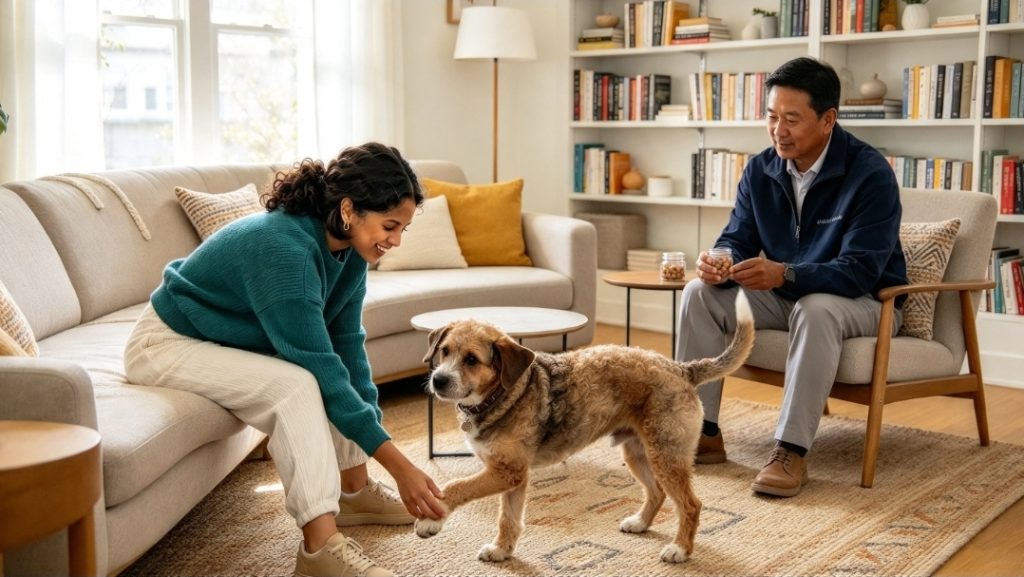
Why Does My Dog Pull Away When I Touch His Paws?
Why does my dog pull away when I touch his paws? Your dog may pull away because his paws are sensitive, he dislikes being restrained, he feels uncomfortable with the way you handle his feet, or he is experiencing pain. Some dogs naturally prefer not to have their paws touched, while others develop discomfort because of previous handling experiences. Understanding your dog’s body language and checking for signs of injury can help you determine whether he needs a different approach, gradual handling practice or veterinary attention.
Why Does My Dog Pull Away When I Touch His Paws?
A dog’s paws are important for movement, balance and exploring the environment. Touching them can feel uncomfortable for some dogs, particularly when someone holds a foot, separates the toes or presses against the pads and nails.
The reason for your dog’s reaction depends on the circumstances. Consider whether he has always disliked paw handling, whether he pulls away from one particular foot or whether the behaviour has developed suddenly.
1. Your Dog May Have Sensitive Paws
Dogs vary in how comfortable they are with physical contact. Some tolerate gentle paw handling, while others prefer not to have their feet touched.
The pads, toes and surrounding skin can also become sensitive through irritation, dryness, small injuries or contact with something uncomfortable. Pulling the paw away may simply be your dog’s way of ending the interaction.
GPK9 Solution: Approach calmly and avoid grabbing your dog’s foot. If he is comfortable with you nearby, begin by allowing him to remain relaxed while you sit beside him. Do not force contact or assume that he needs to tolerate paw touching just because you want to stroke him.
2. Your Dog May Dislike Having His Paw Restrained
When you hold a dog’s paw, you limit his ability to move it away. Some dogs become uncomfortable when their movement is restricted, even if the touch itself is not painful.
You may notice your dog pulling backwards, twisting his body, moving away or attempting to retrieve his paw as soon as you hold it.
GPK9 Solution: Avoid gripping or holding his paw tightly. Allow him to move freely and introduce necessary handling gradually. Reward voluntary engagement with positive reinforcement, and stop before he becomes uncomfortable.
3. Your Dog May Have Had Unpleasant Handling Experiences
Dogs can learn associations between particular movements and what happens next. If paw handling has previously involved uncomfortable nail clipping, pulling at tangled fur or being restrained, your dog may begin to anticipate an unpleasant experience.
This does not mean that every dog who avoids paw handling has had a negative experience. Individual preferences, sensitivity and physical discomfort can also explain the behaviour.
GPK9 Solution: Make handling predictable and positive. Start with your dog relaxed beside you, reward calm voluntary behaviour and keep practice sessions brief. Avoid repeatedly grabbing his paws to test whether he has become more comfortable.
4. Your Dog May Be Worried About Nail Clipping or Grooming
Some dogs pull away when they associate paw touching with nail trimming, clipping, brushing or removing something caught between their toes.
They may react when you reach towards a foot even if you have no grooming equipment in your hand. This can happen because they anticipate what might follow.
GPK9 Solution: Separate ordinary positive interactions from grooming whenever possible. Introduce grooming equipment gradually, at a distance your dog can comfortably manage, and reward relaxed behaviour. Build up slowly rather than attempting to complete the whole task in one session.
If your dog becomes distressed, stop and consider help from a suitably qualified, reward-based groomer or behaviour professional.
5. Your Dog May Have Pain or an Injury
A dog who suddenly starts pulling away from paw contact may be experiencing pain. Possible causes include a damaged nail, a cut pad, something lodged between the toes, a sting, inflammation or an injury affecting the foot or leg.
Look for additional signs such as limping, licking one paw repeatedly, swelling, redness, bleeding, a broken nail or reluctance to walk normally.
GPK9 Solution: If your dog shows signs of pain, stop handling the paw and arrange veterinary advice. Do not force the foot open or repeatedly press the affected area. Seek prompt veterinary attention for significant pain, bleeding, severe swelling or an inability to bear weight.
6. Your Dog May Feel Uncertain About Your Approach
The way you move towards a dog’s paw can influence his response. Reaching suddenly, bending over him or lifting his leg without warning may make him uncomfortable.
This is particularly relevant if your dog is resting, distracted or unfamiliar with being handled.
GPK9 Solution: Approach calmly and make your movements predictable. Give your dog enough space to move away, and let him remain in a comfortable position. If he avoids contact, respect that response rather than following him with your hand.
How Can I Tell Whether My Dog Is Pulling Away Because of Pain?
Look at the complete pattern of behaviour rather than relying on the movement alone.
Signs that may indicate physical discomfort include:
- Pulling away from one specific paw more than the others.
- Limping or placing less weight on a foot.
- Licking or chewing one paw repeatedly.
- Swelling, redness, bleeding or a damaged nail.
- Reacting when walking, climbing stairs or standing.
- A sudden change in tolerance for handling.
Behavioural discomfort may be more likely when your dog has consistently disliked paw handling but walks normally and shows no other signs of pain. However, these patterns cannot reliably rule out a medical problem.
If the behaviour is new, persistent or accompanied by physical symptoms, consult your vet.
How Can I Teach My Dog to Feel More Comfortable With Paw Handling?
The goal is to help your dog feel safe during necessary handling, not to force him to accept every touch.
Step 1: Observe Before You Begin
Choose a calm environment and watch your dog’s posture. Avoid starting when he is excited, frightened, tired or trying to rest.
If he is limping or showing signs of pain, arrange veterinary advice before attempting training.
Step 2: Begin Without Touching the Paw
Sit beside your dog and reward him for remaining relaxed while you move your hand gently near his shoulder or leg, provided he is comfortable with this.
Do not immediately reach for the foot. The aim is to introduce the movement without creating pressure.
Step 3: Introduce Very Brief Contact
When your dog remains relaxed, briefly touch an area near the lower leg before moving closer to the paw over separate sessions.
Only progress if he remains comfortable. If he pulls away, stiffens, turns away or tries to leave, stop and make the next session easier.
Step 4: Pair Comfortable Handling With Rewards
Use a suitable food reward after a brief, comfortable interaction. Allow your dog to move away between repetitions.
Food should encourage voluntary participation, not be used to distract him while you hold his paw against his wishes.
Step 5: Progress Gradually
Over time, you may build towards brief paw contact, examining the toes or introducing grooming equipment, depending on what your dog needs to tolerate.
Keep sessions short and stop before your dog becomes distressed. If he repeatedly struggles, growls or snaps, do not force progress. Seek help from a suitably qualified, reward-based professional.
How Does the GPK9 FUSS Framework Help?
The GPK9 FUSS framework stands for Function, Understand, Structure and Support. It helps you identify what may be influencing your dog’s response and decide how to proceed.
Function
Observe what happens immediately before your dog pulls away. Consider whether you touch a particular paw, hold it, lift a leg or introduce grooming equipment.
Understand
Consider possible explanations, including sensitivity, uncertainty, restraint and pain. Do not assume the behaviour is stubbornness or disobedience.
Structure
Make handling predictable, introduce it gradually and give your dog the opportunity to move away. Use short sessions and positive reinforcement.
Support
Respect your dog’s response, seek veterinary help when pain is suspected and use qualified professional guidance if handling remains difficult.
The GPK9 communication process is OBSERVE → INTERPRET → DECIDE → COMMUNICATE → OBSERVE RESPONSE → REASSESS. This encourages you to adjust your actions according to your dog’s response instead of continuing when he is uncomfortable.
Should I Worry If My Dog Never Lets Me Touch His Paws?
Not necessarily, particularly if your dog has always preferred not to have his feet handled and shows no signs of pain. However, dogs may need to accept some handling for veterinary examinations, nail care and grooming, so gradual positive training can be useful.
If your dog suddenly becomes sensitive, favours one foot, limps or shows other changes, seek veterinary advice. If he growls, snaps or attempts to bite when his paws are approached, stop the interaction and seek professional support rather than forcing him to comply.
Conclusion: Why Does My Dog Pull Away When I Touch His Paws?
Your dog may pull away because his paws are sensitive, he dislikes restraint, he anticipates grooming or he is experiencing pain. The movement itself does not identify the cause, so consider the circumstances and look for other signs of discomfort.
Avoid grabbing his feet, allow him to move away and introduce necessary handling gradually through positive reinforcement. If the reaction is sudden, persistent or associated with limping or other symptoms, arrange a veterinary examination.
Understanding your dog’s response helps you build trust while making necessary handling safer and more comfortable.
How the Five Golden Rules Work Together
The GPK9 Five Golden Rules provide a structured approach to your dog’s everyday behaviour, communication and learning.
- Golden Rule 1 — Home & Social
- Golden Rule 2 — Obedience
- Golden Rule 3 — Prey Drive
- Golden Rule 4 — Toilet
- Golden Rule 5 — Social Walking
Explore The Five Golden Rules to understand how these principles work together.
FUSS — Understanding Your Dog Through Affection, Emotion and Everyday Interaction
The FUSS course helps you develop a deeper understanding of how your dog’s emotions, motivation, physical needs and everyday experiences influence behaviour. This course explains how affection, body language, social interaction and reward can affect the relationship between dogs and their handlers, helping you recognise what your dog is communicating and respond appropriately.
Learn about the roles of hormones such as dopamine, adrenaline, cortisol and oxytocin in motivation, arousal, stress responses and social bonding. Discover how these concepts connect with obedience, reward timing, play, prey drive, excitement management, toilet training, household behaviour and social walking. The course also explores how to recognise when your dog is comfortable and ready to progress, when an interaction needs adjusting, and when you should stop and prioritise safety.
Using the GPK9 FUSS framework — Function, Understand, Structure and Support — you will learn to observe behaviour, consider what may be influencing it, communicate clearly and reassess your dog’s response. The course connects these principles to practical everyday situations, helping you build consistency, encourage appropriate behaviour through positive reinforcement and develop a stronger working partnership with your dog.




