
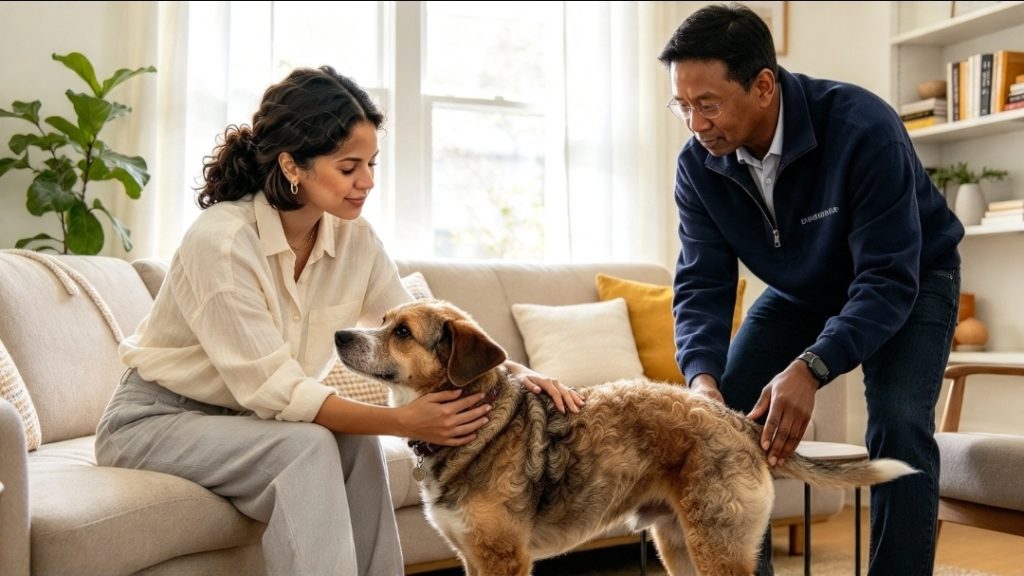
Where Should You Not Touch a Dog?
Where should you not touch a dog? You should avoid touching areas a dog finds uncomfortable, particularly if he is showing signs of fear, pain, tension or a desire to move away. Common areas that some dogs dislike being touched include the top of the head, face, ears, paws, tail, belly and sensitive areas around an injury. However, every dog is different, and no single body area is universally off-limits for every dog. The safest approach is to observe the dog’s body language, allow him to choose whether to interact and never force physical contact.
RECOMMENDED PRODUCTS
Where Should You Avoid Touching a Dog?
Understanding a dog’s individual preferences helps you interact safely and recognise when physical contact is unwelcome. A dog may tolerate being touched in one area but become uncomfortable when you touch another.
1. The Top of the Head
Some dogs dislike hands reaching down towards the top of their head, particularly when the hand approaches from above or outside their field of vision. They may duck, turn away, lean backwards or move away.
This does not automatically mean the dog is frightened or has experienced mistreatment. He may simply prefer a different approach.
GPK9 Solution: Avoid reaching directly over the dog’s head. Let him approach voluntarily and, if he appears comfortable, offer brief, gentle contact around an area he normally accepts, such as the chest or shoulder.
2. The Face and Muzzle
The face contains sensitive areas, including the eyes, nose and mouth. Some dogs dislike having their muzzle held, their face rubbed or hands brought close to their eyes.
A dog may pull away, turn his head, become tense or growl if the contact is uncomfortable. Sudden movements close to the face can also startle him.
GPK9 Solution: Avoid grabbing the muzzle or moving your face close to an unfamiliar dog. Do not force face handling. If a dog needs examination or treatment around the mouth, eyes or muzzle, seek veterinary guidance when necessary.
3. The Ears
Some dogs enjoy gentle contact around their ears, while others dislike having them rubbed, lifted or handled. Ear touching may be particularly uncomfortable if the dog has inflammation, an infection, an injury or another medical problem.
Watch for head shaking, scratching, sensitivity, unusual discharge or a sudden reluctance to let you touch the ears.
GPK9 Solution: Do not pull, twist or repeatedly manipulate a dog’s ears. If touching them causes discomfort or your dog suddenly starts avoiding contact, arrange a veterinary examination rather than treating the reaction as a training issue.
4. The Paws and Feet
Dogs may dislike having their paws handled because the feet are sensitive or because they feel restrained when someone holds a leg. Paw handling may also be uncomfortable if a nail is damaged, a pad is injured or something is lodged between the toes.
A dog may pull his paw away, lick it, limp or become tense when you approach it.
GPK9 Solution: Do not grab or hold a dog’s paws unnecessarily. If you need to introduce grooming or nail care, build tolerance gradually with positive reinforcement and short sessions. If the paw is painful or injured, seek veterinary advice.
5. The Tail and Rear End
Some dogs are uncomfortable when their tail or rear end is touched. This may reflect individual preference, previous experiences or pain affecting the tail, hips, lower back or surrounding tissues.
Avoid pulling, lifting or squeezing the tail. Do not assume that a wagging tail means the dog welcomes contact; tail movement must be interpreted alongside the rest of the body.
GPK9 Solution: Give the dog space and avoid unnecessary handling of the tail or rear end. If he reacts unexpectedly, appears painful or has difficulty moving his tail, consult a vet.
6. The Belly
A dog lying on his back is not necessarily asking for a belly rub. He may be relaxed, seeking a comfortable position or displaying uncertainty. Some dogs enjoy belly rubs, while others become uncomfortable when their abdomen is touched.
Pay attention to whether the dog voluntarily moves closer and remains relaxed or instead stiffens, turns away or tries to get up.
GPK9 Solution: Do not assume that exposing the belly is an invitation to touch it. Offer the dog a choice, keep any contact brief and stop if he shows discomfort. A painful, swollen or unusually sensitive abdomen requires veterinary attention.
7. An Injured or Painful Area
Never deliberately press, squeeze or repeatedly touch an area that appears injured or painful. This includes swollen joints, wounds, sore skin and areas around a suspected fracture.
Even a normally gentle dog may growl, snap or bite when pain makes handling distressing. This is one reason not to punish a dog for communicating discomfort.
GPK9 Solution: Keep handling to what is necessary for immediate safety and follow veterinary advice. Do not attempt to examine a suspected serious injury by manipulating the affected area. Seek urgent veterinary help when the injury appears severe.
How Can You Tell When a Dog Does Not Want to Be Touched?
A dog communicates through his posture, movement and behaviour. Look at the complete picture rather than relying on one signal.
Possible signs of discomfort include:
- Turning the head or body away.
- Leaning backwards or moving away.
- Ducking when a hand approaches.
- Becoming stiff or unusually still.
- Repeated lip licking or yawning in a stressful context.
- Holding the ears back or showing a tense facial expression.
- Growling, snarling, snapping or attempting to bite.
These signs do not all mean the same thing, and some can occur for reasons unrelated to touch. Consider what happened immediately before the behaviour and whether several signals occur together.
Important: If a dog growls, stop the interaction and give him space. Do not punish the growl or force further contact. If there is a risk of biting, keep a safe distance and seek professional support.
How Should You Touch a Dog Safely?
Step 1: Consider the Situation
Do not approach a dog that is sleeping, eating, guarding an item, hiding or trying to escape contact. Be particularly cautious with unfamiliar dogs and dogs that appear injured or distressed.
Step 2: Allow the Dog to Approach
Stand calmly and give the dog room to move away. Avoid leaning over him, reaching suddenly towards his face or assuming that his proximity means he wants to be touched.
Step 3: Offer Brief, Gentle Contact
If the dog voluntarily approaches and appears comfortable, offer brief contact around an area he normally accepts, such as the chest or shoulder. Avoid restraining him or holding him in place.
Step 4: Pause and Observe
Stop touching and allow the dog to respond. If he voluntarily seeks further contact, he may welcome another brief interaction. If he turns away, stiffens or leaves, respect his choice.
Step 5: Reassess
Every interaction provides information. If a dog repeatedly avoids a particular type of touch, stop offering it. If his sensitivity develops suddenly or appears connected to pain, arrange a veterinary examination.
RECOMMENDED PRODUCTS
How Does the GPK9 FUSS Framework Help?
The GPK9 FUSS framework stands for Function, Understand, Structure and Support. It helps you assess a dog’s behaviour before deciding how to respond.
Function
Identify what happened before the dog moved away. Consider the area you touched, the way your hand approached and the surrounding environment.
Understand
Consider possible explanations without assuming you know exactly what the dog is feeling. He may dislike the contact, want space, feel uncertain or have physical discomfort.
Structure
Make the interaction predictable. Allow the dog to approach voluntarily, offer only appropriate contact and ensure he can move away safely.
Support
Respect the dog’s response, use positive reinforcement to encourage voluntary engagement and seek veterinary or qualified professional assistance when needed.
The GPK9 communication process is OBSERVE → INTERPRET → DECIDE → COMMUNICATE → OBSERVE RESPONSE → REASSESS. It encourages you to respond to the dog’s behaviour instead of forcing him to accept contact.
Should You Train a Dog to Accept Being Touched Everywhere?
A dog can benefit from gradually learning to tolerate necessary handling, such as veterinary examinations, grooming and health checks. However, this should not mean forcing him to accept every kind of touch or repeatedly exposing him to something that frightens or hurts him.
Use short, gradual sessions, positive reinforcement and appropriate professional guidance. Allow breaks and stop if the dog shows signs of distress. If the dog has a history of biting or becomes highly distressed during handling, seek help from a suitably qualified, reward-based behaviour professional.
Where pain is suspected, consult a vet before starting handling exercises.
Conclusion: Where Should You Not Touch a Dog?
Avoid touching any area where a dog shows discomfort, fear or pain. Some dogs dislike contact around the head, face, ears, paws, tail or belly, while others may be comfortable with gentle handling in those areas. Injured or painful areas should never be deliberately pressed or manipulated.
The safest approach is to let the dog choose whether to interact, use gentle and predictable movements, recognise signs of discomfort and stop when contact is unwelcome. Respecting a dog’s boundaries helps protect both the dog and the person interacting with him.
How the Five Golden Rules Work Together
The GPK9 Five Golden Rules provide a structured approach to your dog’s everyday behaviour, communication and learning.
- Golden Rule 1 — Home & Social
- Golden Rule 2 — Obedience
- Golden Rule 3 — Prey Drive
- Golden Rule 4 — Toilet
- Golden Rule 5 — Social Walking
Explore The Five Golden Rules to understand how these principles work together.
FUSS — Understanding Your Dog Through Affection, Emotion and Everyday Interaction
The FUSS course helps you develop a deeper understanding of how your dog’s emotions, motivation, physical needs and everyday experiences influence behaviour. This course explains how affection, body language, social interaction and reward can affect the relationship between dogs and their handlers, helping you recognise what your dog is communicating and respond appropriately.
Learn about the roles of hormones such as dopamine, adrenaline, cortisol and oxytocin in motivation, arousal, stress responses and social bonding. Discover how these concepts connect with obedience, reward timing, play, prey drive, excitement management, toilet training, household behaviour and social walking. The course also explores how to recognise when your dog is comfortable and ready to progress, when an interaction needs adjusting, and when you should stop and prioritise safety.
Using the GPK9 FUSS framework — Function, Understand, Structure and Support — you will learn to observe behaviour, consider what may be influencing it, communicate clearly and reassess your dog’s response. The course connects these principles to practical everyday situations, helping you build consistency, encourage appropriate behaviour through positive reinforcement and develop a stronger working partnership with your dog.




