What Is Positive Reinforcement Dog Training?
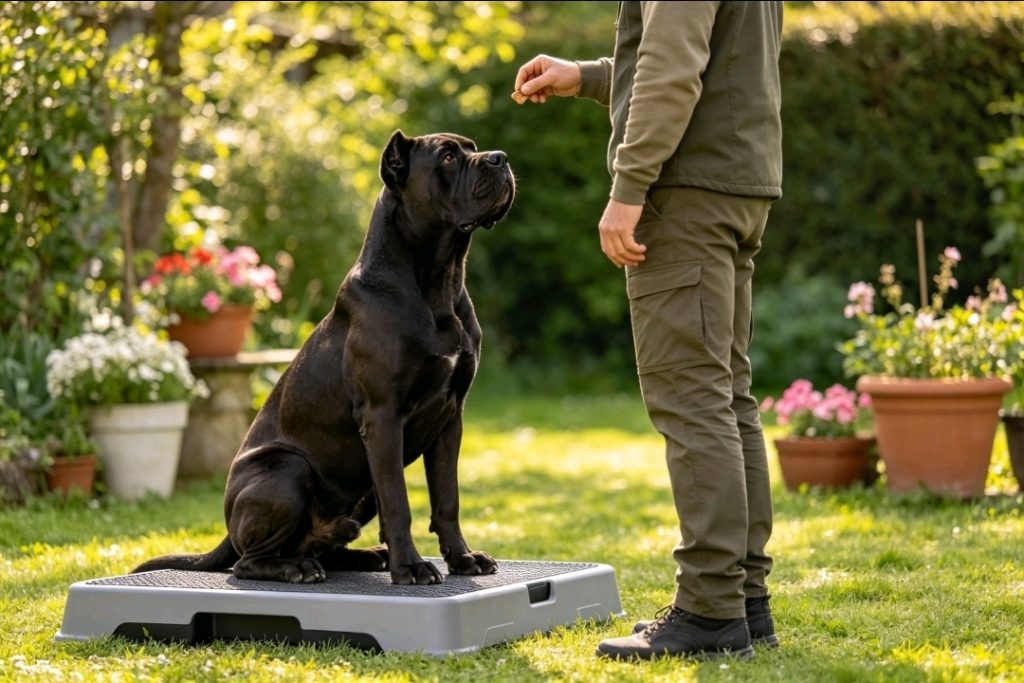
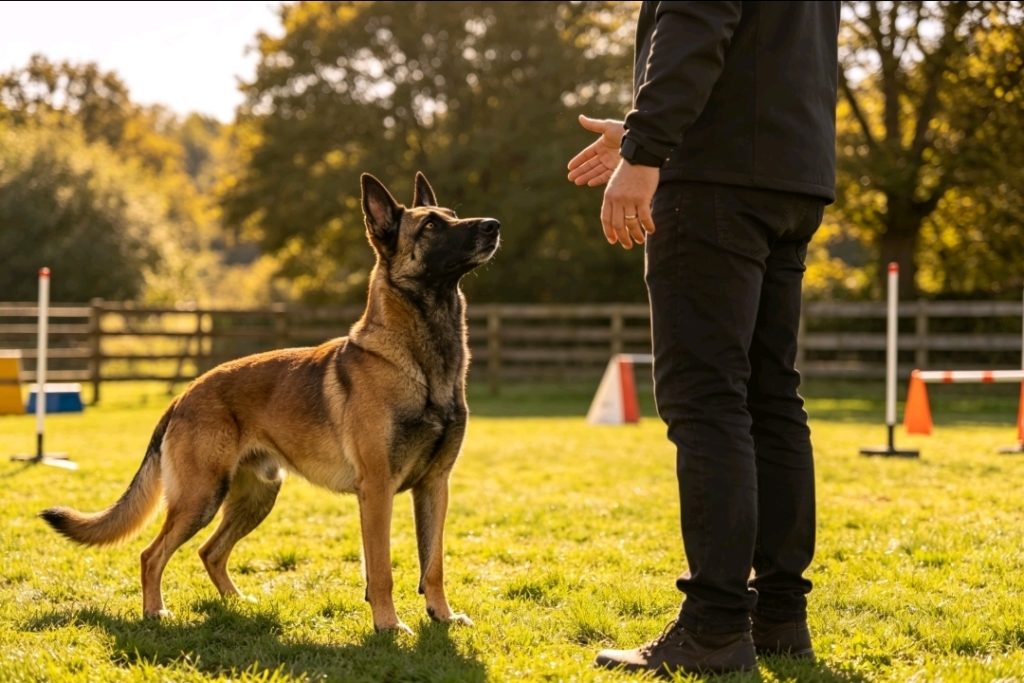
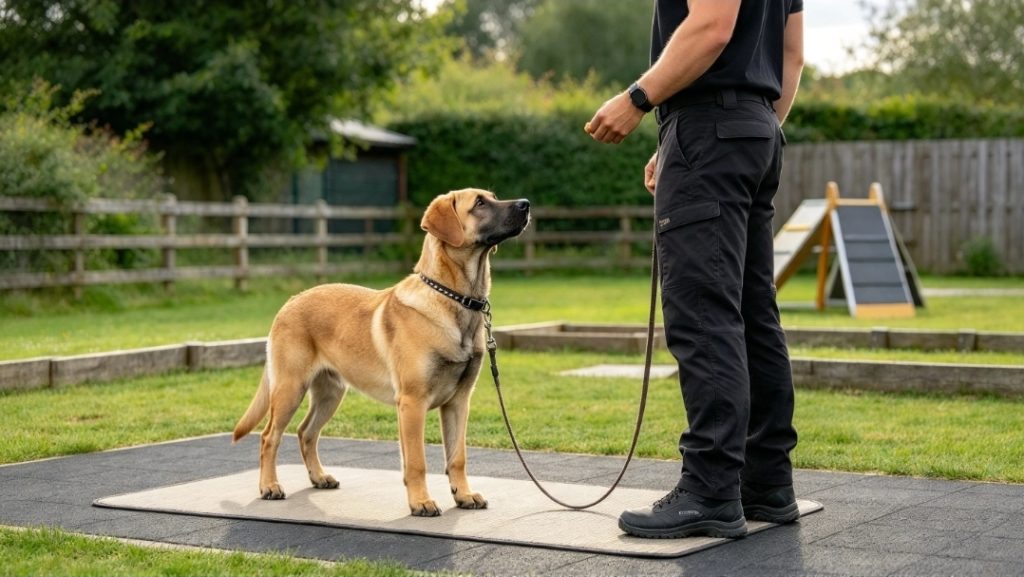
What Is Positive Reinforcement Dog Training? is an important question because the term is often used without explaining what it actually means within a structured training process. Some handlers may use food, toys or praise without understanding how timing, consistency and communication affect the dog’s learning. Others may provide rewards at different times or in response to behaviour that was not intended, making it difficult for the dog to understand what is being reinforced. This can lead to confusion, inconsistent behaviour and frustration for both dog and handler. Positive reinforcement dog training is based on increasing the likelihood of a behaviour by providing something the dog finds rewarding after that behaviour occurs, with the timing and delivery of the reward forming an important part of the learning process.
RECOMMENDED PRODUCTS
Training treats — Training Treats
Suitable training treats can be used as a reward during structured exercises where food is appropriate for the behaviour being developed.
Common Problems
One common problem is misunderstanding what positive reinforcement actually means.
Simply giving a dog food, attention or a toy does not automatically make an exercise positive reinforcement training. The reward needs to be connected to the behaviour being developed.
If the timing is unclear, the dog may associate the reward with another behaviour.
Another problem is rewarding behaviour inconsistently.
If the handler sometimes reinforces a particular response and at other times ignores it without a clear training structure, the dog may receive inconsistent information.
Common Issues
Poor timing can create significant difficulties.
For example, if a dog performs the desired behaviour but the reward is delivered several seconds later, the dog may not clearly understand which behaviour produced the reward.
The handler may believe the correct behaviour has been reinforced while the dog has connected the reward with movement, looking away, standing up or another action.
Another issue is relying entirely on food without developing communication and understanding.
Food can be a useful training tool, but the handler still needs to understand the behaviour being developed and how the reward is being used.
Common Mistakes
A common mistake is continually holding food in front of the dog’s face.
This can cause the dog to focus heavily on the food rather than learning to respond to the handler’s movement, communication and training exercise.
Another mistake is rewarding every behaviour without considering whether that behaviour is appropriate for the exercise.
Positive reinforcement is not simply about giving rewards frequently. The reward needs to have a purpose within the training process.
Handlers can also make the mistake of increasing distractions too quickly.
A dog may understand an exercise in a quiet room but struggle when people, dogs, sounds or movement are introduced.
Frustration
Training can become frustrating when the handler believes the dog understands an exercise but the behaviour changes in different circumstances.
The handler may increase the number of rewards, repeat instructions or change the exercise without understanding why the dog is struggling.
The dog may also become frustrated when the training criteria are unclear or when the handler’s timing changes from one repetition to another.
Without consistency, both dog and handler can lose clarity about what is being trained.
Timing
Timing is central to positive reinforcement dog training.
The reward should be delivered in close connection with the behaviour the handler intends to reinforce.
If the reward is too early, the dog may associate it with a behaviour that occurred before the desired response.
If it is too late, another behaviour may have occurred before the reward is delivered.
This is why the handler needs to observe the dog carefully and understand exactly which behaviour is being reinforced.
Misunderstanding and Miscommunication
Positive reinforcement can be misunderstood when the handler assumes that the dog automatically knows why it has received a reward.
The dog learns from the relationship between behaviour and consequence, not from the handler’s intention alone.
If the handler rewards the wrong moment, the dog may learn something different from what was intended.
Communication also becomes unclear when different people use different expectations, rewards or timing.
A structured approach therefore helps the handler remain consistent and allows the dog to receive clearer information during training.
RECOMMENDED PRODUCTS
A suitable treat pouch can help keep rewards accessible and allow the handler to deliver food efficiently during structured training exercises.
GPK9’S FIVE GOLDEN RULES
The GPK9 Five Golden Rules provide a connected framework for understanding positive reinforcement within the wider training relationship between dog and handler.
What Is Positive Reinforcement Dog Training? is not simply about using food. It involves understanding behaviour, selecting an appropriate reward, recognising the correct moment, communicating clearly and maintaining consistency.
The Five Golden Rules connect these principles to home structure, obedience, play, toilet routines and social walking.
Golden Rule One — Home and Social
Positive reinforcement training works within the wider structure of the dog’s daily environment.
Golden Rule One establishes the progression of crate → placemat → playpen.
The crate provides safety, reset and toilet support.
The placemat provides calm home freedom.
The playpen provides monitored freedom.
This structure helps the handler create clearer situations in which behaviour can be observed and developed.
It also reduces the need to rely on rewards while the dog is moving freely around an uncontrolled environment.
Golden Rule Two — Obedience
Golden Rule Two provides the strongest direct connection to positive reinforcement.
GPK9 obedience training uses food and luring, together with praise, shaping and movement, to develop communication between dog and handler.
Food is hand-delivered as part of structured exercises rather than simply being provided while the dog moves around without purpose.
This allows the handler to consider the dog’s behaviour, the timing of the reward and the progression of the exercise.
The traffic-light system provides a way to monitor training:
- Green — progress and continue to monitor.
- Amber — observe and review.
- Red — stop and return to a more controlled stage.
Golden Rule Three — Prey Drive and Play
Positive reinforcement is not limited to food.
Play can also form part of a dog’s motivation and engagement, which is why Golden Rule Three provides a separate structure for prey drive and play.
The focus is on a quiet, separate area for appropriate toy and tug activities rather than combining high-energy play with obedience exercises.
The handler can observe the dog’s engagement and arousal while maintaining a clear distinction between play and structured obedience.
Golden Rule Four — Toilet
Toilet training provides another opportunity for consistent reinforcement and clear communication.
Golden Rule Four focuses on the same place, the same time and a toilet command.
A predictable routine helps the handler recognise when the dog is likely to need to toilet and provides clearer opportunities to recognise the appropriate behaviour.
This is particularly relevant during puppy development.
Golden Rule Five — Social Walking and Ignore the World
Positive reinforcement can also be used within wider environmental training.
Golden Rule Five focuses on a calm, relaxed and manageable walk, without making commands the central focus.
The handler observes the dog’s behaviour while it experiences normal environmental activity.
This allows the handler to recognise appropriate calm behaviour and understand when the dog is becoming distracted or overstimulated.
The aim is to develop manageable behaviour within real-world surroundings rather than limiting learning to a controlled training area.
Final Connection
What Is Positive Reinforcement Dog Training? is fundamentally about understanding the relationship between behaviour, consequence, timing and communication.
Positive reinforcement is not simply giving a dog food or praise. The reward needs to follow the behaviour the handler wants to develop, and the timing needs to be clear enough for the dog to make the appropriate connection.
The GPK9 Five Golden Rules place this principle within a wider training system.
Home and Social provides structure.
Obedience develops communication through food, luring, praise, shaping and movement.
Prey Drive and Play provides a separate framework for motivation and engagement.
Toilet establishes consistency around an important daily behaviour.
Social Walking and Ignore the World develops calm and manageable behaviour within the wider environment.
Together, these areas help the handler understand how positive reinforcement can be used as part of structured dog training rather than simply as a method of giving rewards.