
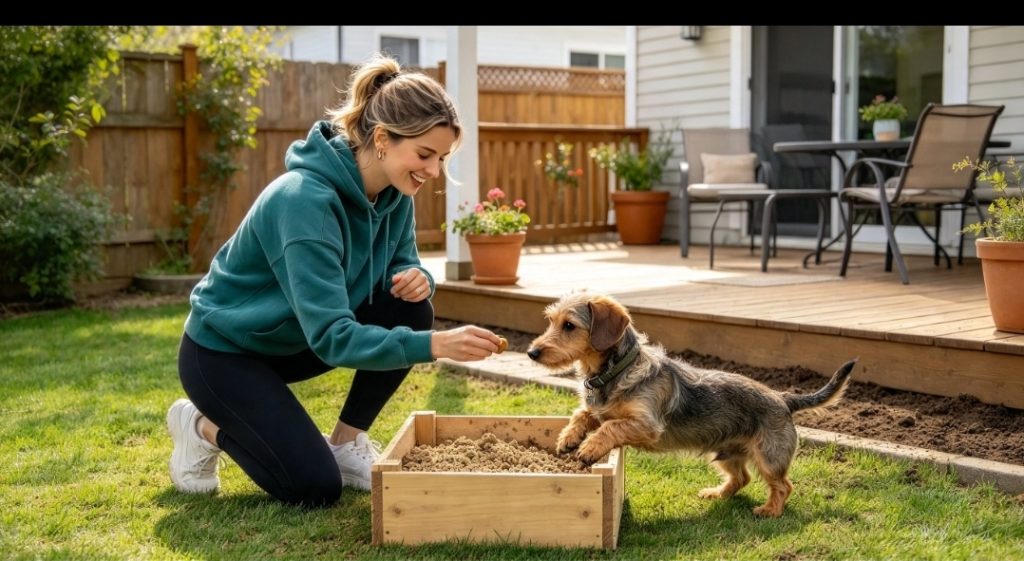
Why Structure Is Important for Dog Toilet Training
Structure is important for dog toilet training because it helps establish a consistent routine around where and when a dog should toilet. Without predictable toilet opportunities, appropriate supervision and clear communication, puppies can struggle to develop reliable habits. Inconsistent routines, excessive freedom, poor timing and unclear expectations can all contribute to repeated accidents.
Effective toilet training is not simply about reacting when an accident happens. It involves understanding the dog’s needs, creating a manageable environment and providing repeated opportunities to learn the expected behaviour.
RECOMMENDED PRODUCTS

What Happens When Toilet Training Has No Clear Structure?
Toilet training can become difficult when a puppy experiences an inconsistent daily routine.
One day, the puppy may be taken to the same toilet area at regular intervals. The next day, the location, timing or supervision may change. The puppy may also be given unrestricted access to the home before reliable toilet habits have developed.
These inconsistencies can make accidents more likely and make it harder for the handler to recognise patterns in the dog’s behaviour.
The problem is not necessarily that the puppy is refusing to learn. It may simply need clearer routines, more appropriate supervision and additional opportunities to practise the desired behaviour.
Common Problems Caused by a Lack of Structure
Several problems can develop when toilet training lacks consistency.
Inconsistent Toilet Locations
Frequently changing the designated toilet area can make the routine less predictable.
Where practical, use the same suitable location so the puppy repeatedly experiences the intended environment. Consistency helps the handler establish a recognisable pattern around toileting.
Irregular Toilet Opportunities
If the puppy is not given opportunities to toilet frequently enough, accidents may happen before the handler recognises the need.
Young puppies generally need more frequent opportunities than adult dogs. Their age, development, activity and individual circumstances should guide the routine.
Excessive Freedom Around the Home
Giving a puppy unrestricted access to the home too early can make supervision difficult.
The puppy may move out of sight, toilet in another room and return before the handler notices. This makes it harder to identify the circumstances surrounding an accident.
Inconsistent Supervision
Supervision helps the handler recognise signs that the puppy needs to toilet, including sniffing, circling, restlessness or suddenly moving away from an activity.
When the puppy is not being supervised directly, appropriate management can help keep it safe and make its behaviour easier to monitor.
Unclear Communication
A puppy does not automatically understand which areas of the home are suitable for toileting.
Using different verbal cues, changing the routine repeatedly or expecting the puppy to understand household rules without sufficient experience can make the process less clear.
Unrealistic Expectations
A few successful toilet trips do not necessarily mean a puppy is fully toilet trained.
Reliable habits develop through repetition. The handler must allow for the puppy’s age, individual development and changing needs rather than expecting immediate consistency.
How Frustration Can Affect Toilet Training
Repeated accidents can become frustrating, especially when the handler believes the puppy should already understand what is expected.
However, focusing only on the accident may prevent the handler from identifying what happened beforehand.
Was the puppy given a toilet opportunity after waking? Was it supervised? Had the routine changed? Was it left longer than it could comfortably manage?
Reviewing these circumstances helps the handler make practical adjustments instead of responding to every accident as an isolated problem.
Remain calm and avoid punishment. If an accident has already happened, clean the area thoroughly and review the routine to reduce the likelihood of it happening again.
Why Timing Matters in Structured Toilet Training
Timing is a fundamental part of toilet training because the handler needs to provide opportunities before an accident occurs.
Useful times to offer a toilet opportunity include:
- Immediately after waking.
- After eating or drinking.
- After play and physical activity.
- After periods of excitement.
- Before settling down for a rest.
- Whenever the puppy shows signs of needing to toilet.
These are useful starting points rather than a universal schedule. Observe the individual dog and adjust the frequency of opportunities to suit its needs.
A predictable routine helps the handler anticipate toileting rather than relying on accidents to identify when the puppy needed to go.
How to Create Structure for Dog Toilet Training
A structured routine does not need to be complicated. It needs to be clear, practical and consistent.
1. Choose a Consistent Toilet Area
Select a suitable location that is accessible and practical for your household.
Where possible, use the same area for regular toilet opportunities. If circumstances require a change, help the puppy adjust by maintaining a predictable routine.
2. Establish Regular Toilet Opportunities
Take the puppy to the designated area at appropriate intervals and after activities that commonly lead to toileting.
Do not rely entirely on the puppy to signal its needs, particularly during the early stages of training.
3. Use a Consistent Verbal Cue
Choose a simple toilet cue and use it consistently when the puppy reaches the designated area.
Give the puppy time to respond. Avoid repeatedly changing the words or distracting it while it is trying to toilet.
4. Reward Toileting in the Correct Location
When the puppy toilets in the appropriate place, offer praise or a suitable reward promptly.
This helps create a positive association between toileting in that location and the outcome.
5. Supervise and Manage Home Access
Keep the puppy within a level of supervision that allows you to recognise changes in behaviour and respond to its needs.
If direct supervision is not possible, use an appropriate, safe management area. A crate should be introduced positively and used as a comfortable resting space, not as punishment.
6. Increase Freedom Gradually
As the puppy develops more reliable habits, gradually increase access to the home while continuing to observe its behaviour.
If accidents increase, review the amount of freedom and the consistency of the routine. The answer may be to return temporarily to closer supervision rather than expecting the puppy to manage more than it can currently handle.
7. Observe and Record Progress
If accidents continue, make a simple record of when they occur, where they happen and what the puppy was doing beforehand.
Patterns may reveal missed toilet opportunities, changes in routine or periods when supervision needs to improve.
The Relationship Between Structure and Freedom at Home
Structure does not mean preventing a dog from enjoying freedom. It means providing a level of freedom that matches the dog’s current ability to manage its environment.
A puppy that is still learning toilet habits may need more supervision and management than an adult dog with an established routine.
A suitable crate, a defined resting area and a safe playpen can help organise the home environment when used appropriately.
Each area should have a clear purpose:
- Crate: A comfortable, secure resting space that can form part of a wider management routine.
- Resting area: A defined place where the dog can settle calmly.
- Playpen: A managed area that provides space while helping the handler supervise the puppy.
These arrangements should support learning rather than replace regular toilet opportunities. A puppy should never be expected to remain confined longer than it can comfortably manage.
As reliable habits develop, freedom can increase gradually.
RECOMMENDED PRODUCTS
How Consistency Improves Communication
Consistency helps the dog experience repeated patterns and gives the handler a clearer way to assess progress.
When the same toilet location, predictable opportunities and consistent verbal cue are used, the puppy receives clearer information about the routine.
Consistency also applies to the handler’s expectations. Changing the rules from one day to another can make it harder to identify what is working.
The goal is not to expect the puppy to understand everything immediately. It is to provide enough clear, repeated experience for reliable habits to develop.
What If Toilet Training Is Still Not Progressing?
If accidents continue despite a structured routine, review the complete situation rather than concentrating only on individual incidents.
Ask yourself:
- Is the toilet location consistent?
- Are toilet opportunities frequent enough?
- Am I recognising the puppy’s signals?
- Is the puppy being supervised appropriately?
- Has it been given too much freedom too soon?
- Am I using the same verbal cue?
- Have there been changes to the household routine?
- Are my expectations appropriate for the dog’s age and development?
Making adjustments based on these observations can help identify areas that need improvement.
However, ongoing toilet problems are not always caused by training. Urinary difficulties, digestive problems and other health conditions can affect toileting behaviour.
If a previously reliable dog suddenly starts having accidents, or if toileting is accompanied by straining, discomfort, blood in the urine or unusually frequent urination, seek veterinary advice promptly.
If the dog’s health is not the concern but the routine remains difficult to establish, a qualified dog-training professional can help assess the management and training approach.
Frequently Asked Questions About Structure in Dog Toilet Training
Why is routine important when toilet training a puppy?
A routine helps the handler anticipate when the puppy may need to toilet and provide regular opportunities. Repeated experiences in a consistent location help the puppy develop more reliable habits.
Can too much freedom delay toilet training?
Yes. Unrestricted access to the home can make supervision more difficult and give a puppy opportunities to toilet out of sight. Increasing freedom gradually makes it easier to monitor progress.
How often should I take my puppy outside to toilet?
The frequency depends on the puppy’s age, development, activity and individual needs. Offer opportunities after waking, eating, playing and whenever signs suggest the puppy needs to go. Young puppies usually need more frequent opportunities than adult dogs.
Should I change the toilet area if my puppy keeps having accidents?
Not necessarily. First review the timing, supervision and consistency of the existing routine. Where the location is suitable, keeping it consistent can help establish a clearer pattern.
Should I punish my puppy for accidents?
No. Punishment can create fear or confusion without teaching the puppy where it should toilet. Focus on prevention, appropriate supervision and rewarding the desired behaviour.
What should I do if my dog suddenly starts having accidents indoors?
A sudden change can indicate a medical issue, particularly in a previously reliable dog. Seek veterinary advice to rule out health-related causes before treating the problem as a training issue.
Building Reliable Toilet Habits Through Structure
Structure is important for dog toilet training because it connects the dog’s needs with the handler’s routine, supervision and communication.
Without consistency, missed opportunities, excessive freedom and unclear expectations can make progress difficult. With an appropriate routine, the handler can anticipate the dog’s needs, recognise patterns and provide repeated opportunities to learn.
The key is to keep the process practical: use a suitable toilet area, maintain regular opportunities, reward the desired behaviour and increase freedom gradually as reliability develops.
Effective toilet training is built through consistency, observation and appropriate management, not punishment or unrealistic expectations.




