
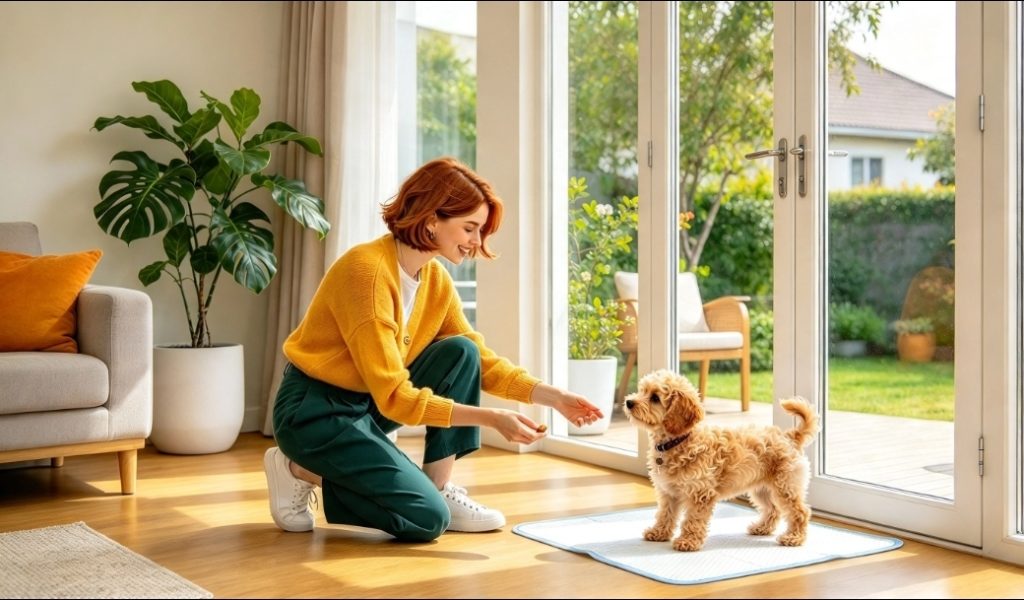
What Is Toilet Training for Dogs? Understanding the Basics
Toilet training for dogs is the process of teaching a dog where and when to toilet through a consistent routine, appropriate supervision and clear communication. Puppies do not automatically understand household toilet rules, so handlers must provide regular opportunities, recognise their needs and establish predictable habits.
Accidents can happen when routines are inconsistent, toilet opportunities are missed or a puppy has more freedom than it can currently manage. Understanding these common problems helps owners build a more reliable toilet-training routine without unnecessary frustration.
RECOMMENDED PRODUCTS

What Is Toilet Training for Dogs?
Toilet training is the process of helping a dog develop consistent habits around where toileting should take place.
For a young puppy, this involves learning how to live within a human household. The puppy does not automatically know which areas are suitable for toileting or how long it is expected to wait between opportunities.
The handler needs to consider several factors:
- Location: Where the dog is expected to toilet.
- Timing: When the dog is likely to need a toilet opportunity.
- Routine: How consistently the daily schedule is maintained.
- Supervision: How closely the puppy is monitored while learning.
- Communication: How clearly the expected behaviour is established.
Toilet training is not simply about cleaning up accidents after they happen. It involves understanding the dog’s needs and creating an environment in which the desired behaviour can develop.
Common Problems With Toilet Training
One of the most common problems is a puppy toileting in the wrong location. This might happen on the floor, near furniture or in another area of the home.
Repeated accidents can become frustrating when owners do not understand what happened beforehand. However, an accident does not automatically mean the puppy is being deliberately disobedient or that the training has failed.
Early success also does not necessarily mean toilet training is complete. Puppies are still developing their habits and their ability to manage longer periods between toilet opportunities.
Inconsistent Toilet Times
If toilet opportunities are provided at unpredictable times, it can become harder for the handler to anticipate the puppy’s needs.
A consistent routine helps the owner recognise patterns and provide opportunities before an accident occurs.
Changing the Toilet Location
Frequently changing the designated toilet area can make the routine less predictable.
Where practical, use the same suitable location so the puppy repeatedly experiences the intended toileting environment.
Missing the Dog’s Signals
Some puppies show signs that they need to toilet, such as sniffing the ground, circling, becoming restless or moving away from an activity.
These behaviours are not always obvious, particularly in young puppies. Watching for patterns and responding promptly can reduce the likelihood of accidents.
Giving Too Much Freedom Too Soon
A puppy that has unrestricted access to the entire home may have opportunities to toilet out of sight before reliable habits have developed.
Supervised access and appropriate management can help the owner monitor behaviour and provide timely toilet opportunities.
Expecting Too Much Too Early
Puppies develop at different rates. Their ability to manage longer periods between toilet opportunities depends on factors including age, individual development, routine and health.
Expectations should reflect the puppy’s current needs rather than an arbitrary timetable.
How Frustration Can Affect Toilet Training
Toilet training can be challenging for both the dog and the handler.
Owners may become frustrated when accidents continue despite several days of progress. A puppy may also struggle when its routine changes or access to an appropriate toilet area is inconsistent.
Responding differently to each accident can make the situation harder to manage. A calm, consistent approach helps the handler concentrate on identifying patterns and improving the routine.
Avoid punishing a puppy for accidents. Instead, focus on prevention, supervision and rewarding toileting in the appropriate location.
If you discover an accident after it has happened, clean the area thoroughly and review the circumstances that may have contributed to it.
Why Timing Matters in Toilet Training
Timing is central to developing reliable toilet habits.
The handler needs to recognise when the puppy may need to go and provide an opportunity at an appropriate time. If the opportunity comes too late, an accident may occur before the puppy reaches the designated area.
Useful times to offer a toilet opportunity often include:
- Immediately after waking.
- After eating or drinking.
- After play or physical activity.
- After periods of excitement.
- Before settling down for a rest.
- Whenever the puppy shows signs of needing to toilet.
Young puppies generally need more frequent opportunities than adult dogs. Observe the individual dog’s routine and adjust the schedule as it develops.
Understanding Communication During Toilet Training
The handler may understand the household rules, but the puppy has to learn what those rules mean.
For example, an owner may expect the puppy to understand that the garden is appropriate for toileting while the living room is not. This distinction develops through repeated experiences and consistent management.
Using the same verbal cue can help establish an association with toileting. Choose a simple phrase, use it consistently and give the puppy enough time to respond.
Avoid repeatedly changing commands or expecting the puppy to understand a cue before it has been associated with the behaviour.
Clear communication works alongside location, timing and routine. It does not replace the need to provide suitable opportunities.
How to Establish a Consistent Toilet-Training Routine
A straightforward routine gives the puppy repeated opportunities to learn the expected behaviour.
1. Choose a Suitable Toilet Area
Select an appropriate location that you can access consistently. Where possible, use the same area for regular toilet opportunities.
2. Provide Regular Opportunities
Take the puppy to the designated area at predictable times and whenever its behaviour suggests it may need to toilet.
Do not rely entirely on the puppy to signal its needs, particularly during the early stages of training.
3. Use a Consistent Toilet Cue
Choose one short verbal cue and use it calmly when the puppy reaches the toilet area.
Give the puppy time to toilet rather than distracting it with repeated commands.
4. Reward the Desired Behaviour
When the puppy toilets in the appropriate location, provide praise or another suitable reward promptly. This helps create a positive association with the behaviour.
5. Supervise the Puppy Indoors
Keep the puppy within a level of supervision that allows you to notice changes in behaviour and respond to its needs.
If you cannot supervise directly, use an appropriate, safe management area. A crate should be introduced positively and used as a comfortable resting space, never as punishment.
6. Increase Freedom Gradually
As the puppy develops more reliable habits, gradually increase its access to the home while continuing to monitor its behaviour.
If accidents become more frequent, review the routine and level of freedom rather than assuming the puppy should already be able to manage independently.
7. Keep a Record of Patterns
If accidents continue, make a note of when they occur, where they happen and what the puppy was doing beforehand.
This can help identify whether the routine needs adjusting or whether there are other factors affecting progress.
The Relationship Between Toilet Training and Freedom at Home
Freedom is an important part of helping a puppy learn to live comfortably within the household. However, the amount of freedom provided should reflect the puppy’s current ability to manage its environment.
Too much unrestricted access can make supervision difficult and increase the opportunity for accidents.
A crate, a defined resting area and a suitable playpen can each have a role in safe home management when introduced appropriately. These areas should provide comfort, safety and supervision rather than punishment.
The aim is not to restrict a puppy unnecessarily. It is to provide a manageable environment while reliable habits develop.
As the puppy becomes more consistent, its freedom can be increased gradually.
What Should You Do When Toilet Training Is Not Progressing?
If accidents continue, look at the complete routine rather than focusing on an individual incident.
Consider the following questions:
- Is the toilet location consistent?
- Are toilet opportunities provided frequently enough?
- Are you recognising the puppy’s signals?
- Is the puppy being supervised appropriately?
- Has the puppy been given too much freedom too soon?
- Are the same verbal cues and routines being used?
- Have there been changes to the household schedule?
- Is the puppy being expected to wait longer than it can comfortably manage?
Making a few carefully considered adjustments may help identify the cause of the problem.
However, persistent accidents are not always a training issue. Urinary problems, digestive difficulties and other health conditions can affect toileting behaviour.
If a previously reliable dog suddenly starts having accidents, if the puppy appears uncomfortable, or if there are changes such as straining, blood in the urine or unusually frequent urination, seek veterinary advice promptly.
If the dog is struggling despite a consistent routine, a qualified dog-training professional can help assess the management and training approach.
Frequently Asked Questions About Toilet Training for Dogs
How long does it take to toilet train a puppy?
The time required varies between individual puppies. Progress depends on factors such as age, development, routine, supervision and consistency. Some puppies establish habits relatively quickly, while others need several months of continued management.
Why is my puppy still having accidents indoors?
Possible reasons include missed toilet opportunities, inconsistent routines, too much freedom, incomplete learning or changes in the puppy’s health. Reviewing when and where accidents occur can help identify patterns.
RECOMMENDED PRODUCTS
Should I punish my puppy for toileting indoors?
No. Punishment can create fear and confusion without teaching the puppy where it should toilet. Focus on providing timely opportunities, supervising carefully and rewarding toileting in the correct location.
Should I use the same toilet area every time?
Where practical, yes. A consistent location helps establish a predictable routine and makes it easier for the handler to recognise patterns in the puppy’s behaviour.
Should I use a verbal command for toilet training?
A consistent verbal cue can help the puppy associate a phrase with toileting. Use the same cue calmly and allow time for the behaviour to happen.
When should I seek professional or veterinary help?
Seek veterinary advice if toileting changes suddenly, accidents persist alongside signs of discomfort, or you suspect a medical problem. A qualified training professional can help if the routine, supervision and management need further assessment.
Building Reliable Toilet Habits
The basics of toilet training for dogs come down to consistency, appropriate timing, supervision and clear communication.
The handler needs to understand where the dog is expected to toilet, provide regular opportunities and recognise that reliable habits develop through repeated experience. Accidents should be treated as information about the current routine rather than as a reason for punishment.
By maintaining a predictable schedule, rewarding the desired behaviour and increasing freedom gradually, owners can give their dogs a clearer foundation for developing reliable toilet habits.




