What Should I Do If My Dog Struggles With Training?
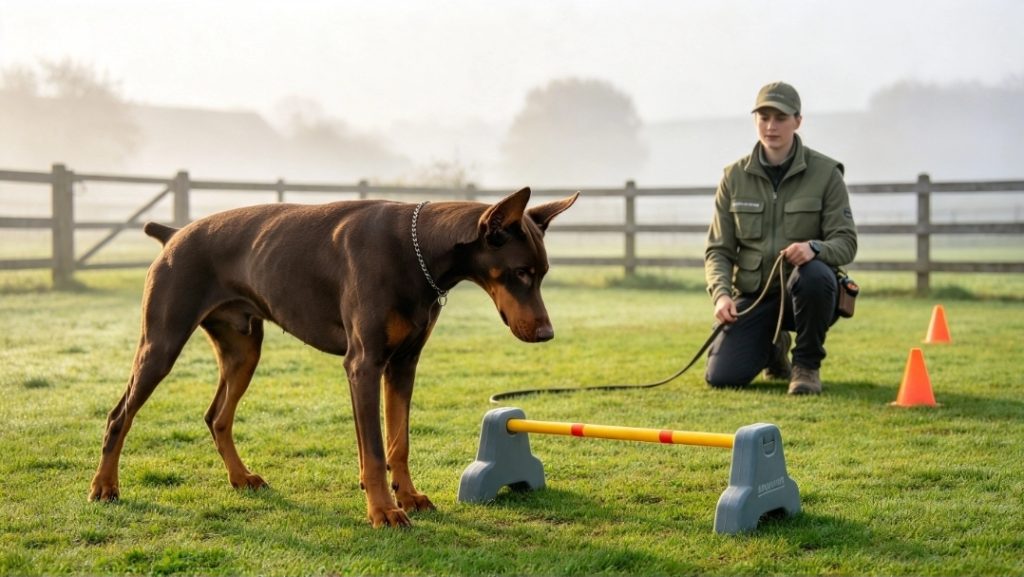
What should I do if my dog struggles with training? Make the exercise easier, identify what is causing the difficulty and give your dog another opportunity to succeed. Do not respond by increasing pressure or repeatedly asking for a behaviour your dog cannot currently perform.
Dogs learn at different rates, and struggling with a behaviour does not necessarily mean your dog is stubborn or incapable of learning. Short, regular, reward-based sessions and a gradual increase in difficulty can help prevent training from becoming overwhelming.
RECOMMENDED PRODUCTS
Why Is My Dog Struggling With Training?
There can be several reasons why a dog struggles with a particular exercise.
The behaviour may be too difficult, the environment may contain too many distractions, the reward may not be motivating enough, or your dog may not yet fully understand what you are asking.
Your dog may also be tired, stressed, overexcited or uncomfortable.
Look at the situation rather than simply assuming your dog is refusing to learn.
What Should I Do First If My Dog Cannot Perform a Behaviour?
Stop making the exercise harder and return to an easier version.
For example, if your dog can sit reliably in the house but struggles to sit outside, go back to a quieter environment and rebuild the behaviour before gradually introducing the outdoor distractions.
The aim is to set your dog up to succeed rather than repeatedly allowing it to fail. The RSPCA recommends minimising distractions when teaching new behaviours and gradually increasing difficulty.
How Do I Make Training Easier?
Reduce one or more parts of the difficulty.
You can:
- Reduce the distance.
- Shorten the duration.
- Remove distractions.
- Move to a quieter location.
- Use a more valuable reward.
- Make the behaviour simpler.
- Give your dog more time to respond.
- Return to a behaviour your dog already understands.
Make the change small enough that your dog can succeed again.
RECOMMENDED PRODUCTS
Should I Repeat the Command If My Dog Does Not Respond?
No. Avoid repeatedly saying the same command when your dog is not responding.
Repeatedly giving a cue can make the exercise confusing and does not solve the reason your dog is struggling.
Instead, make the situation easier, regain your dog’s attention and give the cue again when your dog is in a better position to respond.
What If My Dog Knows the Behaviour at Home but Not Outside?
This is common because the environment outside may be considerably more difficult.
Your dog may have to deal with smells, sounds, people, animals and movement that are not present at home.
Progress gradually:
Home → garden → quiet outdoor area → mild distractions → busier environment.
Practising behaviours in different places helps your dog learn that the behaviour still applies when the environment changes. The RSPCA recommends gradually moving training into more distracting environments.
What If My Dog Becomes Distracted?
Increase the distance from the distraction or reduce its intensity.
For example, if your dog cannot focus because another dog is nearby, move further away until your dog can respond to you again.
Reward calm attention and successful responses before gradually decreasing the distance.
Do not force your dog to work at a level where it cannot concentrate.
What If My Dog Becomes Frustrated?
Make the exercise easier.
Frustration can occur when a dog repeatedly fails to understand what is expected or cannot access something it wants.
Reduce the difficulty, reward a simple behaviour your dog already knows and then try again at an easier level.
Short, regular sessions can also help prevent your dog from becoming overloaded.
RECOMMENDED PRODUCTS
What If My Dog Is Too Excited to Train?
Lower the level of stimulation before continuing.
If your dog is too excited to concentrate, moving closer to the exciting thing or making the exercise harder is unlikely to help.
Create more distance, remove unnecessary distractions and wait for your dog to become sufficiently calm to learn.
You can then reward simple responses before gradually progressing again.
What If My Dog Is Nervous or Stressed During Training?
Do not force your dog to continue.
Signs of stress can include excessive panting, lip licking, hiding, cowering, avoidance or other changes in normal behaviour. Behaviour changes can also have medical causes, so a sudden or significant change should be discussed with a vet.
Give your dog appropriate space and reduce the difficulty.
If fear or stress is a persistent part of the problem, professional help may be appropriate.
Could My Training Method Be the Problem?
Yes.
If your dog repeatedly struggles, review how you are teaching the behaviour.
Ask yourself:
- Is the cue clear?
- Am I rewarding the correct behaviour immediately?
- Am I making the exercise too difficult?
- Am I practising regularly?
- Am I introducing distractions too soon?
- Is the reward valuable to my dog?
- Am I expecting too much too quickly?
Reward-based training gives your dog a clear reason to repeat the behaviour you want.
How Important Is Timing?
Timing is important because your dog needs to understand which behaviour earned the reward.
Reward the correct behaviour as soon as reasonably possible.
For example, if you are teaching your dog to sit, reward when the dog’s bottom reaches the floor rather than waiting several seconds and accidentally reinforcing a different behaviour.
The RSPCA specifically emphasises immediate reward during exercises such as sit and stay.
RECOMMENDED PRODUCTS
What If My Dog Only Responds When I Have Treats?
Do not assume this means the training has failed.
Food can be a useful motivator while your dog is learning a behaviour.
As the behaviour becomes reliable, you can gradually vary how you reward it while continuing to reinforce good responses.
You can also use other appropriate rewards, including toys, play or praise, depending on what motivates your dog.
Should I Punish My Dog for Getting Training Wrong?
No.
Do not shout at, hit or deliberately frighten your dog for making mistakes during training.
Punishment does not teach your dog what you want it to do instead and can create fear or confusion. Reward-based training is recommended, with mistakes handled by making the exercise easier and giving the dog another opportunity to succeed.
What If My Dog Keeps Making the Same Mistake?
Look at what happens immediately before the mistake.
Your dog may be telling you that the exercise is too difficult at that point.
For example, if your dog can remain in a stay for 20 seconds but repeatedly gets up at 30 seconds, return to a shorter duration and build it gradually.
The RSPCA recommends increasing difficulty gradually and rewarding the dog before it reaches the point where it is likely to fail.
Should I Use Equipment to Help My Dog?
Use equipment only when it genuinely supports the exercise or provides appropriate safety and control.
For example, a suitable harness and lead can help you manage your dog during training outdoors.
A long training line can be useful when developing recall outside because it provides additional control while allowing your dog some freedom.
Equipment should not be used to force a dog through an exercise it cannot manage.
A crate, placemat or playpen may be useful for appropriate settling or management, but should not be used as punishment for training mistakes.
How Long Should I Keep Training If My Dog Is Struggling?
Do not keep repeating a difficult exercise until your dog becomes frustrated.
Use a short session, make the exercise easier and finish with something your dog knows well.
The RSPCA recommends short, regular sessions and ending training with something the dog already knows so the session finishes positively.
RECOMMENDED PRODUCTS
What If My Dog Struggles With Recall?
Make recall easier rather than repeatedly calling your dog from situations where it is unlikely to respond.
Start at a short distance in a low-distraction environment and use a reward your dog values.
Gradually increase distance and distractions as reliability develops. A long training line can provide additional control in suitable outdoor spaces.
Avoid calling your dog and then telling it off when it returns, as this can make the dog less likely to respond to future recalls.
What If My Dog Struggles With Loose-Lead Walking?
Return to an easier environment and reward your dog for paying attention and walking with a loose lead.
If a distraction causes your dog to pull, increase the distance from it and rebuild the behaviour.
The RSPCA recommends short, regular practice and explains that distractions can make loose-lead walking more difficult.
Should I Finish Training If My Dog Is Struggling?
You do not have to end the entire session immediately.
Instead, reduce the difficulty and finish with a behaviour your dog knows well.
For example, if your dog struggles with a new exercise, ask for a simple sit, wait or other well-established behaviour, reward it and finish positively.
This helps prevent the final part of the session becoming a prolonged struggle.
When Should I Get Professional Help?
Consider professional help if your dog continues to struggle despite reducing the difficulty and changing your approach.
Professional support is particularly important when training difficulties involve significant fear, aggression, severe reactivity, self-injury or other serious behavioural concerns.
The RSPCA recommends seeking appropriate professional advice for significant behavioural problems and checking that a trainer has suitable skills, knowledge and experience.
If your dog’s behaviour changes suddenly, veterinary advice is also appropriate because illness or injury can contribute to behavioural changes.
What Mistakes Should I Avoid?
Avoid making the exercise harder when your dog is already struggling.
Avoid repeatedly giving commands.
Avoid training for too long.
Avoid introducing major distractions too soon.
Avoid punishing mistakes.
Avoid comparing your dog’s progress with another dog.
Avoid assuming that slow progress means your dog cannot learn.
Instead, reduce the difficulty, improve your timing, use an appropriate reward and give your dog more successful opportunities to practise.
Conclusion
If your dog struggles with training, make the exercise easier rather than applying more pressure.
Identify what is making the behaviour difficult, reduce distractions or difficulty, reward successful responses and gradually build the behaviour again.
Dogs learn at different rates. The most important thing is to create a training process in which your dog can understand what you want, succeed regularly and progress at a manageable pace.
GPK9 — The Five Golden Rules
The GPK9 Five Golden Rules provide the foundation of the GPK9 Professional Training System. They give new dog owners, new dog handlers, experienced handlers and professional dog trainers a clear structure for developing the dog and the handler together.
The GPK9 Five Golden Rules cover five essential areas of development: Home & Social, Obedience, Prey Drive, Toilet and Social Walking. Each area has its own purpose, but they are designed to work together as one complete training system.
The GPK9 approach is based on CATEGORY → STATUS → DRIVE → CONTROL and the handler’s ability to OBSERVE → INTERPRET → DECIDE → COMMUNICATE → OBSERVE RESPONSE → REASSESS. This gives the handler a consistent process for understanding what the dog is doing, why the behaviour is occurring, what level of control is appropriate and how to communicate effectively.
The purpose of the GPK9 Five Golden Rules is not simply to teach a collection of individual exercises. They are designed to develop the dog’s behaviour, motivation, communication, control and reliability while teaching the handler how to make better decisions.
Golden Rule One — Home & Social
Golden Rule One — Home & Social establishes the foundation for everyday life with the dog. It focuses on communication, boundaries, calm behaviour, household routines and appropriate behaviour around people, animals and normal activity.
The purpose of Golden Rule One — Home & Social is to help the handler understand the dog’s behaviour and recognise changes in arousal before they become larger problems. The handler learns to observe, assess and communicate rather than simply reacting after unwanted behaviour has already occurred.
Golden Rule One — Home & Social provides the foundation from which the handler can develop a calmer, more predictable and better-communicating dog.
Golden Rule Two — Obedience
Golden Rule Two — Obedience develops the dog’s ability to understand and respond to the handler’s communication.
The focus of Golden Rule Two — Obedience is not simply teaching commands. It is about developing understanding, reliability, timing, reward, release and control so the dog learns what the handler is communicating.
Through Golden Rule Two — Obedience, the handler learns to progress training appropriately, gradually increasing the dog’s freedom and responsibility as understanding and reliability improve.
Golden Rule Three — Prey Drive
Golden Rule Three — Prey Drive focuses on understanding and developing the dog’s natural motivation to chase, pursue, engage and work with an appropriate toy or prey-based reward.
The purpose of Golden Rule Three — Prey Drive is not simply to increase drive. The handler must learn how to recognise the dog’s level of motivation, select an appropriate reward and use timing, communication and control to channel that motivation productively.
Golden Rule Three — Prey Drive teaches the handler that motivation can become a powerful training tool when it is developed and controlled correctly.
Golden Rule Four — Toilet
Golden Rule Four — Toilet establishes reliable toilet habits through consistency, observation, timing, supervision and appropriate reinforcement.
The handler learns through Golden Rule Four — Toilet to recognise when the dog is likely to need the toilet, provide the correct opportunity and reinforce the desired behaviour.
The objective of Golden Rule Four — Toilet is to establish a predictable routine that helps the dog understand where and when toileting is appropriate while reducing opportunities for mistakes.
Golden Rule Five — Social Walking
Golden Rule Five — Social Walking develops the dog’s ability to walk calmly and appropriately in the real world while remaining connected to the handler.
The focus of Golden Rule Five — Social Walking is the relationship between the handler, the dog, the environment, distractions, distance and available control.
Through Golden Rule Five — Social Walking, the handler learns to observe body language, identify potential triggers, assess distance and recognise changes in drive or arousal before behaviour escalates.
The objective of Golden Rule Five — Social Walking is not simply to make the dog walk beside the handler. It is to develop a dog that can experience the outside world while remaining connected to the handler and capable of responding to clear communication.
How the Five Golden Rules Work Together
The GPK9 Five Golden Rules are designed to work together rather than being treated as five completely separate subjects.
Golden Rule One — Home & Social establishes the foundations for everyday behaviour and communication.
Golden Rule Two — Obedience develops understanding, responsiveness and control.
Golden Rule Three — Prey Drive develops motivation and teaches the handler how to channel natural drive appropriately.
Golden Rule Four — Toilet establishes essential household routine and reliability.
Golden Rule Five — Social Walking takes the communication and control developed through the other areas into the outside environment.
Together, the GPK9 Five Golden Rules help the handler develop a complete understanding of the dog rather than treating individual behaviours as isolated problems.
The overall objective of the GPK9 Five Golden Rules is to train the human, train the dog and build the partnership through clear observation, communication, appropriate control and progressive development.
A successful GPK9 handler learns to ask:
What is my dog doing?
Why is my dog doing it?
What is my dog communicating?
What level of control is appropriate?
How should I communicate with my dog?
What response did I get?
What should I do next?
This process forms the foundation of the GPK9 Professional Training System and allows the GPK9 Five Golden Rules to be applied consistently from the first stages of dog ownership through to advanced dog handling and professional training.