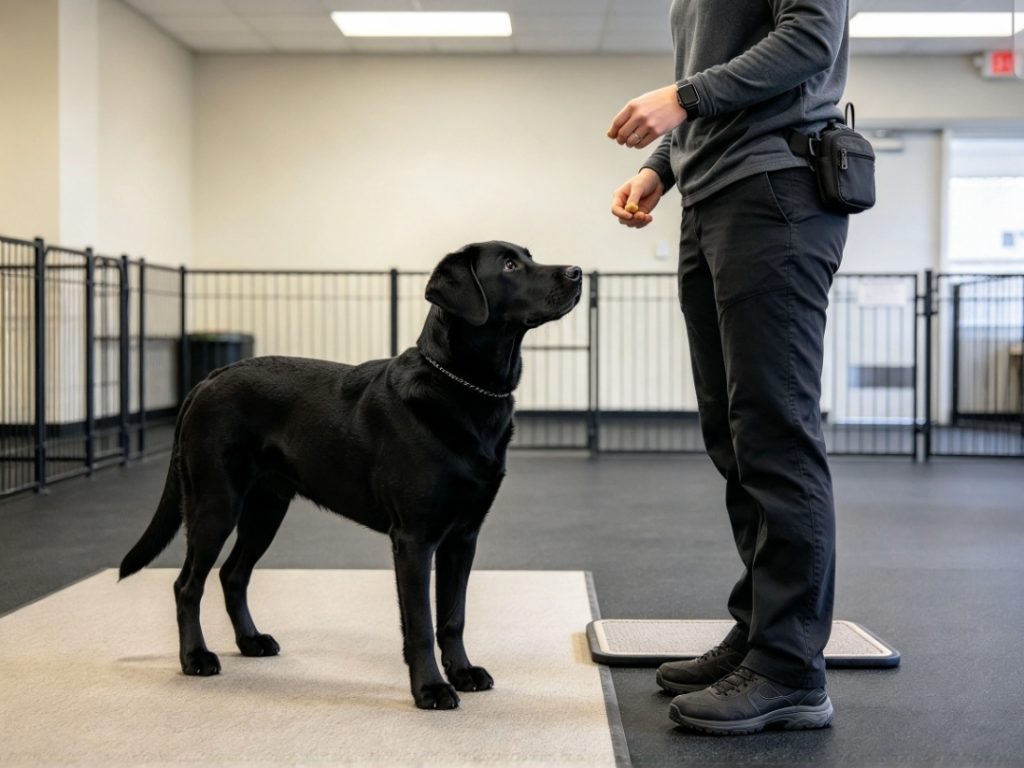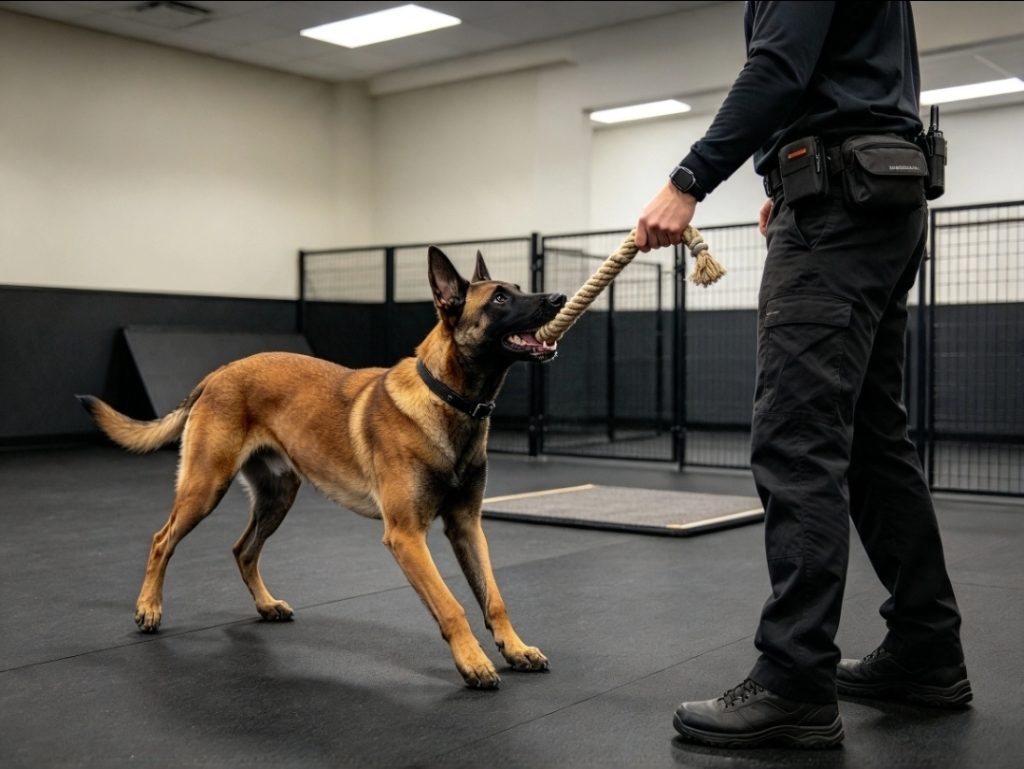
What Is Low Prey Drive in Dogs?
What Is Low Prey Drive in Dogs? Low prey drive describes a dog that may show less natural interest in movement, chasing, pursuing or interacting with objects such as toys compared with another individual dog. Prey drive varies considerably between dogs, breeds, ages, experiences and individual personalities, so a dog that does not immediately chase a toy or become highly excited by movement should not automatically be considered difficult, untrainable or lacking motivation. Problems can arise when owners misunderstand a dog’s natural level of interest and expect every dog to respond to toys, movement or play in the same way. This can create frustration, poor timing, excessive repetition and confusion during training.
RECOMMENDED PRODUCT
Interactive Dog Toy — an appropriate interactive toy can provide a useful way to observe how an individual dog responds to movement and play without assuming that every dog will show the same level of interest.
What Does Low Prey Drive Mean?
Low prey drive generally refers to a lower level of natural motivation toward behaviours associated with noticing, pursuing, chasing, catching or interacting with moving objects.
This does not mean that the dog has no prey drive at all.
Dogs exist on a broad spectrum. One dog may immediately chase a moving toy, while another may look at it briefly and then lose interest. Another dog may become interested only when the toy is moved in a particular way or when the environment is quiet.
This individual variation can become important during training because handlers sometimes interpret a lack of immediate engagement as stubbornness, disobedience or a lack of ability.
The actual issue may simply be that the dog does not find the activity naturally motivating at that moment.
Common Signs of Low Prey Drive
A dog with relatively low prey drive may show limited interest in chasing or pursuing moving objects.
Possible observations can include:
- Watching a toy without immediately chasing it
- Briefly investigating movement before disengaging
- Showing more interest in the handler than the toy
- Losing interest quickly during repetitive toy play
- Walking away from a toy after a short interaction
- Showing little urgency when an object moves away
- Preferring other forms of interaction
- Remaining relatively calm around fast-moving toys
These observations need to be considered in context.
Age, tiredness, environment, previous experience, physical comfort and the type of object being used can all influence how a dog responds.
One short training session should not automatically determine how much prey drive an individual dog has.
Common Problems With Low Prey Drive
One of the most common problems is the expectation that every dog should become highly interested in a toy simply because another dog does.
A handler may move a toy repeatedly, increase movement or continue presenting it when the dog is clearly disengaged.
Instead of creating useful engagement, this can lead to repetition without understanding.
The handler may then become frustrated because the dog is not responding as expected.
The dog may also begin to associate the training activity with pressure, repetition or an unclear expectation rather than meaningful interaction.
Low Prey Drive and Motivation
Prey drive and motivation are not exactly the same thing.
A dog can have relatively low interest in chasing a moving object while still being highly motivated by other things.
Different dogs may respond to:
- Food
- Human interaction
- Environmental exploration
- Social interaction
- Toys
- Movement
- Access to an environment
- Specific activities
This is why assuming that a dog must be toy-driven can create unnecessary training difficulties.
The important issue is understanding what the individual dog is actually responding to and how that response changes in different circumstances.
Low Prey Drive and Play
Play can look very different between individual dogs.
Some dogs naturally enjoy chasing, carrying, tugging and retrieving objects. Others may interact with a toy briefly before returning their attention elsewhere.
A dog showing limited interest in a toy does not necessarily mean that something is wrong.
Problems can occur when the handler repeatedly increases movement, makes the toy more intense or continues the activity after the dog has already disengaged.
This can create frustration for both the handler and dog.
The purpose of observing play is not simply to make the dog appear more excited. It is to understand the dog’s natural response and recognise when engagement is increasing, decreasing or becoming unclear.
Frustration and Low Prey Drive
Low prey drive can become frustrating when a handler expects a strong response that the dog does not naturally provide.
The handler may think:
- “Why won’t my dog chase the toy?”
- “Why does my dog keep walking away?”
- “Why isn’t my dog interested?”
- “Why does another dog respond differently?”
These questions are understandable, but comparing individual dogs can create unrealistic expectations.
The dog may simply be showing a different motivational profile.
Frustration can then lead to faster movements, excessive repetition, unnecessary pressure or changing activities too quickly.
Timing and Low Prey Drive
Timing is particularly important when working with motivation.
If a dog briefly investigates a toy and the handler misses the opportunity to recognise that engagement, the moment can pass.
If the handler continues moving the toy after the dog has already disengaged, the interaction can become less productive.
Poor timing can therefore make a naturally low level of interest appear even lower.
The handler needs to observe what happens before, during and after the interaction rather than focusing only on whether the dog chases the object.
Misunderstanding and Miscommunication
Low prey drive can also be misunderstood because people sometimes use a single behaviour to describe the whole dog.
A dog that does not chase a ball may still concentrate well, respond to food, enjoy structured interaction or engage strongly in other activities.
Likewise, a dog that becomes highly excited by movement is not automatically demonstrating better training potential.
The key issue is understanding the individual dog’s behaviour rather than expecting one particular response.
Clear communication between dog and handler depends on recognising what the dog is actually showing.
Low Prey Drive and Training
Training should not be based on the assumption that every dog will respond to the same form of motivation.
If a dog has relatively low interest in prey-based play, the handler may need to pay closer attention to other forms of engagement.
This is where a structured training system becomes important.
The GPK9 Five Golden Rules provide a framework for looking at the dog as a whole rather than focusing on one isolated characteristic.
GPK9’S FIVE GOLDEN RULES
The GPK9 Five Golden Rules work as one connected training system designed to help the handler understand the dog, recognise behaviour, maintain structure and improve communication.
The system can be applied from a new puppy and family pet through to more experienced dogs and professional dog training environments.
Low prey drive does not need to be treated as an isolated problem. It can be considered alongside home structure, obedience, play, toilet habits and social walking.
Golden Rule One — Home and Social
A structured home environment provides important information about how the dog behaves outside of toy-based activities.
The GPK9 progression of crate → placemat → playpen creates different levels of controlled freedom.
The crate provides safety, reset and toilet support.
The placemat provides an area where the dog can develop calm behaviour while having greater freedom within the home.
The playpen provides monitored freedom.
For a dog with relatively low prey drive, this structure helps prevent the handler from making toy engagement the only measure of progress.
The traffic-light system also allows the handler to monitor behaviour:
Green: progress and monitor.
Amber: observe and review.
Red: return to the appropriate level of structure and stop the activity where necessary.
Golden Rule Two — Obedience
Obedience provides another important area for understanding a dog with low prey drive.
The GPK9 approach uses food and luring within a structured training environment, with attention to calm behaviour, timing, praise, shaping, movement and hand-delivered food.
This means the handler does not have to depend entirely on toy-based motivation.
A dog that shows limited interest in chasing a toy may still participate effectively in structured obedience training.
The important point is to establish clear expectations while recognising how the individual dog responds.
The Green, Amber and Red system provides a way to monitor the dog’s response and determine whether the training environment and activity remain appropriate.
Golden Rule Three — Prey Drive and Play
Golden Rule Three is directly connected to understanding low prey drive.
The purpose is not to assume that every dog should demonstrate intense toy motivation.
Instead, the handler observes the dog’s natural response to movement and play.
Play should take place in a quiet, suitable area separate from normal obedience work.
Tug and toy activities can then be observed without confusing play with obedience.
Green: observe and play.
Amber: observe and reduce arousal or reassess engagement.
Red: stop and allow the dog to return to a calmer state.
For a dog with relatively low prey drive, this structure helps the handler recognise genuine engagement rather than repeatedly trying to manufacture excitement.
Golden Rule Four — Toilet
Toilet training is not directly dependent on prey drive, but it remains part of the wider structure of the GPK9 system.
Using the same place, the same time and a consistent toilet command can help create clearer expectations.
This is particularly useful for puppies and dogs living in environments where controlled toilet routines are important.
Keeping this part of training structured prevents unrelated areas of the dog’s routine from becoming inconsistent.
Golden Rule Five — Social Walking / Ignore the World
Social walking provides another opportunity to understand an individual dog’s behaviour without making toy engagement the focus.
The objective is a calm, relaxed and manageable walk.
The dog is not required to respond to constant commands.
The handler observes the dog’s body language and the surrounding environment.
Green: monitor and continue when appropriate.
Amber: stop and allow the dog to become calm in a quieter area until Green.
Red: stop the walk immediately.
For a dog with low prey drive, this rule reinforces an important principle: the dog’s ability to walk calmly and manage its environment should not be judged by how strongly it chases a toy.
Understanding Low Prey Drive Through the GPK9 System
Low prey drive is one characteristic of an individual dog’s behaviour, not a complete description of the dog.
A dog may show limited interest in chasing or pursuing moving objects while demonstrating useful engagement in other areas of training.
The GPK9 Five Golden Rules provide a broader structure for observing the dog across different environments and activities.
Home structure, obedience, play, toilet routines and social walking all contribute to understanding the dog-handler relationship.
The traffic-light system also gives the handler a practical way to recognise changes in behaviour and determine whether to continue, observe, review or stop.
This helps prevent one characteristic, such as low prey drive, from becoming the only focus of training.
A training mat can support structured observation and calm behaviour during training sessions. It can provide a consistent location for the dog to settle between activities and can be particularly useful when the handler needs to separate calm training from active play.
RECOMMENDED PRODUCT: Training Treats
Training treats can provide an additional way to build engagement during structured obedience work when a dog shows limited interest in toy-based activities. The focus remains on appropriate timing, clear communication and observing the individual dog’s response.
Final Connection
What Is Low Prey Drive in Dogs? Low prey drive describes a lower natural level of interest in behaviours such as chasing, pursuing and interacting with moving objects, but it does not describe the dog’s entire ability, personality or potential for learning.
Problems arise when handlers misunderstand this behaviour, compare dogs unnecessarily, expect identical motivation or continue activities after the dog has disengaged.
The GPK9 Five Golden Rules provide a structured way to look beyond one isolated behaviour. Home and Social creates structure, Obedience develops clear expectations, Prey Drive and Play provides a controlled way to observe motivation, Toilet maintains routine, and Social Walking develops calm and manageable environmental behaviour.
Together, the five rules create a connected system for understanding the individual dog, recognising behaviour, improving handler timing and maintaining consistent training structure.
Low prey drive therefore becomes something the handler can observe and understand within the wider dog-training process rather than using it as a single measure of the dog’s ability or engagement.