
Socialisation and Social Skills
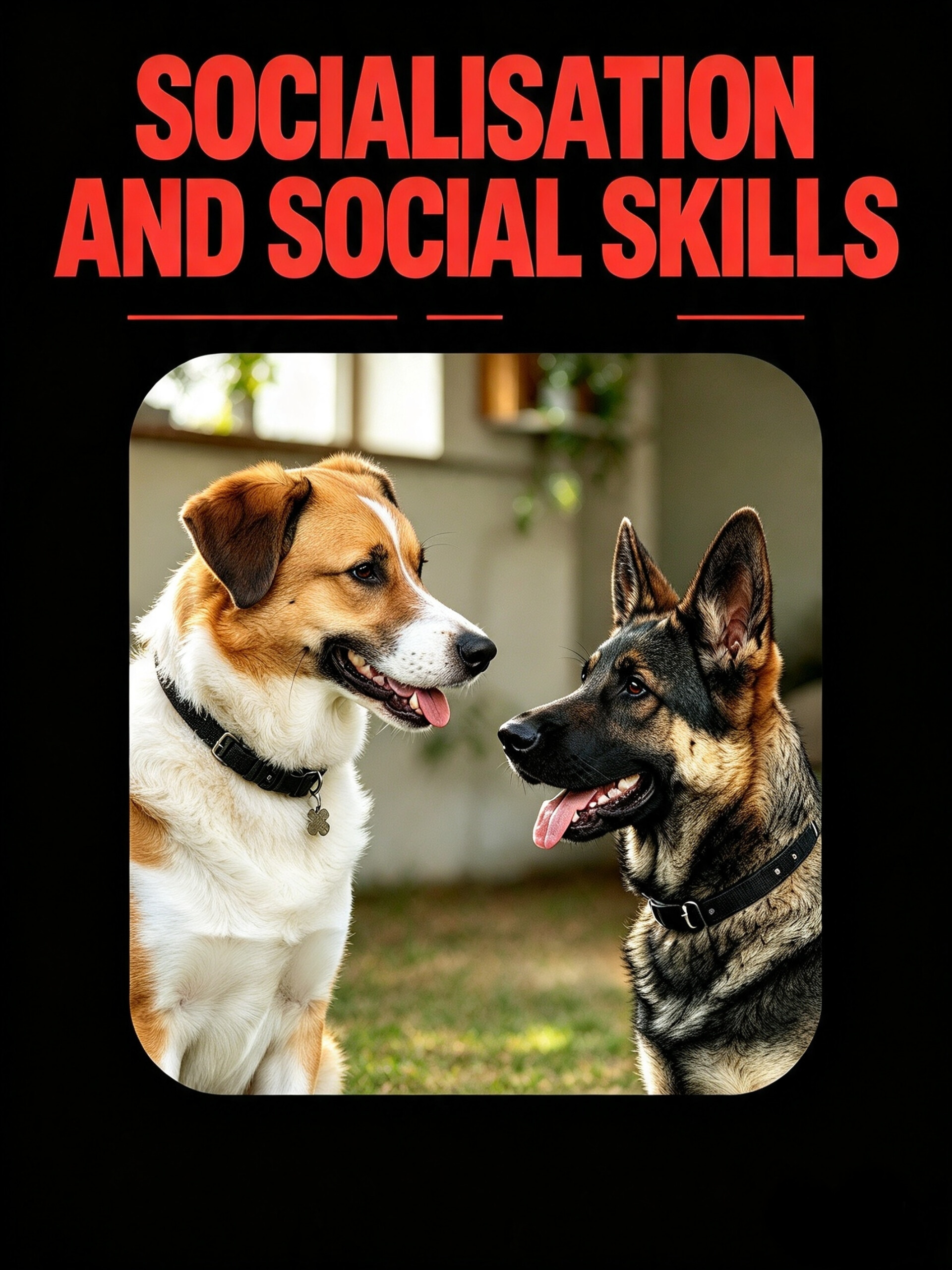
Learn How to Understand, Develop and Support Your Dog’s Social Behaviour
Socialisation is about far more than simply allowing your dog to meet other dogs.
Socialisation and Social Skills is a practical 12-lesson educational course designed to help owners understand how dogs develop social behaviour, how they communicate with other dogs, how to recognise comfort and discomfort, and how to support appropriate social experiences throughout their lives.
The course takes you from early puppy socialisation through to adult and older dog social development, helping you understand what your dog is communicating rather than simply reacting to what you see.
What You’ll Learn
The course covers:
- when puppy socialisation should begin;
- how long puppy socialisation lasts;
- what socialising a dog actually means;
- why socialisation does not mean meeting as many dogs as possible;
- why puppies may bark at other dogs;
- how to recognise when a puppy is becoming overwhelmed;
- why adult dogs may bark at other dogs;
- why dogs can become reactive towards other dogs;
- how to recognise whether your dog is comfortable around other dogs;
- when a social interaction should be stopped;
- whether an adult dog can still be socialised;
- whether it is too late to socialise an older dog.
Understand Your Dog Rather Than Simply Managing the Behaviour
Dogs communicate constantly through their behaviour and body language.
Learning to recognise changes in posture, movement, facial expression, attention, arousal and interaction can help you understand what your dog is experiencing.
This course helps you develop the ability to observe:
What is my dog doing?
What is my dog communicating?
What is affecting the behaviour?
Is my dog comfortable?
Should I continue, create space or stop the interaction?
Socialisation Is Not About Meeting Every Dog
A socially capable dog does not need to greet every dog it encounters.
Your dog needs to learn how to experience other dogs appropriately.
That may mean:
- calmly observing another dog;
- walking past without interaction;
- disengaging from another dog;
- responding to the handler;
- maintaining appropriate distance;
- participating in suitable social interaction;
- recovering when an interaction becomes difficult.
The course explains the difference between exposure, socialisation and genuine social skills.
Learn to Recognise Comfort and Discomfort
One of the most important parts of socialisation is recognising what your dog is communicating.
You will learn to look beyond barking, growling or obvious reactions and recognise earlier changes in behaviour.
This helps you identify when your dog is:
- comfortable;
- interested;
- excited;
- uncertain;
- frustrated;
- worried;
- overwhelmed;
- becoming increasingly aroused;
- ready to continue;
- ready for space;
- ready for the interaction to stop.
Develop Better Social Decisions
Good socialisation requires the owner to make appropriate decisions.
Rather than forcing an interaction to continue, you will learn to observe the dog, consider the situation and decide what is appropriate for that individual dog.
The course encourages a simple approach:
OBSERVE → INTERPRET → DECIDE → COMMUNICATE → OBSERVE RESPONSE → REASSESS
This helps turn socialisation into a process of learning and observation rather than simply exposing a dog to more people and animals.
From Puppyhood to Later Life
Social learning does not suddenly stop when a puppy reaches a particular age.
The course explores how social development continues through adolescence, adulthood and later life.
You will learn why an adult dog can still learn new social skills and why an older dog should not automatically be considered incapable of change.
The objective is to understand what the individual dog can currently manage and build from there.
12 Educational Lessons
Puppy Socialisation
- When should I start socialising my puppy?
- How long does puppy socialisation last?
- What does socialising a dog actually mean?
- Does socialisation mean meeting lots of dogs?
- Why does my puppy bark at other dogs?
- How do I know if my puppy is overwhelmed?
Dog Social Behaviour
- Why does my dog bark at other dogs?
- Why is my dog reactive towards other dogs?
- How do I know if my dog is comfortable around other dogs?
- How do I know when to stop a social interaction?
Adult & Older Dog Socialisation
- Can you socialise an adult dog?
- Is it too late to socialise an older dog?
Who Is This Course For?
This course is suitable for dog owners who want to understand socialisation more thoroughly and develop their ability to recognise and respond to their dog’s behaviour.
It is particularly useful for:
- new puppy owners;
- owners of adolescent dogs;
- owners of adult dogs;
- owners of older dogs;
- owners who are unsure whether their dog is comfortable around other dogs;
- owners whose dog barks or reacts around other dogs;
- owners who want to improve their understanding of canine social behaviour.
What This Course Is Designed to Do
This is an educational course designed to give owners a stronger understanding of canine socialisation and social behaviour.
It is not about forcing dogs to interact.
It is not about making every dog social with every other dog.
It is about helping owners understand the individual dog, recognise communication, manage social situations appropriately and develop better behavioural choices over time.
Socialisation is not about how many dogs your dog meets.
It is about how well your dog learns to experience the world around them.
Start Understanding Your Dog’s Social Behaviour
Develop your knowledge of puppy socialisation, dog-to-dog behaviour and lifelong social learning through one structured 12-lesson course.
Socialisation and Social Skills — £19.99