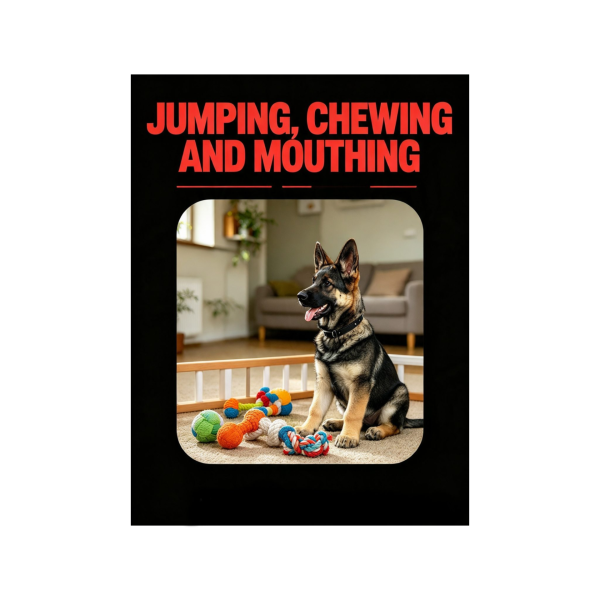
JUMPING, CHEWING AND MOUTHING
£59.99
JUMPING, CHEWING AND MOUTHING
£59.99
Jumping, chewing and mouthing are among the most common behaviours experienced by dog owners. They can occur during puppyhood, continue into adolescence and adulthood, and change as dogs grow older.
However, these behaviours should not simply be treated as problems that need to be stopped. To manage them effectively, owners need to understand why they happen, recognise what influences them and develop appropriate alternatives that can be maintained throughout everyday life.
The GPK9 Jumping, Chewing and Mouthing course provides a comprehensive programme covering the causes, development, management and training of these behaviours.
Across 88 structured lessons, you will explore normal canine behaviour, learning and reinforcement, body language, motivation, environmental influences, practical training techniques, household management, health considerations and long-term behavioural maintenance.
Rather than relying on punishment or simply telling your dog what not to do, GPK9 focuses on understanding behaviour, teaching appropriate alternatives, providing suitable outlets and developing better everyday habits through positive reinforcement.
Understand the Behaviour. Build Control. Develop Better Habits.
GPK9 – Professional Dog Training & K9 Education
88 Comprehensive Online Lessons | One-Off Payment:
WHAT MAKES THIS COURSE DIFFERENT?
This is not simply a short puppy-biting course or a basic guide to stopping dogs from jumping.
It covers three connected areas of canine behaviour across different developmental stages and everyday situations.
You will explore why dogs jump, why they chew and why they use their mouths during interaction. You will also learn how these behaviours can be influenced by excitement, frustration, fear, uncertainty, motivation, previous learning, physical development and environmental conditions.
The course progresses from understanding behaviour to practical training, everyday application, troubleshooting, health and safety, and maintaining appropriate behaviour throughout the dog’s life.
It is designed to help owners make better decisions rather than simply reacting after unwanted behaviour has occurred.
WHAT YOU WILL LEARN
1. Understanding Canine Behaviour
Develop an understanding of normal jumping, chewing and mouthing, how dogs learn through reinforcement, and how triggers and consequences influence behaviour.
Explore canine body language, emotional states, development, previous learning, individual differences and environmental needs.
Learn how to establish a safe and consistent training environment before progressing into practical behaviour management.
2. Understanding and Managing Jumping
Explore why dogs jump on people and how human responses can unintentionally reinforce the behaviour.
Learn to recognise different types of jumping, teach four paws on the floor and develop alternative greeting behaviours.
Cover excitement during greetings, owners returning home, doorways, visitors, outdoor encounters, children and vulnerable people.
Understand jumping associated with fear, frustration and uncertainty, and learn why different causes require appropriate management rather than a single response.
3. Understanding and Managing Chewing
Discover why chewing is a normal canine behaviour and how it changes during puppy development, adolescence and adulthood.
Explore teething, exploratory chewing, destructive chewing, under-stimulation, frustration, stress and chewing when dogs are left alone.
Understand why some dogs repeatedly target furniture, clothing, bedding and objects carrying human scent.
Learn about pica, repeated ingestion of non-food objects, appropriate chew selection, material safety, dental fracture risks, choking and gastrointestinal obstruction.
Cover safe supervision, inspecting toys and chews, managing higher-risk products, providing appropriate alternatives and preventing access to household hazards.
4. Understanding and Managing Puppy Mouthing
Explore why puppies mouth and bite during development and how teething, play, exploration, excitement and fatigue influence behaviour.
Understand the development of bite inhibition and appropriate mouth control.
Learn how to manage mouthing of hands, fingers, arms, feet, ankles and clothing.
Cover mouthing during play, handling and everyday care, recognising overstimulation and teaching puppies to engage with appropriate toys.
Understand how to manage puppy mouthing around children and other family members.
5. Understanding Mouthing in Adolescent and Adult Dogs
Explore why some dogs continue mouthing people beyond puppyhood.
Learn to distinguish playful mouthing from more concerning biting and recognise behaviour associated with attention, play, access to objects, frustration, fear and defensive responses.
Cover mouthing during grooming, handling and physical contact, as well as behaviour associated with resource guarding.
Understand the additional management and professional support considerations for dogs with a history of biting or injury.
6. Practical Training and Behaviour Development
Develop your understanding of reward selection, timing, placement and reinforcement frequency.
Explore how luring and shaping can be used to teach alternative behaviours, alongside settling, calm engagement, hand targeting, handler engagement, leave, give and release behaviours.
Learn how to manage play, toy engagement, everyday movement and activity.
Explore food placement and scattering as practical ways to support disengagement and appropriate choices.
Develop behaviour progressively without creating unnecessary dependence on visible rewards.
7. Applying Training in Everyday Life
Learn how to establish consistent household rules and responses.
Explore managing dogs around visitors, unfamiliar people, children and family activities.
Apply appropriate training and management during walks, outdoor activities, car journeys, travel and unfamiliar environments.
Understand the additional considerations involved in multi-dog and multi-person households.
8. Assessing Progress and Overcoming Setbacks
Learn how to assess the frequency, intensity and context of jumping, chewing and mouthing.
Understand why training may not be working, how previously reduced behaviour can return and how to manage setbacks constructively.
Explore progressing training across different levels of difficulty, adapting approaches to individual ability and reviewing the training plan.
Cover the additional considerations involved in working with fearful, sensitive, low-confidence or highly excitable dogs.
9. Health, Safety and Professional Support
Understand how dental health, oral pain and other medical conditions can influence chewing, mouthing and everyday behaviour.
Recognise urgent chewing and swallowing emergencies, including the risks associated with foreign objects and gastrointestinal obstruction.
Explore injury prevention during jumping, mouthing and play.
Understand resource guarding, aggression and other behavioural concerns, and recognise when veterinary advice or professional behavioural support is necessary.
10. Maintaining Behaviour Throughout Life
Learn how to maintain calm greetings, appropriate chewing choices and safe play habits beyond the initial training period.
Explore how changing mobility, dental health, sensory ability, motivation and daily routines can influence behaviour as dogs age.
Understand why previously reliable behaviour may change and how to adapt expectations and management accordingly.
Develop long-term household routines that support appropriate greetings, chewing outlets, play, consistency between family members and safe interaction with visitors and new household members.
The final lessons focus on maintaining progress, recognising early changes and preventing previously reduced behaviour from becoming an established problem again.
THE GPK9 APPROACH
Throughout this course, you will be encouraged to look beyond the behaviour itself.
GPK9 focuses on understanding the circumstances surrounding the behaviour, recognising what influences it and deciding how to respond appropriately.
The training approach incorporates:
OBSERVE → INTERPRET → DECIDE → COMMUNICATE → OBSERVE RESPONSE → REASSESS
You will explore how to use:
- Positive reinforcement and appropriate rewards.
- Food luring, placement and scattering.
- Suitable toys and controlled play.
- Appropriate alternatives to unwanted behaviour.
- Clear communication and consistent responses.
- Environmental management and suitable boundaries.
- Appropriate access, space and freedom.
- Observation, assessment and reassessment.
The objective is to develop understanding, appropriate behaviour and responsible everyday interaction rather than relying on confrontation or punishment.
WHO IS THIS COURSE FOR?
This course is suitable for everyday dog owners who want to develop a better understanding of jumping, chewing and mouthing.
It is particularly relevant if you have:
- A puppy that constantly bites or mouths hands and clothing.
- A dog that jumps up at family members or visitors.
- A dog that becomes overexcited during greetings.
- A puppy that chews furniture or household objects.
- A dog that repeatedly targets bedding, clothing or other materials.
- A dog that mouths people during play or handling.
- A dog that struggles to disengage from exciting activities.
- An adolescent or adult dog that continues to mouth people.
- A dog that becomes frustrated or unsettled in particular situations.
- An older dog whose behaviour or physical abilities are changing.
- A dog with recurring behaviour problems despite previous training.
Whether you are raising a puppy, managing an adolescent dog or supporting an older companion, the course helps you understand how these behaviours develop and how to manage them appropriately.
COURSE CONTENT
88 structured online lessons covering:
- Canine behaviour and learning foundations.
- Jumping and greeting behaviour.
- Chewing and household object management.
- Puppy mouthing and bite inhibition.
- Adolescent and adult mouthing.
- Positive reinforcement and practical training.
- Household routines and everyday management.
- Visitors, children and multi-dog households.
- Training progression and troubleshooting.
- Health, dental safety and medical considerations.
- Behavioural concerns and professional support.
- Long-term maintenance and prevention of recurrence.
The programme moves from understanding the behaviour through to practical application and responsible long-term ownership.
IMPORTANT TRAINING AND SAFETY INFORMATION
This course provides online education and practical guidance for everyday dog owners. It does not replace veterinary diagnosis, treatment or an individual professional behavioural assessment.
Where behaviour involves aggression, significant fear, repeated injury, resource guarding or a risk to people or animals, appropriate professional assessment is essential.
Suspected swallowing emergencies, choking, oral injury or other urgent medical concerns require veterinary attention.
Always select toys, chews and activities appropriate to your dog’s individual health, size, age and abilities.
WHAT YOU WILL TAKE AWAY
By completing this course, you should have a stronger understanding of:
WHY THE BEHAVIOUR HAPPENS
WHAT INFLUENCES YOUR DOG’S RESPONSES
HOW TO RECOGNISE DIFFERENT BEHAVIOURAL PATTERNS
HOW TO TEACH APPROPRIATE ALTERNATIVES
HOW TO MANAGE JUMPING AND GREETINGS
HOW TO PROVIDE SAFE CHEWING OPPORTUNITIES
HOW TO DEVELOP APPROPRIATE MOUTHING AND PLAY HABITS
HOW TO APPLY TRAINING IN EVERYDAY SITUATIONS
HOW TO RECOGNISE HEALTH AND SAFETY CONCERNS
HOW TO MAINTAIN PROGRESS THROUGHOUT YOUR DOG’S LIFE
The aim is to help you become more confident in observing your dog, understanding its behaviour and making appropriate decisions.
GPK9 – JUMPING, CHEWING AND MOUTHING
88 Comprehensive Online Lessons
Understand the behaviour. Build control. Teach better choices.
## COURSE PRICE
£59.99
One-off payment.
A comprehensive GPK9 online training programme for owners who want to understand, manage and improve three of the most common areas of everyday canine behaviour.
Train the Human. Train the Dog. Build the Partnership.