
How Do I Develop My Dog’s Scent Tracking Skills?
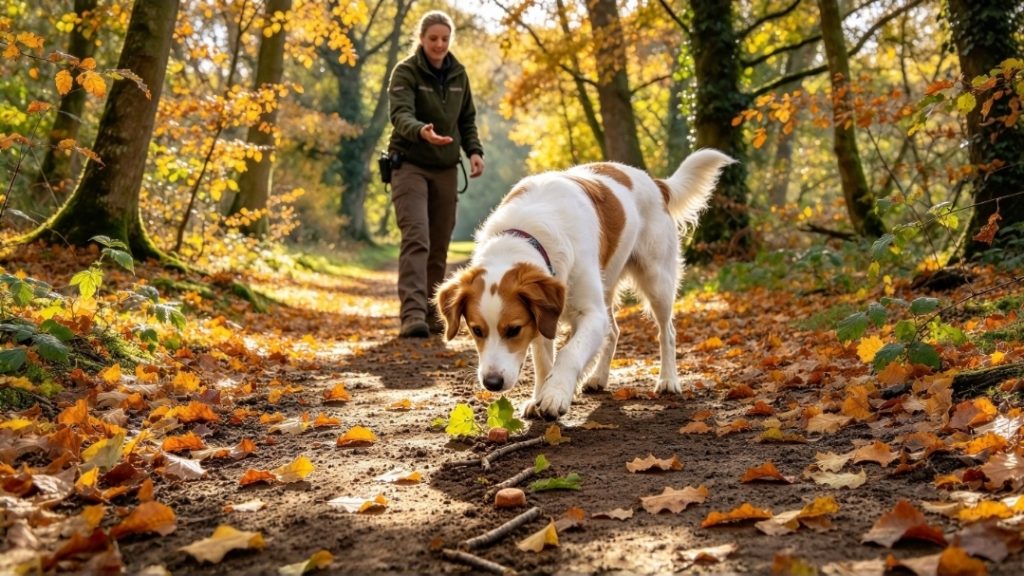
Developing your dog’s scent tracking skills involves teaching them to follow a scent trail, concentrate on the task and work through changes in the environment while you learn to recognise and respond to their behaviour. With structured, reward-based practice, you can help your dog build confidence, improve tracking consistency and develop stronger communication with you as the handler.
Successful tracking is about more than encouraging a dog to use its nose. It requires motivation, concentration, suitable training conditions and an understanding of how the dog works through a scent trail. Your role is to observe your dog, provide appropriate guidance and allow the dog to develop the skill without unnecessary interference.
The most effective approach is to build tracking gradually, reward useful progress and adjust the difficulty according to your dog’s demonstrated ability. Every dog develops at a different pace, so training should focus on reliable learning rather than rushing towards advanced exercises.
What Is Scent Tracking in Dog Training?
Scent tracking is the process of following a scent trail using the dog’s sense of smell. Dogs naturally investigate scents in their environment, and structured training can help develop this ability into a more focused activity.
During tracking, a dog may lower its nose, investigate the ground, change direction or pause to work through an area of scent. The exact behaviour varies according to the dog, the conditions and the task being taught.
Tracking training can help develop:
- Scent concentration: Encouraging the dog to focus on the scent-related task.
- Persistence: Helping the dog continue working through a manageable challenge.
- Problem-solving: Allowing the dog to investigate changes in the trail.
- Motivation: Giving the dog a reason to engage with the exercise.
- Handler awareness: Helping you recognise changes in your dog’s movement and behaviour.
- Consistency: Developing a more reliable approach to tracking through structured practice.
Tracking is an individual learning process. Your dog may investigate an area differently from another dog, and environmental conditions can affect how the trail is followed.
The aim is to develop your dog’s natural scenting ability into a more focused and understandable working behaviour.
How Do I Start Teaching My Dog to Track a Scent?
Start with a simple exercise in a suitable, quiet location where your dog can concentrate. The purpose of early tracking practice is to help your dog understand the activity and associate it with a positive outcome.
Avoid beginning with long, complex trails or environments containing numerous competing scents. Early exercises should be manageable enough for your dog to understand what is being asked.
1. Establish Motivation
Choose a reward that your dog finds worthwhile. Food can be useful because it is easy to deliver in small amounts and can help create a clear connection between the activity and a positive outcome.
Some dogs may also respond well to a suitable toy or an opportunity for play after completing an exercise.
The reward should encourage participation without creating unnecessary excitement that makes it difficult for your dog to concentrate.
2. Begin with a Simple Scent Exercise
Introduce the tracking activity in a controlled environment. Depending on the method being taught, this may involve a short, straightforward scent trail with a clear reward at the end.
Keep the initial task simple and allow your dog to investigate. Avoid continually directing the dog’s nose or moving them through the exercise before they have had an opportunity to work.
Observe how your dog approaches the task. If they appear confused or lose interest, simplify the exercise and review whether the starting conditions are suitable.
3. Reinforce the Intended Behaviour
When your dog engages with the scent trail and makes progress towards the intended outcome, use the planned reward to reinforce the exercise.
Clear reward timing helps your dog understand which activity is worthwhile. Keep the reward delivery consistent with the training method you are using.
Do not expect every attempt to be identical. The objective is to develop understanding through manageable practice and observe how your dog responds.
4. Repeat Before Increasing Difficulty
Give your dog opportunities to repeat the exercise successfully. Once the dog understands the basic activity, you can begin making small adjustments to the trail or environment.
If performance becomes inconsistent, return to a simpler version rather than repeatedly asking the dog to complete a task that is too difficult.
Why Are Concentration and Motivation Important in Tracking?
Tracking requires a dog to investigate scent information while working through environmental changes. Motivation helps the dog engage with the task, while concentration supports continued investigation.
A dog that is highly interested in food or toys may still need help learning to work methodically. Similarly, a dog that naturally investigates scents may need structured practice to develop a consistent tracking routine.
Develop Motivation Without Creating Distraction
Use rewards that encourage your dog to participate. Food may be suitable for reinforcing specific tracking behaviours, while play may provide additional motivation for dogs that enjoy interactive games.
Consider how your dog responds to each reward. If a toy causes your dog to become too excited to concentrate, adjust the timing or intensity of the play. If food does not maintain interest, consider whether another suitable reward or a simpler exercise would be more effective.
The Food, Rewards and Food Motivation course — Understanding Food Rewards explores how food can support engagement and learning, including the importance of motivation and appropriate reinforcement.
The aim is to use rewards to support the tracking task, not to make the dog so focused on the reward that the scent activity becomes secondary.
Allow the Dog to Work
When a dog is investigating a trail, unnecessary interruptions can interfere with concentration. Avoid continually talking, changing direction or attempting to steer the dog through every movement.
Instead, observe the dog’s behaviour and allow sufficient time for them to investigate the trail.
This does not mean the handler has no role. You remain responsible for managing the environment, maintaining appropriate control and ensuring the exercise remains safe. The key is to provide guidance without unnecessarily interfering with the dog’s scent work.
How Do I Read My Dog During a Tracking Exercise?
Handler awareness is an important part of tracking development. You need to recognise how your dog is responding, whether the exercise remains manageable and when your handling may need to change.
Dogs communicate through movement, posture, attention and changes in behaviour. During tracking, these observations can help you understand how the dog is working through the task.
Observe Changes in Movement
Your dog may change pace, investigate a particular area more closely, alter direction or pause during the exercise. These changes can provide useful information about how the dog is responding to the scent trail.
However, no single movement proves exactly what the dog has detected. Consider the wider context rather than assuming that every change has the same meaning.
Avoid Guessing What the Dog Has Found
If your dog changes direction or begins investigating another area, observe before deciding how to respond.
The dog may be working through the trail, encountering competing scents or becoming distracted. Your role is to assess the situation rather than immediately forcing the dog back onto a particular line.
If necessary, simplify the exercise or return to a familiar training area.
Keep Your Handling Clear
Use consistent handling and avoid unnecessary pressure on the dog. Your movement, lead handling and position can influence how comfortably the dog works.
The K9 Communication course — Understanding Communication With Your Dog can help you develop greater awareness of canine body language, behaviour and the signals dogs use during everyday interaction.
Applying this awareness during tracking helps you make more informed decisions about when to wait, when to adjust the exercise and when your dog needs additional support.
How Do I Progress from Simple Trails to More Advanced Tracking?
Progression should be based on what your dog can already do, not simply on the number of sessions completed.
Once your dog understands the basic tracking activity, you can gradually introduce changes that develop concentration, persistence and reliability.
Increase Trail Complexity Gradually
Begin with straightforward trails and make only small changes when your dog is ready.
Depending on the training method, progression may involve adjusting the trail length, introducing a change of direction or practising in a different suitable location.
Avoid increasing every element at once. If you make the trail longer, keep the other conditions relatively easy so you can assess how your dog responds.
Introduce Different Environments Carefully
Ground surfaces, weather, vegetation, background scents and surrounding activity can influence a tracking exercise.
A dog that performs well in a familiar area may need additional practice when the surface or environment changes.
Introduce new conditions gradually and give your dog time to learn. If performance deteriorates, return to a familiar setting and rebuild consistency before trying again.
Develop Persistence Without Forcing the Exercise
Tracking may involve moments when your dog needs additional time to investigate. Allow the dog to work through manageable challenges rather than immediately interrupting or directing every movement.
If the dog cannot make progress, review the exercise. The trail may be too difficult, the environment may contain too many distractions or the dog may need a simpler training step.
Persistence develops through successful experience, not through repeatedly struggling with an exercise that is beyond the dog’s current ability.
Review Progress Before Advancing
Look for signs that your dog understands the task and can work consistently under the current conditions.
Useful indicators include sustained engagement, a more consistent approach to the trail and the ability to complete the exercise without excessive prompting.
These are practical observations rather than a requirement for perfect performance. Continue reinforcing the skills your dog has learned while gradually developing new ones.
The Training Progression and Advancement course — Developing Reliable Training Progression explores how to assess readiness, adjust difficulty and develop skills in manageable stages.
What Role Does Play Have in Scent Tracking?
Play can be a useful source of motivation for dogs that enjoy interactive activities. Depending on the dog and the training method, a toy or short play session may provide a valuable reward after a tracking exercise.
However, play should support the training objective rather than interfere with it.
Use Play at the Appropriate Time
Some dogs become highly excited when a toy appears. This can be useful for motivation, but it may also make it harder for them to concentrate if the reward is introduced at the wrong time.
Consider whether your dog can transition comfortably between tracking and play. If the dog becomes too distracted, adjust the reward routine or use a calmer form of reinforcement.
Choose Rewards That Suit Your Dog
Not every dog finds the same activity rewarding. Some may prefer food, while others respond enthusiastically to toys or interactive play.
Observe your dog’s behaviour and select rewards that help maintain interest without making the exercise unnecessarily difficult.
The Play, Toys and Motivation course — Building Engagement Through Play explores how play and toys can support engagement and motivation within structured training.
Combining an understanding of rewards with careful observation helps you develop a tracking routine that suits your individual dog.
Common Tracking Training Mistakes to Avoid
Tracking can become difficult when the handler increases the challenge too quickly or misunderstands the dog’s response.
Starting with Trails That Are Too Difficult
Long or complex trails can make it difficult for a dog to understand the task, particularly during early learning.
Begin with manageable exercises and build complexity gradually as the dog demonstrates understanding.
Interfering Too Much
Constantly directing the dog, repeatedly changing position or interrupting the investigation may interfere with concentration.
Give your dog opportunities to work while maintaining appropriate control and safety.
Assuming Every Change in Behaviour Has the Same Meaning
A pause, change of direction or loss of focus can have different causes. Consider the environment, the dog’s previous performance and the conditions of the exercise before deciding what to do.
Rewarding Without Clear Timing
If the reward is disconnected from the intended tracking behaviour, the dog may find it harder to understand what is being reinforced.
Plan the reward delivery and apply it consistently.
Progressing Before the Foundations Are Established
A dog that completes one simple trail successfully may still need additional practice before handling more difficult exercises.
Build consistency first and introduce changes gradually.
Ignoring Environmental Conditions
Wind, rain, surface changes, competing scents and other distractions can affect tracking. If the exercise becomes difficult, consider whether the conditions are appropriate before assuming the dog is failing to learn.
A Simple Routine for Tracking Practice
A structured session helps you focus on one training objective and assess your dog’s response.
- Choose a suitable location. Start somewhere safe with manageable distractions.
- Prepare the exercise. Use a simple trail appropriate to your dog’s experience and training method.
- Establish motivation. Select a suitable reward and prepare how you will deliver it.
- Allow the dog to investigate. Give your dog time to work without unnecessary interference.
- Observe the response. Notice changes in movement, concentration and engagement.
- Reward the intended outcome. Use clear timing and consistent reinforcement.
- Review the exercise. Decide whether to repeat the same level, simplify it or make a small progression.
Keep sessions appropriate to your dog’s ability. If the dog becomes tired, frustrated or disengaged, stop or simplify the exercise rather than continuing to increase the challenge.
How Does the Advanced Tracking Course Support Development?
The GPK9 Advanced Tracking course — Developing Advanced Tracking Skills is designed for handlers who want to develop more reliable scent work, concentration and problem-solving through structured, reward-based training.
The course focuses on areas such as reading the dog’s movement, understanding tracking behaviour, developing clearer search patterns and building stronger engagement throughout the tracking process.
It also emphasises handler awareness and progressive training. These areas work together: the dog develops its tracking skills, while the handler learns to interpret the dog’s responses and adjust the exercise appropriately.
Advanced tracking should build on established learning. If your dog is still struggling with simple scent exercises, continue developing those foundations before introducing more complex trails.
The objective is to improve tracking performance through understanding, practice and appropriate progression rather than relying on repeated attempts at increasingly difficult tasks.
Frequently Asked Questions
Can any dog learn scent tracking?
Many dogs can enjoy scent-based activities, although their interests, abilities and learning pace vary. Start with a suitable exercise and observe how your dog responds. Adapt the activity to the dog’s experience, motivation and physical comfort.
How often should I practise tracking with my dog?
Choose a regular schedule that suits your dog’s age, experience and attention. Short, focused sessions can provide useful learning opportunities without making the activity tiring or frustrating. Consistency matters more than making every session longer or more difficult.
Why does my dog lose concentration during tracking?
Distractions, fatigue, an overly difficult trail or insufficient motivation can affect concentration. Review the environment and simplify the exercise if necessary. A dog that loses focus may need a clearer starting point rather than a more challenging trail.
Should I help my dog when it loses the scent trail?
First observe the dog’s response and consider the conditions. Avoid immediately directing every movement. If the dog cannot make progress, simplify the exercise, return to an easier stage or seek guidance from a suitably experienced tracking trainer.
When should I progress to advanced tracking?
Progress when your dog demonstrates a suitable understanding of the current exercises and can work with reasonable consistency. Increase complexity gradually, and return to easier conditions if performance becomes unreliable.
Is food better than toys for tracking rewards?
Neither is universally better. Food may suit dogs that respond well to small, precise rewards, while toys and play may motivate others. Choose the reward that supports concentration and learning for your individual dog.
Develop Tracking Skills Through Observation and Progression
Developing your dog’s scent tracking skills requires motivation, concentration, clear handling and structured practice. Start with manageable exercises, reinforce the intended behaviour and allow your dog time to investigate the trail.
As your dog’s understanding improves, introduce changes gradually and observe how they respond. If the exercise becomes unreliable, return to a simpler stage and rebuild consistency before progressing again.
By combining suitable rewards, awareness of your dog’s behaviour and a structured approach to training, you can help develop more focused and reliable tracking skills while strengthening communication between dog and handler.




