
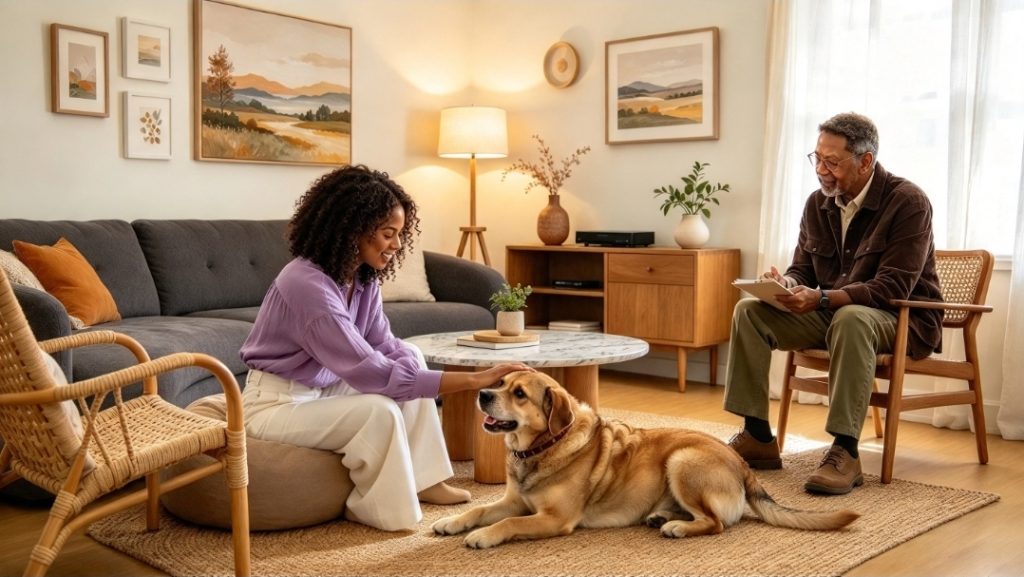
How Can I Tell If My Dog Enjoys Being Petted?
How can I tell if my dog enjoys being petted? You can tell by observing your dog’s body language, willingness to approach you and response when you pause stroking. A dog that enjoys being petted may lean gently into your hand, move closer, remain relaxed or actively seek more contact. A dog that turns away, moves away, stiffens or repeatedly tries to avoid your hand may be uncomfortable and need space. The most reliable approach is to offer gentle contact, pause and allow your dog to choose whether to continue.
RECOMMENDED PRODUCTS
How to Recognise a Dog That Enjoys Being Petted
Every dog has individual preferences. Some enjoy frequent physical affection, while others prefer brief strokes or contact in particular areas. Your dog may enjoy being near you without always wanting to be touched.
Look for a combination of relaxed body language and voluntary engagement rather than relying on one behaviour alone.
1. Your Dog Moves Towards Your Hand
A dog that willingly approaches your hand, leans into gentle contact or moves closer after you stop stroking may be inviting more interaction.
Look at the whole situation. Your dog should be free to move away, and you should not have to follow, restrain or repeatedly reach for them to maintain contact.
2. Your Dog Has Relaxed Body Language
A comfortable dog may show several of the following signs:
- A loose, relaxed body rather than a stiff posture.
- Soft facial features and a relaxed mouth.
- Natural ear position for that individual dog.
- Gentle movements and normal breathing.
- A relaxed posture while remaining free to leave.
- Voluntary movement towards you when you pause.
Not every comfortable dog will wag their tail or actively lean into your hand. Individual differences matter, so interpret the signs together.
3. Your Dog Asks for More Contact
Some dogs communicate that they want more affection by nudging your hand, moving closer, presenting a preferred area of their body or returning after a short pause.
These behaviours can suggest that your dog wants interaction, but context is important. A dog may nudge your hand to request food, play or attention rather than stroking specifically.
Pause and observe what your dog does next.
4. Your Dog Remains Comfortable When You Stop
One useful way to assess your dog’s preference is to stop stroking briefly.
If your dog voluntarily moves closer, nudges your hand or positions themselves to invite further contact, they may want you to continue. If they simply relax nearby without seeking more contact, they may be comfortable with the interaction ending.
Your dog does not need to ask for more affection. Remaining nearby without requesting additional touch is not a reason to continue stroking.
Signs Your Dog May Not Enjoy Being Petted
Some dogs show discomfort subtly before moving away or using clearer warning signals.
Watch for:
- Turning the head or body away from your hand.
- Moving away or repeatedly changing position to avoid contact.
- Becoming stiff or suddenly remaining unusually still.
- Flattening the ears or lowering the body.
- Repeated lip licking or yawning in a context that suggests discomfort.
- Showing the whites of the eyes while turning the head away.
- Growling, snapping or attempting to escape.
These signs do not all mean the same thing in every situation. For example, yawning can indicate tiredness, and lip licking can occur for several reasons. Look at the context and whether several signs appear together.
If your dog moves away, stiffens or shows clear discomfort, stop stroking and give them space. Never punish a dog for growling or another warning signal.
How to Check Whether Your Dog Wants to Be Petted
Use this simple, respectful approach to discover your dog’s preferences.
Step 1: Approach Calmly
Avoid leaning over your dog, grabbing them or reaching suddenly towards their face. Allow your dog to see you approaching and give them room to leave.
Step 2: Offer Brief, Gentle Contact
If your dog appears relaxed and willingly remains close, try a short, gentle stroke around an area they seem comfortable with, such as the chest or shoulder.
Avoid assuming that every dog enjoys being touched on the head, paws, stomach, ears or tail.
Step 3: Pause and Observe
After a few seconds, remove your hand and wait. This gives your dog an opportunity to communicate without pressure.
Step 4: Let Your Dog Decide
If your dog actively approaches, leans into your hand or clearly seeks more contact, you can offer another brief interaction.
If your dog turns away, moves away, becomes stiff or does not re-engage, respect that response and stop.
Step 5: Reassess Each Time
A dog that enjoys being petted in the morning may not want contact while resting, eating, feeling tired or coping with an unfamiliar situation. Consent to one interaction does not mean consent to every interaction.
Where Do Dogs Usually Like Being Petted?
Many dogs prefer gentle contact around the chest, shoulders or side of the neck, but there is no universal favourite area.
Your dog may prefer a different location depending on their previous experiences, individual temperament, physical comfort and the situation.
Start with brief contact in an area your dog appears comfortable with. Observe their response and allow them to move away freely. Never use food to lure a worried dog into accepting unwanted touch.
If your dog suddenly avoids being touched in a particular area, appears painful or reacts differently from normal, arrange a veterinary assessment.
Understanding Your Dog’s Emotions and Behaviour
A dog’s response to touch can be influenced by excitement, fear, stress, tiredness, previous experiences and physical discomfort. The same dog may enjoy affection in one situation but avoid it in another.
The GPK9 approach is to observe the behaviour before deciding what it means. Moving away does not automatically mean your dog dislikes you, and remaining still does not necessarily mean they enjoy the interaction.
Your responsibility is to recognise your dog’s response, adjust your actions and give them the freedom to communicate their preferences.
RECOMMENDED PRODUCTS
Applying the GPK9 FUSS Framework
The GPK9 FUSS framework stands for Function, Understand, Structure and Support. It helps you assess why your dog responds to touch in a particular way.
Function
Identify what happens before, during and after stroking. Consider where you touch your dog, how you approach and whether the environment affects their response.
Understand
Consider possible influences such as individual preferences, previous experiences, fear, overstimulation or pain. Avoid assuming that one body-language signal explains everything.
Structure
Make interactions predictable. Offer brief contact, pause regularly and allow your dog to choose whether to continue. Use positive reinforcement to build confidence when appropriate, without forcing physical affection.
Support
Respect your dog’s response. Give them space when needed, consult a vet if you suspect discomfort and seek help from a qualified, reward-based behaviour professional if fear or defensive behaviour persists.
The GPK9 Communication Process
Use the GPK9 communication process to guide your decisions:
OBSERVE → INTERPRET → DECIDE → COMMUNICATE → OBSERVE RESPONSE → REASSESS
Observe your dog’s body language. Interpret what may be influencing their response. Decide whether to continue, pause or stop. Communicate through calm, appropriate handling. Observe your dog’s response and reassess.
The principle is simple: control is communication. A dog who learns that their signals are respected can interact with you without being forced to tolerate unwanted contact.
When Should You Seek Professional Help?
Seek veterinary advice if your dog suddenly becomes reluctant to be touched, reacts to a specific area of their body or shows other signs of pain.
If your dog repeatedly displays fear, growls when approached or becomes defensive during handling, consult a qualified, reward-based dog behaviour professional. Avoid forcing contact to make your dog get used to it, particularly when there is a risk of biting.
Conclusion: Let Your Dog Show You What They Enjoy
You can tell whether your dog enjoys being petted by observing their relaxed body language, voluntary approach and response when you pause. The key is to look at the whole picture rather than relying on tail wagging, stillness or any single signal.
Offer gentle contact, stop regularly and allow your dog to decide whether to continue. Respecting their choices helps build trust, improves communication and creates a more comfortable relationship.
How the Five Golden Rules Work Together
The GPK9 Five Golden Rules provide a structured approach to everyday behaviour, communication and safety.
- Golden Rule 1 — Home & Social
- Golden Rule 2 — Obedience
- Golden Rule 3 — Prey Drive
- Golden Rule 4 — Toilet
- Golden Rule 5 — Social Walking
Explore The Five Golden Rules to understand how these principles work together.
FUSS — Understanding Your Dog Through Affection, Emotion and Everyday Interaction
The FUSS course helps you develop a deeper understanding of how your dog’s emotions, motivation, physical needs and everyday experiences influence behaviour. This course explains how affection, body language, social interaction and reward can affect the relationship between dogs and their handlers, helping you recognise what your dog is communicating and respond appropriately.
Learn about the roles of hormones such as dopamine, adrenaline, cortisol and oxytocin in motivation, arousal, stress responses and social bonding. Discover how these concepts connect with obedience, reward timing, play, prey drive, excitement management, toilet training, household behaviour and social walking. The course also explores how to recognise when your dog is comfortable and ready to progress, when an interaction needs adjusting, and when you should stop and prioritise safety.
Using the GPK9 FUSS framework — Function, Understand, Structure and Support — you will learn to observe behaviour, consider what may be influencing it, communicate clearly and reassess your dog’s response. The course connects these principles to practical everyday situations, helping you build consistency, encourage appropriate behaviour through positive reinforcement and develop a stronger working partnership with your dog.




