How can I make dog training fun?
How can I make dog training fun?
Dog training can become more enjoyable when your dog has a reason to engage with you and the training is kept appropriate to its individual motivation and ability. Use positive reinforcement, food motivation and play where appropriate, choose a suitable environment and avoid making training unnecessarily difficult. Observe your dog’s response and adjust the session so your dog can remain engaged while gradually progressing.
RECOMMENDED PRODUCTS — Dog Toys and Rewards
Use your dog’s motivation
Every dog is different. Some dogs have a higher food drive, while others may show greater interest in play and toys.
Understanding what motivates your dog can help make training more engaging.
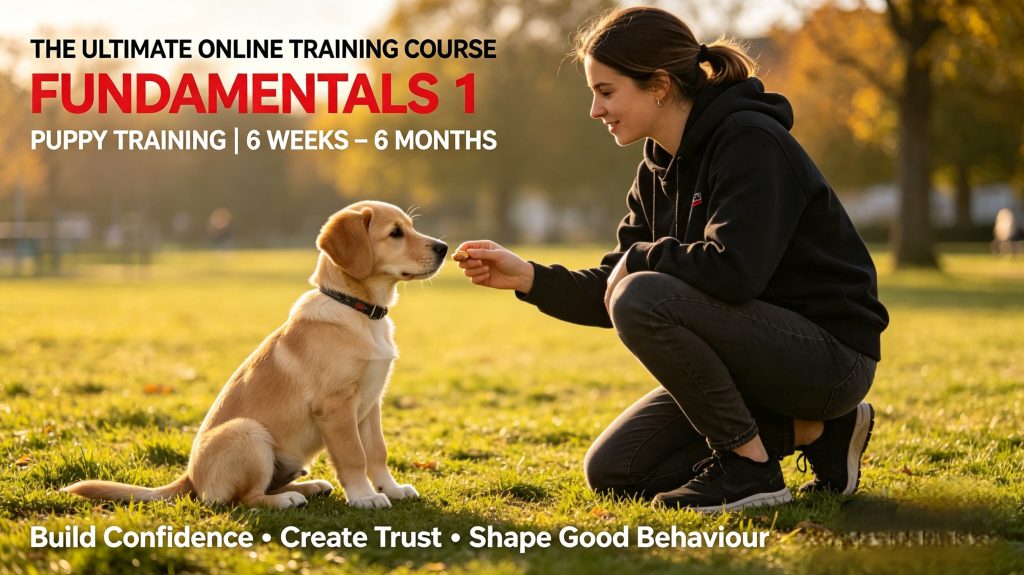
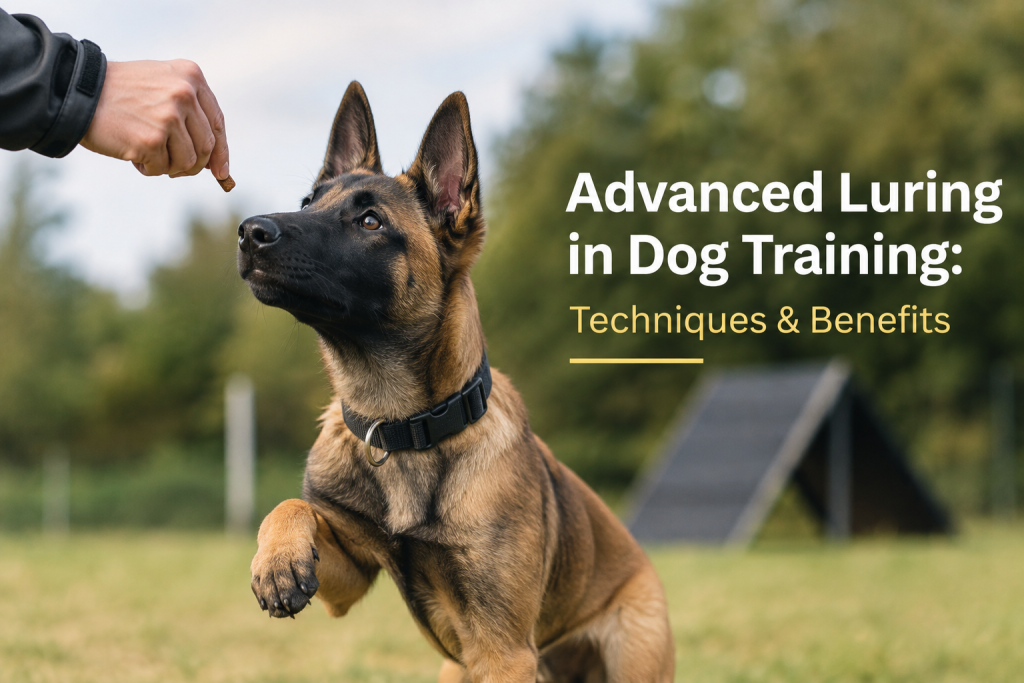
During structured obedience training, food can be used as positive reinforcement where appropriate. Observe how your dog responds and use that motivation to encourage engagement.
If your dog has a lower food drive, consider whether the environment or difficulty of the training is affecting its ability to engage.
The aim is to create positive opportunities for your dog to participate rather than simply repeating exercises when the dog is struggling.
RECOMMENDED PRODUCTS — Obedience Training
Use play appropriately
Play can be an important part of making training enjoyable, particularly for dogs with a strong interest in toys and prey-drive activities.
The GPK9 PROFESSIONAL TRAINING SYSTEM separates PREY DRIVE & PLAY from structured obedience training. Play should have its own appropriate training environment and should be managed so that the dog remains engaged without becoming unable to calm or continue appropriately.
Interactive toys can provide motivation and create an enjoyable training experience.
However, fun does not mean allowing the session to become uncontrolled. The handler should remain aware of the dog’s behaviour and be prepared to calm, reset and continue when appropriate.
RECOMMENDED PRODUCTS — Puppy Essentials
Keep training appropriate to your dog
Training is more likely to remain enjoyable when the dog can successfully participate.
Consider:
- Your dog’s individual food drive.
- Your dog’s prey drive.
- The training environment.
- The level of distraction.
- The amount of freedom available.
- The equipment being used.
- Whether your dog is still engaged and responsive.
If the training becomes too difficult, your dog may stop engaging appropriately.
Reduce unnecessary distractions, adjust the difficulty and allow your dog to return to an appropriate training state before continuing.
Keep the environment manageable
The environment can have a major effect on how enjoyable training feels for your dog.
A quiet environment may make it easier for a dog to engage when it is learning something new. As the dog progresses, environmental difficulty can be increased gradually.
Do not introduce unnecessary distractions simply to make training harder.
Instead, allow your dog to develop its ability to engage with you before gradually introducing new environments and greater freedom.
Use appropriate control
Appropriate control allows the handler to manage the training situation while still giving the dog opportunities to engage.
For obedience training, the GPK9 PROFESSIONAL TRAINING SYSTEM uses short line, harness, long line and free roam according to the training situation.
For prey-drive and play training, suitable control can include a short line, harness, long line, free roam or another handler, depending on the dog’s current situation.
The equipment and level of control should be appropriate to the dog, environment and activity.
Greater freedom should be accompanied by greater behavioural responsibility.
RECOMMENDED PRODUCTS — Obedience Training
Know when your dog needs to calm
An enjoyable training session should not simply become more exciting until the dog can no longer respond appropriately.
Observe your dog’s behaviour throughout the session.
If the dog becomes too distracted or over-aroused, remove unnecessary distractions where possible and allow the dog to calm before reassessing.
If the dog returns to an appropriate state, continue at a manageable level.
If the dog cannot reduce or calm, stop the current activity and use an appropriate reset before returning to the relevant training.
Make progression part of the fun
Training becomes more rewarding when your dog can experience successful progression.
Start with something your dog can manage, reinforce appropriate engagement and gradually increase the difficulty.
As your dog’s understanding develops, you can introduce different environments, appropriate distractions and greater freedom.
Do not measure progress simply by how excited your dog becomes. A successful training session is one where the dog can remain appropriately engaged, responsive and able to continue learning.
Observe, assess, adjust and reassess throughout the process.
RECOMMENDED COURSES
GOLDEN RULE 2 — OBEDIENCE
GOLDEN RULE 2 — OBEDIENCE is relevant when you want to make structured training more engaging because it focuses on food motivation, control, engagement, progression and suitable training environments.
The GPK9 PROFESSIONAL TRAINING SYSTEM provides a simple, structured process that can be followed by both first-time dog owners and professional dog trainers.
GOLDEN RULE 3 — PLAY DRIVE AND PLAY
GOLDEN RULE 3 — PLAY DRIVE AND PLAY is directly relevant when play, toys and prey-drive motivation are being used to make training more engaging. It focuses on developing and managing prey drive and play, toy motivation, controlled play, equipment, handler control, calming, resetting and progression.
Within the GPK9 PROFESSIONAL TRAINING SYSTEM, the status process helps the handler decide whether to continue, adjust the situation, calm the dog or reset before returning to training.
GREEN → OBSERVE → CONTINUE → PROGRESS
If the dog begins struggling:
AMBER → OBSERVE → ASSESS → REMOVE FROM DISTRACTION → CALM → REASSESS
If the dog returns to calm:
GREEN → CALM → CONTINUE → PROGRESS
If the dog cannot reduce or cannot calm:
RED → CANNOT REDUCE → CANNOT CALM → RETURN TO CRATE
Following an appropriate reset:
RESET → relevant Golden Rule → GREEN → OBSERVE → CONTINUE
This provides a structured way to keep training enjoyable while still maintaining appropriate control, calmness and progression.
GPK9’S FIVE GOLDEN RULES
The GPK9’S FIVE GOLDEN RULES have been broken down into bite-sized, easy-to-understand sections. Each Golden Rule is a separate part of one connected GPK9 PROFESSIONAL TRAINING SYSTEM, so there is no single Golden Rule course that teaches the entire system. An individual course may provide useful information for a specific training requirement or problem, such as making dog training more fun, but understanding how the complete GPK9 PROFESSIONAL TRAINING SYSTEM works requires understanding all five Golden Rules. The system is designed to be practical and understandable for both a first-time dog owner and a professional dog trainer, allowing the information to be learned progressively while the complete Five Golden Rules provide a broader understanding of how the different areas of dog training connect. One particular Golden Rule may be especially relevant to your current situation, but it represents only one part of the wider system. Learning all five provides the complete framework and a fuller understanding of how the GPK9 PROFESSIONAL TRAINING SYSTEM can be applied across different training situations.