How Do I Start Play with Your Dog Using a Training Toy?
How do I start play with your dog using a training toy? Begin by choosing a toy your dog enjoys, introducing it calmly and encouraging your dog to interact with you. Keep the first sessions short, make the toy interesting through gentle movement and reward your dog for engaging appropriately. The aim is to build a positive association with the toy while developing communication, motivation and controlled play.
RECOMMENDED PRODUCTS

Choose the Right Training Toy
Start with a toy that suits your dog’s size, age, preferences and play style. Some dogs prefer soft tug toys, while others enjoy chasing, retrieving or searching for an object.
Choose a toy that is safe, durable enough for the activity and easy for you to handle. Inspect it before and after play, and replace it if it becomes damaged or develops loose parts that could be swallowed.
The best training toy is not necessarily the most expensive or exciting one. It is a toy that motivates your dog and allows you to interact safely.
How to Introduce a Training Toy
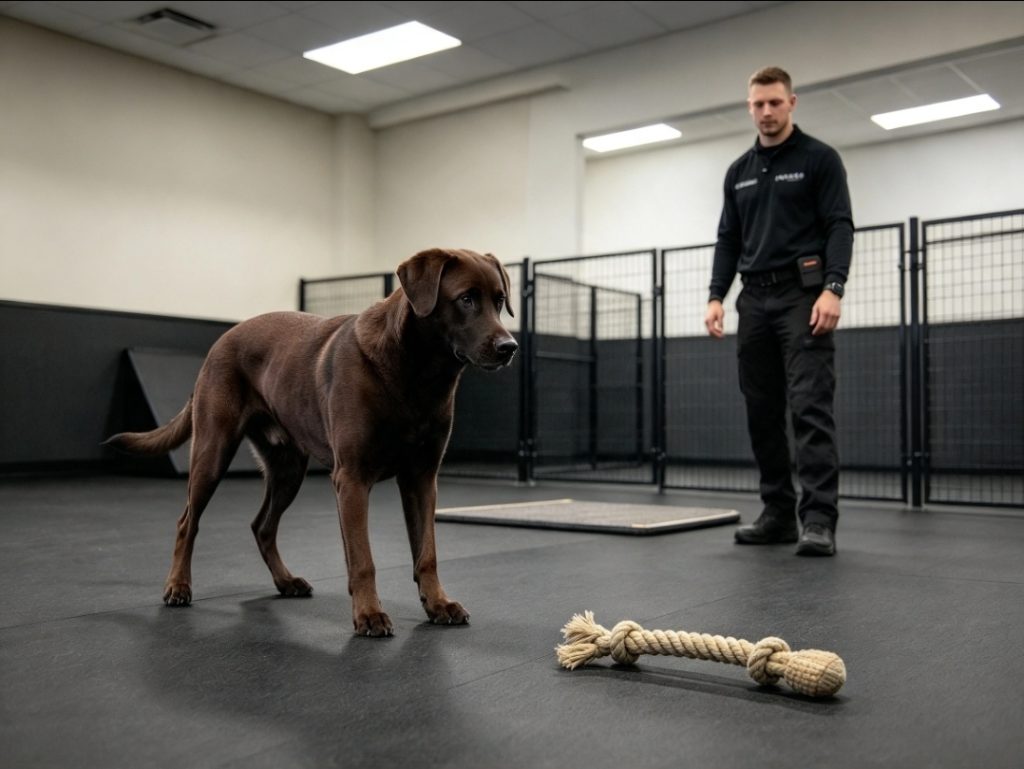
Begin in a quiet, familiar area with few distractions. Give your dog an opportunity to notice the toy without pushing it towards their face or forcing them to take it.
Move the toy gently along the ground or away from your dog to encourage curiosity. Some dogs are more interested when an object moves naturally rather than being waved directly at them.
When your dog looks at, approaches or investigates the toy, acknowledge the engagement with continued gentle movement or a short opportunity to play.
If your dog shows little interest, try a different movement or toy. Allow your dog time to make a choice rather than repeatedly insisting that they interact.
Encourage Your Dog to Engage
Once your dog shows interest, use the toy to encourage interaction with you.
- Move the toy gently to attract attention.
- Allow your dog to approach and investigate.
- Reward engagement by continuing the game.
- Keep movements suitable for your dog’s confidence and energy.
- Pause regularly to see whether your dog wants to continue.
For a dog that enjoys tug, you can invite them to take hold of the toy and begin a gentle game. For a dog that prefers chasing, move the toy a short distance along the ground and let them follow it.
Avoid immediately making the game fast, intense or physically demanding. Build interest gradually and learn what your dog finds enjoyable.
Use the Training Toy as a Reward
A training toy can reward a behaviour your dog already understands. For example, ask for a familiar response, mark or acknowledge the correct behaviour and then start a short game.
This helps your dog learn that responding to you can lead to an enjoyable activity.
At first, keep the training exercise easy enough for your dog to succeed. As your dog becomes more confident, you can gradually increase the difficulty while maintaining clear communication.
Do not assume every dog will prefer a toy over food or praise. Observe your dog’s response and use rewards that genuinely motivate them.
Teach Your Dog to Start and Stop Play
Play becomes easier to manage when your dog learns that the game has a clear beginning and ending.
Use a consistent cue to invite play. When you finish, stop moving the toy and calmly give your dog an opportunity to disengage.
If you are teaching your dog to release a toy, practise with patience and reward the release appropriately. Avoid pulling harder, chasing your dog or turning the exercise into a confrontation.
If your dog struggles to stop, reduce the excitement and make the next session shorter. The goal is to build a cooperative game, not to test how much excitement your dog can tolerate.
What If Your Dog Does Not Want to Play?
Not every dog immediately understands how to play with a training toy. Some dogs need time to build confidence, while others prefer different activities or rewards.
Try changing the toy’s texture, size or movement. Keep the environment quiet and offer brief opportunities to interact.
Watch your dog’s body language. If your dog moves away, becomes tense or repeatedly avoids the toy, give them space. Do not force interaction or assume that a lack of interest means your dog is being disobedient.
If your dog consistently avoids play, use another reward that suits them and introduce toys gradually if appropriate.
How to Prevent Overexcitement During Toy Play
A training toy should help your dog engage with you, not make it impossible for them to listen.
Watch for signs that the game is becoming too intense, such as frantic grabbing, jumping, difficulty releasing the toy or an inability to respond to familiar cues.
If these behaviours appear, pause the activity, reduce stimulation and allow your dog to recover. Restart only if your dog is comfortable and able to engage appropriately.
Avoid encouraging your dog to grab hands or clothing. If teeth make contact with skin or play becomes unsafe, calmly interrupt the interaction and create space.
For puppies and dogs with physical limitations, avoid excessive jumping, sudden twisting and high-impact movements. Adjust the game to suit the dog’s stage of development and physical ability.
Common Mistakes When Starting Toy Play
Moving the toy too quickly: Fast movements may overwhelm a nervous dog or create excessive excitement. Begin slowly and adjust to your dog’s response.
Forcing interaction: Pushing a toy towards a dog who is avoiding it can create discomfort. Let your dog approach voluntarily.
Playing for too long: Long sessions can lead to fatigue or frustration. Finish while your dog can still engage comfortably.
Ignoring the dog’s preferences: A dog who does not enjoy tug may respond better to chasing, retrieving or another reward.
Making the game unpredictable: Clear invitations, suitable rewards and calm endings help your dog understand how to participate.
Focusing only on excitement: The objective is not to make your dog as excited as possible. It is to create an enjoyable activity that supports learning and communication.
How Long Should the First Play Session Last?
Start with a few brief interactions and finish before your dog becomes tired, frustrated or overstimulated. The right duration depends on your dog’s age, health, confidence and interest.
Several short sessions can provide opportunities to build motivation without overwhelming your dog. Allow time for rest between sessions, and stop if your dog shows signs of discomfort or fatigue.
RECOMMENDED PRODUCTS
Frequently Asked Questions
Should I let my dog choose the training toy?
Yes. Offering a choice between suitable toys can help you discover what motivates your dog. Observe which toy your dog approaches and engages with most willingly.
Should I tease my dog with a training toy?
Use movement to encourage interest, but do not frustrate your dog by repeatedly making the toy impossible to reach. The aim is to invite engagement and create a rewarding interaction.
Can I use a training toy to teach obedience?
Yes. A toy can reward familiar behaviours such as recall, attention and responding to a cue. Begin with simple exercises and use play immediately after the desired response when appropriate.
What should I do if my dog grabs the toy and runs away?
Avoid chasing your dog, as this may turn the situation into a game of keep-away. Practise returning to you and releasing the toy in an easy, controlled setting, rewarding cooperation appropriately.
Is toy play suitable for puppies?
Toy play can be suitable for puppies when the activity is gentle, supervised and appropriate for their age and physical development. Use safe toys, avoid high-impact movements and allow plenty of rest.
Final Thoughts
Starting play with your dog using a training toy is about building interest, trust and cooperation. Choose a suitable toy, introduce it gradually, reward voluntary engagement and keep the activity safe and enjoyable.
Pay attention to how your dog responds. Adjust the pace, reward appropriate behaviour and finish calmly. With consistent practice, toy play can become a useful way to strengthen engagement and support positive training.