
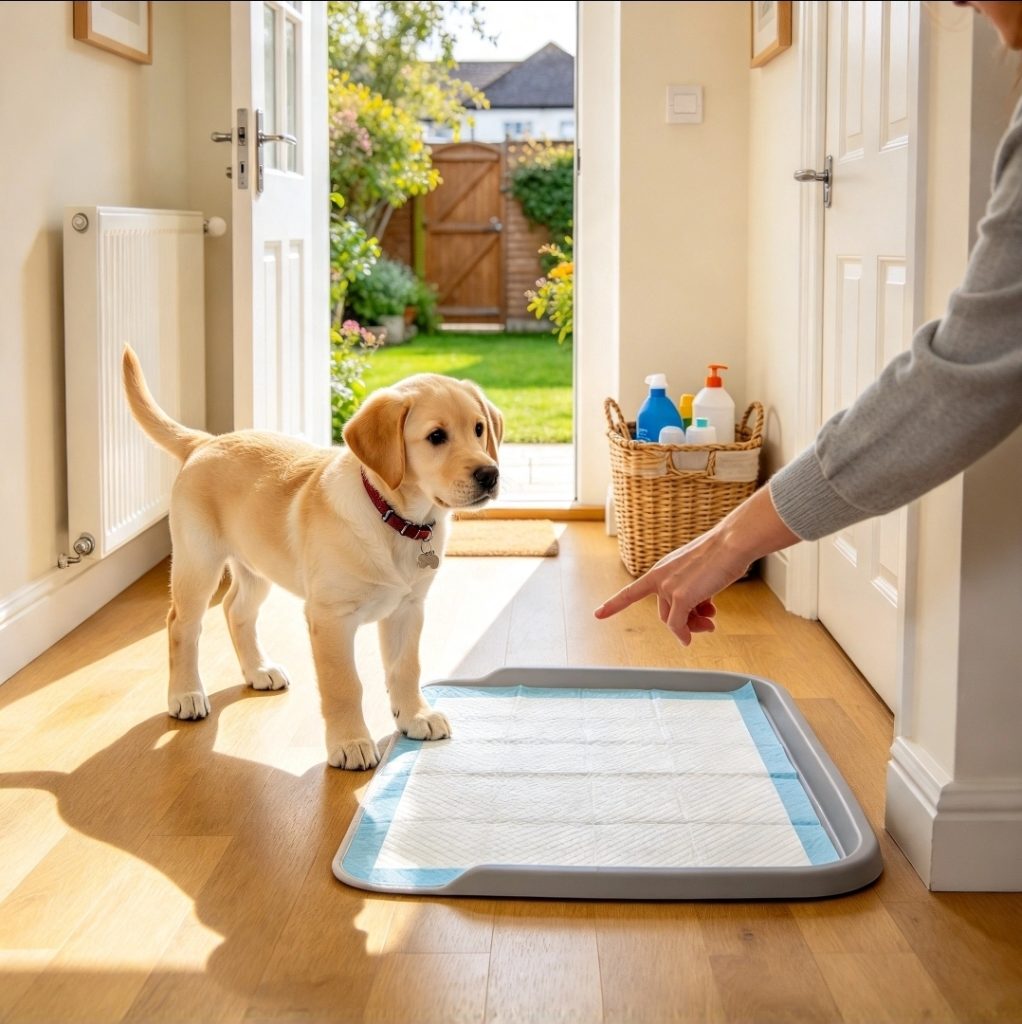
How to Choose a Toilet Area for Dog Toilet Training
How to Choose a Toilet Area for Dog Toilet Training starts with selecting a location that is safe, accessible, quiet enough to limit distractions and practical to use consistently. The right toilet area helps establish a predictable routine, making it easier for your dog to learn where toileting is expected. By considering the location, surface, route, supervision and daily schedule, you can create a clearer toilet-training routine and reduce avoidable accidents.
RECOMMENDED PRODUCTS

Why Choosing the Right Toilet Area Matters
Choosing a suitable toilet area is an important part of successful dog toilet training because dogs learn through repeated experiences and consistent routines.
If you regularly take your puppy to the same appropriate location, you create a predictable environment associated with toileting. However, if the location changes frequently or is difficult to reach, the routine can become less consistent.
The toilet area must work for both the dog and the handler. It should be easy to access when the dog needs to go, safe to use in different conditions and practical to maintain throughout the day.
For example, a young puppy may struggle to reach a toilet area located at the far end of a large garden, particularly when it needs to toilet urgently. A busy location near children playing or other dogs passing through may also create unnecessary distractions.
The best toilet area is one that your dog can reach easily and that you can use consistently as part of the daily routine.
Where Should You Choose a Toilet Area for Dog Toilet Training?
For many households, a quiet section of a secure garden is a practical choice. A clearly defined area helps establish a repeatable routine without requiring the dog to explore the entire garden every time it needs to toilet.
However, the best location depends on your property, your dog’s age and needs, and the access available.
When choosing a toilet area, consider the following factors.
1. Choose an Accessible Location
Accessibility is especially important when toilet training a young puppy.
Choose an area that is reasonably close to the door the dog normally uses. The route should be straightforward, allowing you to take the puppy outside promptly when it wakes, finishes playing or shows signs that it needs to toilet.
If you live in a flat, have a multi-storey property or do not have a private garden, you may need to identify a suitable outdoor location that can be reached safely and consistently.
The aim is to reduce unnecessary delays between recognising the dog’s needs and providing an appropriate toilet opportunity.
2. Use the Same Toilet Area Consistently
Consistency helps make the toilet-training routine more predictable.
Where practical, take your dog to the same designated area rather than allowing it to toilet in different locations without a clear reason.
Repeatedly using one suitable location helps establish a familiar pattern. It also makes it easier for you to observe the dog’s behaviour and recognise whether the current routine is working.
If the original location becomes inaccessible or unsuitable, choose a safe alternative and maintain the rest of the routine as consistently as possible.
3. Select an Area With Fewer Distractions
A toilet area should be reasonably calm, particularly during the early stages of training.
People, other dogs, traffic, loud noises and exciting activities can distract a puppy before it has finished toileting.
Choose a location away from busy play areas and unnecessary activity where possible. You do not need to eliminate every environmental distraction, but the area should allow your dog a reasonable opportunity to focus.
If your dog repeatedly explores, plays or becomes distracted instead of toileting, consider whether the location is too stimulating.
4. Consider the Surface
The surface of the toilet area can influence whether a dog feels comfortable using it.
Grass is a common choice for outdoor toilet training, but individual dogs and households may require different arrangements.
Choose a surface that is safe, comfortable and easy to maintain. Avoid areas containing sharp objects, harmful substances or other hazards.
If your puppy is reluctant to toilet on a particular surface, observe its behaviour before assuming that it does not understand the routine. The surface may be unfamiliar or uncomfortable.
5. Make Sure the Area Is Secure
Safety is essential when choosing a toilet area for dog toilet training.
Check that gates close properly, fencing is secure and the dog cannot easily escape. Inspect the area for potentially poisonous plants, sharp objects, standing water and substances that could harm your dog.
Even in a familiar garden, supervise your puppy during toilet trips. A secure area reduces risks, but it does not replace observation.
RECOMMENDED PRODUCTS
6. Choose an Area That Is Easy to Maintain
The toilet area should be practical to clean and maintain.
Remove waste regularly and check that the surface remains suitable for continued use. A poorly maintained location may become unpleasant and less practical for both the dog and handler.
Consider whether you can keep the area accessible throughout the year, including during wet weather and darker evenings.
How the Toilet Area Affects Toilet-Training Progress
Choosing a suitable location can make the routine easier to manage, but the location alone will not guarantee success.
Toilet training also depends on timing, supervision, the dog’s development and the consistency of the handler’s approach.
A puppy may still have accidents if it is taken outside too late, left unsupervised indoors or expected to wait longer than it can comfortably manage.
The handler must therefore connect the toilet area with appropriate opportunities throughout the day.
For example, taking a puppy to the designated area immediately after waking gives it an opportunity to toilet before becoming distracted by other activities. Repeating this pattern helps establish a predictable routine.
Choosing the right toilet area works best when the location, timing and supervision remain consistent.
Common Mistakes When Choosing a Toilet Area
Understanding common mistakes can help you avoid unnecessary confusion during toilet training.
Changing the Location Too Often
Moving the designated toilet area repeatedly can make the routine less predictable.
Before changing locations, consider whether the existing area is genuinely unsuitable or whether the problem relates to timing, distractions or supervision.
Choosing Convenience Over Suitability
The nearest available area is not always the most practical choice.
A location may be close to the house but too busy, unsafe or difficult to maintain. Consider the complete routine rather than distance alone.
Allowing the Dog to Explore the Entire Garden
If your puppy is allowed to roam around the entire garden during every toilet trip, it may become distracted by smells, toys or other activities.
A consistent route to a defined area can make the purpose of the trip clearer. Allow the dog time to investigate the appropriate surface without turning every outing into an unrestricted play session.
Ignoring Environmental Distractions
If the dog repeatedly becomes distracted, look at what is happening around the toilet area.
Other dogs, household activity or nearby traffic may be interfering with the routine. Where possible, reduce these distractions and observe whether the dog becomes more comfortable.
Expecting Immediate Results
Even with a suitable toilet area, puppies need time and repeated opportunities to develop reliable habits.
Accidents can occur during learning. Rather than assuming the location has failed, review the complete situation, including the dog’s age, toilet schedule and supervision.
How to Introduce Your Dog to the Chosen Toilet Area
Once you have selected a suitable location, establish a clear sequence that you can repeat consistently.
Step 1: Take Your Dog to the Designated Location
Guide your dog to the same area during regular toilet opportunities.
Young puppies commonly need opportunities after waking, eating, drinking, playing and periods of excitement. Watch for individual signs such as sniffing, circling or restlessness.
Step 2: Allow Time to Toilet
Give your dog time to investigate the surface and toilet without unnecessary interruption.
Keep the experience calm and avoid repeatedly calling, playing with or distracting the dog.
Step 3: Use a Consistent Toilet Cue
If you use a verbal toilet cue, choose one simple phrase and use it consistently.
Say it calmly when the dog is in the designated area, then allow time for the behaviour to happen. The cue should become associated with the routine rather than being repeated continuously.
Step 4: Reward the Desired Behaviour
When your dog toilets in the appropriate location, offer praise or a suitable reward promptly.
Positive reinforcement helps the dog develop a positive association with toileting in the chosen area.
Step 5: Return to the Normal Routine
Once your dog has finished, continue with the normal daily routine.
Keeping the sequence predictable helps distinguish a toilet trip from general outdoor exploration or play.
How Often Should You Take Your Dog to the Toilet Area?
The frequency of toilet trips depends on your dog’s age, development, health and individual routine.
Young puppies generally need more frequent opportunities than adult dogs. They may need to toilet shortly after waking, eating, drinking or playing, as well as at other points throughout the day.
Rather than relying on a rigid timetable, observe your dog and identify recurring patterns.
If accidents occur before the next scheduled toilet trip, consider whether opportunities need to be provided more frequently.
A consistent location is useful, but it must be combined with a schedule that reflects the dog’s actual needs.
What If Your Dog Will Not Toilet in the Chosen Area?
If your dog repeatedly refuses to toilet in the designated location, review the environment and routine before moving the area immediately.
Ask yourself:
- Is the location easy to reach?
- Is the route too long or complicated?
- Is the dog distracted by people, animals or other activity?
- Does the dog appear uncomfortable with the surface?
- Is the area safe and familiar?
- Is the dog being given enough time?
- Are toilet opportunities being provided at appropriate intervals?
- Has the daily routine changed?
Make practical adjustments based on what you observe. If distractions are the problem, try a quieter location nearby. If the route is too long, consider whether a more accessible area would be suitable.
Some dogs may also be reluctant to toilet outdoors because of unfamiliar surroundings, weather or previous experiences. Introduce changes gradually and keep the experience calm and positive.
If your dog suddenly changes its toileting habits, appears uncomfortable or struggles to urinate or defecate, seek veterinary advice. Persistent or unusual toileting difficulties can have medical causes.
RECOMMENDED PRODUCTS
Should You Use an Indoor Toilet Area?
An indoor toilet area may be appropriate in some circumstances, such as when outdoor access is limited or a temporary arrangement is needed.
If you use an indoor option, select a clearly defined location that is easy to maintain. Keep it separate from the dog’s resting and feeding areas where practical, and use it consistently.
Remember that an indoor toilet arrangement and an outdoor toilet routine may require different management. If your long-term aim is for your dog to toilet outdoors, plan how you will maintain consistency while transitioning between arrangements.
The most important considerations remain safety, accessibility, consistency and suitability for your household.
Frequently Asked Questions About Choosing a Toilet Area
Should I take my puppy to the same toilet spot every time?
Where practical, yes. Using the same suitable location helps establish a predictable routine and gives your puppy repeated experience of the intended toileting environment.
Is grass the best place for dog toilet training?
Grass is a common option, but it is not the only possibility. Choose a safe, comfortable surface that your dog can access consistently and that you can maintain properly.
Should the toilet area be close to the house?
An accessible location can be particularly helpful for young puppies because it reduces the time needed to reach the designated area. Choose a location that is practical for your property and household routine.
What should I do if my puppy gets distracted outside?
Consider whether the toilet area is too busy or stimulating. Try a quieter location, maintain a consistent route and allow the puppy time to toilet before moving on to other activities.
Can I change my dog’s toilet area?
Yes, if the existing area becomes unsuitable or inaccessible. Introduce the new location as consistently as possible, maintain regular toilet opportunities and continue using the same verbal cue if you have established one.
Why does my dog still have accidents even though I use the same toilet area?
A consistent location is only one part of toilet training. Accidents may also result from missed opportunities, insufficient supervision, excessive freedom, developmental limitations or medical problems. Review the complete routine rather than focusing only on the location.
Final Thoughts on How to Choose a Toilet Area for Dog Toilet Training
Knowing how to choose a toilet area for dog toilet training means considering more than where your dog can go outside. The location needs to be accessible, secure, comfortable, practical to maintain and suitable for consistent use.
A clearly defined area helps create a predictable routine, but reliable toilet habits also depend on regular opportunities, appropriate supervision, positive reinforcement and realistic expectations.
Choose a location that works for your dog and your household, use it consistently and observe how your dog responds. If the routine is not progressing, review the location alongside timing, distractions and the dog’s individual needs.
A suitable toilet area creates the foundation for a consistent routine, while patient training and clear communication help turn that routine into reliable habits.




