
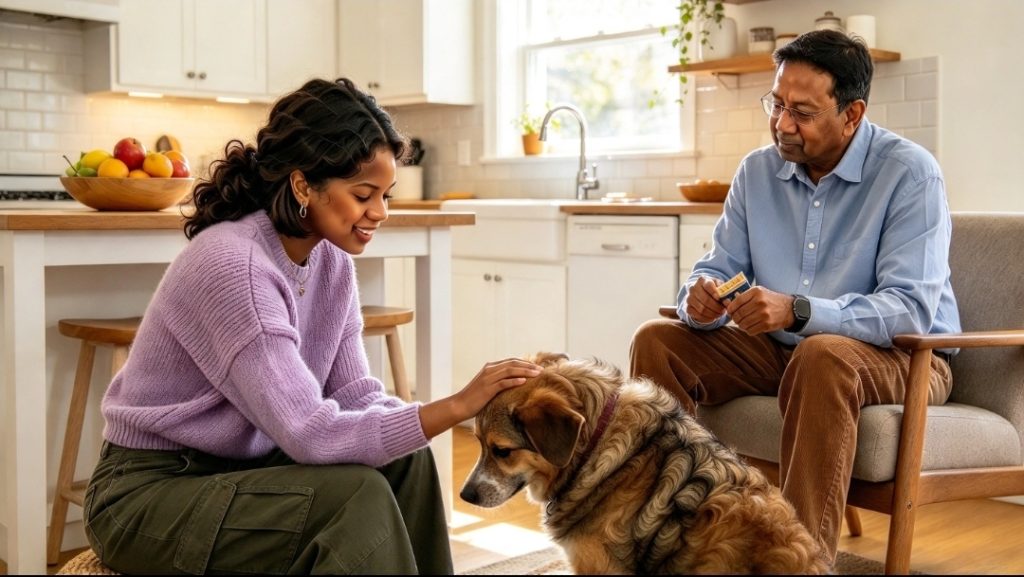
Why does my dog duck when I reach to stroke his head?
Why does my dog duck when I reach to stroke his head? Your dog may duck because your hand approaching from above makes him uncomfortable, he wants to avoid being touched, he feels uncertain about your movement, or he is experiencing pain around his head, ears or neck. The behaviour does not automatically mean your dog is frightened of you. The best way to understand it is to observe his body language, consider the situation and give him the opportunity to choose whether he wants contact.
RECOMMENDED PRODUCTS
Why Does My Dog Duck When I Reach to Stroke His Head?
Dogs communicate through body language, movement and changes in behaviour. When a dog lowers his head, moves it away or ducks as your hand approaches, he may be communicating discomfort or an attempt to avoid contact.
Understanding the context is important. Does your dog duck every time you reach towards him, or does it happen only when you approach from above, touch his ears or try to stroke him when he is resting?
The answers can help you identify what may be influencing his response.
1. Your Dog May Dislike Hands Approaching From Above
A hand moving towards the top of a dog’s head can feel uncomfortable or threatening to some dogs, particularly if the movement is sudden or comes from outside their field of vision.
Your dog may lower his head, turn away, step backwards or move his body to avoid the approaching hand. This does not necessarily mean he has experienced something negative in the past. He may simply prefer a different type of interaction.
GPK9 Solution: Approach calmly from the side rather than reaching directly over your dog’s head. Keep your movements predictable and allow him to approach you. If he moves away, do not follow him with your hand.
2. Your Dog May Be Asking for Space
A dog can enjoy your company without wanting to be stroked at that particular moment. He may be tired, resting, distracted or simply not interested in physical contact.
Ducking can be an early indication that he wants the interaction to change or stop. Look for other signs, including turning his head away, leaning backwards, moving away, licking his lips, yawning or becoming unusually still.
No single signal proves what a dog is feeling. Consider the complete pattern of behaviour and the circumstances in which it occurs.
GPK9 Solution: Respect your dog’s movement. Stop reaching towards him and give him room to decide whether he wants to approach again. Allowing him to move away safely helps you understand his preferences without forcing an interaction.
3. Your Dog May Be Nervous About Being Touched
Some dogs become uncomfortable when a person moves quickly, bends over them or brings a hand close to their face. This can be particularly noticeable in puppies, newly adopted dogs and dogs who are still learning to feel comfortable around people.
Your dog may duck before your hand makes contact because he anticipates the movement rather than reacting to the touch itself.
Avoid assuming that your dog has been mistreated. Previous experiences are one possible influence, but individual temperament, limited experience and the way people approach him can also affect his response.
GPK9 Solution: Build positive associations through calm, predictable interactions. Let your dog approach voluntarily and reward relaxed engagement with food if he is comfortable taking it. Do not repeatedly reach towards his head to test whether he will duck.
4. Your Dog May Dislike Head Petting
Dogs have individual preferences about where and how they are touched. Some enjoy gentle contact around the chest or shoulders but dislike having their head stroked.
Other dogs tolerate head petting without actively enjoying it. Remaining still does not necessarily mean a dog wants the interaction to continue.
Pay attention to what happens when you stop. If your dog moves closer, gently seeks contact or positions himself beside you, he may be interested in further interaction. If he turns away or leaves, respect that choice.
GPK9 Solution: Begin with a brief, gentle touch around an area your dog already appears comfortable with, such as the chest or shoulder. Pause and observe his response. Continue only if his body language suggests that he welcomes more contact.
RECOMMENDED PRODUCTS
5. Your Dog May Have Pain or Physical Discomfort
If your dog previously enjoyed head strokes but has started ducking, pain or discomfort should be considered. Problems affecting the ears, eyes, teeth, mouth, skin, head or neck may make handling unpleasant.
Other possible warning signs include scratching an ear, shaking the head, sensitivity when chewing, swelling, unusual discharge, changes in appetite or reacting when you approach a particular area.
Do not repeatedly touch the painful area to investigate it yourself. A dog in pain may move away, growl or bite when someone approaches.
GPK9 Solution: Arrange a veterinary examination if the behaviour is new, persistent or associated with other signs of discomfort. Seek prompt veterinary advice if your dog appears to be in significant pain or has developed sudden neurological symptoms. Avoid forcing handling while you wait for professional guidance.
6. Your Dog May Be Responding to Your Body Language
Dogs respond to more than the hand itself. Your posture, speed, facial position and the direction in which you move can influence how comfortable an interaction feels.
Leaning directly over a dog, placing your face close to his or bending down suddenly may make some dogs uncomfortable. A dog may duck even when the person intends to be affectionate.
GPK9 Solution: Turn your body slightly sideways, keep your posture relaxed and avoid looming over your dog. Give him enough room to move away. Allow him to initiate contact rather than assuming that approaching him means he wants to be stroked.
How Can I Tell Whether My Dog Wants Me to Stroke His Head?
The most useful approach is to observe what your dog does before, during and after a brief interaction. Do not rely on one movement alone.
Step 1: Observe Your Dog Before Reaching Out
Notice whether your dog approaches voluntarily, has a relaxed body and appears interested in interacting. If he is sleeping, eating, hiding, guarding an item or trying to move away, do not reach towards his head.
Step 2: Let Your Dog Approach
Stand or sit calmly and give your dog the option to come closer. Avoid leaning over him or placing your hand directly above his face.
If he chooses to approach, that indicates an interest in being near you, but it does not automatically mean he wants to be touched.
Step 3: Offer Brief, Gentle Contact
If your dog appears comfortable, try a brief, gentle stroke around an area he normally accepts, such as the chest or shoulder. Avoid immediately reaching for his head.
Step 4: Stop and Observe His Response
Pause and give your dog time to respond naturally.
Signs that he may welcome further contact include voluntarily moving closer, gently seeking your hand or remaining relaxed while actively engaging with you. Signs that he may want space include ducking, turning away, leaning back, moving away, becoming stiff or showing other signs of discomfort.
Step 5: Reassess Before Continuing
If your dog moves away or shows discomfort, stop. Do not keep reaching towards him to persuade him to accept the touch.
If he repeatedly chooses to return and seeks contact, you can offer another brief interaction while continuing to observe his response.
How Does the GPK9 FUSS Framework Help?
The GPK9 FUSS framework stands for Function, Understand, Structure and Support. It helps you consider what your dog’s behaviour may be communicating before deciding how to respond.
Function
Identify what happens immediately before your dog ducks. Consider the approaching hand, your position, the environment and whether your dog is resting or already uncomfortable.
Understand
Consider possible explanations without assuming that you know exactly what your dog is feeling. He may dislike head petting, want space, feel uncertain or have physical discomfort.
Structure
Make the interaction predictable and give your dog the freedom to choose. Approach calmly, avoid reaching over his head and use brief contact only when he appears comfortable.
Support
Respond to your dog’s needs. Respect his decision to move away, build positive experiences gradually and seek veterinary or qualified professional help when appropriate.
The aim is not to make your dog tolerate every touch. It is to understand his communication and create interactions that are safe, clear and comfortable for both of you.
Should I Be Worried If My Dog Ducks When I Touch His Head?
An occasional duck when you reach over your dog may simply reflect a preference for a different approach. However, a repeated or sudden change deserves attention, particularly if your dog previously welcomed head strokes.
Seek veterinary advice if your dog shows signs of pain, sensitivity around the ears or neck, changes in normal behaviour or reluctance to be handled. If fear or defensive behaviour persists, a suitably qualified dog behaviour professional can help you assess the situation and develop a safe plan.
If your dog growls, snaps or attempts to bite when you reach towards him, stop the interaction immediately. Do not punish the warning or force further contact.
How Can I Prevent My Dog From Ducking When I Reach to Stroke His Head?
You may not need to eliminate the behaviour. If your dog simply prefers not to have his head stroked, respecting that preference is appropriate.
Instead, focus on making your approach predictable, recognising early signs of discomfort, allowing your dog to initiate contact and rewarding voluntary engagement through positive reinforcement.
The GPK9 principle is to observe, interpret, decide, communicate, observe the response and reassess. By following this process, you can respond to what your dog is showing you instead of repeatedly testing his tolerance.
Conclusion: Why Does My Dog Duck When I Reach to Stroke His Head?
Your dog may duck because he dislikes hands approaching from above, wants space, feels uncertain about being touched or is experiencing physical discomfort. The movement alone cannot tell you which explanation is correct.
Observe the circumstances, respect your dog’s choice to move away and offer gentle contact only when he appears comfortable. If the behaviour begins suddenly or is accompanied by signs of pain, arrange a veterinary examination.
Building trust means recognising that your dog can enjoy being with you without always wanting to be touched.
How the Five Golden Rules Work Together
The GPK9 Five Golden Rules provide a structured approach to your dog’s everyday behaviour, communication and learning.
- Golden Rule 1 — Home & Social
- Golden Rule 2 — Obedience
- Golden Rule 3 — Prey Drive
- Golden Rule 4 — Toilet
- Golden Rule 5 — Social Walking
Explore The Five Golden Rules to understand how these principles work together.
FUSS — Understanding Your Dog Through Affection, Emotion and Everyday Interaction
The FUSS course helps you develop a deeper understanding of how your dog’s emotions, motivation, physical needs and everyday experiences influence behaviour. This course explains how affection, body language, social interaction and reward can affect the relationship between dogs and their handlers, helping you recognise what your dog is communicating and respond appropriately.
Learn about the roles of hormones such as dopamine, adrenaline, cortisol and oxytocin in motivation, arousal, stress responses and social bonding. Discover how these concepts connect with obedience, reward timing, play, prey drive, excitement management, toilet training, household behaviour and social walking. The course also explores how to recognise when your dog is comfortable and ready to progress, when an interaction needs adjusting, and when you should stop and prioritise safety.
Using the GPK9 FUSS framework — Function, Understand, Structure and Support — you will learn to observe behaviour, consider what may be influencing it, communicate clearly and reassess your dog’s response. The course connects these principles to practical everyday situations, helping you build consistency, encourage appropriate behaviour through positive reinforcement and develop a stronger working partnership with your dog.




