
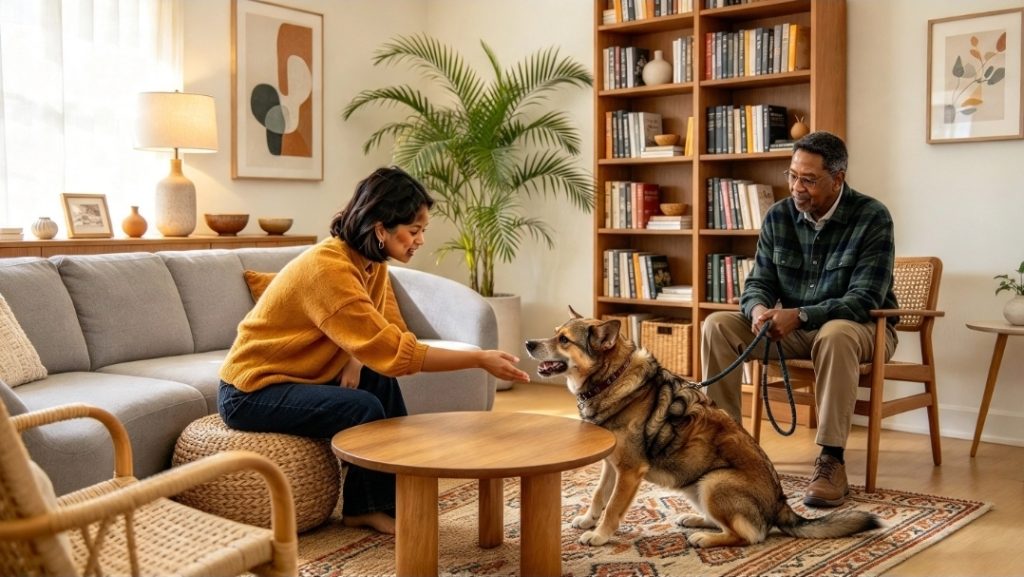
Why Does My Dog Growl When I Touch Him?
Why does my dog growl when I touch him? A dog may growl when touched because they feel uncomfortable, frightened, threatened, overstimulated or in pain. Growling is a form of communication that warns you something about the interaction is not right for them. The safest response is to stop touching your dog, give them space and investigate the possible cause without forcing further contact. Never punish a growl, because suppressing this warning can make it harder to recognise when your dog feels unsafe.
RECOMMENDED PRODUCTS
Why Does My Dog Growl When I Touch Him?
Dogs communicate through body language, movement and vocal signals. A growl is one way they can communicate discomfort or a desire for distance.
Your dog may growl when you touch their head, back, stomach, paws or another sensitive area. They may also growl when resting, being moved, approached unexpectedly or handled by someone they do not fully trust.
The reason matters because a dog that growls due to pain needs a different response from a dog that is frightened of handling. Your first priority is to prevent the situation from escalating and identify what may be influencing the behaviour.
1. Your Dog May Be Experiencing Pain
Pain is one of the most important causes to consider when a dog growls during physical contact. A normally affectionate dog may begin growling if touching a particular area hurts.
Possible causes include joint problems, muscle injuries, skin irritation, ear infections, dental problems or discomfort affecting the back, neck or abdomen.
You may also notice that your dog flinches, stiffens, limps, avoids jumping, licks a particular area or behaves differently from normal.
What should you do?
Stop touching the area and avoid repeatedly testing your dog’s reaction. Contact your vet if the growling is new, persistent, focused on a particular area or accompanied by other changes.
Do not attempt to restrain your dog to examine a painful area. If your dog appears to be in severe pain or has suffered a significant injury, seek urgent veterinary advice.
2. Your Dog Feels Frightened or Threatened
Some dogs growl because they feel unsafe when a person reaches towards them. This can happen if someone leans over them, touches their head unexpectedly, approaches while they are resting or prevents them from moving away.
A dog may show earlier signs of discomfort, such as turning their head, lowering their body, flattening their ears, licking their lips or moving away. If these signals are missed, the dog may growl to make the need for distance clearer.
What should you do?
Stop the interaction and allow your dog to move away freely. Avoid cornering them, leaning over them or repeatedly reaching towards them.
Let your dog choose whether to approach again. Build positive associations with handling gradually and only when your dog is comfortable. If fear persists, seek help from a qualified, reward-based behaviour professional.
3. Your Dog Does Not Want to Be Touched at That Moment
Dogs have individual preferences about physical affection. Your dog may enjoy being stroked at certain times but prefer not to be touched when tired, distracted, resting or simply not interested in contact.
A growl can communicate that your dog wants the interaction to stop. It does not automatically mean that they dislike you or have a generally aggressive temperament.
What should you do?
Respect the warning and stop touching. Give your dog space instead of following them, reaching for them again or insisting on affection.
In future interactions, offer brief, gentle contact only when your dog appears comfortable. Pause regularly and allow them to choose whether to re-engage.
4. Your Dog Is Protecting a Comfortable Resting Space
Some dogs growl when touched while sleeping, resting on a bed or relaxing in a favourite location. They may be startled, uncomfortable about being disturbed or worried that someone will move them.
If the behaviour happens mainly around a particular resting place, consider whether the dog is being disturbed or feels unable to leave comfortably.
What should you do?
Allow your dog to rest without unnecessary handling. If you need them to move, use a familiar, positively trained cue or encourage them to move voluntarily rather than grabbing their collar or physically pushing them.
Children should never disturb a resting dog or approach a dog that is growling. Give your dog a quiet space where they can rest undisturbed.
5. Your Dog Has Learned to Expect Unpleasant Handling
A dog that has experienced frightening or uncomfortable handling may begin to anticipate it when someone reaches towards them.
This can occur following rough handling, difficult grooming, nail trimming, painful treatment or other stressful experiences. Even gentle contact may trigger a defensive response if the dog expects something unpleasant to happen.
What should you do?
Make your approach calm and predictable. Do not punish, intimidate or force your dog to accept touch.
Once medical causes have been considered, a qualified, reward-based professional can help you introduce gradual handling exercises at a level your dog can comfortably manage. The aim is to change how your dog feels about the interaction, not simply to make them tolerate it.
6. Your Dog Is Overstimulated or Uncomfortable With the Type of Touch
Some dogs become uncomfortable when stroking continues for too long, becomes too intense or focuses on an area they dislike.
Your dog might initially tolerate contact but later growl when they need a break. They may also react to hugs, being held tightly or having their paws, ears or tail handled.
What should you do?
Keep physical contact brief and gentle. Pause frequently and observe your dog’s response.
If your dog moves away, becomes stiff or growls, stop. Do not assume that accepting a few strokes means they want to continue indefinitely.
7. Your Dog Is Guarding Something Valuable
Sometimes growling during touch occurs when a dog is beside food, a chew, a toy, a bed or another resource they value. This may indicate resource guarding rather than a general dislike of being touched.
The dog may be concerned that the person will take something away or interfere with access to it.
What should you do?
Do not reach for the resource, forcibly remove it or punish the growl. Give the dog space and prevent unnecessary interference.
If the behaviour is repeated or there is a risk of biting, seek guidance from a qualified, reward-based behaviour professional. Resource guarding should be addressed through a carefully planned approach that prioritises safety.
RECOMMENDED PRODUCTS
What Does Your Dog’s Body Language Tell You?
A growl should be considered alongside the circumstances and your dog’s other signals.
- Turning away or moving away: Your dog may be trying to end the interaction or create distance.
- Stiffening or freezing: Your dog may be uncomfortable or feel threatened.
- Flinching or reacting to a particular area: Pain or sensitivity should be considered.
- Growling while resting: Your dog may be startled or uncomfortable about being disturbed.
- Growling around food or toys: Resource guarding may be involved.
- Growling with snapping or lunging: The situation may carry an increased risk of injury and requires careful management.
These signs are clues rather than a diagnosis. A dog may be experiencing more than one influence at the same time.
What Should You Do Immediately When Your Dog Growls?
Follow these steps to reduce the risk of escalation.
Step 1: Stop Touching
Stop the physical contact calmly. Do not continue stroking to see whether your dog will tolerate it.
Step 2: Create Space
Move away without sudden movements. Do not corner, grab, restrain or block your dog from moving away.
Step 3: Do Not Punish the Growl
Avoid shouting, hitting, threatening or using punishment to stop the noise. A growl is useful warning information. Punishing it may suppress the warning without resolving the underlying discomfort.
Step 4: Consider the Trigger
Once the situation is safe, consider what happened before the growl. Think about the location, type of touch, your dog’s activity, nearby resources and whether the behaviour is new.
Do not recreate the situation to test your theory.
Step 5: Seek Appropriate Help
Arrange a veterinary assessment if pain is possible, especially if the behaviour has started suddenly. If fear, handling sensitivity or resource guarding persists, obtain help from a qualified, reward-based behaviour professional.
Understanding Your Dog Through the GPK9 FUSS Framework
The GPK9 FUSS framework stands for Function, Understand, Structure and Support. It helps you consider the possible reasons for behaviour before deciding how to respond.
Function
Identify what happens before the growl. Consider where you are touching your dog, what they are doing, the environment and whether food, toys or resting spaces are involved.
Understand
Consider possible influences such as pain, fear, previous experiences, overstimulation or a desire for space. Do not assume every growl has the same meaning.
Structure
Make interactions predictable and avoid unnecessary handling. Give your dog the freedom to move away, and do not force physical contact.
Support
Prioritise safety and welfare. Consult a vet when pain or illness may be involved and seek professional behavioural support if growling continues or the risk of biting increases.
The GPK9 Communication Process
Use the GPK9 communication process to guide your response:
OBSERVE → INTERPRET → DECIDE → COMMUNICATE → OBSERVE RESPONSE → REASSESS
Observe the growl and surrounding body language. Interpret what may be influencing it. Decide whether to stop, create distance or seek help. Communicate through calm, appropriate actions. Observe your dog’s response and reassess the situation.
The principle is simple: control is communication. Your actions should help your dog feel safe rather than pressure them into accepting unwanted contact.
When Should You Seek Professional Help?
Contact your vet if your dog suddenly starts growling when touched, reacts to a particular body area or shows signs of pain, illness or a change in normal behaviour.
Seek support from a qualified, reward-based behaviour professional if your dog repeatedly growls during handling, guards resources, becomes defensive when approached or has a history of snapping or biting.
Until you have professional guidance, avoid the situations that trigger the growling where possible. If children are in the household, keep them separated from situations in which the dog may react and never allow them to test the dog’s tolerance.
Conclusion: Respect the Growl and Find the Cause
If your dog growls when you touch them, treat it as a warning that something about the interaction may be uncomfortable or unsafe. Pain, fear, unwanted handling, overstimulation and resource guarding are all possible explanations.
Stop touching, create space and avoid punishment. If the behaviour is new or pain is possible, contact your vet. If it persists or creates a risk of injury, seek qualified behavioural support.
By listening to your dog’s signals and responding calmly, you can protect their welfare, reduce the risk of escalation and build a safer relationship based on trust and clear communication.
How the Five Golden Rules Work Together
The GPK9 Five Golden Rules provide a structured approach to everyday behaviour, communication and safety.
- Golden Rule 1 — Home & Social
- Golden Rule 2 — Obedience
- Golden Rule 3 — Prey Drive
- Golden Rule 4 — Toilet
- Golden Rule 5 — Social Walking
Explore The Five Golden Rules to understand how these principles work together.
FUSS — Understanding Your Dog Through Affection, Emotion and Everyday Interaction
The FUSS course helps you develop a deeper understanding of how your dog’s emotions, motivation, physical needs and everyday experiences influence behaviour. This course explains how affection, body language, social interaction and reward can affect the relationship between dogs and their handlers, helping you recognise what your dog is communicating and respond appropriately.
Learn about the roles of hormones such as dopamine, adrenaline, cortisol and oxytocin in motivation, arousal, stress responses and social bonding. Discover how these concepts connect with obedience, reward timing, play, prey drive, excitement management, toilet training, household behaviour and social walking. The course also explores how to recognise when your dog is comfortable and ready to progress, when an interaction needs adjusting, and when you should stop and prioritise safety.
Using the GPK9 FUSS framework — Function, Understand, Structure and Support — you will learn to observe behaviour, consider what may be influencing it, communicate clearly and reassess your dog’s response. The course connects these principles to practical everyday situations, helping you build consistency, encourage appropriate behaviour through positive reinforcement and develop a stronger working partnership with your dog.




