
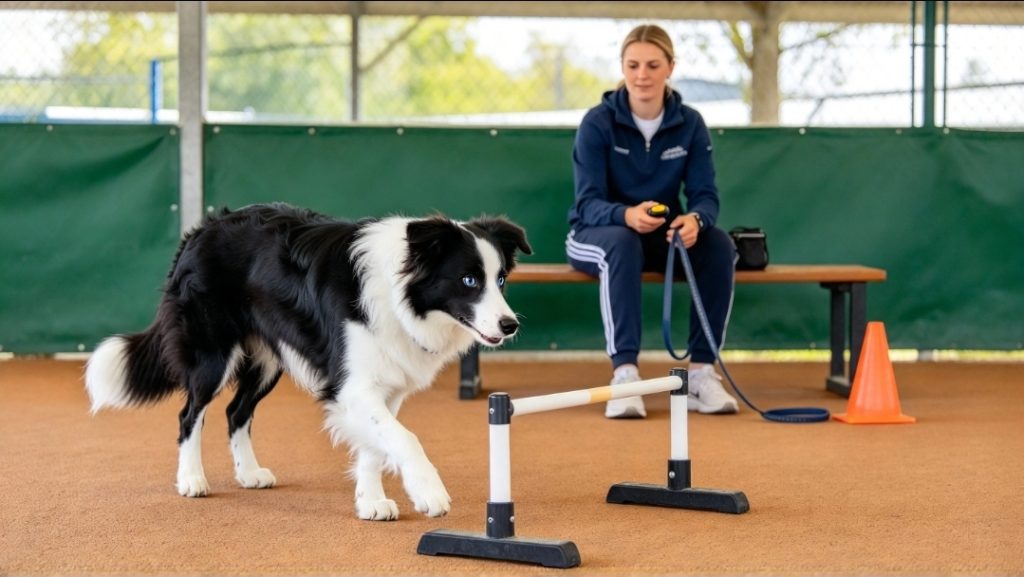
What Should I Look for in a Dog Trainer?
What should I look for in a dog trainer? Look for a dog trainer with relevant qualifications, practical experience, suitable training methods, good communication skills and experience with the specific needs of your dog. The right trainer should prioritise safety and welfare while teaching you how to continue the training yourself.
RECOMMENDED PRODUCTS

What Qualifications Should a Dog Trainer Have?
Look for relevant education, qualifications, practical training experience and, where appropriate, professional memberships.
There is no single qualification that automatically makes someone an excellent dog trainer. Qualifications should be considered alongside practical experience, training methods and their ability to work with the type of dog and behaviour you need help with.
A good trainer should also understand the limits of their expertise and know when to refer you to another professional.
Does Experience Matter When Choosing a Dog Trainer?
Yes, but relevant experience matters more than simply the number of years they have been training dogs.
Ask whether the trainer has experience with your dog’s age, behaviour and particular training needs.
For example, a trainer who mainly teaches puppy obedience may not be the right person to handle serious aggression or complex fear.
Similarly, a behaviour specialist may not be necessary if you simply want help teaching basic commands.
What Training Methods Should a Good Dog Trainer Use?
Ask the trainer to explain exactly how they train dogs.
Reward-based training can use food, treats, toys, play, praise, attention and other appropriate rewards to reinforce desired behaviour.
A good trainer should be able to explain:
- What behaviour they want the dog to perform
- How they will teach it
- When the reward will be given
- How they will increase difficulty
- What they will do if the dog struggles
You should understand the reason behind the training rather than simply being told what to do.
Should I Ask a Dog Trainer About Punishment?
Yes.
Ask how they respond when a dog makes a mistake or displays unwanted behaviour.
Be cautious if a trainer relies heavily on fear, intimidation or harsh punishment.
A suitable training approach should prioritise the dog’s welfare and teach the dog what behaviour is wanted rather than relying primarily on making unwanted behaviour unpleasant.
Should the Trainer Adapt Their Methods to My Dog?
Yes.
A good trainer should consider the individual dog rather than applying exactly the same programme to every dog.
Factors such as age, temperament, motivation, previous learning, environment and distractions can affect how successfully a dog learns.
The training should be adjusted according to the dog’s ability to understand, concentrate and remain comfortable.
What Should a Good Dog Trainer Teach Me?
A good trainer should teach you as well as your dog.
You should learn how to:
- Give clear cues
- Recognise the behaviour you want
- Use rewards effectively
- Get the timing right
- Release your dog appropriately
- Increase difficulty gradually
- Manage distractions
- Recognise when your dog is struggling
- Practise effectively between sessions
The aim is not to make you permanently dependent on the trainer.
Should I Choose Group Classes or One-to-One Training?
It depends on what you need.
Group classes can be useful for puppies and basic obedience because they provide opportunities to practise around controlled distractions.
One-to-one training may be more appropriate when you need individual guidance or your dog struggles around other dogs, people or environmental distractions.
If your dog is highly fearful, reactive or aggressive, discuss its behaviour with the trainer before attending a group class.
RECOMMENDED PRODUCTS
What Should I Look for If My Dog Has Behaviour Problems?
Choose a trainer with relevant experience rather than assuming a general obedience trainer will be suitable.
Behaviour problems can include:
- Severe reactivity
- Fear
- Anxiety
- Aggression
- Lunging
- Bite-related behaviour
- Resource guarding
- Destructive behaviour
- Difficulty being left alone
Ask the trainer how they would assess the problem and manage safety before starting training.
Serious or complex behaviour may require a qualified behaviour professional or veterinary involvement.
What If My Dog Has Aggression or Has Bitten Someone?
Prioritise safety and specialist experience.
Ask the professional about their experience with aggression and bite-related cases before booking.
A dog that has bitten someone or presents a significant risk of injury should not simply be treated as a basic obedience case.
Veterinary assessment may also be appropriate, particularly if the behaviour has appeared suddenly or changed significantly.
What Equipment Should a Good Dog Trainer Recommend?
Equipment should be recommended because it serves a clear training or safety purpose.
For example, a suitable harness and lead may be useful for walking training. A long line can provide controlled freedom during appropriate recall training.
A crate, playpen or placemat may be useful for teaching settling or managing the environment when introduced positively and used correctly.
A muzzle may be appropriate in some safety-critical situations involving reactivity or aggression, but it should be introduced carefully and should not be treated as a substitute for behaviour training.
A good trainer should explain why equipment is needed and how to use it safely.
Should a Dog Trainer Guarantee Results?
Be cautious of guaranteed results.
Dog training depends on the individual dog, the behaviour being addressed, the environment, previous learning, health and the consistency of training.
A responsible trainer should explain what realistic progress may look like rather than promising that every problem will be completely fixed within a specific number of sessions.
What Are the Warning Signs of a Bad Dog Trainer?
Be cautious if a trainer:
- Promises instant results
- Guarantees that every problem will be fixed
- Cannot explain their training methods
- Uses fear or intimidation as their main approach
- Refuses to answer questions about safety
- Uses the same method for every dog regardless of circumstances
- Ignores signs that a dog is overwhelmed
- Claims specialist expertise without relevant experience
- Blames the dog or owner without explaining how to improve the situation
You should feel comfortable asking questions about how your dog will be trained.
Should I Check Reviews of a Dog Trainer?
Yes, but reviews should be only one part of your decision.
Look for consistent feedback about communication, professionalism, reliability, training support and the owner’s ability to make progress afterwards.
Do not rely solely on testimonials that promise dramatic or instant results.
A trainer’s experience and suitability for your dog are more important than having the highest number of reviews.
What Questions Should I Ask Before Hiring a Dog Trainer?
Before booking, ask:
- What qualifications and experience do you have?
- What training methods do you use?
- Have you worked with dogs like mine?
- How would you approach my dog’s specific problem?
- Will I be involved in the training?
- What equipment would you recommend and why?
- How do you measure progress?
- What happens if my dog struggles?
- When would you recommend veterinary or specialist behaviour support?
The answers should be clear, practical and relevant to your situation.
How Do I Know If a Dog Trainer Is Right for Me?
You should feel comfortable communicating with the trainer and understand what they expect you to do between sessions.
A good trainer should listen to your concerns, explain their approach and give you practical instructions that you can realistically follow.
The relationship matters because you will be responsible for continuing the training when the trainer is not there.
How Should I Compare Different Dog Trainers?
If you have several options, compare them using the same criteria.
Consider:
- Qualifications and education
- Relevant practical experience
- Training methods
- Experience with your dog’s specific needs
- Safety and welfare
- Communication
- Owner involvement
- Reviews and reputation
- Availability
- Cost
Do not automatically choose the cheapest or most expensive trainer.
Choose the trainer whose experience and approach best match your dog and your goals.
RECOMMENDED PRODUCTS
What Should I Tell a Dog Trainer Before the First Session?
Give the trainer accurate information about your dog and the reason you are seeking help.
Explain:
- Your dog’s age
- How long you have had the dog
- The behaviour or skill you want to address
- Where the behaviour occurs
- What triggers it
- What you have already tried
- What equipment you currently use
- Any safety concerns
This allows the trainer to determine whether they are suitable to help.
When Should I Choose a Behaviour Professional Instead?
A general dog trainer may be appropriate for basic obedience, puppy training and everyday manners.
More serious or complex problems may require someone with specific behaviour expertise.
This can include severe aggression, bite risk, intense fear, significant anxiety or complicated behavioural problems.
Choosing the right level of professional support is just as important as choosing the individual trainer.
If your dog’s behaviour changes suddenly or significantly, veterinary advice should also be considered.
Conclusion
When choosing a dog trainer, look beyond qualifications or reviews alone.
Look for relevant experience, clear and appropriate training methods, good communication, proper safety practices and a trainer who teaches you how to continue the work yourself.
The trainer should be able to explain what they are doing, why they are doing it and how you can practise successfully between sessions.
For basic training, a general dog trainer may be suitable. For serious or complex behaviour, choose someone with appropriate specialist experience.
The best trainer is one who can help you and your dog develop reliable skills that continue to work in everyday life.
GPK9 — The Five Golden Rules
The GPK9 Five Golden Rules provide the foundation of the GPK9 Professional Training System. They give new dog owners, new dog handlers, experienced handlers and professional dog trainers a clear structure for developing the dog and the handler together.
The GPK9 Five Golden Rules cover five essential areas of development: Home & Social, Obedience, Prey Drive, Toilet and Social Walking. Each area has its own purpose, but they are designed to work together as one complete training system.
The GPK9 approach is based on CATEGORY → STATUS → DRIVE → CONTROL and the handler’s ability to OBSERVE → INTERPRET → DECIDE → COMMUNICATE → OBSERVE RESPONSE → REASSESS. This gives the handler a consistent process for understanding what the dog is doing, why the behaviour is occurring, what level of control is appropriate and how to communicate effectively.
The purpose of the GPK9 Five Golden Rules is not simply to teach a collection of individual exercises. They are designed to develop the dog’s behaviour, motivation, communication, control and reliability while teaching the handler how to make better decisions.
Golden Rule One — Home & Social
Golden Rule One — Home & Social establishes the foundation for everyday life with the dog. It focuses on communication, boundaries, calm behaviour, household routines and appropriate behaviour around people, animals and normal activity.
The purpose of Golden Rule One — Home & Social is to help the handler understand the dog’s behaviour and recognise changes in arousal before they become larger problems. The handler learns to observe, assess and communicate rather than simply reacting after unwanted behaviour has already occurred.
Golden Rule One — Home & Social provides the foundation from which the handler can develop a calmer, more predictable and better-communicating dog.
Golden Rule Two — Obedience
Golden Rule Two — Obedience develops the dog’s ability to understand and respond to the handler’s communication.
The focus of Golden Rule Two — Obedience is not simply teaching commands. It is about developing understanding, reliability, timing, reward, release and control so the dog learns what the handler is communicating.
Through Golden Rule Two — Obedience, the handler learns to progress training appropriately, gradually increasing the dog’s freedom and responsibility as understanding and reliability improve.
Golden Rule Three — Prey Drive
Golden Rule Three — Prey Drive focuses on understanding and developing the dog’s natural motivation to chase, pursue, engage and work with an appropriate toy or prey-based reward.
The purpose of Golden Rule Three — Prey Drive is not simply to increase drive. The handler must learn how to recognise the dog’s level of motivation, select an appropriate reward and use timing, communication and control to channel that motivation productively.
Golden Rule Three — Prey Drive teaches the handler that motivation can become a powerful training tool when it is developed and controlled correctly.
Golden Rule Four — Toilet
Golden Rule Four — Toilet establishes reliable toilet habits through consistency, observation, timing, supervision and appropriate reinforcement.
The handler learns through Golden Rule Four — Toilet to recognise when the dog is likely to need the toilet, provide the correct opportunity and reinforce the desired behaviour.
The objective of Golden Rule Four — Toilet is to establish a predictable routine that helps the dog understand where and when toileting is appropriate while reducing opportunities for mistakes.
Golden Rule Five — Social Walking
Golden Rule Five — Social Walking develops the dog’s ability to walk calmly and appropriately in the real world while remaining connected to the handler.
The focus of Golden Rule Five — Social Walking is the relationship between the handler, the dog, the environment, distractions, distance and available control.
Through Golden Rule Five — Social Walking, the handler learns to observe body language, identify potential triggers, assess distance and recognise changes in drive or arousal before behaviour escalates.
The objective of Golden Rule Five — Social Walking is not simply to make the dog walk beside the handler. It is to develop a dog that can experience the outside world while remaining connected to the handler and capable of responding to clear communication.
How the Five Golden Rules Work Together
The GPK9 Five Golden Rules are designed to work together rather than being treated as five completely separate subjects.
Golden Rule One — Home & Social establishes the foundations for everyday behaviour and communication.
Golden Rule Two — Obedience develops understanding, responsiveness and control.
Golden Rule Three — Prey Drive develops motivation and teaches the handler how to channel natural drive appropriately.
Golden Rule Four — Toilet establishes essential household routine and reliability.
Golden Rule Five — Social Walking takes the communication and control developed through the other areas into the outside environment.
Together, the GPK9 Five Golden Rules help the handler develop a complete understanding of the dog rather than treating individual behaviours as isolated problems.
The overall objective of the GPK9 Five Golden Rules is to train the human, train the dog and build the partnership through clear observation, communication, appropriate control and progressive development.




