
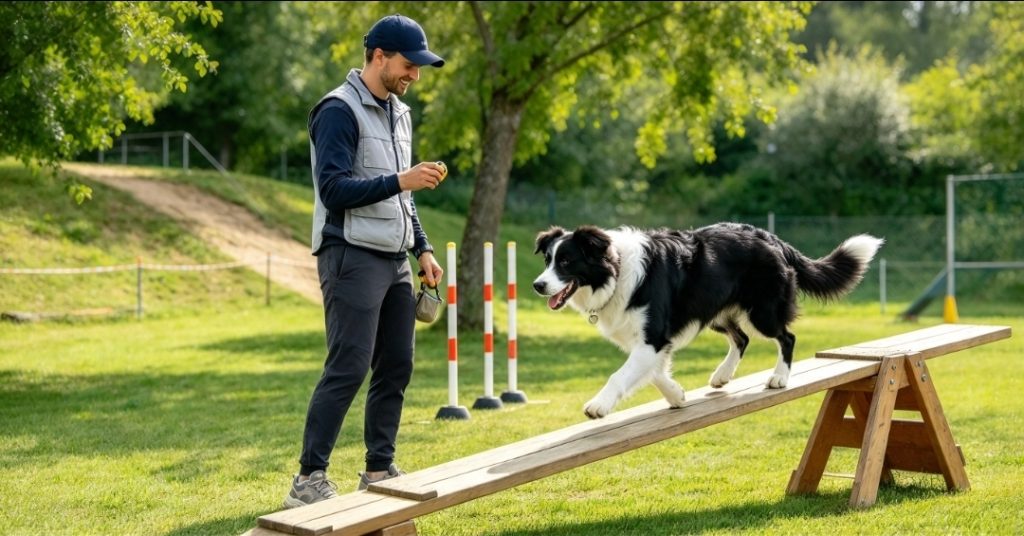
When Should I Hire a Dog Trainer?
When should I hire a dog trainer? You should consider hiring a dog trainer when you need help teaching your dog, are struggling to change a behaviour, want to establish good habits early or are unsure how to train effectively. You do not need to wait until your dog develops a serious problem before getting professional support.
RECOMMENDED PRODUCTS

Should I Hire a Dog Trainer for a New Puppy?
A puppy does not automatically need a professional trainer, but early guidance can be useful.
A puppy has to learn much more than basic commands. Training can include:
- Responding to its name
- Toilet training
- Settling calmly
- Appropriate chewing
- Handling and grooming
- Recall
- Lead and harness skills
- Waiting
- Basic obedience
- Appropriate socialisation
- Gradually coping with being alone
A trainer can help you establish good habits before unwanted behaviours become established.
Should I Hire a Trainer for Basic Obedience?
You may benefit from a trainer if you are unsure how to teach basic obedience or your dog is not responding consistently.
A trainer can help you improve your timing, rewards, communication and progression.
However, many owners can successfully teach basic behaviours themselves with suitable guidance and regular practice.
Should I Hire a Trainer If My Dog Pulls on the Lead?
Professional help can be useful if your dog consistently pulls and you are struggling to improve the behaviour.
A trainer can help identify why the pulling occurs and show you how to reinforce calmer walking.
Training should begin in an environment where your dog can concentrate before gradually introducing greater distractions.
Should I Hire a Trainer for Poor Recall?
A trainer can be particularly useful if your dog ignores recall, runs away or becomes difficult to control outside.
Recall should be built gradually, starting in controlled environments and increasing distance and distractions as the dog becomes reliable.
If your dog repeatedly fails to return, avoid testing recall in situations where running away could create a safety risk.
Should I Hire a Trainer If My Dog Jumps on People?
You may not need professional help if the behaviour is mild and you can teach an alternative response yourself.
Reward your dog for keeping four paws on the floor or settling when people approach.
If the jumping is persistent, difficult to manage or creates a safety problem, a trainer can help you develop a structured plan.
RECOMMENDED PRODUCTS
Should I Hire a Trainer If My Dog Barks Excessively?
It depends on why your dog is barking.
Barking can be related to excitement, frustration, fear, attention seeking, environmental triggers or other factors.
A trainer can help identify the circumstances surrounding the barking and teach more appropriate responses.
If the barking is sudden or accompanied by other changes in behaviour, consider veterinary advice as well.
Should I Hire a Trainer If My Dog Is Reactive?
If your dog regularly barks, lunges or reacts strongly towards people, dogs or other triggers, professional support can be very useful.
The training needs to consider the dog’s emotional state, distance from the trigger, environment and ability to remain calm.
Do not repeatedly expose your dog to situations that cause a severe reaction in the hope that it will simply get used to them.
Should I Hire a Trainer If My Dog Is Aggressive?
Yes, professional help should be considered if your dog shows aggression, particularly where there is a risk of injury.
Aggression can have different causes and should not be treated as simply a lack of obedience.
A suitably qualified professional can help assess the behaviour and establish appropriate safety and training measures.
If your dog has attempted to bite or has bitten someone, seek professional advice promptly.
Should I Hire a Trainer If My Dog Is Fearful?
Professional guidance can help if your dog is regularly frightened, avoids situations, freezes, panics or struggles to cope with everyday experiences.
Do not force a fearful dog into situations that overwhelm it.
Training should work at a level the dog can manage, using appropriate reinforcement and gradual progression.
Sudden or significant changes in fear should also be discussed with a vet.
Should I Hire a Trainer If My Dog Cannot Settle?
Consider professional help if your dog struggles to relax at home, constantly follows you, becomes excessively restless or cannot settle even in quiet situations.
A trainer can help establish calm routines and teach your dog how to settle independently.
If restlessness appears suddenly or is accompanied by other unusual behaviour, consider whether there may be a medical cause.
Should I Hire a Trainer If My Dog Is Destroying Things?
Destructive behaviour can have different causes, including boredom, lack of appropriate outlets, frustration, stress or difficulty being left alone.
A trainer can help identify when the behaviour occurs and develop a suitable management and training plan.
If destruction happens specifically when your dog is left alone and is accompanied by distress, separation-related problems may need more specialised support.
Should I Hire a Trainer If I Have Tried Training Before?
Yes, particularly if your previous approach has not produced improvement.
Instead of simply repeating the same exercises, identify what is preventing progress.
The problem may be the reward, timing, training environment, difficulty level, consistency or the training method itself.
A trainer can help identify where the process is breaking down.
Should I Hire a Trainer Before There Is a Problem?
You can.
Professional guidance can be useful when bringing home a puppy, adopting a rescue dog or wanting to establish good habits with a new dog.
Early training can help you understand how to reinforce appropriate behaviour before unwanted habits become established.
You do not have to wait for a behaviour problem to appear.
How Do I Know If I Can Train My Dog Myself?
You may be able to train your dog yourself if:
- You understand the behaviour you want to teach
- Your dog is comfortable and able to concentrate
- You can use rewards effectively
- Your dog is making steady progress
- You can keep training sessions short and consistent
- There are no significant safety concerns
If progress has stopped or the behaviour is becoming worse, professional support may be appropriate.
How Do I Know When Professional Help Is Urgent?
Seek professional help promptly if your dog:
- Attempts to bite
- Has bitten someone
- Shows serious aggression
- Displays severe fear or panic
- Tries to escape during stressful situations
- Cannot be safely managed around people or animals
- Shows rapidly worsening behaviour
For sudden behaviour changes, veterinary assessment should also be considered because medical problems can affect behaviour.
RECOMMENDED PRODUCTS
What Should a Dog Trainer Teach Me?
A good trainer should help you understand how to train your dog, not simply perform the training for you.
You should learn how to recognise successful behaviour, use rewards effectively, communicate clearly, manage distractions and increase difficulty at an appropriate pace.
The goal is to give you the skills to continue training your dog successfully between sessions.
How Often Should I Use a Dog Trainer?
There is no fixed number of sessions.
Some owners may need one or two sessions to understand what to do. Others may need ongoing support for more complicated training or behaviour problems.
The important factor is regular practice between sessions.
Professional instruction provides direction, but your consistent daily training is what develops reliable behaviour.
Conclusion
You should consider hiring a dog trainer when you need help teaching your dog, cannot make progress yourself or want professional guidance before problems become established.
Basic training can often be handled by owners, but persistent, complex or safety-related behaviours require more careful assessment.
Do not wait for a problem to become severe before asking for help.
The right time to hire a dog trainer is when professional guidance can make your dog’s training clearer, safer and more effective.
GPK9 — The Five Golden Rules
The GPK9 Five Golden Rules provide the foundation of the GPK9 Professional Training System. They give new dog owners, new dog handlers, experienced handlers and professional dog trainers a clear structure for developing the dog and the handler together.
The GPK9 Five Golden Rules cover five essential areas of development: Home & Social, Obedience, Prey Drive, Toilet and Social Walking. Each area has its own purpose, but they are designed to work together as one complete training system.
The GPK9 approach is based on CATEGORY → STATUS → DRIVE → CONTROL and the handler’s ability to OBSERVE → INTERPRET → DECIDE → COMMUNICATE → OBSERVE RESPONSE → REASSESS. This gives the handler a con.sistent process for understanding what the dog is doing, why the behaviour is occurring, what level of control is appropriate and how to communicate effectively.
The purpose of the GPK9 Five Golden Rules is not simply to teach a collection of individual exercises. They are designed to develop the dog’s behaviour, motivation, communication, control and reliability while teaching the handler how to make better decisions.
Golden Rule One — Home & Social
Golden Rule One — Home & Social establishes the foundation for everyday life with the dog. It focuses on communication, boundaries, calm behaviour, household routines and appropriate behaviour around people, animals and normal activity.
The purpose of Golden Rule One — Home & Social is to help the handler understand the dog’s behaviour and recognise changes in arousal before they become larger problems. The handler learns to observe, assess and communicate rather than simply reacting after unwanted behaviour has already occurred.
Golden Rule One — Home & Social provides the foundation from which the handler can develop a calmer, more predictable and better-communicating dog.
Golden Rule Two — Obedience
Golden Rule Two — Obedience develops the dog’s ability to understand and respond to the handler’s communication.
The focus of Golden Rule Two — Obedience is not simply teaching commands. It is about developing understanding, reliability, timing, reward, release and control so the dog learns what the handler is communicating.
Through Golden Rule Two — Obedience, the handler learns to progress training appropriately, gradually increasing the dog’s freedom and responsibility as understanding and reliability improve.
Golden Rule Three — Prey Drive
Golden Rule Three — Prey Drive focuses on understanding and developing the dog’s natural motivation to chase, pursue, engage and work with an appropriate toy or prey-based reward.
The purpose of Golden Rule Three — Prey Drive is not simply to increase drive. The handler must learn how to recognise the dog’s level of motivation, select an appropriate reward and use timing, communication and control to channel that motivation productively.
Golden Rule Three — Prey Drive teaches the handler that motivation can become a powerful training tool when it is developed and controlled correctly.
Golden Rule Four — Toilet
Golden Rule Four — Toilet establishes reliable toilet habits through consistency, observation, timing, supervision and appropriate reinforcement.
The handler learns through Golden Rule Four — Toilet to recognise when the dog is likely to need the toilet, provide the correct opportunity and reinforce the desired behaviour.
The objective of Golden Rule Four — Toilet is to establish a predictable routine that helps the dog understand where and when toileting is appropriate while reducing opportunities for mistakes.
Golden Rule Five — Social Walking
Golden Rule Five — Social Walking develops the dog’s ability to walk calmly and appropriately in the real world while remaining connected to the handler.
The focus of Golden Rule Five — Social Walking is the relationship between the handler, the dog, the environment, distractions, distance and available control.
Through Golden Rule Five — Social Walking, the handler learns to observe body language, identify potential triggers, assess distance and recognise changes in drive or arousal before behaviour escalates.
The objective of Golden Rule Five — Social Walking is not simply to make the dog walk beside the handler. It is to develop a dog that can experience the outside world while remaining connected to the handler and capable of responding to clear communication.
How the Five Golden Rules Work Together
The GPK9 Five Golden Rules are designed to work together rather than being treated as five completely separate subjects.
Golden Rule One — Home & Social establishes the foundations for everyday behaviour and communication.
Golden Rule Two — Obedience develops understanding, responsiveness and control.
Golden Rule Three — Prey Drive develops motivation and teaches the handler how to channel natural drive appropriately.
Golden Rule Four — Toilet establishes essential household routine and reliability.
Golden Rule Five — Social Walking takes the communication and control developed through the other areas into the outside environment.
Together, the GPK9 Five Golden Rules help the handler develop a complete understanding of the dog rather than treating individual behaviours as isolated problems.
The overall objective of the GPK9 Five Golden Rules is to train the human, train the dog and build the partnership through clear observation, communication, appropriate control and progressive development.




