
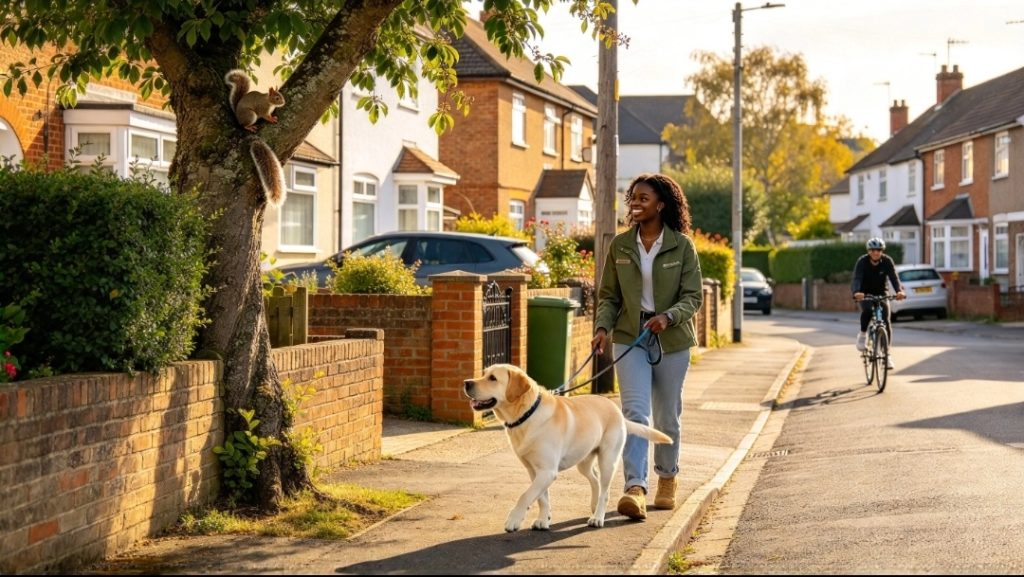
How Do I Teach My Dog to Ignore Distractions While Walking?
How do I teach my dog to ignore distractions while walking? Teach your dog to notice distractions without immediately reacting to them, then reward calm behaviour and attention to you. Start with distractions at a manageable distance and gradually increase the difficulty as your dog becomes more reliable.
RECOMMENDED PRODUCTS

Why Does My Dog Struggle With Distractions While Walking?
Dogs can become distracted by other dogs, people, vehicles, wildlife, smells, noises and unfamiliar environments.
A distraction becomes difficult when it is more interesting or stimulating to your dog than the behaviour you are asking for. If your dog becomes too focused on the distraction, repeatedly giving commands may not help.
The first step is to recognise what your dog can cope with and work within that level.
What Is the Best Way to Teach a Dog to Ignore Distractions?
The best approach is gradual exposure combined with positive reinforcement.
Do not start by taking your dog directly into the busiest environment and expecting it to ignore everything. Begin somewhere your dog can still respond to you.
Reward your dog for looking at a distraction and then returning its attention to you, remaining calm, or continuing to walk appropriately.
How Do I Teach My Dog to Focus on Me?
Start somewhere quiet.
Ask for a simple behaviour your dog already understands, such as looking at you or walking beside you. Reward your dog for responding.
Once this is reliable, introduce a mild distraction at a distance.
When your dog notices the distraction but can still respond to you, reward the response. Repeat this until your dog becomes comfortable working around that level of distraction.
How Do I Teach My Dog to Ignore Other Dogs?
Do not immediately walk your dog close to another dog if it becomes highly distracted.
Start far enough away that your dog can notice the other dog while still responding to you.
Reward calm behaviour and attention to you. Gradually reduce the distance over multiple training sessions if your dog remains comfortable and responsive.
If your dog becomes too focused on the other dog, increase the distance and allow it to settle before continuing.
How Do I Stop My Dog Being Distracted by People?
Begin with people at a distance.
Reward your dog for remaining focused on you or continuing to walk calmly. Gradually practise around different people and in different environments.
Do not allow every person your dog sees to become an opportunity for interaction. Your dog should learn that seeing people does not automatically mean approaching them.
RECOMMENDED PRODUCTS
What Should I Do When My Dog Sees a Distraction?
Observe your dog’s behaviour before deciding what to do.
If your dog notices the distraction but remains responsive, continue walking and reward the appropriate behaviour.
If your dog begins to become overly focused, increase distance, change direction or move away from the distraction.
If your dog can no longer respond to you, the distraction is currently too difficult. Create more distance and regain your dog’s attention before continuing.
Should I Use Treats to Teach My Dog to Ignore Distractions?
Food can be useful when teaching your dog to remain focused around distractions.
The timing is important. Reward the behaviour you want as soon as your dog responds appropriately.
As your dog becomes more reliable, you can gradually reduce how frequently you need to provide food while continuing to reinforce good behaviour in more difficult situations.
Other rewards can also be useful, including movement, access to an appropriate area for sniffing, toys or continuing the walk.
What Equipment Should I Use?
Use equipment that gives you appropriate control without relying on physical force.
A suitable collar or harness and lead can be used for ordinary walking. A short line can provide closer control when working around distractions.
If your dog is difficult to control around a particular trigger, choose the equipment and training environment according to the level of risk. For serious reactivity or aggression, seek professional assessment rather than attempting to manage the situation through equipment alone.
What Should I Do If My Dog Pulls Towards a Distraction?
Do not repeatedly pull against your dog while it is pulling towards the distraction.
Instead, create distance by stopping, changing direction or moving away. Once your dog can focus again, continue the exercise at a level it can manage.
Reward your dog when it walks calmly rather than allowing pulling to become the way it reaches something interesting.
How Do I Increase the Difficulty?
Increase distractions gradually rather than changing everything at once.
You can progress by increasing:
- The number of people around.
- The distance travelled.
- The number of dogs nearby.
- Environmental noise.
- The length of the training session.
- The difficulty of the walking environment.
- The proximity to distractions.
If your dog struggles, make the exercise easier again.
What Are the Biggest Mistakes When Training Around Distractions?
Common mistakes include:
- Starting too close to the distraction.
- Expecting the dog to ignore everything immediately.
- Repeating commands when the dog is no longer able to respond.
- Allowing pulling to become a way of reaching distractions.
- Increasing difficulty too quickly.
- Training for too long.
- Failing to notice early signs that the dog is becoming overwhelmed.
- Only practising in one environment.
Good distraction training depends on recognising when your dog is still able to learn and adjusting the situation accordingly.
How Long Does It Take to Teach a Dog to Ignore Distractions?
There is no fixed timeframe.
Some dogs become comfortable around mild distractions quickly, while others need much more gradual training, particularly if they have a strong reaction to certain triggers.
Regular short sessions and controlled progression are more useful than expecting immediate results.
RECOMMENDED PRODUCTS
When Should I Get Professional Help?
Seek professional help if your dog lunges, snaps, bites, becomes aggressive, repeatedly escapes your control or cannot remain calm around a particular trigger.
Professional assessment is especially important when another person, dog or animal could be placed at risk.
Do not deliberately expose your dog to a situation that could result in injury simply to test its behaviour.
Conclusion
To teach your dog to ignore distractions while walking, start at a distance where your dog can still respond to you. Reward calm behaviour, attention and appropriate walking, then gradually introduce more difficult distractions.
The goal is not to make your dog completely unaware of its surroundings. The goal is to teach your dog to notice distractions without automatically reacting to them, remain responsive to you and continue walking appropriately.




