
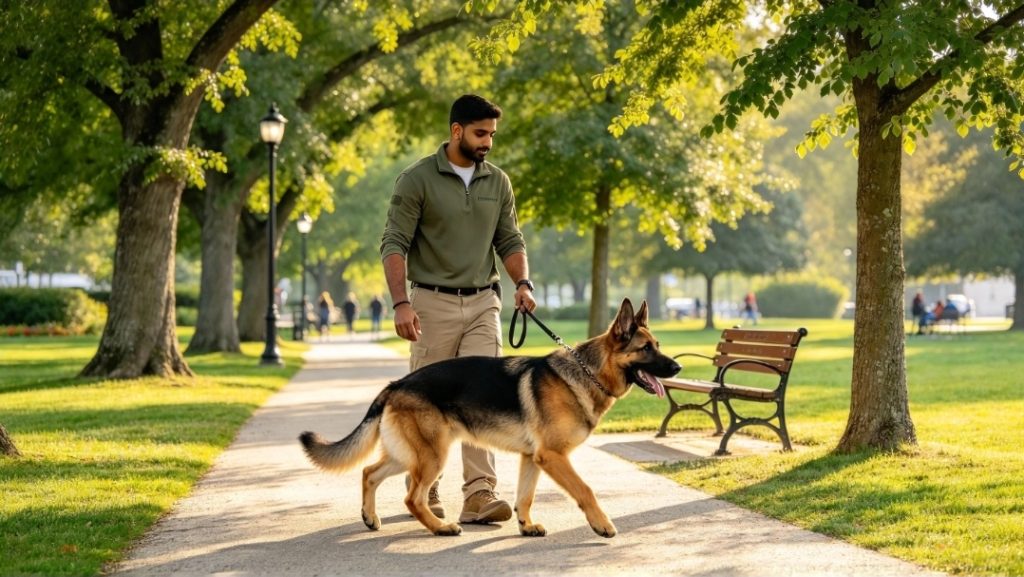
How Do I Teach My Dog to Heel?
How do I teach my dog to heel? Teach your dog that staying close to your chosen heel position is rewarding, then gradually build duration, movement, changes of direction and distractions. Start in a quiet environment and reward your dog while it is in the correct position so it learns exactly where you want it to be.
RECOMMENDED PRODUCTS

What Does Heel Mean in Dog Training?
“Heel” usually means teaching your dog to walk closely beside you in a specific position, commonly with the dog’s shoulder near your leg.
Unlike ordinary walking, where your dog may have more freedom to sniff and explore, a heel is a more precise behaviour. Your dog needs to stay focused on your movement and maintain the position as you walk.
How Do I Start Teaching Heel?
Begin somewhere quiet with minimal distractions.
Have your dog beside you and wait for it to move into the position you want. As soon as your dog is correctly positioned, reward it.
Repeat this several times before introducing movement. Your dog needs to understand the position before you expect it to maintain that position while walking.
How Do I Teach My Dog to Walk in Heel Position?
Step 1: Reward the Correct Position
Stand still and reward your dog for being beside the correct leg.
Repeat this until your dog begins choosing the position without needing to be guided there every time.
Step 2: Take One Step
Take one step forward.
If your dog remains beside you, immediately reward it. Repeat this several times before gradually increasing the number of steps.
Step 3: Increase the Distance
Once your dog can remain beside you for a few steps, gradually increase the distance before rewarding.
Do not increase the distance too quickly. If your dog repeatedly moves away from the heel position, make the exercise easier again.
Step 4: Add Changes of Direction
Introduce turns once your dog understands the basic movement.
Practise left turns, right turns and changes of pace. Reward your dog for adjusting its movement and returning to the correct heel position.
Step 5: Introduce Distractions
Begin adding distractions gradually.
Practise around mild distractions first, then progress to busier environments. If your dog loses concentration, increase the distance from the distraction and return to an easier level of training.
How Do I Stop My Dog Moving Ahead of Me?
If your dog moves ahead of you, avoid continually pulling it backwards.
Stop or calmly change direction and encourage your dog to return to the heel position. Reward it as soon as it returns to the correct position.
This teaches your dog that remaining in the correct position allows the walk to continue.
How Do I Keep My Dog Focused During Heel Training?
Keep training sessions short and make the exercise worthwhile for your dog.
Reward frequently when teaching the behaviour, particularly during the early stages. As your dog becomes more reliable, gradually increase the time between rewards.
Your dog does not need to stare at you constantly. The important point is that it remains aware of your movement and maintains the required position.
Should My Dog Heel for the Whole Walk?
No. A heel is a specific training behaviour and does not need to be maintained throughout an entire walk.
Allowing your dog appropriate opportunities to walk more freely, sniff and explore can make it easier to separate structured heelwork from normal walking.
Teach your dog when you require a precise heel and when it has greater freedom.
What Equipment Should I Use for Heel Training?
A suitable collar or harness and lead can be used when teaching heel.
A short line can help maintain closer control while your dog is learning. Equipment should support communication and safety rather than physically force the dog into position.
As your dog’s behaviour becomes more reliable, you can gradually introduce greater freedom where it is safe and appropriate.
What Are the Common Mistakes When Teaching Heel?
Common mistakes include:
- Expecting a dog to heel for long periods immediately.
- Starting around too many distractions.
- Rewarding too late.
- Pulling the dog into position.
- Repeating the heel command without giving the dog an opportunity to respond.
- Increasing distance or difficulty too quickly.
- Making every walk a formal heel session.
Short, successful training sessions are usually more effective than prolonged sessions where the dog becomes distracted or frustrated.
RECOMMENDED PRODUCTS
How Long Does It Take to Teach a Dog to Heel?
The basic heel position can be introduced relatively quickly, but reliable heelwork takes regular practice.
The time required depends on your dog’s age, previous training, motivation and ability to concentrate around distractions.
Practise little and often, then gradually increase duration, distance and difficulty.
How Do I Make My Dog’s Heel Reliable?
Once your dog can heel in a quiet environment, practise in different locations.
Gradually introduce:
- Longer periods of heelwork.
- More changes of direction.
- Different walking speeds.
- People and environmental distractions.
- Other dogs at an appropriate distance.
- Busier walking environments.
Only increase one aspect of difficulty at a time when possible. If your dog struggles, reduce the difficulty and rebuild the behaviour.
Conclusion
To teach your dog to heel, first teach the correct position, reward your dog for staying there, then gradually introduce movement, turns, duration and distractions.
The aim is to teach your dog to choose and maintain the correct position, rather than physically forcing it into heel. Consistent practice, clear communication, positive reinforcement and gradual progression will help turn heelwork into a reliable behaviour.




