
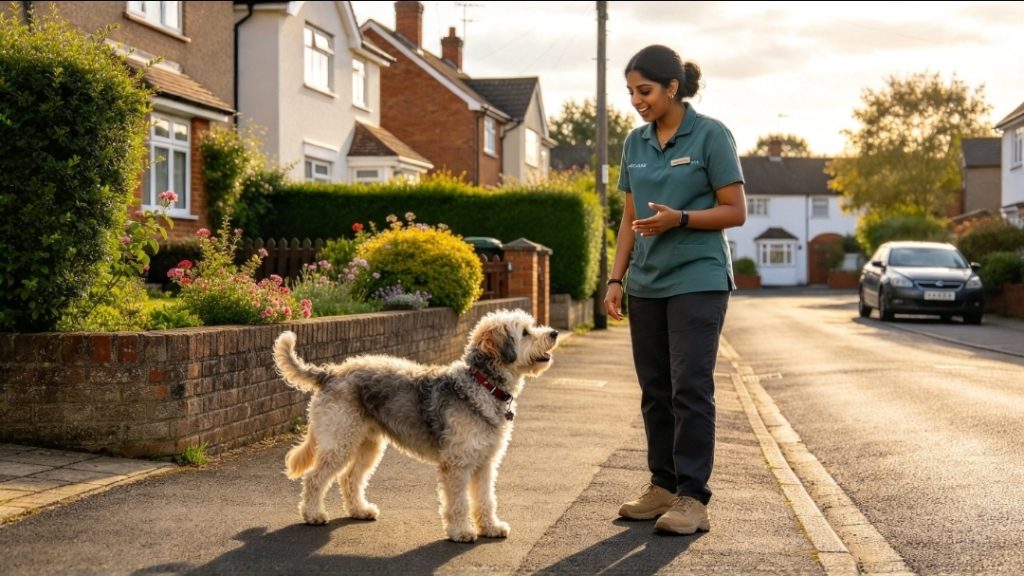
How Do I Teach My Dog to Respond to Its Name?
How do I teach my dog to respond to its name? Teach your dog that its name means to turn its attention towards you by saying the name once, rewarding the moment your dog looks at you, and gradually practising in different environments and around increasing levels of distraction. The aim is for your dog to hear its name and understand that responding to it is worthwhile.
RECOMMENDED PRODUCTS

What Should a Dog Do When It Hears Its Name?
Your dog’s name should act as an attention cue.
When you say your dog’s name, you want your dog to stop briefly, acknowledge you and turn their attention towards you.
You are not necessarily asking your dog to come to you. You are teaching them to notice and respond to your communication.
Once your dog responds reliably to their name, you can use their name before another cue when you need to gain their attention.
How Do I Teach My Dog Its Name Step by Step?
Step 1: Start in a Quiet Environment
Begin somewhere with very few distractions.
Wait until your dog is not already looking directly at you. Say their name once in a clear, normal voice.
As soon as your dog looks towards you, reward them.
Repeat this several times, allowing your dog to return to whatever they were doing before calling their name again.
The aim is to create a simple association:
Name → attention → reward.
Step 2: Reward the Response Immediately
Your timing matters.
The moment your dog turns their head, looks towards you or clearly acknowledges their name, provide the reward.
This helps your dog understand exactly what behaviour produced the reward.
Food can be particularly useful during the early stages, but praise, play or another appropriate reward can also be used.
Step 3: Say the Name Only Once
Avoid repeatedly saying your dog’s name when they are not responding.
For example, avoid:
“Max, Max, Max, Max, Max!”
Repeatedly saying the name can teach your dog that the first few repetitions do not matter.
Say the name once, give your dog an opportunity to respond, and if they do not, make the situation easier before trying again.
How Do I Know If My Dog Understands Its Name?
Your dog is beginning to understand their name when they consistently acknowledge it without needing you to repeat it.
They may:
- Turn their head towards you.
- Look at you.
- Stop what they are doing briefly.
- Orient their body towards you.
- Move towards you if another cue follows.
The first goal is attention, not necessarily a full recall.
How Do I Teach a Puppy Its Name?
Puppies can learn their name through short, positive repetitions.
Say the puppy’s name when they are already close to you and likely to respond.
When they look towards you, reward them immediately.
Repeat the exercise during normal daily activities without constantly saying the name.
The puppy should gradually learn that hearing their name means paying attention to the person communicating with them.
Should I Use Food to Teach My Dog Its Name?
Food can be an effective reward when teaching name recognition.
Say your dog’s name and reward the moment they respond.
As the behaviour becomes reliable, you can vary the reward using praise, play, a toy or access to an appropriate activity.
The reward does not always need to be identical, but the response should continue to produce something worthwhile.
How Do I Teach My Dog to Respond to Its Name Outside?
Do not move directly from a quiet room to a highly distracting outdoor environment.
First practise in different rooms, then a garden or another controlled area.
Once your dog responds reliably, gradually introduce outdoor distractions.
A suitable harness and short line can provide additional control during outdoor training.
A long line can be useful in an appropriate secure environment when gradually increasing distance and freedom.
The equipment should support safety and communication rather than physically forcing your dog to look at you.
How Do I Teach My Dog Its Name Around Distractions?
Start with mild distractions.
For example, your dog might be aware of a person or another object but still be capable of responding to you.
Say their name once.
If your dog turns towards you, reward immediately.
Gradually work around more difficult distractions as your dog’s reliability improves.
If your dog cannot respond, increase your distance from the distraction or reduce the difficulty.
Do not keep repeating the name when your dog is unable to respond.
What If My Dog Ignores Its Name?
If your dog ignores their name, look at what is happening around them.
The distraction may be too strong, your dog may be too excited, or they may not yet understand the cue in that environment.
Move closer to your dog or further away from the distraction.
Use a more valuable reward if appropriate and practise again.
If the problem continues, return to an easier environment where your dog can succeed.
What If I Have Used My Dog’s Name Too Much?
If your dog’s name has become background noise, you can rebuild its meaning.
Stop using the name unnecessarily.
Return to short, controlled exercises where saying the name is followed by a reward for responding.
Gradually rebuild the association between the name and attention.
Avoid using the name repeatedly when you are frustrated or when you know your dog is unlikely to respond.
Should I Use My Dog’s Name When Telling It Off?
Avoid using your dog’s name as a routine way of delivering punishment.
You want your dog’s name to have a clear and positive meaning: pay attention to me.
If the name repeatedly predicts something unpleasant, your dog may become less enthusiastic about responding to it.
Use the name primarily as a communication cue and teach other behaviours with their own clear instructions.
Is My Dog’s Name the Same as a Recall Cue?
No.
Your dog’s name can mean “pay attention to me.”
A recall cue such as “come” can mean “move towards me.”
You can use the name to gain attention before another instruction:
Name → attention → recall cue → come → reward.
Keeping the meanings clear can make communication easier for your dog.
How Do I Teach My Dog to Respond to Its Name During a Walk?
Use natural opportunities during walks.
When your dog is calmly exploring and is not completely focused on another distraction, say their name once.
When they look towards you, reward them.
You can then allow them to continue walking or give another appropriate cue.
This teaches your dog that responding to their name does not automatically mean the walk will stop or that their freedom will disappear.
What Equipment Do I Need to Teach Name Recognition?
Very little equipment is required.
Useful training equipment may include:
- Food rewards for reinforcing attention.
- A suitable harness and short line for controlled outdoor training.
- A long line when gradually increasing outdoor distance.
- A suitable toy if your dog is strongly motivated by play.
A muzzle may be appropriate for some dogs as part of a wider safety-management plan, but it does not teach name recognition.
A crate, placemat or playpen is not required for basic name training.
Equipment should support safe training rather than replace communication and learning.
How Do I Make My Dog’s Name Reliable?
Practise in progressively more difficult situations.
A useful progression is:
- Quiet room.
- Different rooms.
- Garden.
- Quiet outdoor area.
- Mild distractions.
- Greater distractions.
- Real-life situations.
Do not increase every difficulty at the same time.
Your dog may respond perfectly inside but struggle outside because there is much more competing information.
Build the behaviour gradually.
RECOMMENDED PRODUCTS
How Often Should I Practise?
Practise short repetitions throughout the day rather than holding long training sessions.
You can use everyday situations to reinforce the behaviour when your dog naturally responds to their name.
For example, say their name, reward their attention and then allow them to continue what they were doing.
Frequent successful repetitions help make responding to the name an automatic part of your dog’s behaviour.
What Are the Most Common Mistakes?
One of the biggest mistakes is repeatedly saying the dog’s name when they are not responding.
Another is using the name constantly without giving it a clear purpose.
Using the name mainly when something unpleasant is about to happen can also weaken the response.
Starting around distractions that are too difficult can create repeated failures.
Finally, failing to reward the behaviour during the early stages can make the name less meaningful to the dog.
Frequently Asked Questions
How long does it take for a dog to learn its name?
Some dogs begin responding within a short period of consistent training, while others need more practice. The important factor is repeated successful associations rather than a fixed timeframe.
Should I change my dog’s name?
Usually, an existing name can be retrained if the dog has learned to ignore it. Rebuild the association between the name and positive attention before considering a name change.
Should I say my dog’s name before every command?
Not necessarily. Use the name when you need to gain your dog’s attention, then give the appropriate cue. Constantly adding the name to every instruction is not required.
Why does my dog respond to its name at home but not outside?
Outdoor environments contain more distractions. Reduce the difficulty, increase your distance from distractions and gradually build the response in more challenging environments.
Can an older dog learn its name?
Yes. Older dogs can learn or relearn name recognition through clear communication, appropriate rewards, repetition and gradual progression.
Conclusion
Teaching your dog to respond to its name means teaching them that hearing their name is a reason to pay attention to you. Say the name once, reward the response immediately and gradually practise in different environments and around increasing distractions.
Avoid repeatedly calling the name, using it mainly for punishment or expecting a response in situations that are currently too difficult.
With clear communication, good timing, appropriate rewards and consistent practice, your dog’s name can become a reliable attention cue that helps you communicate more effectively in everyday situations.




