
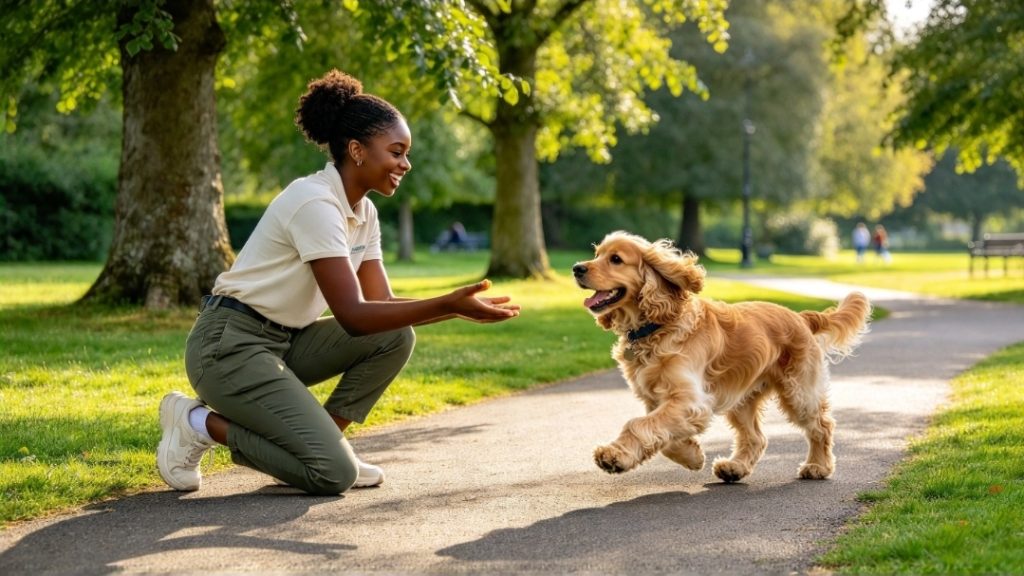
How Do I Teach My Dog to Come?
How do I teach my dog to come? Teach your dog to come by making coming to you rewarding, starting in a quiet environment, using a clear recall cue, and gradually increasing distance and distractions. Begin with short, successful recalls and reward your dog immediately when they reach you, so they learn that coming when called is always worthwhile.
RECOMMENDED PRODUCTS

What Does “Come” Mean?
“Come” should mean that your dog immediately turns their attention towards you and moves to you when you give the recall cue.
Choose one clear word, such as “come” or “here,” and use it consistently. Avoid repeatedly calling the word when your dog is unlikely to respond, because this can weaken the meaning of the cue.
The goal is to build a reliable recall that works not only inside the home but also in increasingly difficult real-life situations.
How Do I Teach My Dog to Come Step by Step?
Step 1: Start Close to Your Dog
Begin somewhere quiet with very few distractions.
Move only a short distance away from your dog. Use their name to gain their attention, followed by your recall cue.
When your dog turns towards you and comes to you, immediately reward them.
Keep the first repetitions easy. You want your dog to learn that responding to the recall cue produces something positive.
Step 2: Make Coming to You Rewarding
Use a reward your dog genuinely values.
Food can be particularly useful when teaching recall because it provides a quick and clear reward. Praise, play or access to something your dog enjoys can also be used when appropriate.
The reward should happen immediately after your dog reaches you.
Your timing matters because your dog needs to understand that coming all the way to you is the behaviour being rewarded.
Step 3: Increase the Distance Gradually
Once your dog reliably comes from a short distance, gradually move further away.
For example:
- Call your dog from a few steps away.
- Reward them when they reach you.
- Increase the distance slightly.
- Repeat in different areas.
- Only increase the difficulty when your dog is responding reliably.
Do not suddenly move from a short indoor recall to calling your dog from a long distance in a highly distracting environment.
Step 4: Practise in Different Locations
Dogs do not automatically understand that a behaviour learned in one location will work everywhere.
Practise indoors first, then move to a garden or another controlled environment.
Gradually introduce different surroundings and distractions while continuing to reward reliable recalls.
The aim is to teach your dog that the recall cue has the same meaning wherever you are.
How Do I Teach Recall Outside?
Outdoor recall should be introduced in a controlled and safe way.
A harness and long line can provide additional distance while allowing you to maintain control. The long line should give your dog room to move without allowing them to run into an unsafe situation.
Call your dog when they are already likely to respond. When they turn and come towards you, reward them immediately.
Do not use the long line to drag your dog towards you. It should provide safety and management while you teach the behaviour.
Only progress towards greater freedom when your dog has demonstrated reliable recall at the current level.
What Should I Do If My Dog Ignores Me?
If your dog ignores the recall, avoid repeatedly shouting the cue.
Instead, reduce the difficulty.
Move closer, reduce the distraction, regain your dog’s attention and try again when you have a better opportunity for success.
If your dog is highly interested in another dog, animal, person or object, calling repeatedly may teach them that they can ignore the cue.
The better approach is to manage the distance and environment so you can practise recall successfully.
Should I Punish My Dog for Not Coming?
No. Punishing your dog when they eventually come to you can make future recalls less reliable.
Your dog should learn that reaching you is safe and rewarding.
Even if your dog has taken longer than expected to respond, reward the decision to come to you. You can then identify why the recall failed and make the next repetition easier.
How Do I Stop My Dog From Running Away When Called?
Build recall gradually and avoid giving your dog more freedom than their current reliability allows.
A long line and harness can help during training because they allow your dog to experience greater distance while you maintain physical control.
Do not allow your dog to repeatedly practise ignoring the recall and running away.
Freedom should increase as behavioural responsibility increases.
How Do I Teach a Puppy to Come?
Puppies can begin recall training with very short distances.
Use a cheerful voice, move away from the puppy, give the recall cue and reward the puppy immediately when they follow you.
You can make the exercise easier by getting down closer to the puppy and using movement to encourage them to follow.
Keep sessions short and successful. Young puppies can become distracted or tired quickly.
As the puppy develops, gradually introduce greater distance, different environments and controlled distractions.
How Do I Use Food When Teaching Recall?
Food can be an effective recall reward because it allows you to reinforce the behaviour immediately.
Hold the reward until your dog reaches you rather than showing the food and repeatedly using it to pull your dog towards you.
Once your dog understands the recall, vary the reward where appropriate. Your dog should learn that coming to you is worthwhile even when the reward is not always identical.
Should I Call My Dog for Something They Dislike?
Be careful about repeatedly using the recall cue immediately before something your dog dislikes.
For example, if you only call your dog when the walk is ending, your dog may begin learning that coming to you means the fun is over.
Instead, practise recalls during enjoyable activities. Call your dog, reward them, and sometimes release them to continue what they were doing.
This helps prevent the recall from becoming associated only with losing freedom or ending an enjoyable activity.
RECOMMENDED PRODUCTS
How Do I Make Recall More Reliable?
Reliability comes from gradually increasing difficulty rather than testing your dog at the hardest level immediately.
Progress through:
- Short distances.
- Longer distances.
- Quiet environments.
- Mild distractions.
- Greater distractions.
- Different locations.
- Controlled outdoor situations.
- Increasing freedom when reliability is demonstrated.
If your dog’s response becomes less reliable, go back to an easier level.
What Equipment Do I Need for Recall Training?
The equipment required depends on the environment and the level of training.
A suitable harness and long line can be useful when teaching outdoor recall because they provide greater movement while maintaining control.
A short line can be useful in situations where you need closer control.
A muzzle may be appropriate for a dog that requires one for safety around specific triggers, animals or people, but it does not teach recall by itself. Any muzzle use should be introduced correctly and should not replace appropriate training and professional assessment where required.
Equipment should support safety and communication rather than being used as punishment.
How Do I Teach Recall Around Distractions?
Do not begin with the strongest distraction your dog encounters.
Start far enough away from the distraction that your dog can still notice you and respond. Call your dog, reward the response and then gradually work closer as reliability improves.
If your dog stops responding, increase the distance again.
The key is to teach your dog that responding to you remains worthwhile even when something interesting is happening nearby.
What If My Dog Comes Slowly?
A slow response can indicate that the environment, distraction or reward is not sufficiently motivating.
Look at what your dog is interested in before calling them. If they are highly focused on something else, make the exercise easier.
Use an appropriate high-value reward and practise at a distance where your dog can still respond successfully.
Avoid turning every recall into a test.
What If My Dog Comes Close But Does Not Reach Me?
Reward the dog when they reach the position you want rather than rewarding too early.
If your dog approaches but stops several feet away, make the exercise easier and encourage them to complete the recall.
You can move backwards slightly to encourage your dog to follow you, then reward when they reach you.
Gradually teach your dog that the recall is completed by coming all the way to you.
How Often Should I Practise Recall?
Practise recall frequently in short sessions rather than relying on occasional long training sessions.
You can build recalls into everyday activities by calling your dog from one room to another, rewarding them in the garden or practising during controlled walks.
Frequent successful repetitions help make responding to the recall cue an established behaviour.
When Can I Let My Dog Off Lead?
Off-lead freedom should be based on your dog’s reliability, the environment and the safety of the situation.
A dog that recalls reliably in a quiet garden may not yet be ready to recall reliably around wildlife, unfamiliar dogs or busy public spaces.
Use a long line to build reliability outdoors before increasing freedom where appropriate.
More freedom requires more behavioural responsibility.
RECOMMENDED PRODUCTS
Frequently Asked Questions
What is the best word to use for recall?
There is no single word that is best for every dog. Choose one clear cue, such as “come” or “here,” and use it consistently.
How long does it take to teach a dog to come?
There is no fixed timeframe. The speed of progress depends on the dog’s previous learning, motivation, environment, distractions and consistency of training.
Should I use treats to teach recall?
Yes. Food can be an effective reward, particularly during the early stages. Other appropriate rewards can also be introduced as the behaviour becomes more reliable.
Why does my dog come inside but not outside?
Outside usually contains more distractions and competing rewards. Build the behaviour gradually by increasing environmental difficulty rather than assuming your dog will automatically transfer the indoor behaviour outdoors.
Can an older dog learn recall?
Yes. Older dogs can learn reliable recall through clear communication, appropriate rewards, repetition and gradual progression.
Conclusion
Teaching your dog to come is about building a strong association between the recall cue and reaching you. Start close, use an appropriate reward, practise frequently, increase distance and distractions gradually, and use a harness and long line when additional outdoor control is required.
Do not punish your dog for coming late. Instead, identify why the recall failed, make the next repetition easier and continue building reliability.
A reliable recall is not created by repeatedly shouting louder. It is built through clear communication, appropriate timing, rewarding the correct behaviour and gradually increasing your dog’s freedom as their reliability improves.




