
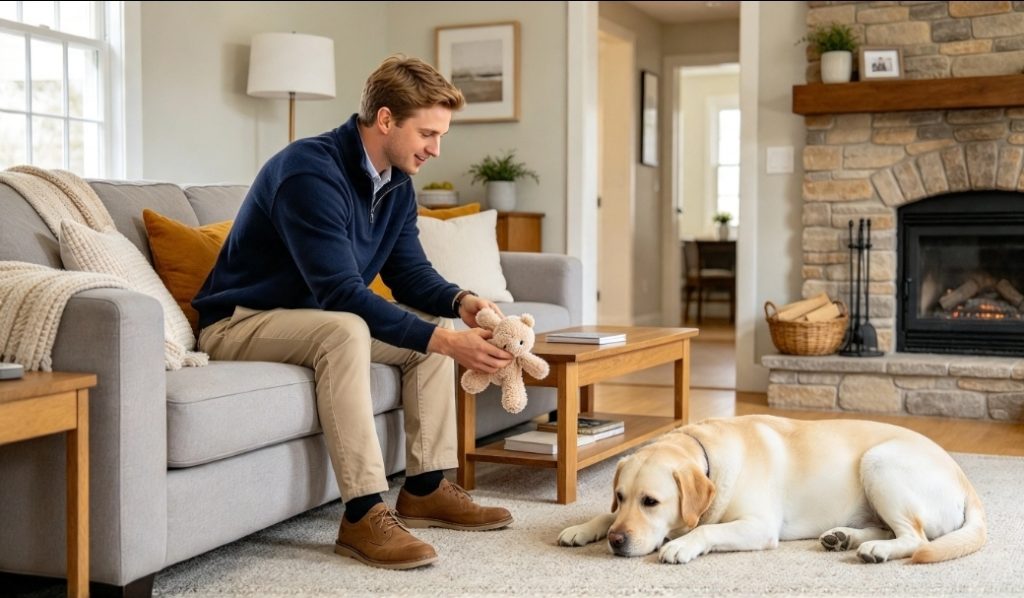
What to Do When Your Dog Will Not Engage in Play
What to do when your dog will not engage in play starts with understanding why the dog is not interested rather than trying to force interaction. A dog may ignore a toy, look away, walk off or show only brief interest because of distractions, tiredness, uncertainty, the type of toy or the way play is being introduced. The best approach is to observe the dog’s response, create a suitable environment, offer an appropriate opportunity to engage and adjust the activity according to the dog’s behaviour.
RECOMMENDED PRODUCTS

Why Will a Dog Not Engage in Play?
A dog that will not engage in play may have several possible reasons for its behaviour. Some dogs naturally enjoy toys more than others, while some need time to become comfortable with a particular activity.
A dog may be distracted by its surroundings, unsure how to interact with the toy, tired, uncomfortable or simply not interested at that moment. Previous experiences can also influence how a dog responds to play.
It is important not to assume that a dog is stubborn or lacks motivation simply because it does not chase, grab or carry a toy.
The first step is to observe what the dog does when the toy is introduced. Does the dog look towards it, approach it, investigate it briefly or move away? These responses can help identify what may be affecting engagement.
If a dog that normally enjoys play suddenly loses interest, consider whether pain, illness, fatigue or another change in its wellbeing could be responsible. Seek veterinary advice if the change is sudden, persistent or accompanied by other signs of discomfort or illness.
Common Reasons a Dog Will Not Play
1. The Environment Is Too Distracting
A dog may engage with a toy in a quiet room but show little interest in a busy garden, public space or unfamiliar training area.
People, other dogs, unfamiliar sounds and movement can compete for the dog’s attention. The dog may be concentrating on its surroundings rather than the activity being offered.
Start somewhere familiar and relatively quiet. Once the dog shows comfortable, voluntary engagement, distractions can be introduced gradually.
2. The Dog Is Not Interested in That Particular Toy
Not every dog enjoys the same type of toy.
One dog may prefer a soft object, while another may show more interest in something that rolls or moves. Some dogs enjoy carrying objects but have little interest in chasing them, while others prefer exploring their surroundings.
Offer a suitable variety of safe play opportunities and observe the dog’s response. Avoid assuming that every dog should enjoy tugging, chasing or retrieving.
3. The Handler Is Moving the Toy Too Much
Repeatedly shaking, waving or moving a toy towards a dog can sometimes make the interaction confusing or overwhelming.
If the dog is watching without approaching, the handler may be tempted to increase the movement. However, more movement does not automatically create more interest.
Present the toy calmly and give the dog time to investigate. Observe whether the dog chooses to approach before changing the activity.
4. The Dog Is Tired or Needs a Break
A dog that has already exercised, trained or experienced a stimulating environment may not be ready for another active session.
Fatigue can reduce interest and affect the dog’s ability to participate comfortably.
Allow adequate rest and choose a suitable time for play. Do not interpret a lack of interest as a reason to keep trying harder.
5. The Dog Is Uncertain About the Interaction
Some dogs may not understand what is expected when a toy is presented. Others may be hesitant because of unfamiliar objects, previous experiences or discomfort with the handler’s movements.
Give the dog space and allow voluntary investigation. Avoid pushing the toy into the dog’s face, repeatedly pursuing it or forcing physical contact.
Building confidence requires the dog to feel safe enough to explore at its own pace.
How to Encourage a Dog to Engage in Play
1. Start With Observation
Before attempting to encourage play, watch the dog’s natural behaviour.
Notice what attracts its attention, whether it approaches objects voluntarily and how it responds to movement. Look for small signs of interest, such as looking towards the toy, moving closer or briefly investigating it.
These early responses can provide useful information even when the dog does not immediately pick up the toy.
2. Choose a Quiet, Comfortable Area
Begin in a familiar space where the dog can focus without excessive distractions.
Allow enough room for the dog to move freely and ensure the environment is safe. Avoid introducing play in a place where the dog is already overwhelmed or struggling to settle.
If the dog remains distracted, reduce the environmental demands rather than increasing the intensity of the activity.
3. Offer a Suitable Toy
Choose a toy that is appropriate for the dog’s size, age, physical ability and style of interaction.
Present it without repeatedly moving it towards the dog. Allow the dog to look, approach or investigate voluntarily.
If the dog shows no interest, try a different type of activity at another opportunity rather than continually presenting the same toy.
4. Follow the Dog’s Interest
If the dog approaches or investigates the toy, allow the interaction to develop naturally.
Some dogs begin by sniffing or carrying an object before showing interest in more active play. Others may prefer a short interaction followed by a break.
Respond to what the dog is comfortable doing instead of expecting an immediate chase, tug or retrieve.
5. Keep Sessions Short
Early sessions should be brief enough to avoid frustration or overstimulation.
If the dog engages, observe how the interaction develops. If interest fades, pause and allow the dog to move away.
Ending a session calmly can be more useful than continuing until neither the dog nor handler is responding productively.
6. Reward Voluntary Engagement
When the dog chooses to interact appropriately, acknowledge that behaviour in a way the dog finds rewarding.
Depending on the individual dog, this might involve praise, food, an opportunity to continue the activity or another suitable form of positive reinforcement.
Do not assume that a toy must be the dog’s preferred reward. The purpose is to understand what motivates that dog and use it appropriately.
7. Build Progress Gradually
Once the dog begins engaging comfortably, develop the activity in small steps.
For example, a dog that initially investigates a toy might progress to carrying it, following its movement or participating in a short game.
Not every dog will progress in the same way, and not every dog needs to enjoy every type of play. Focus on safe, voluntary engagement rather than reaching a particular performance standard.
How to Recognise Engagement During Play Training
Engagement is more than the amount of movement a dog produces.
A dog can be highly active without interacting in a controlled or meaningful way. Equally, a dog that approaches slowly or investigates quietly may be showing genuine interest.
Observe the complete interaction, including whether the dog:
- Notices the toy or activity.
- Chooses to approach or investigate.
- Interacts voluntarily.
- Remains comfortable with the handler.
- Can pause or disengage.
- Returns to a calmer state after the activity.
These observations help the handler assess the quality of engagement instead of judging success solely by speed, excitement or physical intensity.
What If the Dog Looks at the Toy but Does Not Approach?
Looking at a toy without approaching it may indicate interest, uncertainty or simply awareness of the object. The behaviour alone does not establish the reason.
Avoid repeatedly moving the toy closer or trying to make the dog chase it.
Give the dog space and time. If the dog chooses to approach, allow it to investigate without immediately increasing the intensity. If it looks away or leaves, respect that response and reassess the environment, activity and timing.
What If the Dog Becomes Overexcited Once It Starts Playing?
Some dogs show little interest initially but become highly stimulated once the activity begins. Others alternate between brief engagement and periods of distraction.
If the dog becomes increasingly frantic, jumps repeatedly, grabs at clothing or struggles to disengage, reduce the intensity or stop the session.
Avoid making the toy move faster in an attempt to maintain interest. Instead, observe whether the dog can participate safely and recover after a pause.
If the behaviour becomes difficult to manage or creates a risk of injury, end the activity and seek suitable professional guidance.
Understanding Motivation, Timing and Communication
A dog’s response to play is influenced by more than the toy itself. Motivation, environment, previous experiences, physical comfort and the handler’s actions can all affect engagement.
Timing is important because the handler needs to recognise when the dog notices the toy, chooses to approach, begins interacting or loses interest.
If the handler continually changes the activity, the reason for the dog’s response can become harder to identify. A more useful approach is to make one adjustment at a time and observe what changes.
Clear, consistent handling allows the dog to explore the activity without unnecessary pressure.
When Should You Stop Trying to Encourage Play?
Stop or pause the session when the dog repeatedly disengages, appears uncomfortable, becomes overwhelmed or cannot participate safely.
Do not force the dog to chase, grip or carry a toy. Avoid punishing the dog for showing little interest or treating every refusal to engage as a training problem.
If the dog shows fear, guarding, aggression or persistent difficulty interacting comfortably, seek advice from a suitably qualified dog behaviour professional.
If a dog that previously enjoyed play suddenly stops engaging, or shows signs of pain, reduced mobility, lethargy or other changes in health, consult a veterinarian.
Frequently Asked Questions
Why Does My Dog Not Like Playing With Toys?
Some dogs have little interest in toys, while others prefer particular types of objects or activities. Environment, experience, age, physical comfort and individual preferences can all influence play. Explore suitable alternatives without forcing interaction.
Can You Teach an Adult Dog to Play?
An adult dog may learn to enjoy new activities, but progress depends on the individual dog, its experiences and what it finds rewarding. Start with voluntary exploration and simple interactions. Allow the dog to progress gradually without assuming it must enjoy a particular game.
Should I Keep Trying if My Dog Ignores the Toy?
Repeatedly presenting a toy when the dog is uninterested is unlikely to clarify the reason for its response. Pause, observe the dog and consider changing the environment, timing or activity. Try again at a suitable opportunity.
Does a Dog Need Play Training?
Play can provide enrichment and an opportunity for interaction, but dogs differ in what they enjoy. A dog does not have to enjoy every toy or game to learn effectively. Choose suitable activities that support the dog’s wellbeing and individual needs.
Is Lack of Play Interest a Sign of Low Motivation?
Not necessarily. A dog may be motivated by food, exploration, social interaction or other activities rather than toys. Consider the dog’s overall behaviour and preferences before drawing conclusions about its motivation.
RECOMMENDED PRODUCTS
Final Thoughts on What to Do When Your Dog Will Not Engage in Play
What to do when your dog will not engage in play begins with observation rather than pressure. A lack of interest may relate to the environment, the type of toy, timing, motivation, fatigue, uncertainty or physical discomfort.
Choose a suitable environment, offer appropriate opportunities for voluntary interaction and allow the dog to respond at its own pace. Reward engagement when appropriate, keep sessions manageable and adjust the activity according to what the dog communicates through its behaviour.
The objective is not to force every dog to play. It is to understand the individual dog, identify suitable forms of enrichment and build a comfortable, positive interaction that supports the dog’s wellbeing and development.




