
No products in the cart.
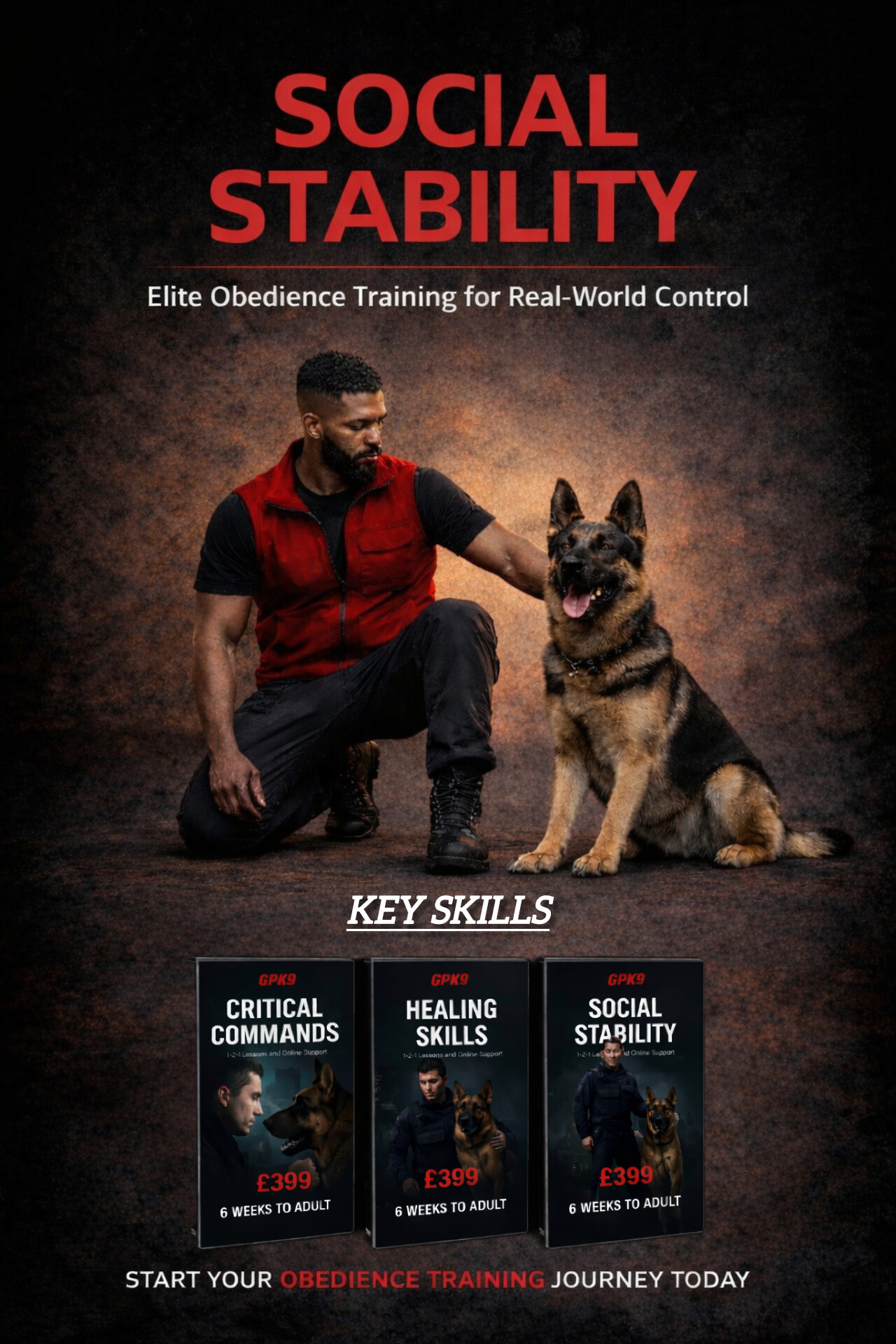
Social Stability
Building Confident Behaviour in Every Environment
Socialization is one of the most important foundations in a dog’s development. It allows the dog and handler to move through daily life with confidence, awareness, and calm behaviour.
However, true socialization is not created simply by exposing a dog to people or animals. It develops over time through guidance, structure, and consistent experiences in different environments.
When a dog truly understands social behaviour, it no longer reacts impulsively to unfamiliar situations. Instead, the dog learns how to remain calm, observe its surroundings, and respond appropriately. Over time, both the dog and the handler build confidence as new experiences become familiar.
The goal is to develop behaviour that remains balanced and non-threatening in any situation the dog encounters.
Understanding the Three Core Socialization Principles
Different environments require different behaviours from a dog. Learning how to behave appropriately in each situation helps the dog remain calm and prevents behaviour that may appear threatening to others.
The following three principles represent common environments where dogs must learn to remain socially stable and controlled.
Socialization at Home
Socialization at home focuses on how the dog behaves within its primary environment.
The dog learns how to relax, respond to household activity, and interact calmly with the people and animals it lives with. Rather than reacting to every sound or movement, the dog develops the ability to remain stable and balanced.
Instead of becoming overly excited or defensive, the dog learns appropriate behaviour inside the home environment.
The purpose of home socialization is to create calm and predictable behaviour in the place where the dog spends the most time.
Common examples include:
• Remaining calm around family members
• Responding appropriately to household movement
• Relaxing when visitors arrive
• Settling comfortably within the home
Home socialization creates a stable foundation for behaviour in other environments
Socialization in Public
Public socialization focuses on how the dog behaves when outside the home environment.
The dog may encounter unfamiliar people, animals, noises, and changing surroundings. Training teaches the dog to observe these situations without reacting aggressively or appearing threatening.
In public environments, the dog learns to remain neutral and controlled while moving through busy areas.
This principle is commonly applied during:
• Walks in public areas
• Encounters with unfamiliar people
• Passing other animals calmly
Public socialization helps dogs move through the world without creating stress or concern for others.
Socialization When Alone
Socialization when alone focuses on how the dog behaves when temporarily separated from the handler.
There may be situations where the dog is briefly alone at home, separated during a walk, or moving independently without the handler nearby.
The dog must still behave calmly and avoid reacting aggressively to unfamiliar situations.
Rather than panicking or becoming defensive, the dog learns to remain composed and non-threatening.
This principle is commonly applied when:
• The dog is alone at home
• The dog becomes separated during a walk
• The dog encounters unfamiliar surroundings alone
Teaching dogs how to remain calm when alone helps prevent reactive behaviour in uncertain situations.

Training for Real-World Environments
A well-socialized dog must be able to behave appropriately in a variety of environments.
Dogs should experience different surroundings, sounds, and situations while learning how to remain calm and controlled.
Training in multiple locations helps the dog understand that calm behaviour is expected everywhere, not only in familiar places.
This approach prepares the dog for real-world situations where it may encounter unfamiliar experiences.
Guidance Over Exposure
Some people believe socialization simply means exposing a dog to many people and animals.
While exposure can be helpful, it does not automatically teach a dog how to behave correctly.
Effective socialization focuses on guiding the dog so it understands how to react calmly and appropriately.
When dogs learn what behaviour is expected, they respond with greater confidence and stability.
Key elements of effective socialization include:
- Clear guidance from the handler
- Consistent exposure to environments
- Calm responses to new experiences
- Structured learning through repetition
These elements help the dog learn how to behave appropriately rather than reacting unpredictably.
Creating a Balanced Companion
Socialization is not only about exposure. It is about developing behaviour that allows the dog to move through the world calmly.
When trained properly, socialization helps:
- Strengthen trust between dog and handler
- Encourage calm behaviour in unfamiliar environments
- Prevent behaviour that may appear threatening
Over time, the dog develops the ability to remain confident and controlled, creating a balanced and reliable companion.
Social Stabillity
£399Lifetime Access
- All premium features
- Online support
- Regular updates
- Personal training