
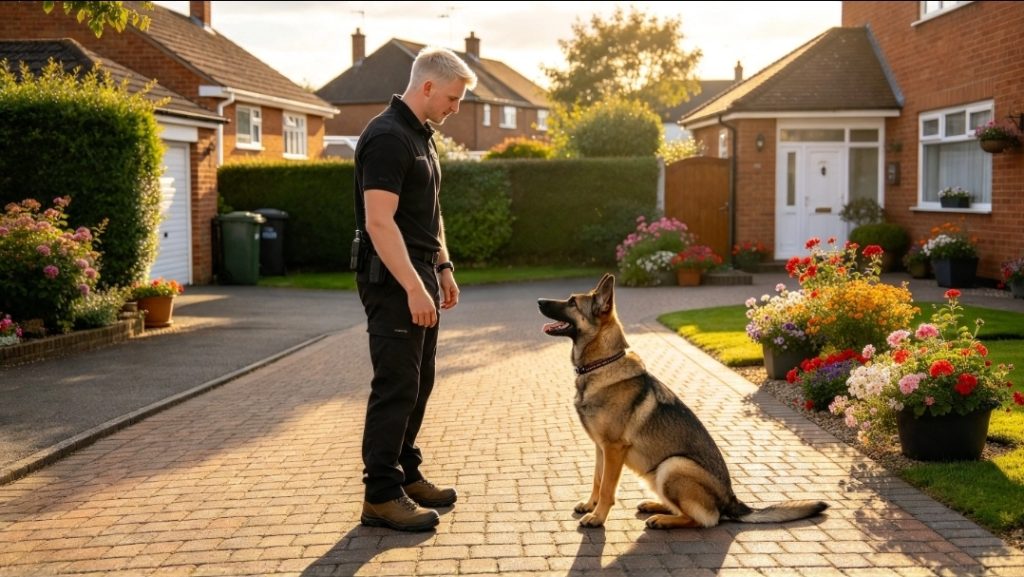
How Many Commands Should a Dog Know?
How many commands should a dog know? There is no fixed number of commands every dog needs to know. A well-trained dog should understand the commands that are useful for everyday life, safety, communication and control rather than simply learning as many commands as possible. The quality, reliability and usefulness of the behaviours matter more than the total number.
RECOMMENDED PRODUCTS

How Many Commands Does a Dog Really Need?
Most dogs do not need dozens of commands to be well trained.
A practical foundation can include around five to ten important behaviours, provided your dog understands them reliably in different situations.
Useful commands can include:
- Name or attention
- Sit
- Down
- Wait
- Stay
- Come
- Leave it
- Drop it
- Place
- Heel or walking position
The exact number can vary depending on the dog’s lifestyle, environment and the level of training required.
A family pet may need fewer behaviours than a working dog, assistance dog or dog involved in advanced training.
Is It Better to Teach More Commands?
Not necessarily.
Teaching a dog more commands can be useful, but adding commands simply to increase the number your dog knows does not automatically improve their behaviour.
A dog that knows ten commands reliably can be much better trained than a dog that knows thirty commands but only responds occasionally.
Reliability is more important than quantity.
Your dog should understand what a command means, respond appropriately and continue responding when the environment becomes more distracting.
What Are the Most Important Commands to Teach a Dog?
Start with behaviours that have a practical purpose.
Name and Attention
Your dog’s name should help get their attention.
Teaching your dog to look towards you when you use their name gives you a foundation for further communication.
Recall
Recall teaches your dog to return to you when called.
This is one of the most important behaviours for safety and off-lead freedom.
Wait
Wait teaches your dog not to move forward immediately.
It can be useful around doors, gates, roads, food and other situations where controlled movement is important.
Leave It
Leave it teaches your dog to disengage from something you do not want them to interact with.
This can be useful when your dog encounters food, objects, wildlife or other distractions.
Drop It
Drop it teaches your dog to release something they already have.
This can be particularly useful during play or when your dog picks up something inappropriate.
Sit and Down
Sit and down are useful foundation behaviours.
They can help your dog learn to control their movement and respond to simple instructions.
Place
Place can teach your dog to remain in a designated area.
It can be particularly useful at home when you need your dog to settle while you carry out another activity.
Walking Position
Teaching your dog to walk appropriately on lead gives you better control during everyday walks.
The exact walking position does not need to be rigid. The important point is that your dog can walk safely and respond to you when needed.
RECOMMENDED PRODUCTS
Should Every Dog Know the Same Commands?
No.
The commands your dog needs should reflect your dog’s lifestyle.
For example, a dog living in a busy household may benefit from strong place, wait and leave-it behaviours.
A dog regularly walking off lead needs particularly reliable recall.
A working dog may require many additional behaviours that are not necessary for an average companion dog.
Training should be based on what the dog needs to do in real life.
Does the Number of Commands Matter More Than Reliability?
No.
Imagine one dog that knows five commands and responds correctly almost every time.
Another dog may know twenty commands but ignores several of them whenever there is a distraction.
The first dog may be considerably easier and safer to manage.
A command is only useful if your dog can understand and respond to it when you actually need it.
How Do I Know If My Dog Really Knows a Command?
Your dog should not only perform the behaviour in a quiet room.
A reliable behaviour should gradually be tested across different:
- Locations
- Distances
- Positions
- Distractions
- Durations
- Situations
For example, your dog may know recall in your garden but struggle to return when another dog or wildlife is nearby.
That does not necessarily mean your dog has forgotten recall. It means the behaviour needs more training in that level of difficulty.
Should I Teach Commands One at a Time?
Usually, yes.
Teaching one new behaviour at a time makes it easier for your dog to understand what you are asking.
Once a behaviour is established, you can continue maintaining it while introducing another.
There is no need to rush through a long list of commands.
Build a strong foundation first.
How Do I Teach a New Command?
Start somewhere with few distractions.
Clearly communicate what you want your dog to do and reward the correct response immediately.
Repeat the exercise in short sessions.
Once your dog begins responding consistently, gradually introduce more distance, duration or distractions.
Do not make everything more difficult at once.
If your dog begins making repeated mistakes, reduce the difficulty and practise at an easier level.
How Do Rewards Help With Command Training?
Rewards help your dog understand which behaviour produced a successful outcome.
The timing of the reward is important.
Reward immediately after the correct behaviour so your dog can make the connection.
Food, play, praise or access to something your dog wants can all be useful rewards, depending on the behaviour and the individual dog.
As the behaviour becomes reliable, you can vary how and when you reward while continuing to reinforce good responses.
What If My Dog Knows a Command at Home but Ignores It Outside?
This is common.
Your dog may understand the command but not yet be reliable in a more distracting environment.
Do not simply repeat the command louder.
Reduce the difficulty and practise again.
For example, if your dog responds to recall indoors but ignores it in a busy park, return to a quieter outdoor environment and gradually build towards the more difficult situation.
Dogs need to learn that a command remains relevant even when the environment changes.
How Many Commands Should a Puppy Know?
A puppy does not need a large vocabulary.
Focus on useful foundation behaviours such as their name, attention, recall, wait, leave it and appropriate movement around the home and outdoors.
Short, positive training sessions are more useful than trying to teach a puppy a large number of commands quickly.
As the puppy develops, you can gradually add more behaviours and increase the difficulty.
Can a Dog Learn Too Many Commands?
A dog can learn a large number of behaviours, but the issue is rarely the number itself.
Problems arise when training becomes confusing, inconsistent or unnecessarily complicated.
Each command should have a clear meaning.
Avoid using several different words for the same behaviour unless you deliberately teach your dog that they mean the same thing.
Clear communication makes learning easier.
What Equipment Do I Need to Teach Commands?
Most basic command training requires very little equipment.
A suitable reward and a safe training environment are usually enough.
A short line can provide additional control during some training exercises.
A harness and long line can be useful when developing recall or other behaviours at a distance.
A crate or placemat may be useful for teaching appropriate settling or positioning at home, but they are not necessary for every command.
Equipment should only be used when it serves a clear training or safety purpose.
Common Mistakes When Teaching Commands
Avoid:
- Focusing on the number of commands instead of reliability
- Teaching too many behaviours at once
- Repeating commands when your dog ignores them
- Rewarding the wrong behaviour
- Increasing distractions too quickly
- Expecting a command learned at home to work immediately outdoors
- Changing the meaning of a command
- Using unnecessary commands that have no practical purpose
- Stopping training once the dog performs the behaviour correctly in one environment
The goal is not to create a dog that knows the longest list of commands.
The goal is to create a dog that understands and reliably responds to useful communication.
How Should I Progress My Dog’s Training?
Once your dog understands a command, gradually increase the difficulty.
You can increase:
Duration → distance → distractions → different environments.
For example, once your dog can wait for five seconds in a quiet room, you can gradually increase the duration.
Then practise from further away.
Then introduce distractions.
Finally, practise in different environments.
If your dog struggles, reduce the difficulty and rebuild the behaviour.
Frequently Asked Questions
Is 10 commands enough for a dog?
For many companion dogs, ten well-trained behaviours can provide a very useful foundation. What matters most is whether the dog can reliably respond to them when needed.
What are the 5 most important commands for a dog?
A useful starting point is attention or name response, recall, wait, leave it and a reliable walking or positioning behaviour. The exact priorities depend on the dog’s lifestyle.
Should my dog know 20 commands?
There is no need for every dog to know twenty commands. Additional behaviours can be useful if they have a genuine purpose for your dog.
Can I teach my dog more commands after basic training?
Yes. Once the foundation behaviours are reliable, you can continue teaching new behaviours and more advanced skills.
What matters more than the number of commands?
Reliability, understanding and the ability to respond in different environments are more important than the total number of commands your dog knows.
Conclusion
There is no magic number of commands a dog should know. Start with the behaviours that have the greatest practical value, such as attention, recall, wait, leave it, drop it and appropriate walking or positioning.
Once these behaviours are understood, build reliability across different environments and distractions before adding more advanced commands.
A well-trained dog is not the dog that knows the most commands. It is the dog that reliably understands and responds to the commands that matter.
How Many Commands Should a Dog Know?
How many commands should a dog know? There is no fixed number of commands every dog needs to know. A well-trained dog should understand the commands that are useful for everyday life, safety, communication and control rather than simply learning as many commands as possible. The quality, reliability and usefulness of the behaviours matter more than the total number.
RECOMMENDED PRODUCTS
How Many Commands Does a Dog Really Need?
Most dogs do not need dozens of commands to be well trained.
A practical foundation can include around five to ten important behaviours, provided your dog understands them reliably in different situations.
Useful commands can include:
- Name or attention
- Sit
- Down
- Wait
- Stay
- Come
- Leave it
- Drop it
- Place
- Heel or walking position
The exact number can vary depending on the dog’s lifestyle, environment and the level of training required.
A family pet may need fewer behaviours than a working dog, assistance dog or dog involved in advanced training.
Is It Better to Teach More Commands?
Not necessarily.
Teaching a dog more commands can be useful, but adding commands simply to increase the number your dog knows does not automatically improve their behaviour.
A dog that knows ten commands reliably can be much better trained than a dog that knows thirty commands but only responds occasionally.
Reliability is more important than quantity.
Your dog should understand what a command means, respond appropriately and continue responding when the environment becomes more distracting.
What Are the Most Important Commands to Teach a Dog?
Start with behaviours that have a practical purpose.
Name and Attention
Your dog’s name should help get their attention.
Teaching your dog to look towards you when you use their name gives you a foundation for further communication.
Recall
Recall teaches your dog to return to you when called.
This is one of the most important behaviours for safety and off-lead freedom.
Wait
Wait teaches your dog not to move forward immediately.
It can be useful around doors, gates, roads, food and other situations where controlled movement is important.
Leave It
Leave it teaches your dog to disengage from something you do not want them to interact with.
This can be useful when your dog encounters food, objects, wildlife or other distractions.
Drop It
Drop it teaches your dog to release something they already have.
This can be particularly useful during play or when your dog picks up something inappropriate.
Sit and Down
Sit and down are useful foundation behaviours.
They can help your dog learn to control their movement and respond to simple instructions.
Place
Place can teach your dog to remain in a designated area.
It can be particularly useful at home when you need your dog to settle while you carry out another activity.
Walking Position
Teaching your dog to walk appropriately on lead gives you better control during everyday walks.
The exact walking position does not need to be rigid. The important point is that your dog can walk safely and respond to you when needed.
Should Every Dog Know the Same Commands?
No.
The commands your dog needs should reflect your dog’s lifestyle.
For example, a dog living in a busy household may benefit from strong place, wait and leave-it behaviours.
A dog regularly walking off lead needs particularly reliable recall.
A working dog may require many additional behaviours that are not necessary for an average companion dog.
Training should be based on what the dog needs to do in real life.
Does the Number of Commands Matter More Than Reliability?
No.
Imagine one dog that knows five commands and responds correctly almost every time.
Another dog may know twenty commands but ignores several of them whenever there is a distraction.
The first dog may be considerably easier and safer to manage.
A command is only useful if your dog can understand and respond to it when you actually need it.
How Do I Know If My Dog Really Knows a Command?
Your dog should not only perform the behaviour in a quiet room.
A reliable behaviour should gradually be tested across different:
- Locations
- Distances
- Positions
- Distractions
- Durations
- Situations
For example, your dog may know recall in your garden but struggle to return when another dog or wildlife is nearby.
That does not necessarily mean your dog has forgotten recall. It means the behaviour needs more training in that level of difficulty.
Should I Teach Commands One at a Time?
Usually, yes.
Teaching one new behaviour at a time makes it easier for your dog to understand what you are asking.
Once a behaviour is established, you can continue maintaining it while introducing another.
There is no need to rush through a long list of commands.
Build a strong foundation first.
How Do I Teach a New Command?
Start somewhere with few distractions.
Clearly communicate what you want your dog to do and reward the correct response immediately.
Repeat the exercise in short sessions.
Once your dog begins responding consistently, gradually introduce more distance, duration or distractions.
Do not make everything more difficult at once.
If your dog begins making repeated mistakes, reduce the difficulty and practise at an easier level.
How Do Rewards Help With Command Training?
Rewards help your dog understand which behaviour produced a successful outcome.
The timing of the reward is important.
Reward immediately after the correct behaviour so your dog can make the connection.
Food, play, praise or access to something your dog wants can all be useful rewards, depending on the behaviour and the individual dog.
As the behaviour becomes reliable, you can vary how and when you reward while continuing to reinforce good responses.
What If My Dog Knows a Command at Home but Ignores It Outside?
This is common.
Your dog may understand the command but not yet be reliable in a more distracting environment.
Do not simply repeat the command louder.
Reduce the difficulty and practise again.
For example, if your dog responds to recall indoors but ignores it in a busy park, return to a quieter outdoor environment and gradually build towards the more difficult situation.
Dogs need to learn that a command remains relevant even when the environment changes.
How Many Commands Should a Puppy Know?
A puppy does not need a large vocabulary.
Focus on useful foundation behaviours such as their name, attention, recall, wait, leave it and appropriate movement around the home and outdoors.
Short, positive training sessions are more useful than trying to teach a puppy a large number of commands quickly.
As the puppy develops, you can gradually add more behaviours and increase the difficulty.
Can a Dog Learn Too Many Commands?
A dog can learn a large number of behaviours, but the issue is rarely the number itself.
Problems arise when training becomes confusing, inconsistent or unnecessarily complicated.
Each command should have a clear meaning.
Avoid using several different words for the same behaviour unless you deliberately teach your dog that they mean the same thing.
Clear communication makes learning easier.
What Equipment Do I Need to Teach Commands?
Most basic command training requires very little equipment.
A suitable reward and a safe training environment are usually enough.
A short line can provide additional control during some training exercises.
A harness and long line can be useful when developing recall or other behaviours at a distance.
A crate or placemat may be useful for teaching appropriate settling or positioning at home, but they are not necessary for every command.
Equipment should only be used when it serves a clear training or safety purpose.
Common Mistakes When Teaching Commands
Avoid:
- Focusing on the number of commands instead of reliability
- Teaching too many behaviours at once
- Repeating commands when your dog ignores them
- Rewarding the wrong behaviour
- Increasing distractions too quickly
- Expecting a command learned at home to work immediately outdoors
- Changing the meaning of a command
- Using unnecessary commands that have no practical purpose
- Stopping training once the dog performs the behaviour correctly in one environment
The goal is not to create a dog that knows the longest list of commands.
The goal is to create a dog that understands and reliably responds to useful communication.
How Should I Progress My Dog’s Training?
Once your dog understands a command, gradually increase the difficulty.
You can increase:
Duration → distance → distractions → different environments.
For example, once your dog can wait for five seconds in a quiet room, you can gradually increase the duration.
Then practise from further away.
Then introduce distractions.
Finally, practise in different environments.
If your dog struggles, reduce the difficulty and rebuild the behaviour.
RECOMMENDED PRODUCTS
Frequently Asked Questions
Is 10 commands enough for a dog?
For many companion dogs, ten well-trained behaviours can provide a very useful foundation. What matters most is whether the dog can reliably respond to them when needed.
What are the 5 most important commands for a dog?
A useful starting point is attention or name response, recall, wait, leave it and a reliable walking or positioning behaviour. The exact priorities depend on the dog’s lifestyle.
Should my dog know 20 commands?
There is no need for every dog to know twenty commands. Additional behaviours can be useful if they have a genuine purpose for your dog.
Can I teach my dog more commands after basic training?
Yes. Once the foundation behaviours are reliable, you can continue teaching new behaviours and more advanced skills.
What matters more than the number of commands?
Reliability, understanding and the ability to respond in different environments are more important than the total number of commands your dog knows.
Conclusion
There is no magic number of commands a dog should know. Start with the behaviours that have the greatest practical value, such as attention, recall, wait, leave it, drop it and appropriate walking or positioning.
Once these behaviours are understood, build reliability across different environments and distractions before adding more advanced commands.
A well-trained dog is not the dog that knows the most commands. It is the dog that reliably understands and responds to the commands that matter.




