FEATURED IMAGE — DALL·E DESCRIPTION
Thank you for reading this post, don't forget to subscribe!Create a cinematic, photorealistic professional dog-training and care environment showing a healthy adult German Shepherd calmly drinking fresh water from a stable stainless-steel water bowl positioned beside a separate food bowl and measured feeding equipment. Include a clean, organised feeding station with a secure food-storage container and subtle training equipment nearby. The environment features dark-grey flooring, rich red-brick detailing, black metal fencing, industrial glass panels and dark structural elements. Realistic dog anatomy, detailed fur, realistic bowls and equipment, natural posture and relaxed behaviour. Professional cinematic lighting, realistic materials, balanced exposure, detailed shadows, premium professional dog-care photography, no text, logos or watermarks.
Dog Feeding & Hydration: Essential Equipment and Practical Advice
Feeding and hydration are among the most important parts of everyday dog care, but good routines involve more than simply putting food and water into a bowl.
The equipment you choose can influence cleanliness, portion control, convenience and how easily feeding fits into your dog’s daily routine. From food bowls and storage containers to travel water and measuring equipment, small decisions can make everyday care considerably more organised.
Dog Feeding & Hydration: Essential Equipment and Practical Advice focuses on creating a practical system that works for both the dog and the owner. The objective is not to buy the largest collection of feeding equipment possible, but to select useful equipment, establish consistent routines and understand how feeding and hydration can fit alongside training.
For owners preparing for a puppy, Puppy Essentials: Everything You Need for a New Puppy is a natural companion article because feeding equipment is one of the essential areas to prepare before a puppy arrives.
Choosing the Right Feeding Equipment
The basic feeding station normally consists of a food bowl, water bowl and suitable food-storage system. However, different dogs can benefit from different equipment depending on their size, eating habits, environment and individual needs.
Food bowls
Food bowls are available in materials including stainless steel, ceramic and plastic.
Stainless steel is popular because it is durable, relatively easy to clean and resistant to many forms of everyday wear. Ceramic bowls can also provide a stable feeding option, although owners should regularly check them for chips or damage.
Plastic bowls can be lightweight and inexpensive, but their suitability depends on the quality of the material, durability and how easily the surface can be cleaned.
The most important consideration is that the bowl is appropriate for the dog and can be kept clean.
Slow feeders
Some dogs eat extremely quickly.
A slow-feeder bowl can make food access more gradual by requiring the dog to work around ridges, channels or other shapes incorporated into the bowl.
However, slow feeders should be selected according to the individual dog. The design should not be so complicated that the dog becomes frustrated or cannot access its food appropriately.
A slow feeder can also form part of an enrichment strategy. For broader ideas about using food, toys and activities to provide mental stimulation, Dog Enrichment: Toys, Activities & Ideas for Mental Stimulation provides useful related information.
Raised feeders
Raised feeders can be convenient in certain situations, particularly for some larger dogs or specific household setups.
However, they are not automatically necessary simply because a dog is large or tall. Owners should consider the individual dog’s needs and seek veterinary guidance where a particular feeding position has been recommended for health reasons.
Measuring equipment
Accurate portion management starts with accurate measurement.
A measuring cup can be useful, but weighing food with suitable scales can provide greater consistency, particularly where precise portions are important.
Using the same method from one meal to another also makes it easier to monitor how much food the dog is actually receiving.
RECOMMEND PRODUCT
Dog Feeding & Hydration: Essential Equipment and Practical Advice
When building a feeding station, prioritise practical equipment that is durable, stable, easy to clean and suitable for the individual dog rather than choosing equipment based purely on appearance.
SUPPORTING IMAGE — DALL·E DESCRIPTION
Create a photorealistic cinematic close-up of a professional dog feeding station with a stainless-steel food bowl, separate water bowl, digital measuring scales and a secure food-storage container. A calm German Shepherd is positioned naturally beside the station. Dark-grey flooring, rich red-brick detailing, black metal fencing, industrial glass panels and dark structural elements. Realistic materials, realistic dog anatomy and fur, clean organised environment, professional cinematic lighting, detailed shadows, no text, logos or watermarks.
Food Storage and Portion Management
Food storage is often overlooked when considering feeding equipment.
A suitable storage container can help keep dry food protected from moisture, contamination and accidental access. The container should be appropriately sized and easy to clean.
Avoid simply leaving food bags open in areas where the dog can access them.
Portion consistency
Portion sizes should be based on the dog’s individual requirements and the feeding guidance appropriate to the food being used.
Age, size, activity level and individual circumstances can all affect feeding requirements. If there are concerns about a dog’s weight, appetite or nutritional needs, veterinary advice should be sought.
Using consistent measuring equipment makes it easier to maintain a routine.
Feeding location
A dedicated feeding location can make everyday routines more predictable.
The area should be easy to clean and positioned somewhere the dog can eat without unnecessary disturbance.
For multi-dog households, owners may also need to consider whether dogs should be fed separately to reduce competition or unwanted interference.
A consistent feeding location can become another part of the dog’s daily routine, helping the owner establish clear expectations around meals.
Hydration Is Just as Important
Fresh water should be available as part of normal dog care.
While feeding often receives more attention, hydration is an essential part of a dog’s everyday routine.
Water bowls
A water bowl should be appropriately sized and stable enough that the dog cannot easily tip it over.
Stainless steel is a practical option for many households because it is durable and relatively straightforward to clean.
The bowl should be checked regularly rather than assuming that water remains clean throughout the day.
Food particles, hair, dust and other debris can enter water bowls, particularly in busy household environments.
Cleaning
Water bowls require regular cleaning.
Simply topping up old water may leave contaminants behind on the bowl’s surface. Emptying, cleaning and refilling the bowl provides a more hygienic routine.
The same principle applies to food bowls.
Cleaning frequency should reflect the type of food being served, the individual dog and the environment.
RECOMMEND PRODUCT
Dog Care & Health: Essential Everyday Care for Your Dog
Feeding and hydration equipment form part of a much wider everyday-care routine. This related GPK9 article can help owners connect feeding, hydration and general care rather than treating them as completely separate responsibilities.
RECOMMEND COURSE
Fundamentals 1
Fundamentals 1 can complement feeding routines by helping establish basic training foundations around everyday activities. Calm behaviour around food, waiting appropriately and responding to simple cues can all be developed as part of structured training.
Hydration Away From Home
Dogs do not only need water at home.
Walks, training sessions, travel and outdoor activities can all create situations where owners need to provide access to suitable drinking water.
Travel water
Portable water bottles, collapsible bowls and dedicated travel containers can make providing water away from home much easier.
The equipment should be easy to carry, practical to use and simple to clean.
Owners should also consider how much water they may need for the duration and conditions of the outing rather than assuming a small container will always be sufficient.
Outdoor hydration
Warm weather and physical activity can increase the importance of providing suitable access to water.
Dogs should not be expected to continue strenuous activity when environmental conditions are unsuitable.
During longer walks or training sessions, take appropriate breaks and monitor the dog rather than relying solely on a predetermined schedule.
For owners who regularly take their dogs outdoors, Dog Walking Essentials: Equipment for Safe Outdoor Adventures provides a natural connection between walking equipment and the wider practical requirements of outdoor care.
RECOMMEND PRODUCT
Dog Walking Essentials: Equipment for Safe Outdoor Adventures
Portable hydration equipment can be particularly useful alongside everyday walking equipment. Keeping a practical water solution with the dog’s outdoor kit means hydration does not become an afterthought.
SUPPORTING IMAGE — DALL·E DESCRIPTION
Create a cinematic photorealistic outdoor dog-training scene showing a German Shepherd taking a drink from a portable collapsible water bowl during a structured walk. A professional handler stands nearby with a practical walking bag and lead. Show realistic water equipment, natural dog posture and relaxed behaviour. Maintain GPK9 visual styling with dark-grey surfaces where appropriate, rich red-brick detailing, black metal fencing and industrial architectural elements integrated into the environment. Professional cinematic lighting, realistic fur and equipment, detailed shadows, no text, logos or watermarks.
Feeding and Training
Food can be more than a source of nutrition. It can also be useful within structured training.
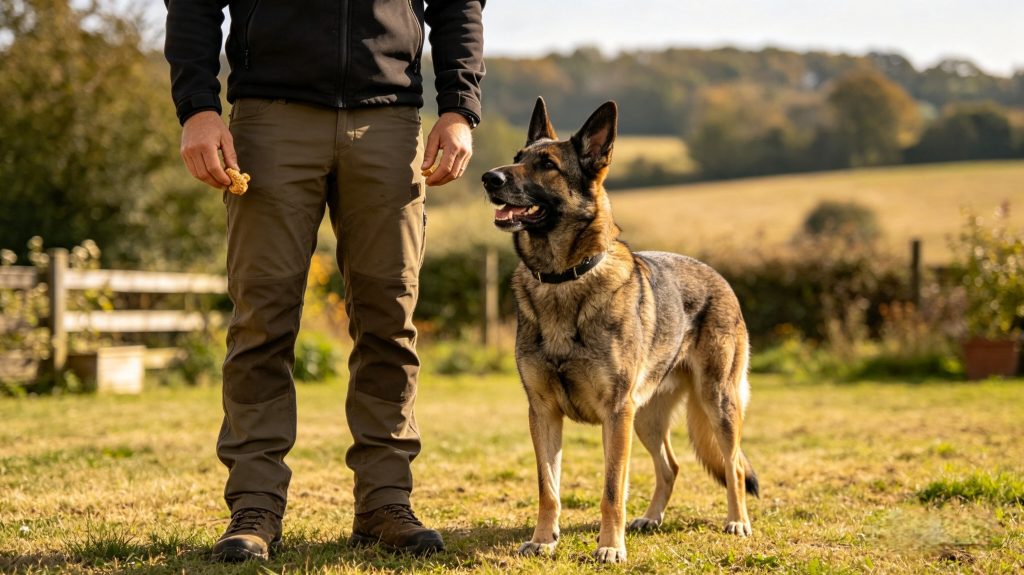
Many dogs are motivated by food, making appropriately sized rewards useful for teaching behaviours, reinforcing responses and maintaining engagement.
However, training rewards should be considered alongside the dog’s overall daily food intake.
Using food rewards
Small training rewards can be incorporated into training without creating unnecessary overfeeding.
Where appropriate, part of the dog’s normal daily food allowance can sometimes be used during training rather than treating training rewards as additional food.
The exact approach depends on the dog, food and training programme.
For more information about selecting appropriate rewards, Dog Training Treats: Choosing the Right Rewards for Training connects directly with this part of the feeding and training process.
Calm behaviour around food
Feeding routines can also provide opportunities to teach calm behaviour.
A dog can learn that food is delivered through predictable routines rather than frantic jumping, grabbing or rushing.
Training should remain fair and consistent. The objective is not to make the dog anxious about food, but to establish calm, controlled behaviour around meals and rewards.
RECOMMEND COURSE
Fundamentals 2
Fundamentals 2 is relevant when developing greater reliability and control around everyday behaviours. Feeding routines can provide practical opportunities to reinforce calm responses and consistent cues.
Equipment Selection: Material, Size and Stability
When choosing feeding equipment, appearance should not be the primary consideration.
The equipment needs to work in the real environment where it will be used.
Material
Consider durability, hygiene and ease of cleaning.
Stainless steel is a practical choice for many feeding and hydration applications. Ceramic can also be useful when appropriately maintained. Plastic may be convenient in some circumstances but should be checked regularly for damage and excessive wear.
Size
The bowl needs to accommodate the dog’s feeding requirements without being unnecessarily large.
A water bowl should provide enough capacity for normal use while remaining manageable to clean and refill.
Stability
Dogs can be enthusiastic eaters and drinkers.
A lightweight bowl that slides across the floor every time the dog eats may become frustrating for both owner and dog.
Non-slip bases, heavier construction or a suitable feeding stand can improve stability depending on the setup.
Cleaning
Easy cleaning should be considered before purchasing.
If equipment is awkward to clean, owners may be less likely to maintain it properly.
Choose equipment that can be routinely emptied, washed and inspected without unnecessary difficulty.
RECOMMEND PRODUCT
Puppy Essentials: Everything You Need for a New Puppy
For new puppy owners, feeding bowls, water equipment, storage containers and measuring equipment are all practical purchases. Choosing equipment that can remain useful as the puppy grows can also help avoid unnecessary replacement.
Establishing a Consistent Feeding Routine
Dogs often benefit from predictable routines.
A consistent feeding schedule can help owners organise the day and make it easier to identify changes in appetite or normal behaviour.
The exact schedule will depend on the dog’s age, food, lifestyle and individual needs.
Consistency does not mean every day has to be identical. It means the dog can rely on an understandable pattern of feeding, exercise, training and rest.
Feeding location
Try to maintain a clean, practical feeding area.
Keeping food and water equipment in a consistent location can make the routine easier for both the dog and owner.
Training around meals
Meals can become useful opportunities for calm engagement.
Simple behaviours can be practised before food is delivered, provided this does not create frustration or unnecessary delay.
The dog should understand that training is a normal part of everyday life, not something that only happens during formal sessions.
For owners developing broader obedience skills, Obedience Dog Training: Equipment, Commands & Techniques provides a useful connection between everyday management and structured training.
RECOMMEND COURSE
90-Day Transformation
A structured training programme can help owners develop consistency across daily routines. Feeding can then become one of many predictable parts of a wider programme involving obedience, exercise, enrichment and rest.
SUPPORTING IMAGE — DALL·E DESCRIPTION
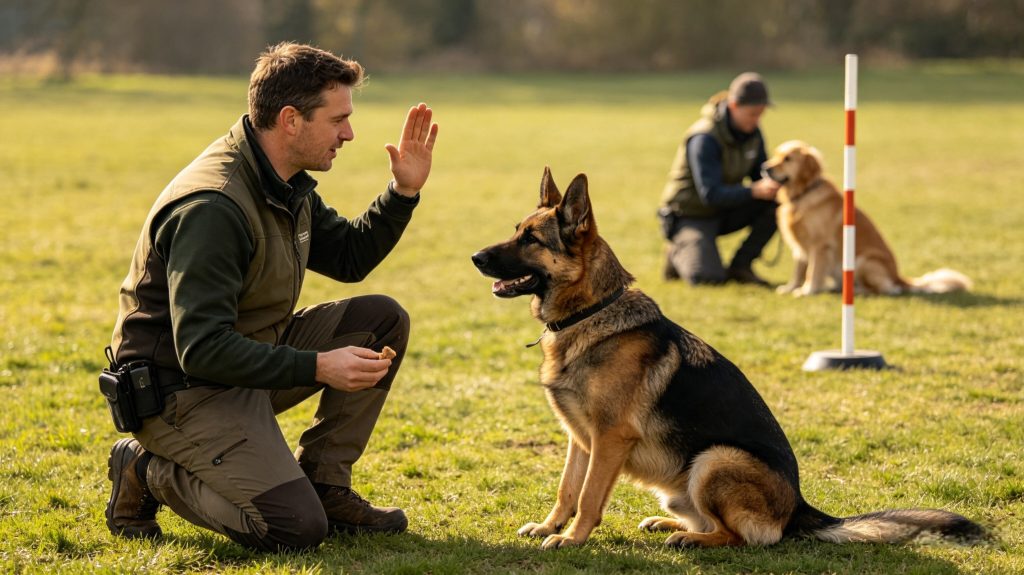
Create a cinematic, realistic indoor training scene showing a professional handler calmly rewarding a German Shepherd with a small food reward beside a clean feeding station. Include a food bowl, water bowl and practical storage equipment in the background. The dog should demonstrate attentive but calm behaviour. Dark-grey flooring, rich red-brick detailing, black metal fencing, industrial glass panels and dark structural elements. Realistic dog anatomy, fur, equipment and human interaction. Professional cinematic lighting, balanced exposure and detailed shadows, no text, logos or watermarks.
Feeding Equipment for Puppies
Puppies have different requirements from mature dogs, particularly during periods of rapid growth.
Bowls should be appropriately sized, stable and easy to clean. Water should remain readily available, and feeding routines should be appropriate for the puppy’s age and individual needs.
Puppies can also be naturally curious about food and equipment.
This makes secure food storage particularly important. Food should not be left somewhere the puppy can access unsupervised.
Feeding time can also provide opportunities to introduce basic manners and calm behaviour.
The key is to avoid making every meal into a complicated training exercise. Feeding should remain straightforward and enjoyable while appropriate training is introduced progressively.
RECOMMEND COURSE
Fundamentals 1
Fundamentals 1 is a natural companion for early puppy development because foundational behaviours can be incorporated into everyday routines, including feeding and calm behaviour around resources.
Building a Practical Feeding and Hydration System
The best feeding setup is not necessarily the most expensive or complicated.
A practical system can be built around a few reliable pieces of equipment:
- A suitable food bowl.
- A stable water bowl.
- Appropriate measuring equipment.
- Secure food storage.
- A suitable slow feeder where genuinely useful.
- Portable water equipment for outings.
- Easy-to-clean equipment.
- A consistent feeding location.
From there, the system can be adapted to the individual dog.
Some dogs may benefit from a slow feeder. Others may eat comfortably from a standard bowl. Some owners may need portable equipment because they spend considerable time travelling or training outdoors.
The purpose of Dog Feeding & Hydration: Essential Equipment and Practical Advice is therefore not to prescribe one setup for every dog. It is to help owners understand the principles behind choosing and using feeding equipment.
Bringing Feeding, Hydration and Training Together
Feeding, hydration and training do not have to operate as separate parts of dog ownership.
A well-organised routine can combine meals, fresh water, training, exercise, enrichment and rest into a predictable daily structure.
Food can provide appropriate reinforcement during training. Water can form part of the dog’s walking and travel equipment. Feeding equipment can be selected to support hygiene and portion consistency.
The wider GPK9 topic cluster builds on these connections.
RECOMMENDED ARTICLES
Puppy Training: Essential Skills, Equipment & Techniques
Useful for connecting feeding routines with early training, household structure and foundational behaviours.
Dog Training Treats: Choosing the Right Rewards for Training
Directly relevant when using food as a training reward and considering how treats fit into the dog’s overall food intake.
Dog Enrichment: Toys, Activities & Ideas for Mental Stimulation
Useful for understanding how food-based activities can form part of a broader enrichment routine.
Dog Walking Essentials: Equipment for Safe Outdoor Adventures
Relevant when feeding and hydration requirements extend beyond the home, particularly during walks and outdoor training.
Dog Travel Safety: Essential Equipment for Safe Journeys
Useful when considering hydration and feeding equipment for dogs travelling away from home.
Dog Care & Health: Essential Everyday Care for Your Dog
Provides a wider everyday-care pathway connecting nutrition, hydration and general dog-care responsibilities.
Puppy Essentials: Everything You Need for a New Puppy
A natural next step for new puppy owners preparing their feeding, hydration and general equipment.
What the Reader Learns
Understanding Dog Feeding & Hydration: Essential Equipment and Practical Advice means recognising that effective feeding systems are built around practical choices and consistent routines.
The right food bowl should be suitable for the dog’s size and eating habits. Water equipment should be stable, accessible and regularly cleaned. Measuring equipment can help maintain consistent portions, while secure storage helps protect food between meals.
Hydration should also be considered outside the home, particularly during walks, training sessions and travel.
Most importantly, feeding can become part of a wider training and care routine without making mealtimes unnecessarily complicated.
Good equipment supports good management, but the equipment itself is only one part of responsible dog ownership.
A clean feeding station, fresh water, appropriate portions, suitable equipment and consistent routines provide a practical foundation for everyday care. When these are combined with exercise, enrichment, training, rest and appropriate professional guidance when needed, feeding and hydration become an integrated part of a dog’s overall routine.