Adolescent Dog Training: How to Build Focus, Obedience and Self-Control
Adolescent dog training is essential for helping dogs develop reliable behaviour as they mature. Between approximately 6 and 18 months, many dogs experience changes in confidence, motivation, attention and independence. Behaviours that seemed reliable during puppyhood may become inconsistent, particularly when distractions increase or the dog begins exploring its environment more confidently.
GPK9 helps owners understand these changes and develop a structured approach to adolescent dog training through clear communication, positive reinforcement, food-based motivation, structured play and progressive obedience training.
The objective is to help your dog develop better focus, self-control and reliable responses while building a stronger relationship between dog and handler.
What Is the Adolescent Stage in Dogs?
The adolescent stage is the period between puppyhood and adulthood. Although the exact timing varies according to breed, size and individual development, many dogs experience adolescence from around 6 to 18 months, with some larger breeds maturing later.
During this period, dogs may become more interested in their surroundings, more easily distracted or less consistent in their responses to familiar instructions.
An adolescent dog might respond reliably to recall at home but struggle to return when other dogs are nearby. A dog that previously walked calmly on a lead may begin pulling towards interesting smells or movement.
These changes do not necessarily mean the dog has forgotten its training. They may indicate that the existing skills need further practice in different environments and under gradually increasing levels of distraction.
Why Adolescent Dogs Need Continued Training
Puppy training establishes important foundations, but those foundations need to develop as the dog grows.
Without continued practice, owners may find it difficult to maintain attention, manage excitement and reinforce appropriate behaviour during everyday activities.
Adolescent dog training helps address these challenges by focusing on several key areas.
Building Focus and Engagement
Focus means the dog can pay attention to the handler when needed, even when the environment offers competing distractions.
Use short training sessions, suitable rewards and manageable exercises to encourage engagement. Begin in an environment where the dog can concentrate before gradually introducing more challenging situations.
Developing Reliable Obedience
Basic obedience should continue to develop throughout adolescence.
Practise familiar skills such as sit, wait, recall and responding to a consistent verbal cue. Reward correct responses and gradually increase difficulty as the dog demonstrates understanding.
Avoid expecting reliable performance in a highly distracting environment before the behaviour has been practised successfully at easier levels.
Improving Impulse Control
Impulse control involves helping a dog learn to pause, wait and respond appropriately rather than immediately following every distraction.
Simple exercises can include waiting briefly before receiving a reward, remaining settled while the handler prepares a lead or responding to a recall cue during a controlled activity.
Progress should be gradual. The aim is to develop understanding and reliable habits rather than expecting the dog to manage every situation immediately.
Managing Jumping, Mouthing and Lead Pulling
Jumping, mouthing and pulling can become more noticeable during adolescence as the dog becomes stronger, more energetic or more interested in its environment.
Identify what happens before the behaviour and consider whether excitement, frustration, attention or the situation itself is contributing.
Reward appropriate alternatives, manage the environment and practise the desired behaviour consistently. If the behaviour involves fear, aggression or a risk of injury, seek suitable professional guidance.
How Positive Reinforcement Supports Adolescent Dog Training
Positive reinforcement involves rewarding a behaviour to increase the likelihood that it will occur again.
Rewards may include food, toys, play, praise or access to an appropriate activity, depending on what motivates the individual dog.
The important factor is that the reward is meaningful to the dog and delivered in a way that supports learning.
Using Food and Luring Effectively
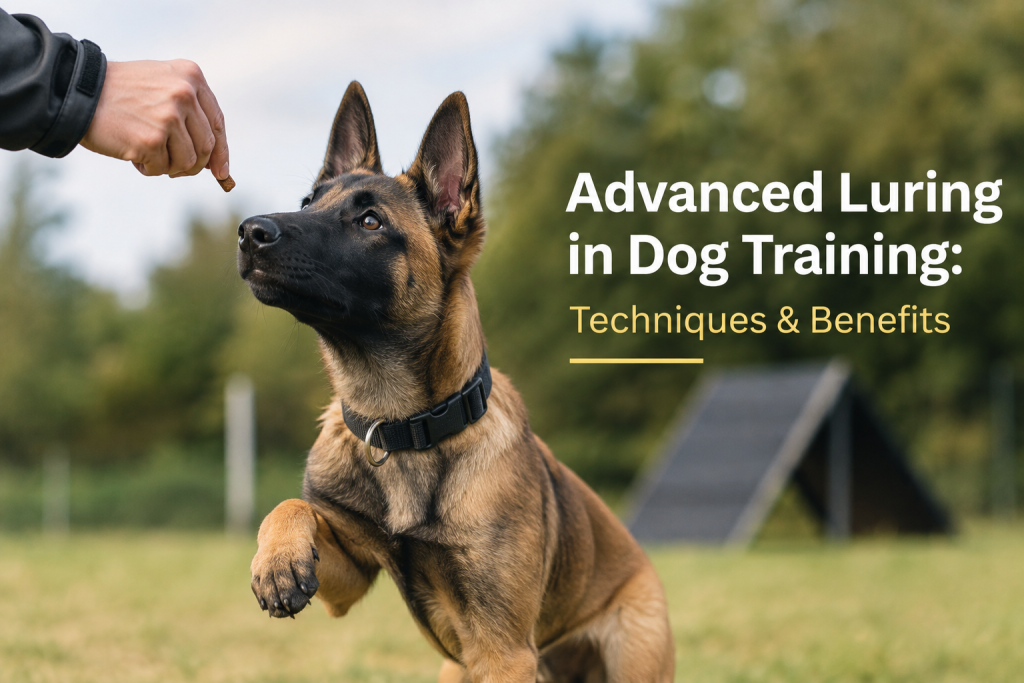
Food can help guide a dog into a position or encourage a particular movement during early learning.
For example, a food lure can guide a dog into a sit or help establish a controlled change of direction. As the dog develops understanding, gradually reduce reliance on following the food directly.
Reward the intended behaviour rather than allowing the dog to become focused solely on chasing the treat.
Marking Desired Behaviour
A marker can help identify the precise behaviour the handler wants to reinforce. This might be a consistent verbal marker or another established signal.
For example, when a dog returns successfully during recall practice, the handler can mark the desired response and deliver a reward promptly.
Consistency helps the dog understand which action earned the reward.
Managing Unwanted Behaviour
Ignoring behaviour is not suitable for every situation. It may be appropriate for certain attention-seeking behaviours when ignoring them is safe and the dog is given a clear alternative.
However, behaviours involving danger, distress, fear or aggression require appropriate management rather than simply being ignored.
Focus on reinforcing the behaviour you want to see while preventing situations in which unwanted behaviour is likely to become established.
How to Train an Adolescent Dog Step by Step
Step 1 — Assess Your Dog’s Current Ability
Identify the skills your dog can already perform reliably and the situations in which difficulties arise.
Your dog may respond well at home but struggle outdoors. This helps identify where additional practice is needed.
Step 2 — Return to a Manageable Environment
If your dog struggles to concentrate, reduce distractions and simplify the exercise.
Begin somewhere the dog can succeed before introducing more challenging environments.
Step 3 — Use Clear Instructions
Choose consistent words and signals for each exercise. Avoid repeatedly changing the instruction or adding unnecessary gestures when your dog is still learning.
Give your dog time to process the information and respond.
Step 4 — Reward the Desired Response
Use an appropriate reward when your dog performs the intended behaviour.
Reward timing matters because it helps the dog connect its action with the outcome.
Step 5 — Practise Short, Focused Sessions
Keep training sessions appropriate to your dog’s attention and energy levels.
Short sessions with clear objectives can be more productive than continuing when the dog has become distracted or frustrated.
Step 6 — Introduce Distractions Gradually
Once your dog can perform an exercise reliably in a quiet environment, begin practising with manageable distractions.
Increase difficulty gradually and reduce it again if your dog struggles.
Step 7 — Review Progress and Adapt
Observe how your dog responds to the training.
If a particular exercise becomes difficult, consider whether the environment, duration, distance or level of distraction needs adjusting.
Progress should reflect your dog’s actual ability rather than a fixed deadline.
Common Adolescent Dog Training Problems and How to Fix Them
My Adolescent Dog No Longer Listens to Me
A dog that becomes less responsive during adolescence may be struggling with distractions, motivation or a level of difficulty that has increased too quickly.
Return to familiar exercises in a manageable environment. Reward appropriate responses and gradually rebuild reliability before increasing the challenge.
My Dog Gets Too Excited During Training
Excessive excitement can make it harder for a dog to concentrate.
Reduce the intensity of the activity, create more space from distractions and use shorter exercises. Choose rewards that encourage engagement without making the session unnecessarily difficult to manage.
My Adolescent Dog Pulls on the Lead
Lead pulling can become more noticeable as the dog grows stronger and more interested in its surroundings.
Practise lead skills in a quiet area first. Reward appropriate lead position and attention, and manage distance from distractions that make walking difficult.
If pulling is associated with lunging, fear or aggression, seek professional guidance.
My Dog Ignores Recall Outdoors
Recall may be reliable in a familiar environment but less consistent when more interesting distractions are present.
Practise in a secure area or use an appropriate long line under supervision. Begin with manageable distractions and reward successful returns.
Avoid repeatedly testing recall in situations where the dog is unlikely to respond reliably.
My Dog Becomes Easily Frustrated
Frustration can develop when exercises are too difficult, rewards are poorly timed or training continues for too long.
Simplify the task, improve reward timing and provide breaks when needed. Finish with an achievable exercise so the dog has an opportunity to succeed.
Why Consistency Matters During Adolescence
Consistency helps dogs recognise what is expected of them across different situations.
When household members use different instructions or respond differently to the same behaviour, the dog may receive conflicting information.
Agree on the words, signals, routines and expectations that matter most. This does not mean every training session must be identical. It means maintaining clear communication while adapting the level of difficulty to the dog’s current ability.
Regular practice also helps owners recognise when a dog is ready to progress and when an exercise needs to be simplified.
When Does an Adolescent Dog Need Professional Support?
Most training difficulties benefit from clear communication, appropriate management and gradual progression. However, some situations require individual assessment.
Seek suitable professional support if your dog displays persistent aggression, significant fear, severe reactivity or behaviour that creates a safety concern.
A sudden change in behaviour may also warrant veterinary advice, particularly if pain or illness could be affecting your dog’s responses.
Professional support should consider the individual dog, its history, environment and the handler’s experience. Online training can provide valuable education, but it cannot replace an appropriate in-person assessment when one is necessary.
Adolescent Dog Training With GPK9
GPK9 provides structured dog training education designed to help owners and handlers develop their understanding of canine behaviour, communication, motivation and obedience.
Adolescent dogs benefit from continued practice that builds on their existing foundations while adapting to their changing needs.
GPK9’s training approach incorporates positive reinforcement, food-based motivation, appropriate play and progressive skill development to help owners work towards more reliable everyday behaviour.
Whether your main goal is improving recall, developing lead manners, strengthening focus or building better obedience, the starting point is to understand your dog’s current ability and work towards the next stage in manageable steps.
Explore the available training programmes through the GPK9 website to find educational resources suited to your dog’s development.
Frequently Asked Questions About Adolescent Dog Training
At what age does a dog become an adolescent?
Many dogs begin adolescence at around 6 months and continue through approximately 18 months. The timing varies by breed, size and individual development, and some dogs mature later.
Is it normal for adolescent dogs to become more distracted?
Yes. Changes in attention, confidence, motivation and interest in the environment can occur during adolescence. Continued training and gradual progression can help strengthen existing skills.
How often should I train my adolescent dog?
Regular, short sessions are a useful starting point. The ideal frequency depends on your dog’s needs, attention and ability to remain engaged. Consistency is more important than making every session long.
Can an adolescent dog learn new commands?
Yes. Dogs can continue learning throughout their lives. Adolescence is an appropriate time to reinforce existing skills, introduce new exercises and gradually improve reliability around distractions.
How can I improve my adolescent dog’s recall?
Begin in a secure, low-distraction environment, use a consistent recall cue and reward successful returns. Increase distractions gradually and use appropriate management, such as a long line, while reliability develops.
Should I punish my dog for ignoring a command?
Punishment can increase confusion or distress and may damage the dog’s willingness to engage. Instead, assess why the dog is struggling, simplify the exercise, improve communication and reinforce the desired response.
Build Better Habits During Adolescence
Adolescent dog training is an opportunity to strengthen the foundations established during puppyhood and develop skills for adult life.
By improving focus, reinforcing obedience, managing excitement and progressing at an appropriate pace, owners can help their dogs develop more reliable behaviour across everyday situations.
The goal is not simply to make an adolescent dog obey. It is to build understanding, communication and consistent behaviour that can continue into adulthood.