
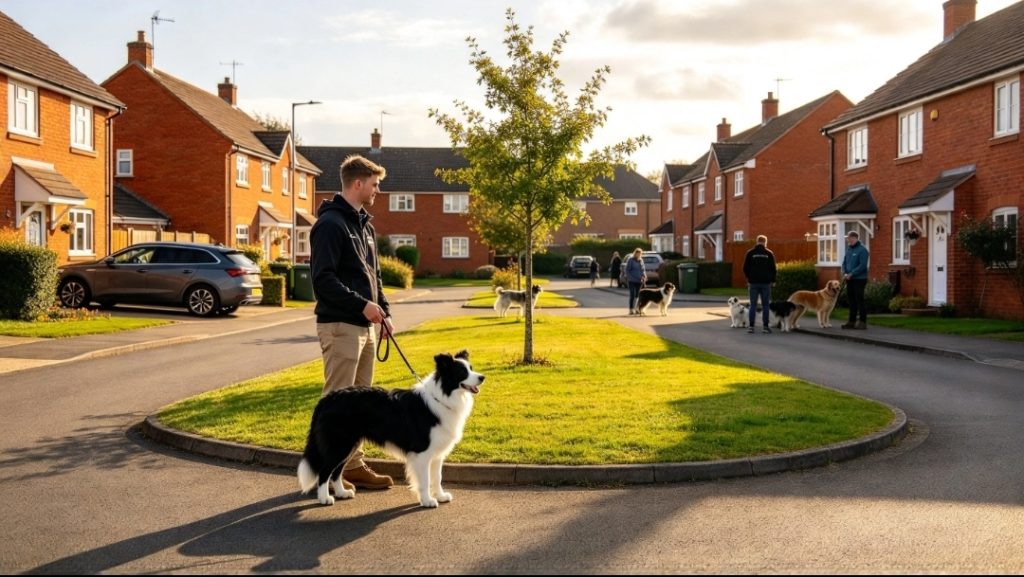
Does Socialisation Mean Meeting Lots of Dogs?
Does socialisation mean meeting lots of dogs? No. Socialisation does not mean allowing your dog to meet as many dogs as possible. Good socialisation means teaching your dog how to behave appropriately around other dogs, including being able to calmly observe them without needing to approach or interact.
RECOMMENDED PRODUCTS

What does dog socialisation actually mean?
Socialisation is about helping your dog develop appropriate responses to different people, dogs, environments, sounds, handling experiences and everyday situations.
Meeting suitable dogs can be part of this process, but it is only one part.
A dog that has met hundreds of other dogs but becomes overexcited, fearful or reactive whenever they see one has not necessarily learned appropriate social behaviour.
The aim is quality of experience rather than quantity of interactions.
Does my dog need to meet every dog they see?
No. Your dog does not need to greet every dog they encounter.
In fact, constantly allowing greetings can teach your dog to expect access to other dogs. This can make it harder for them to remain calm when they are prevented from approaching.
Your dog should learn that another dog can simply be present without anything needing to happen.
For example, seeing another dog while walking, calmly observing it and continuing with you can be a very useful socialisation experience.
Is meeting other dogs still important?
Yes, appropriate dog-to-dog interaction can be valuable.
A puppy or young dog can benefit from carefully managed contact with healthy, suitable and appropriately vaccinated dogs.
The interaction should be appropriate for the dogs involved. A calm, socially competent adult dog may provide a better learning experience than an unfamiliar dog that is excessively excitable or poorly controlled.
Your vet can advise you about vaccination and disease-risk considerations, particularly for puppies.
How should I introduce my dog to another dog?
Introductions should be calm and controlled rather than allowing two dogs to rush directly towards each other.
Start with distance
Allow both dogs to see each other from a comfortable distance.
Watch their body language and avoid moving closer if either dog is becoming uncomfortable or excessively excited.
Allow appropriate investigation
If both dogs remain comfortable, they can be allowed to investigate each other appropriately.
Keep the situation calm and avoid forcing either dog to continue interacting.
Give the dogs space
Dogs should be able to move away from an interaction.
Do not hold a dog in place while another dog continues approaching or interacting with them.
End the interaction while it is going well
A successful interaction does not need to continue for a long time.
Allow the dogs to separate and settle before deciding whether another interaction is appropriate.
How do I teach my dog to ignore other dogs?
Teaching your dog to ignore other dogs is an important part of socialisation.
Start at a distance where your dog can notice another dog without becoming overwhelmed.
When your dog calmly observes the other dog, reward the behaviour. You can then continue walking or redirect your dog’s attention when appropriate.
As your dog becomes more reliable, gradually work around closer or more distracting situations.
Do not wait until your dog is already pulling, barking or lunging before trying to regain their attention.
What if my dog gets excited whenever they see another dog?
Excitement can develop because the dog has learned that seeing another dog usually leads to interaction.
Instead of automatically allowing your dog to approach, create opportunities for them to observe dogs without interacting.
Reward calm behaviour and teach your dog to wait before receiving access when an interaction is appropriate.
Over time, your dog can learn that seeing another dog does not automatically mean they get to run over and say hello.
What if my dog is frightened of other dogs?
Do not force a nervous dog to interact with other dogs.
Create enough distance for your dog to remain comfortable and allow them to observe from there.
Reward calm behaviour and gradually work towards greater confidence.
If your dog repeatedly shows significant fear, attempts to escape, freezes, barks or reacts strongly around other dogs, seek advice from an appropriately qualified professional.
Can puppies socialise without playing with other dogs?
Yes.
A puppy can gain valuable social experience by simply seeing, hearing and calmly observing other dogs.
For example, sitting at a safe distance and watching dogs walk past can teach a puppy that other dogs are a normal part of the environment.
This can be particularly useful for teaching calm behaviour before the puppy is ready for greater freedom or more challenging environments.
RECOMMENDED PRODUCTS
What equipment should I use around other dogs?
For controlled socialisation, a well-fitted harness or collar and suitable lead can provide appropriate control.
A short line may be useful when you need closer control around distractions.
A long line can provide additional freedom in an appropriate secure environment once your dog is ready for it.
Equipment should allow you to manage the situation safely without using the lead to drag your dog towards another dog.
If a muzzle is genuinely required for safety, it should be introduced gradually and positively. It should not be used as a substitute for appropriate behavioural management.
What are the signs that a dog interaction is going well?
Look for relaxed and appropriate behaviour.
Depending on the individual dogs, positive signs may include:
- Calm investigation
- Loose, relaxed body language
- Ability to disengage
- Ability to move away
- Ability to respond to the handler
- No persistent attempts to escape or overwhelm the other dog
Do not focus solely on whether the dogs are playing. Calm interaction and appropriate disengagement are valuable social skills.
What are the signs that an interaction should stop?
An interaction should be interrupted if one or both dogs become uncomfortable, frightened or excessively aroused.
Warning signs can include:
- Persistent avoidance
- Hiding or attempting to escape
- Freezing
- Repeated barking
- Lunging
- Excessive chasing
- Persistent mounting
- One dog repeatedly trying to get away
- Inability to settle
If one dog wants to disengage, give them space.
What are the biggest mistakes when socialising a dog with other dogs?
Common mistakes include:
- Trying to meet every dog
- Allowing uncontrolled greetings
- Forcing interaction
- Assuming play is always necessary
- Ignoring signs of discomfort
- Allowing a dog to repeatedly rehearse pulling or lunging towards other dogs
- Increasing proximity too quickly
- Using dog-to-dog interaction as the only form of socialisation
Socialisation should teach your dog how to behave around dogs, not simply how to meet them.
How many dogs should my dog meet?
There is no target number of dogs your dog needs to meet.
One calm, appropriate experience can be more valuable than numerous uncontrolled encounters.
Focus on helping your dog develop the ability to remain calm, observe, interact appropriately when suitable and disengage when necessary.
That is a much more useful measure of socialisation than counting how many dogs your dog has met.
Conclusion
Does socialisation mean meeting lots of dogs? No. Meeting suitable dogs can be part of socialisation, but the real objective is teaching your dog how to behave appropriately around other dogs.
Your dog should learn that they can calmly observe another dog, walk past one, wait before interacting and disengage when appropriate.
Focus on quality, control and calm behaviour rather than the number of dogs your dog meets.




