
What Does Socialising a Dog Actually Mean?
What does socialising a dog actually mean? Socialising a dog means teaching them how to behave appropriately and remain comfortable around different people, dogs, environments, sounds, objects, handling and everyday situations. It does not simply mean letting a dog meet as many people and other dogs as possible. Good socialisation helps a dog learn how to calmly experience the world and respond appropriately to what is happening around them.
RECOMMENDED PRODUCTS

What is dog socialisation?
Dog socialisation is the process of helping a dog develop appropriate responses to the people, animals, environments and situations they encounter.
A well-socialised dog should be able to experience something unfamiliar without automatically becoming frightened, excessively excited or reactive.
Socialisation can involve simply observing something from a comfortable distance. A dog does not always need to approach, touch or interact with whatever they encounter.
Does socialising a dog mean letting them meet other dogs?
No. Meeting other dogs is only one part of socialisation.
A dog also needs to learn how to behave around dogs without interacting with them. For example, calmly seeing another dog while walking and continuing with their handler is an important social skill.
When interaction is appropriate, meetings should be controlled and involve suitable dogs. Uncontrolled interactions can create negative experiences or reinforce inappropriate behaviour.
What should a dog be socialised to?
A dog can gradually experience many aspects of normal life.
People
Dogs can learn to remain comfortable around different people, including people who look, sound and move differently.
They do not need to greet everyone. Calmly observing people and remaining focused on their handler can be just as valuable.
Dogs and other animals
Dogs can learn how to behave appropriately around other dogs and animals.
The aim is not to make every dog interaction exciting. Calm observation, appropriate distance and controlled interaction are all useful social skills.
Different environments
Dogs should gradually experience different environments, such as quiet streets, busy areas, parks, buildings, vehicles and unfamiliar places.
The difficulty should be increased gradually according to the dog’s ability to cope.
Sounds and movement
Everyday noises and movement can form an important part of socialisation.
Traffic, household appliances, machinery, people, children and other environmental activity can all be introduced at an appropriate level.
If a dog becomes frightened, increase distance or reduce the intensity rather than forcing them to remain close.
Handling
Socialisation also includes learning to accept appropriate handling.
A dog should gradually become comfortable with routine contact involving areas such as their paws, ears, mouth, body and collar.
Positive reinforcement can make handling experiences more rewarding and can help prepare the dog for grooming and veterinary care.
RECOMMENDED PRODUCTS
What is the goal of socialising a dog?
The goal is to help the dog learn how to respond appropriately, rather than simply expose them to as many experiences as possible.
For example, if a dog sees another dog and calmly looks at it before continuing with their handler, that can be a successful socialisation experience.
The dog has learned that another dog can be present without requiring an interaction.
How do I socialise a dog correctly?
Start with experiences your dog can manage and gradually increase the difficulty.
1. Observe your dog’s behaviour
Watch your dog’s body language when they encounter something unfamiliar.
A dog that can remain relaxed, take food, respond to their handler and investigate appropriately is generally in a better position to learn.
2. Choose an appropriate level of difficulty
Do not start with the most difficult version of an experience.
If your dog struggles around busy environments, begin somewhere quieter. If another dog causes a reaction, create more distance.
3. Reward appropriate behaviour
Use positive reinforcement when your dog responds appropriately.
Food, toys, praise or access to an appropriate activity can be used depending on what motivates your dog.
Timing matters. Reward the behaviour you want your dog to repeat rather than waiting until they have become overwhelmed.
4. Gradually increase difficulty
As your dog becomes comfortable, gradually introduce greater distractions or more challenging environments.
Change one factor at a time where possible.
If your dog struggles, reduce the difficulty rather than simply continuing.
What should I do if my dog becomes frightened?
Do not force a frightened dog towards the thing that concerns them.
Create distance, reduce the intensity and allow the dog to recover.
For example, if your dog becomes uncomfortable around a busy group of people, move somewhere quieter. Once your dog is calm enough to respond again, you can work at a more manageable distance.
Repeatedly forcing a dog into frightening situations can make the response worse.
If your dog has persistent or severe fear, seek help from an appropriately qualified professional.
What should I do if my dog gets overexcited?
Socialisation is not only about fear. Some dogs become excessively excited around people, dogs or environmental distractions.
If your dog becomes highly aroused, increase distance from the distraction and help them return to a calmer state.
Avoid repeatedly allowing the dog to rush towards the source of excitement.
Reward calm observation, waiting and appropriate engagement with you.
Over time, the dog can learn that seeing an exciting person or dog does not automatically mean they get immediate access to it.
What equipment can help with socialisation?
Equipment should provide safe control while allowing the dog to learn.
A well-fitted harness or collar and suitable lead can be appropriate for everyday socialisation.
A short line can provide closer control when a dog needs additional guidance around distractions. A long line can provide more freedom in an appropriate secure environment while maintaining control.
A muzzle may be appropriate for some dogs where there is a genuine safety requirement, but it should be introduced gradually and positively. It should not be used to force a dog into situations they cannot cope with.
Equipment supports training; it does not replace it.
Is socialisation only for puppies?
No. Puppies benefit greatly from early socialisation, but adult dogs can continue learning.
An adult dog with limited previous experience can still be introduced gradually to new people, environments, dogs and situations.
The process may simply need to be slower and more carefully managed if the dog already has fear, frustration or reactivity.
Can a dog be too social?
Yes. A dog that believes every person or dog should be greeted can develop poor impulse control or frustration when access is prevented.
A well-socialised dog should be able to interact appropriately when interaction is suitable and remain calm when interaction is not appropriate.
Teaching a dog to observe, wait and move on is therefore an important part of socialisation.
What is the difference between socialisation and socialising?
Socialising is often used to describe the act of exposing a dog to people and other animals.
Socialisation is broader. It is about helping the dog learn appropriate responses to the world around them.
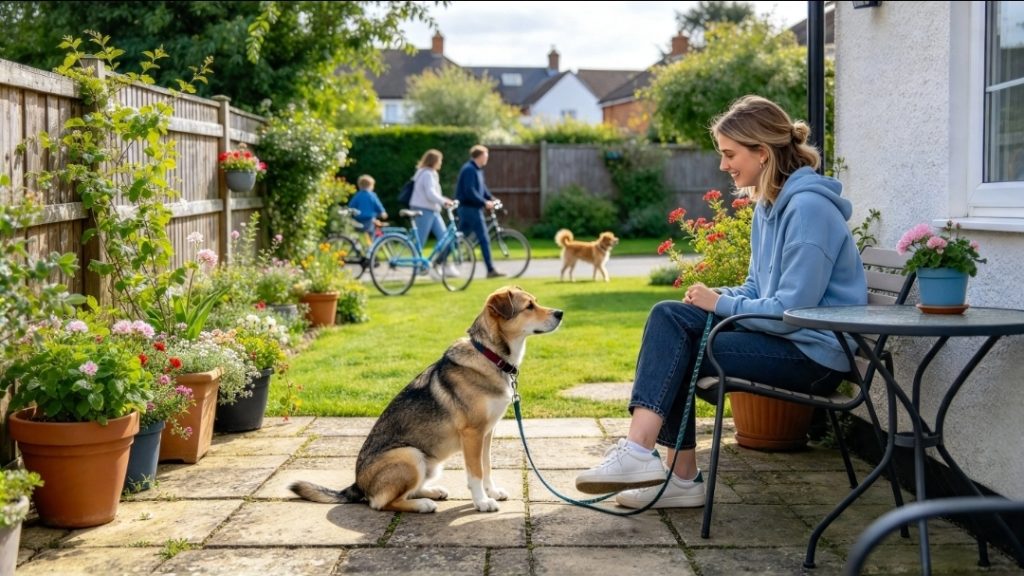
A dog sitting calmly beside their handler while another dog walks past may be receiving valuable socialisation even though the dogs never interact.
This distinction is important because socialisation is about behaviour and coping, not simply interaction.
RECOMMENDED PRODUCTS
What are the biggest mistakes when socialising a dog?
Common mistakes include:
- Assuming every dog should meet every other dog
- Forcing a frightened dog closer to a trigger
- Allowing uncontrolled interactions
- Ignoring signs of stress or excessive arousal
- Increasing difficulty too quickly
- Rewarding unwanted excitement accidentally
- Believing socialisation ends after puppyhood
- Focusing only on dogs and people while ignoring environments and everyday experiences
The quality of each experience is more important than the number of experiences.
Conclusion
What does socialising a dog actually mean? It means teaching a dog how to cope with and respond appropriately to the people, dogs, environments, sounds and situations they encounter.
Your dog does not need to greet everything they see. Good socialisation teaches them when to interact, when to observe, when to wait and when to move on.
Start at a level your dog can manage, use positive reinforcement, watch their behaviour and gradually increase difficulty. The ultimate goal is a dog that can experience everyday life calmly and appropriately.




