
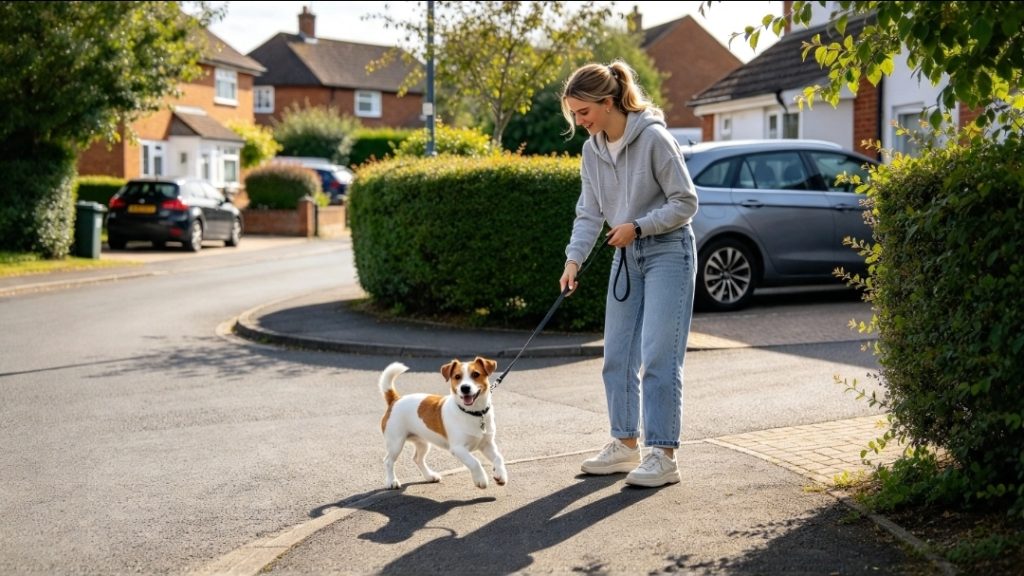
How Do I Calm My Dog Down on Walks?
How do I calm my dog down on walks? The most effective approach is to recognise what is causing your dog’s excitement or stress, create enough distance from the trigger, and reward calm behaviour before your dog becomes overwhelmed.
RECOMMENDED PRODUCTS

Why Does My Dog Get Overexcited or Stressed on Walks?
Dogs can become unsettled on walks for many different reasons. Your dog may become excited by other dogs, people, traffic, wildlife, smells, noises or the anticipation of going outside.
Some dogs become highly excited because they want to investigate everything around them. Others may become nervous or frustrated when they cannot reach something they want to approach.
Watch your dog’s body language and the situation around them. Identifying what causes the change in behaviour will help you decide what to do next.
How Can I Calm My Dog Before the Walk?
A calm walk starts before you leave the house.
Avoid turning getting ready into an exciting event. Put on the lead and equipment calmly, give your dog time to settle, and only move towards the door when your dog is reasonably calm.
If your dog becomes highly excited as soon as the lead appears, practise putting the lead on and waiting for calm behaviour before continuing. This helps prevent excitement from becoming part of the normal routine.
What Should I Do When My Dog Becomes Excited on a Walk?
If your dog starts becoming overexcited, do not wait until the behaviour is out of control.
Reduce the difficulty immediately. Create more distance from whatever is causing the excitement, slow down, and give your dog an opportunity to settle.
Once your dog can pay attention to you and remain calm, reward that behaviour. You can then continue the walk or gradually work closer to the distraction if your dog remains settled.
How Do I Teach My Dog to Stay Calm Around Other Dogs?
Start at a distance where your dog can see another dog without becoming overwhelmed.
As soon as your dog notices the other dog and remains calm, reward the behaviour. Continue rewarding calm observation and gradually reduce the distance over multiple sessions.
If your dog starts pulling, barking, lunging or becoming unable to respond to you, you have moved too close or increased the difficulty too quickly. Move away and allow your dog to recover before trying again.
Your dog does not need to greet every dog it sees. Learning that another dog can simply pass by without interaction is an important part of calm walking.
How Do I Calm My Dog Around People?
Use the same principle with people.
If your dog becomes excited when approaching people, keep enough distance for your dog to remain calm. Reward calm behaviour and continue walking when your dog is ready.
Do not allow pulling or jumping to become the way your dog gets attention from people. If a greeting is appropriate, wait until your dog is calm before allowing it.
Should I Stop My Dog From Sniffing?
No. Sniffing is a normal part of walking and can provide useful mental stimulation.
A calm walk does not mean making your dog walk continuously without investigating its environment. Allowing appropriate opportunities to sniff can help make the walk more enjoyable.
The important distinction is between relaxed exploration and behaviour that has become difficult for your dog to control.
What Should I Do If My Dog Is Already Overwhelmed?
If your dog is already highly aroused, trying to teach a new behaviour may not work.
Instead, prioritise reducing the pressure. Move away from the trigger, create space, stop adding stimulation and give your dog time to recover.
Do not punish barking, lunging or other signs of distress. Punishment can increase stress and may make the underlying problem worse.
If your dog repeatedly becomes impossible to control, shows aggression, or you are concerned that someone or another animal could be injured, seek help from a qualified professional dog trainer or behaviour professional.
What Equipment Can Help Keep My Dog Calm?
The equipment should help you manage the walk safely while you train the behaviour.
A suitable harness and lead can give you better control without relying on equipment to teach calm behaviour. A longer line may be useful in appropriate safe areas when your dog has developed sufficient control.
If there is a genuine bite risk, a properly introduced basket muzzle may be appropriate as part of a wider safety plan. A muzzle should never be used as a substitute for training or introduced suddenly during a stressful situation.
Choose equipment based on your dog’s behaviour, the environment and the level of control you currently have.
RECOMMENDED PRODUCTS
What Mistakes Can Make a Dog More Excited on Walks?
One common mistake is allowing your dog to repeatedly practise the behaviour you are trying to change.
Other mistakes include getting too close to triggers, expecting too much too quickly, constantly correcting the dog, forcing greetings, or continuing towards a distraction when your dog is already struggling to cope.
Training works better when you recognise the early signs of rising excitement and make the situation easier before your dog loses control.
How Long Does It Take to Calm a Dog Down on Walks?
There is no fixed timeframe. Some dogs improve quickly once their triggers are properly managed, while others need consistent training over weeks or months.
Progress should be measured by how well your dog can remain calm around distractions, how quickly they recover after becoming excited, and how much control they can maintain as the environment becomes more difficult.
Increase the difficulty gradually rather than expecting your dog to cope with busy environments immediately.
What If My Dog Cannot Stay Calm on Walks?
If your dog cannot remain calm even when you create distance, reduce distractions and make the walk easier, stop increasing the difficulty.
Your dog may need a more structured training programme, and professional assessment may be appropriate, particularly if the behaviour involves aggression, lunging, biting or severe fear.
The goal is not simply to make your dog stop reacting. The goal is to teach your dog how to cope with the situations that currently cause excessive excitement or stress.
Conclusion
The best way to calm your dog down on walks is to recognise the cause of the behaviour, reduce pressure, create enough distance, reward calm responses and gradually increase difficulty.
Do not wait for your dog to become overwhelmed before responding. The earlier you recognise rising excitement or stress, the easier it is to help your dog regain control and continue the walk calmly.




