
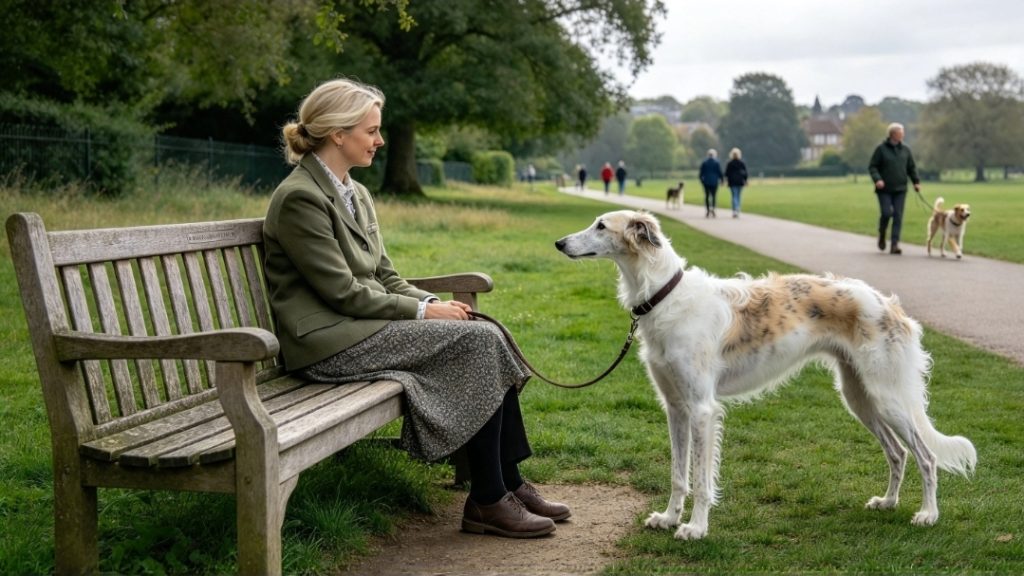
How Do I Teach My Dog to Look at Me?
How do I teach my dog to look at me? Teach your dog to look at you by rewarding them whenever they voluntarily make eye contact or turn their attention towards you. Start in a quiet environment, use a clear cue such as “look,” reward the moment your dog looks at you, and gradually practise around more distractions.
RECOMMENDED PRODUCTS

What Does “Look at Me” Mean?
“Look at me” means your dog should direct their attention towards you when you give the cue.
The behaviour can help you communicate with your dog before asking for another behaviour. It can also help your dog learn to check in with you when something interesting is happening.
The aim is not to make your dog stare at you continuously. The aim is to teach your dog that looking towards you is a useful and rewarding behaviour.
How Do I Teach My Dog to Look at Me Step by Step?
Step 1: Start in a Quiet Environment
Begin somewhere with very few distractions.
Stand or sit near your dog and wait for them to naturally look towards you.
The moment your dog looks at you, reward them.
At this stage, you do not need to say anything. You are teaching your dog that choosing to look at you produces a positive outcome.
Step 2: Introduce the “Look” Cue
Once your dog is regularly looking towards you, introduce a simple cue such as “look.”
Say the cue calmly and wait for your dog to make eye contact.
As soon as they look at you, reward them.
The timing should be clear:
“Look” → eye contact → reward.
With repetition, your dog learns what the cue means.
Step 3: Gradually Increase the Duration
Once your dog understands the cue, gradually encourage them to maintain eye contact for slightly longer.
Begin with a brief glance, then gradually increase the duration.
Do not expect your dog to stare at you for a long period immediately.
Reward successful eye contact and release your dog so they understand when the exercise has finished.
Should I Use Food to Teach Eye Contact?
Food can be an effective reward when teaching eye contact.
Hold the reward in a way that encourages your dog to look towards your face rather than simply staring at the food.
When your dog looks at you, reward them immediately.
As your dog becomes more reliable, gradually reduce the need to show the food before the behaviour. The aim is for your dog to respond to the cue rather than simply follow a visible piece of food.
How Do I Teach My Dog to Look at Me Without Food?
Once your dog understands the behaviour, you can vary the rewards.
You can use:
- Praise.
- Play.
- A toy.
- Food.
- Access to something your dog wants.
- A release to continue an activity.
The appropriate reward depends on what motivates your dog and the difficulty of the environment.
In a highly distracting environment, you may need a more valuable reward than you would use at home.
How Do I Teach a Puppy to Look at Me?
Puppies can learn eye contact through very short and simple exercises.
Wait for your puppy to look towards you naturally, then reward them.
Once they begin offering eye contact frequently, introduce the cue.
Keep the sessions short and positive. Puppies can become distracted quickly, so several brief repetitions are often more useful than a long session.
How Do I Get My Dog to Look at Me on Walks?
Start practising at home before expecting reliable attention outside.
During a walk, choose an environment where your dog can still respond to you.
Say your cue when your dog is aware of their surroundings but not completely focused on a distraction.
When they look towards you, reward them immediately.
Gradually practise around more distractions while maintaining enough distance for your dog to succeed.
A suitable harness and short line can provide additional control during training.
A long line can be useful in an appropriate safe environment when gradually increasing distance and freedom.
Equipment should support communication and safety rather than being used to force your dog’s attention towards you.
How Do I Teach My Dog to Look at Me Around Distractions?
Do not begin with the strongest distraction your dog encounters.
Start at a distance where your dog can notice the distraction but can still respond to you.
For example, if your dog becomes distracted by another dog, begin far enough away that they can see the other dog without becoming completely focused on it.
When your dog looks back towards you, reward them.
Gradually reduce the distance only when your dog remains able to respond.
If your dog stops responding, increase the distance again.
What If My Dog Will Not Look at Me?
If your dog will not look at you, assess the environment before repeating the cue.
Your dog may be too distracted, too excited, too tired or too close to something highly interesting.
Move to a quieter area or increase your distance from the distraction.
You can also use a more valuable reward if appropriate.
Do not repeatedly say “look” while your dog is ignoring you. Make the exercise easier and give your dog a realistic opportunity to succeed.
Should I Hold My Dog’s Head to Make Them Look at Me?
No. Do not physically force your dog’s head towards you.
Eye contact should be taught as a voluntary behaviour.
Forcing the behaviour can create discomfort and may make your dog less comfortable with being handled or approached.
Instead, use appropriate rewards and timing to reinforce the moment your dog chooses to look towards you.
How Can Eye Contact Improve Communication?
Eye contact can become a useful part of your communication system.
A dog that has learned to check in with you can provide information about their current level of attention and help you communicate before another behaviour is required.
For example, you may ask your dog to look at you before giving another cue.
The sequence can become:
Observe → look towards you → communicate → respond → reward or continue.
The goal is useful communication, not constant eye contact.
RECOMMENDED PRODUCTS
What Equipment Do I Need to Teach Eye Contact?
Basic eye-contact training requires very little equipment.
Food rewards and a suitable toy are normally enough.
For outdoor training, a suitable harness and short line can provide additional control and safety.
A long line can be useful when gradually introducing greater distance in an appropriate environment.
A muzzle may be appropriate for a dog that requires additional safety management around particular triggers, but it does not teach eye contact and should not be used to force a dog to focus on you.
A crate, placemat or playpen is not required for basic eye-contact training.
How Do I Make Eye Contact More Reliable?
Practise in different environments and gradually increase distractions.
A useful progression is:
- Quiet room.
- Different room.
- Garden.
- Quiet outdoor environment.
- Mild distractions.
- Greater distractions.
- Real-life situations.
Do not increase every difficulty at once.
Your dog may be able to look at you reliably inside but struggle outside. This is normal because the environment contains more competing information.
Build the behaviour gradually.
How Long Should My Dog Look at Me?
There is no single correct duration.
For many situations, a brief check-in is enough.
The purpose is not to make your dog stare at you for extended periods. You want your dog to understand that when you ask for their attention, they should acknowledge you and be ready to receive further communication.
Increase duration only when it is genuinely useful for the behaviour you are teaching.
What Are the Most Common Mistakes When Teaching Eye Contact?
One common mistake is repeatedly saying the cue when the dog is not responding.
Another is holding food directly in front of the dog’s face and expecting them to understand that eye contact is the behaviour being rewarded.
Starting around distractions that are too difficult can also lead to repeated failure.
Finally, avoid demanding prolonged eye contact when a brief check-in is all that is required.
How Often Should I Practise?
Practise short repetitions throughout the day.
You can reward natural eye contact during normal activities, then gradually introduce the cue.
During walks, reward your dog when they voluntarily check in with you.
Frequent successful repetitions help make looking towards you a natural part of communication.
Frequently Asked Questions
Should I teach my dog to look at me before every command?
Not necessarily. Eye contact can be useful before some cues, but requiring it before every behaviour can make communication unnecessarily complicated.
Why does my dog look at me at home but not outside?
Outside environments contain more distractions and competing information. Increase the distance from distractions and gradually build reliability in more difficult environments.
RECOMMENDED PRODUCTS
Can eye contact help with distractions?
Yes. Teaching your dog to check in with you can provide another way to redirect their attention, provided the distraction is at a level your dog can still manage.
Should I reward my dog every time they look at me?
During early training, frequent reinforcement helps establish the behaviour. As your dog becomes reliable, you can vary the rewards while continuing to reinforce useful responses.
Can an older dog learn to make eye contact?
Yes. Older dogs can learn the behaviour through clear communication, appropriate rewards, repetition and gradual progression.
Conclusion
Teaching your dog to look at you is about making voluntary attention useful and rewarding. Start in a quiet environment, reward natural eye contact, introduce a clear cue, and gradually practise around distractions.
Do not force your dog’s head towards you or repeatedly call for attention when they are unable to respond. Make the exercise easier, reward successful check-ins and gradually build the behaviour.
With good timing, appropriate rewards and consistent practice, your dog can learn to look towards you when you need their attention.




