
No products in the cart.
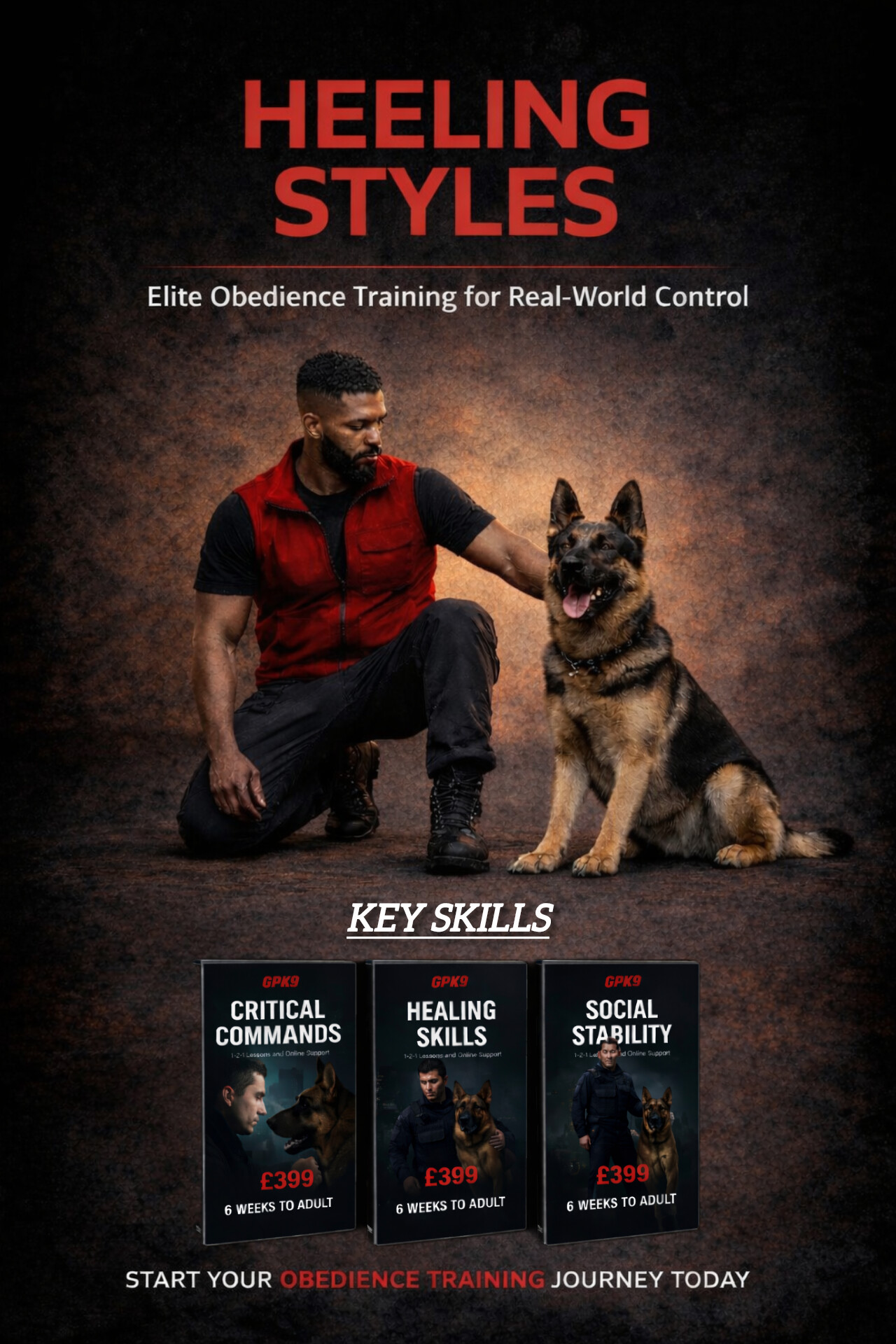
Heeling Styles
Building Practical and Structured Movement With Your Dog
Heeling is one of the most important skills a dog can learn. It allows the dog and handler to move together with control, awareness, and cooperation.
However, proper heeling is not created through quick tricks or forced positioning. It develops over time through clear communication, structure, and consistent training.
When a dog truly understands heeling, it no longer feels like a command being enforced. Instead, the dog naturally moves in sync with the handler. The process is gradual, and both the dog and handler improve together as the training progresses.
The goal is to create movement that feels natural, reliable, and confident in any situation.
Understanding the Three Core Heel Styles
Different environments and training goals require different types of heeling. Learning how to apply the correct style helps handlers maintain control and communication in both everyday situations and more advanced training scenarios.
The following three heel styles represent common ways handlers structure movement with their dogs.havioural development in everyday situations. It’s for owners and trainers who want to build strong foundations in leash manners, recall, focus, and a solid bond with their dog through structured training.
Real Heel
Real Heel focuses on practical heeling for everyday life.
The dog learns to stay close to the handler while remaining calm, responsive, and aware of the handler’s movement. Unlike highly formal heeling, the dog does not need to maintain constant eye contact.
Instead, the dog learns to stay aligned with the handler while navigating real environments such as sidewalks, parks, streets, and public spaces.
The purpose of Real Heel is to create a walking style that works reliably outside of controlled training environments.
Common uses include:
- Daily walks
- Public environments with distractions
- Real-life working situations
- General control while moving through busy areas
Real Heel is designed to be practical and adaptable so the dog can maintain good behaviour in almost any real-world situation.
Focus Heel
Focus Heel is a more structured and precise form of heeling where the dog actively directs its attention toward the handler.
The dog maintains engagement while walking in alignment, creating a more energetic and polished appearance. This type of heel often includes stronger posture, rhythm, and coordinated movement between the dog and handler.
In Focus Heel, the dog learns to channel its energy toward maintaining position and attention rather than becoming distracted by the environment.
This style is commonly used for:
- Obedience competitions
- Training demonstrations
- Improving engagement and handler focus
Focus Heel helps develop strong communication and creates a highly controlled style of movement.
Contact Heel
Contact Heel emphasizes close positioning and physical awareness of the handler’s body.
In this style, the dog naturally seeks proximity while maintaining focus on a specific target or objective. The dog learns to move tightly alongside the handler while managing its energy and drive.
This type of heeling can be helpful when developing advanced control and engagement during higher intensity training.
Contact Heel is often used for:
- Protection training foundations
- Advanced obedience work
- Building engagement and drive control
This style can also help establish the positioning required for more structured heeling behaviours

Training for Real-World Environments
A well-trained dog must be able to perform outside of a controlled training field.
Dogs should learn how to apply their training while moving through everyday environments filled with distractions, changing surroundings, and unpredictable situations.
Training in real locations helps dogs understand how to maintain structure and control even when the environment becomes challenging.
This type of training prepares the dog for practical situations rather than limiting their skills to the training ground.
Communication Over Corrections
Some traditional training methods rely heavily on corrections or pressure to force dogs into position.
While these approaches may produce quick results in some cases, they can also create confusion or tension between the dog and handler.
A more effective training approach focuses on helping the dog understand the task clearly.
When dogs understand what is expected, they are more likely to perform willingly and consistently.
Key elements of effective heeling training include:
- Clear communication
- Consistent structure
- Controlled energy
- Purposeful movement
These elements help the dog learn how to work with the handler rather than simply reacting to pressure.
Creating a Strong Working Partnership
Heeling is more than just walking beside a person. It represents a shared movement and understanding between dog and handler.
When trained properly, heeling helps:
- strengthen the bond between dog and handler
- channel the dog’s energy into productive behaviour
- create reliable control in real environments
Over time, the dog begins to move naturally with the handler, creating a balanced and confident partnership.
Helling Skills
Heeling Precision
£399Lifetime Access
- All premium features
- Online support
- Regular updates
- Personal training