
Puppy Toilet Training
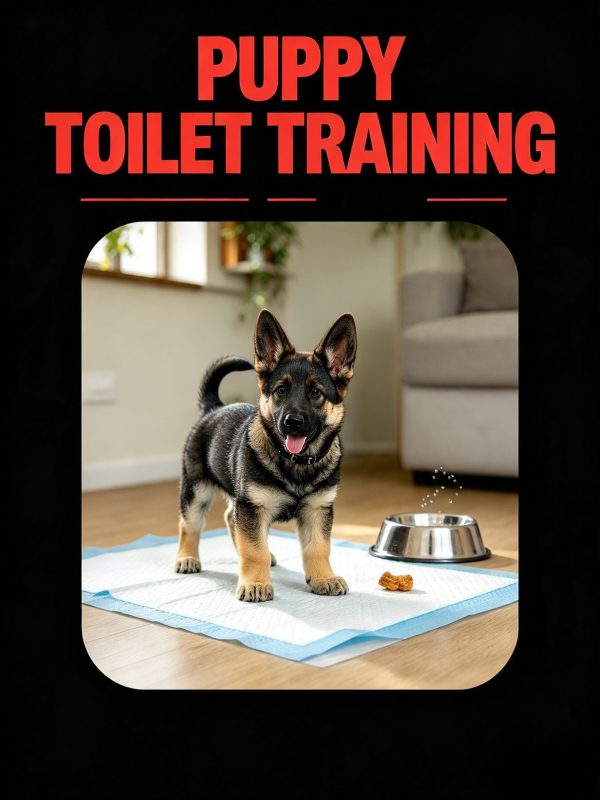
Puppy Toilet Training
Puppy Toilet Training is a focused, practical course designed to help owners understand the most common challenges that occur when teaching a puppy where and when to toilet.
Toilet training is not simply about taking a puppy outside. It involves understanding the puppy’s development, recognising individual toilet signals, creating the right routine, managing freedom, preventing accidents and reinforcing the behaviour you want.
This course takes owners through the process step by step, helping them understand why accidents happen, how to prevent them and how to rebuild reliable toilet habits when training goes off track.
What This Course Covers
The course covers the essential questions owners commonly have about puppy toilet training:
- How long puppy toilet training can take.
- How long a puppy can realistically hold its bladder.
- Why puppies continue to urinate in the house.
- Why puppies continue to have accidents.
- What to do when a previously toilet-trained puppy starts having accidents.
- How often a puppy should be taken outside.
- How to recognise when a puppy needs to toilet.
- How to establish an effective toilet routine.
- What to do when an accident happens.
- How to prevent repeated accidents.
- How to get a puppy back on track after a setback.
- Why supervision and controlled freedom are important.
- How positive reinforcement can strengthen appropriate toileting.
- Why punishment can create confusion and fear.
- Why delayed punishment does not teach a puppy what the owner thinks it does.
- How the camera snapshot principle helps explain timing and learning.
- Why rubbing a puppy’s nose in an accident does not teach the correct behaviour.
- How to respond calmly and constructively when mistakes occur.
Learn to Read Your Puppy
Successful toilet training depends heavily on observation.
You will learn how to recognise potential toilet signals such as:
- sniffing;
- circling;
- pacing;
- restlessness;
- searching;
- moving away from an activity;
- approaching the exit;
- changes in behaviour after sleeping;
- changes following eating, drinking or play.
Understanding these signals allows the owner to provide an appropriate toilet opportunity before an accident occurs.
Build a Reliable Toilet Routine
The course explains how to create a predictable routine around important events such as:
- waking;
- sleeping;
- eating;
- drinking;
- playing;
- exercise;
- training;
- excitement;
- settling;
- bedtime.
The aim is not to force every puppy into an identical timetable.
Instead, owners learn how to combine routine with observation and adjust the frequency of toilet opportunities according to the individual puppy.
Understand Accidents Instead of Punishing Them
Accidents are information.
Rather than becoming frustrated, owners learn how to consider:
- what happened immediately beforehand;
- when the puppy last toileted;
- whether the puppy had enough opportunity;
- whether the puppy was supervised;
- how much freedom the puppy had;
- whether the environment was distracting;
- whether the puppy was excited;
- whether the routine had changed.
This turns an accident into an opportunity to improve the training process.
Learn Why Punishment Can Make Toilet Training Worse
One of the most important parts of the course explains why telling a puppy off, shouting or using physical punishment does not teach the lesson the owner intends.
A puppy may instead become:
- nervous around the handler;
- reluctant to toilet in front of the handler;
- more likely to hide when it needs to toilet;
- uncertain about particular areas of the home;
- confused about what behaviour caused the owner’s reaction.
The course explains the camera snapshot principle and why the timing of a consequence matters when a puppy is learning.
The focus is on teaching the correct behaviour rather than creating fear around a natural biological function.
Learn How to Get Back on Track
Toilet training does not always progress perfectly.
A puppy that was previously doing well may suddenly start having accidents because of:
- increased freedom;
- reduced supervision;
- changes in routine;
- visitors;
- excitement;
- environmental changes;
- changes in activity;
- stress;
- distraction;
- or possible health problems.
You will learn how to identify what changed and return temporarily to a level where the puppy can succeed.
The process is:
STRUCTURE → SUCCESS → RELIABILITY → FREEDOM
Understand Freedom and Responsibility
A puppy should not automatically receive unrestricted access to the entire home simply because it has had several successful days.
The course explains the principle:
MORE FREEDOM REQUIRES MORE BEHAVIOURAL RESPONSIBILITY.
As reliability develops, freedom can gradually increase.
If accidents return, freedom can temporarily be reduced while reliability is rebuilt.
Learn How to Respond to Accidents
You will learn what to do if:
You discover an accident later
Stay calm, clean the area thoroughly and investigate what may have caused the accident.
You catch the puppy in the act
Remain calm, gently interrupt where appropriate and guide the puppy towards the correct toilet location.
The puppy does not toilet outside
Avoid immediately giving unrestricted freedom indoors. Continue appropriate supervision and provide another opportunity when necessary.
Accidents repeatedly occur in the same location
Consider residual odour, access to the area, supervision and whether the puppy has developed a location or surface preference.
Previously reliable training suddenly deteriorates
Look at changes in health, routine, environment, freedom and behaviour rather than automatically assuming the puppy has forgotten its training.
Positive Reinforcement
The course focuses on reinforcing the behaviour the owner wants to see repeated.
When the puppy toilets in the correct location:
TOILET → FINISH → REWARD
Clear timing helps the puppy understand which behaviour produced the positive consequence.
With repetition, the puppy can develop a stronger association between the appropriate location and toileting.
A Practical Learning Process
Throughout the course, owners are encouraged to use a simple decision-making process:
OBSERVE → INTERPRET → DECIDE → COMMUNICATE → OBSERVE RESPONSE → REASSESS
This encourages owners to look at what the puppy is actually showing them instead of automatically repeating the same response.
If the puppy succeeds, continue developing the behaviour.
If the puppy struggles, simplify the conditions.
If accidents increase, investigate why.
If freedom has increased too quickly, reduce it temporarily.
If behaviour suddenly changes, consider whether health or environmental factors may be involved.
Who Is This Course For?
This course is suitable for:
- new puppy owners;
- families bringing home their first puppy;
- owners struggling with repeated accidents;
- owners dealing with toilet-training setbacks;
- owners who want a clearer toilet routine;
- owners who want to understand puppy toilet signals;
- owners who want to avoid punishment-based mistakes;
- owners who want to develop reliable toilet behaviour through positive reinforcement.
What You Will Take Away
By completing the course, you will have a clearer understanding of how to:
- establish a practical toilet routine;
- recognise when your puppy needs to go;
- provide appropriate toilet opportunities;
- supervise effectively;
- manage freedom around the home;
- reinforce successful toileting;
- respond correctly to accidents;
- clean previous accident areas appropriately;
- understand why punishment can create additional problems;
- recognise when training has gone off track;
- rebuild reliability after setbacks;
- gradually increase your puppy’s freedom;
- recognise when a sudden change may require veterinary attention.
Course Price
Puppy Toilet Training — £19.99
A focused, practical course covering the key stages of puppy toilet training, from understanding normal accidents through to building reliable habits and getting training back on track after setbacks.
£19.99 one-off purchase.