When Should I Introduce Distractions in Dog Training?
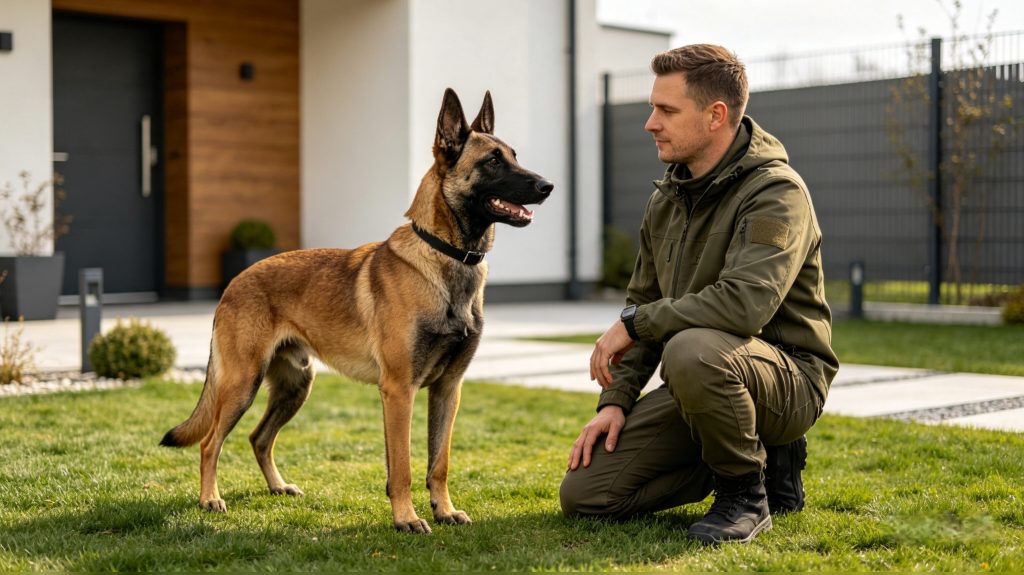
When should I introduce distractions in dog training? Introduce distractions once your dog understands the behaviour and can perform it reliably in a quiet, familiar environment. Start with mild distractions and increase the difficulty gradually rather than taking your dog straight into a busy or highly stimulating environment.
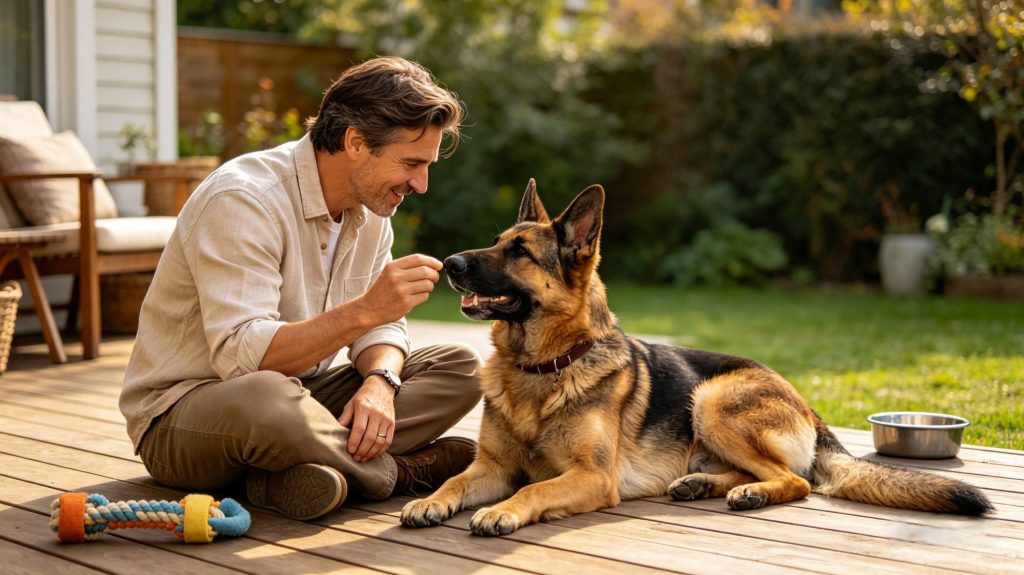
New behaviours are generally easier to teach in a quiet environment before distractions are introduced. Training should remain short, regular and reward-based so your dog has frequent opportunities to succeed.
How Do I Know If My Dog Is Ready for Distractions?
Your dog is ready for a distraction when it can perform the behaviour consistently without needing excessive help.
Look for signs such as:
- Your dog understands the cue.
- Your dog responds consistently in a quiet environment.
- Your dog remains relaxed and focused.
- Your dog is motivated by its reward.
- Your dog can complete several successful repetitions.
- Your dog can recover quickly from small mistakes.
You do not need to wait for absolute perfection, but your dog should have a reliable foundation before you make the exercise harder.
Should I Introduce Distractions Immediately?
Not usually.
If you introduce major distractions while your dog is still learning what you want, the environment can become more difficult than the behaviour itself.
Teach the behaviour first, reinforce it and then gradually introduce distractions.
For example, if you are teaching your dog to sit, start somewhere quiet before expecting the same response while people, dogs, toys or other exciting things are nearby.
What Distractions Should I Introduce First?
Start with mild distractions that your dog can notice without becoming overly excited.
You could gradually introduce:
- Small movements from you.
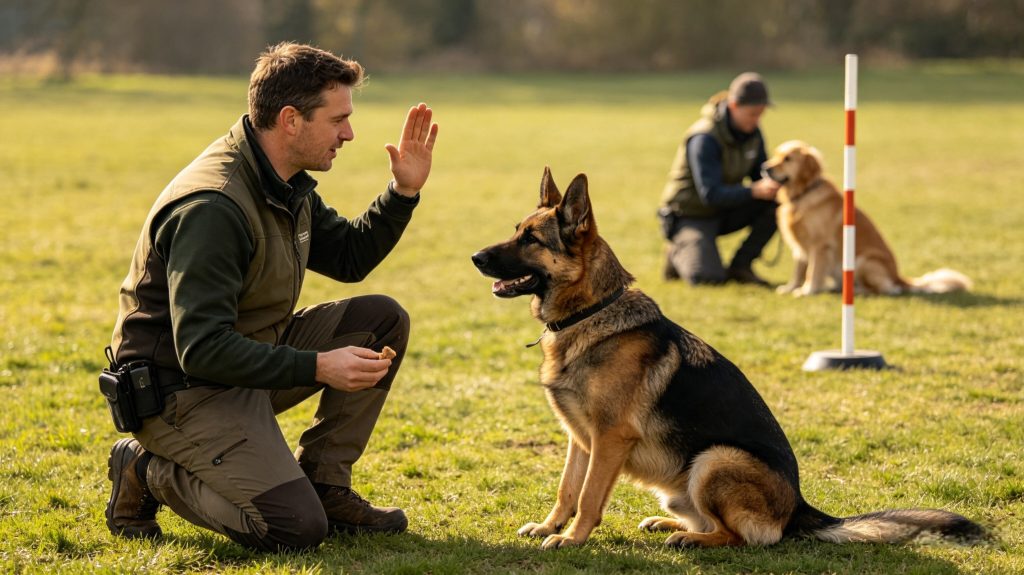
- Another person moving around.
- A different room.
- A quieter outdoor area.
- A toy or mild environmental distraction.
- People at a distance.
- Other dogs at a suitable distance.
- Busier environments.
The exact progression depends on your individual dog.
A distraction should challenge your dog’s attention without immediately overwhelming it.
How Do I Introduce Distractions Step by Step?
Step 1: Teach the Behaviour Without Distractions
Begin in a quiet environment where your dog can concentrate.
Reward the correct behaviour promptly and repeat it through short sessions.
This gives your dog a clear understanding of what behaviour earns the reward.
Step 2: Add One Mild Distraction
Introduce one small distraction while keeping everything else easy.
For example, ask your dog to remain in position while you take one step to the side.
Reward your dog if it remains focused.
Step 3: Repeat Until Your Dog Is Comfortable
Do not immediately make the distraction harder.
Give your dog several successful opportunities to learn that it can continue responding even when something else is happening.
Step 4: Increase the Distraction Gradually
Once your dog is reliable, make the distraction slightly more difficult.
You might increase the movement, distance, noise or duration.
Change one main variable at a time whenever possible.
Step 5: Practise in Different Places
Once your dog can cope with mild distractions, practise the behaviour in different environments.
For example:
Home → garden → quiet outdoor area → more distracting environment.
Dogs do not automatically generalise a behaviour to every location, so practising in different places is an important part of building reliability. The RSPCA recommends practising behaviours in different locations and gradually increasing difficulty.
When Should I Introduce Distractions Around Other People?
Introduce people gradually if people are a distraction for your dog.
Start with someone at a distance where your dog can still focus on you.
Reward calm behaviour and successful responses.
As your dog becomes more reliable, gradually decrease the distance or increase the amount of movement.
If your dog becomes too excited, increase the distance again.
When Should I Introduce Other Dogs as Distractions?
Do not use another dog as a distraction until your dog can work reliably around easier distractions.
Start at a distance where your dog can notice the other dog without becoming overwhelmed.
Reward attention and calm behaviour.
Gradually work closer only when your dog remains able to respond.
If your dog is barking, lunging, pulling heavily or unable to respond, the distraction is too difficult at that distance.
When Should I Introduce Distractions During Recall Training?
Build recall gradually.
Start indoors, then progress through the garden and suitable outdoor environments before introducing increasingly difficult distractions.
The RSPCA recommends increasing recall distance gradually and using a long training line in suitable outdoor areas while developing reliability.
Do not test an unreliable recall around major distractions when your dog could run away or enter danger.
When Should I Introduce Distractions During Loose-Lead Walking?
Start loose-lead training somewhere relatively quiet.
Once your dog understands the behaviour, gradually introduce distractions such as mild movement, smells, toys and eventually busier environments.
If your dog immediately starts pulling when a distraction appears, increase the distance from the distraction or return to an easier environment.
Distractions can make walking more difficult, so gradual progression is important.
What If My Dog Notices the Distraction but Still Listens to Me?
That is a good training opportunity.
Your goal is not necessarily to make your dog completely ignore everything around it.
Your dog can notice something and still choose to respond to you.
Reward your dog for looking at the distraction without automatically reacting, then returning its attention to you when appropriate.
This builds the ability to remain responsive while the environment changes.
What If My Dog Cannot Concentrate Around the Distraction?
Make the exercise easier.
Increase your distance from the distraction, reduce the intensity or return to a quieter environment.
Do not repeatedly give the cue when your dog is unable to respond.
Your dog needs to be able to succeed before you increase the difficulty again.
Short, regular sessions can help prevent training from becoming overwhelming.
How Do I Know If a Distraction Is Too Difficult?
The distraction may be too difficult if your dog:
- Stops responding to familiar cues.
- Repeatedly makes mistakes.
- Becomes excessively excited.
- Pulls towards the distraction.
- Barks or lunges.
- Stops accepting its usual reward.
- Cannot focus on you.
- Tries to escape or avoid the situation.
If this happens, increase distance or reduce the distraction rather than forcing your dog to continue.
Should I Reward My Dog Around Distractions?
Yes.
Reward successful responses promptly.
The reward helps your dog understand that remaining responsive and performing the desired behaviour is worthwhile even when something interesting is happening nearby.
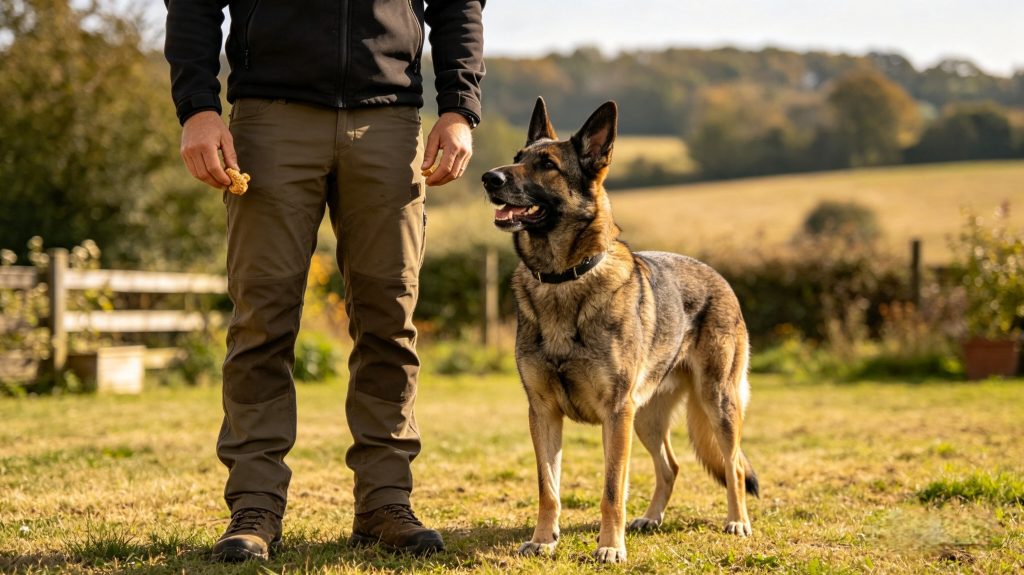
Food, toys or other appropriate rewards can be used depending on what motivates your dog. Reward-based training is recommended for teaching dogs new behaviours.
Should I Use Treats When Introducing Distractions?
Treats can be very useful, particularly when a distraction is new or difficult.
Use a reward that your dog values and deliver it promptly after the correct behaviour.
As the behaviour becomes reliable, you can gradually vary the rewards while continuing to reinforce good responses.
Do not wait until your dog has completely lost focus before trying to reward it.
Should I Increase Distance, Duration and Distractions Together?
Usually, no.
If your dog is learning to stay, for example, do not simultaneously increase the duration, walk a long distance away and introduce a busy environment.
Build each element separately first.
Once your dog is reliable with each element, you can gradually combine them.
This makes it easier to identify what your dog is struggling with.
Can I Introduce Distractions During Puppy Training?
Yes, but they should be introduced carefully and positively.
Puppies need opportunities to experience different sights, sounds, people and environments, but experiences should be appropriate for their age and vaccination status.
Keep puppy training sessions short and fun, and provide plenty of opportunities for rest.
What Equipment Can Help With Distraction Training?
The equipment you use depends on the behaviour and the level of risk.
A suitable harness and lead can provide control while practising around manageable distractions.
For recall, a long training line can provide additional control in appropriate outdoor areas while your dog’s reliability develops.
Equipment should support training and safety. It should not be used to force a dog to remain in a situation that is too difficult.
Should I Introduce Distractions Every Training Session?
No.
Some sessions should reinforce behaviours your dog already knows.
Other sessions can introduce a small new challenge.
If your dog is tired, stressed, unwell or unusually distracted, make the training easier rather than automatically progressing.
The aim is steady development, not making every session harder.
What Mistakes Should I Avoid?
Avoid introducing major distractions too early.
Avoid taking a dog that only knows a behaviour at home straight into a highly stimulating environment.
Avoid adding several difficult distractions at once.
Avoid repeatedly giving commands when your dog is unable to respond.
Avoid forcing your dog closer to something it finds overwhelming.
Avoid punishing your dog for failing around a distraction.
Instead, reduce the difficulty, create enough distance for your dog to succeed and build the behaviour gradually.
When Should I Get Professional Help?
Seek professional help if your dog becomes highly distressed, fearful, aggressive or reactive around particular distractions.
A qualified trainer or appropriate behaviour professional can help you identify a suitable starting point and progression.
If your dog’s behaviour changes suddenly or you notice significant signs of stress or fear, veterinary advice may also be appropriate.
Conclusion
Introduce distractions after your dog understands the behaviour and can perform it reliably in an easier environment.
Start with mild distractions, reward successful responses and gradually increase the difficulty.
The aim is not to see whether your dog can cope with the biggest distraction possible. The aim is to build reliable behaviour that continues to work as the environment becomes progressively more challenging.