How Do I Help a Fearful Dog?
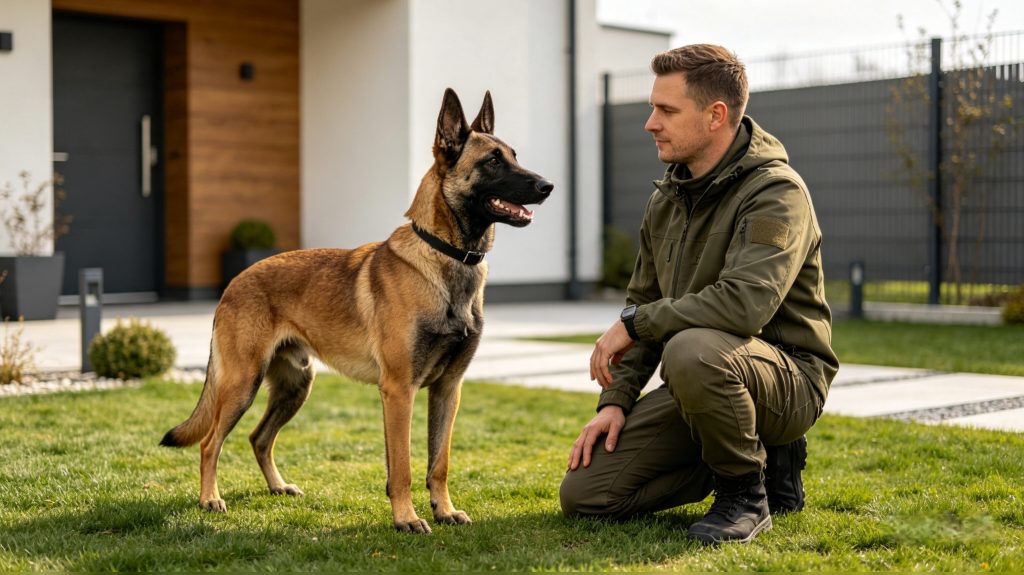
How do I help a fearful dog? Start by making your dog feel safe, identifying what causes fear, reducing the intensity of difficult situations, and gradually building positive experiences without forcing your dog into situations it cannot cope with.
Why Is My Dog Fearful?
Fear can develop for many reasons, including limited early experiences, frightening experiences, changes in the environment, genetics, pain, or a lack of confidence.
A fearful dog may hide, freeze, avoid people or dogs, pull away, bark, growl, tremble, or try to escape. These behaviours are ways of responding to something the dog finds threatening or overwhelming.
Understanding what triggers the fear is the first step towards helping your dog.
How Do I Know What My Dog Is Afraid Of?
Watch your dog’s behaviour carefully and identify when the fear appears.
Common triggers include:
- Unfamiliar people
- Other dogs
- Children
- Loud noises
- Traffic
- New places
- Handling
- Household objects
- Veterinary visits
- Being approached
- Sudden movements
Look for early signs such as avoiding eye contact, turning away, lowering the body, moving backwards, freezing, licking the lips, or trying to increase distance.
Recognising these signs early allows you to respond before your dog becomes overwhelmed.
How Do I Make My Fearful Dog Feel Safe?
Give your dog enough space to move away from situations that cause fear.
Do not force your dog towards a person, dog, object, or environment it is frightened of. Instead, increase distance and allow your dog time to observe without being pressured.
A predictable routine can also help. Consistent feeding, walking, resting, and training routines can make the environment easier for your dog to understand.
Your dog should have a safe place where it can settle without being disturbed.
How Do I Build Confidence in a Fearful Dog?
Start with situations your dog can handle successfully.
If your dog is frightened of people, for example, begin at a distance where your dog can notice a person without becoming overwhelmed. Reward calm behaviour and gradually work towards being closer only when your dog is comfortable.
The same principle can be used with dogs, noises, environments, handling, and other triggers.
Small successful experiences are more useful than forcing rapid progress.
How Do I Train a Fearful Dog?
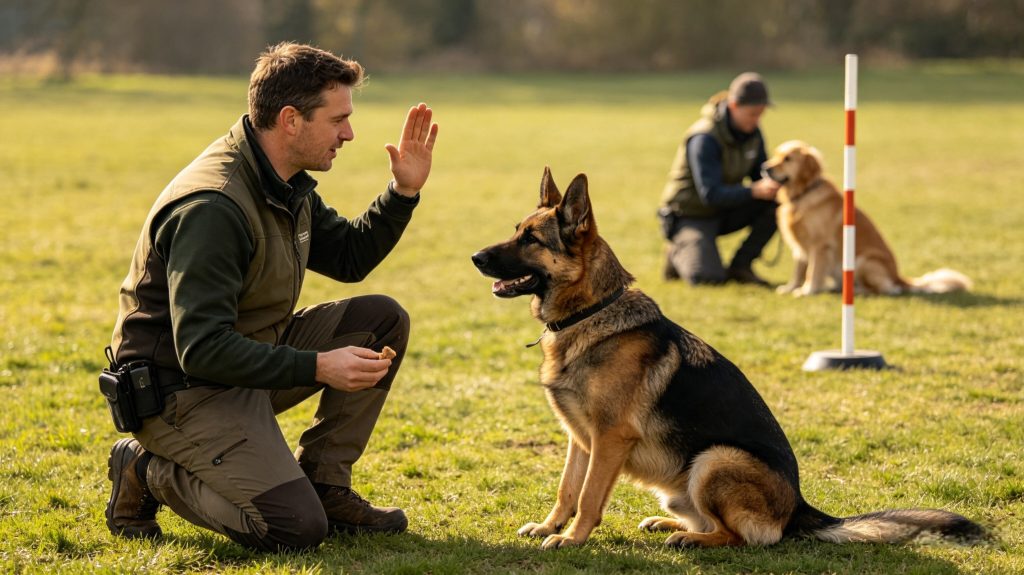
Training should be simple, positive, and easy for your dog to understand.
Step 1: Identify the Trigger
Work out what causes the fearful response and how severe the reaction is.
Step 2: Create Distance
Move far enough away that your dog can notice the trigger without becoming overwhelmed.
Step 3: Reward Calm Behaviour
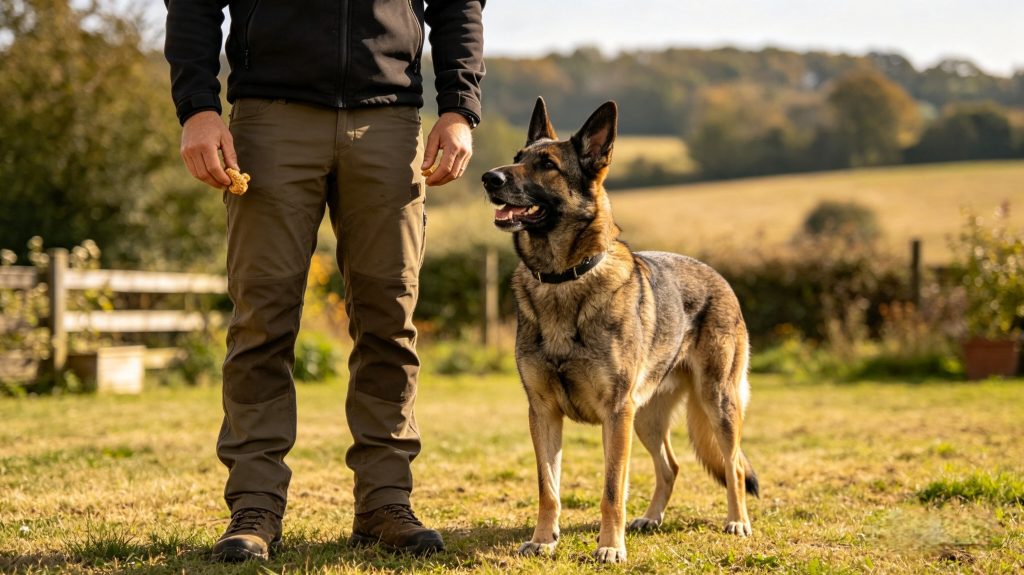
Use food, play, praise, or another reward your dog values when it remains calm and able to engage with you.
Step 4: Keep Sessions Short
End the session while your dog is still coping. Several short successful sessions are often more useful than one long session.
Step 5: Increase Difficulty Gradually
Only make the situation more difficult when your dog is consistently comfortable at the current level.
If your dog becomes fearful again, reduce the difficulty rather than continuing to push forward.
What Should I Do If My Dog Freezes, Hides or Tries to Escape?
Give your dog space and reduce whatever is causing the fear.
Do not drag your dog towards the trigger or force it to remain in the situation.
Allow your dog to recover before attempting another training session. If the reaction is severe or happens frequently, professional assessment can help identify the safest approach.
Should I Comfort a Fearful Dog?
You can calmly support your dog without turning the situation into a frightening confrontation.
Stay relaxed, give your dog appropriate space, and help it move away from the trigger when necessary.
The aim is not to punish fear or force the dog to ignore it. The aim is to help the dog feel safe enough to learn a different response.
Can Treats Help a Fearful Dog?
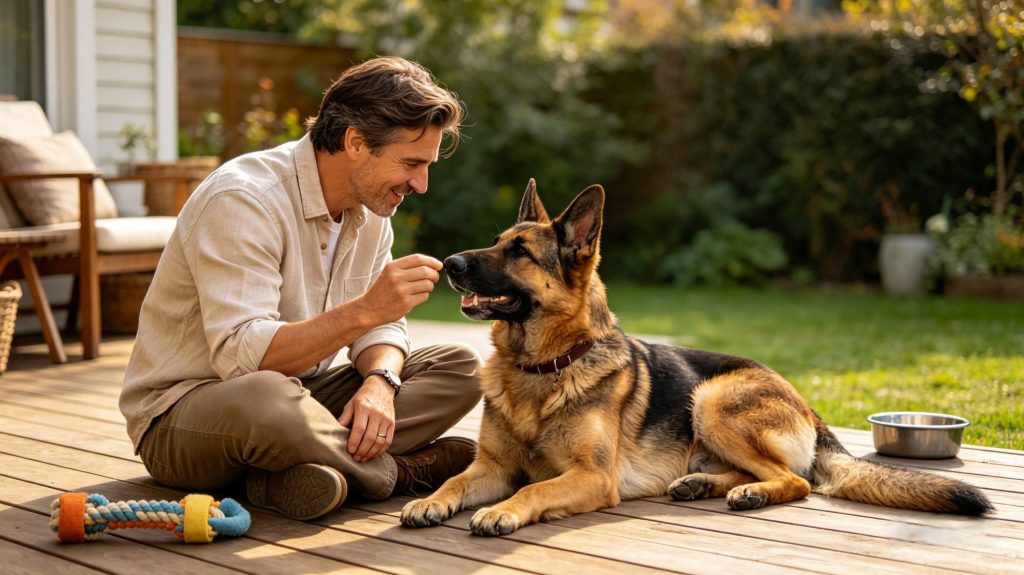
Food can be useful when your dog is comfortable enough to eat.
Give the reward while your dog is calm or beginning to notice the trigger without becoming overwhelmed.
If your dog refuses food, becomes highly focused on escaping, or cannot respond to you, the situation may be too difficult. Increase distance and allow your dog to recover.
How Do I Help My Dog Around People?
Start at a distance where your dog can see people without becoming frightened.
Ask people not to approach, stare at, reach towards, or touch your dog. Reward your dog for calm behaviour and allow it to choose whether to move closer.
Do not use forced greetings as a way of socialising a fearful dog.
How Do I Help My Dog Around Other Dogs?
Do not assume that a fearful dog needs to meet more dogs.
Instead, begin at a comfortable distance and allow your dog to observe another dog without being forced into an interaction.
Reward calm behaviour and gradually reduce the distance only when your dog remains comfortable.
If your dog becomes highly reactive, increase distance and allow it to settle before continuing.
What Equipment Can Help a Fearful Dog?
A suitable harness and lead can provide secure, predictable control while allowing you to manage distance from triggers.
A short line can be useful when you need closer control in a particular environment.
A long line can provide more freedom in appropriate secure areas while still giving you a way to manage your dog safely.
Equipment should support training and safety. It should never be used to force a fearful dog towards something it is trying to avoid.
What If My Fearful Dog Barks or Growls?
Barking and growling can be signs that your dog is frightened and wants more distance.
Do not punish the warning.
Instead, stop moving towards the trigger, create distance, and allow your dog to recover. Once your dog is calm enough to respond again, reassess the situation.
If the behaviour is becoming more intense, frequent, or difficult to manage, seek professional help.
How Do I Know If My Dog Is Becoming More Confident?
Look for gradual changes such as:
- Recovering more quickly after a trigger
- Choosing to investigate new things
- Remaining calmer around people or dogs
- Taking food in situations that previously caused fear
- Responding to familiar cues
- Needing less distance from a trigger
- Returning to normal behaviour more quickly
Confidence does not necessarily mean your dog will want to approach everything. A confident dog should be able to make appropriate choices without becoming overwhelmed.
What Mistakes Should I Avoid With a Fearful Dog?
Avoid forcing your dog into frightening situations, punishing fearful behaviour, rushing progress, or deliberately overwhelming your dog to make it “get used to” something.
Do not measure progress by how close your dog can get to a trigger alone.
A better measure is whether your dog can remain calm, recover appropriately, and gradually cope with situations that previously caused fear.
How Long Does It Take to Help a Fearful Dog?
There is no fixed timeframe.
Some dogs improve quickly with careful management and consistent training, while others need much longer. The cause of the fear, the intensity of the response, the dog’s previous experiences, and the environment can all affect progress.
Focus on steady improvement rather than expecting your dog to overcome fear in a set number of days or weeks.
When Should I Get Professional Help?
Professional help is important when your dog’s fear is severe, worsening, difficult to predict, or creating a risk of escape, injury, or aggression.
A sudden change in behaviour should also be discussed with a vet because pain or another underlying health problem can sometimes contribute to changes in behaviour.
A qualified professional can help identify triggers, manage risk, and create a training plan appropriate for your individual dog.
Conclusion
Helping a fearful dog means creating safety, understanding what causes the fear, managing distance, rewarding calm behaviour, and progressing gradually.
Do not force your dog to face something it cannot cope with. Give it opportunities to succeed, build confidence through positive experiences, and adjust the difficulty according to its behaviour.
The goal is not simply to make your dog tolerate frightening situations. The goal is to help your dog become safer, calmer, and more confident when dealing with them.