How Do I Teach My Dog to Release a Toy?
How do I teach my dog to release a toy? Teach a clear release cue, make releasing the toy rewarding, and practise in short sessions before gradually increasing distractions. Your dog should learn that releasing the toy does not mean something bad happens or that play becomes unpredictable.
What Does It Mean to Teach a Dog to Release a Toy?
A release cue teaches your dog to let go of a toy when asked.
You might use a word such as “drop”, “release”, “give” or “finished”. Choose one cue and use it consistently.
The aim is to create a reliable response:
Cue → release toy → reward → continue or finish.
How Do I Teach My Dog to Release a Toy?
Start with a toy your dog enjoys but in a calm environment where there are few distractions.
Step 1: Start a Short Game
Play gently with your dog and allow them to become interested in the toy.
Keep the game controlled rather than allowing your dog to become highly excited.
Step 2: Stop Moving the Toy
Stop pulling or moving the toy.
Hold it still and wait briefly.
Your dog may naturally loosen their grip when the game stops.
Step 3: Give the Release Cue
As your dog begins to release the toy, calmly say your chosen release cue.
For example, say “release”.
Step 4: Reward the Release
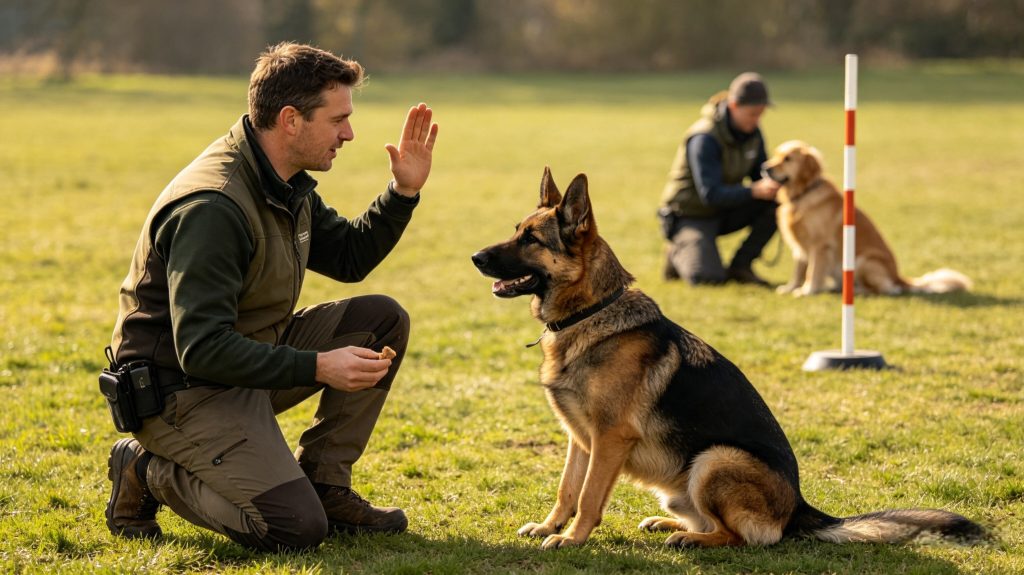
As soon as your dog lets go, mark the correct behaviour and reward it.
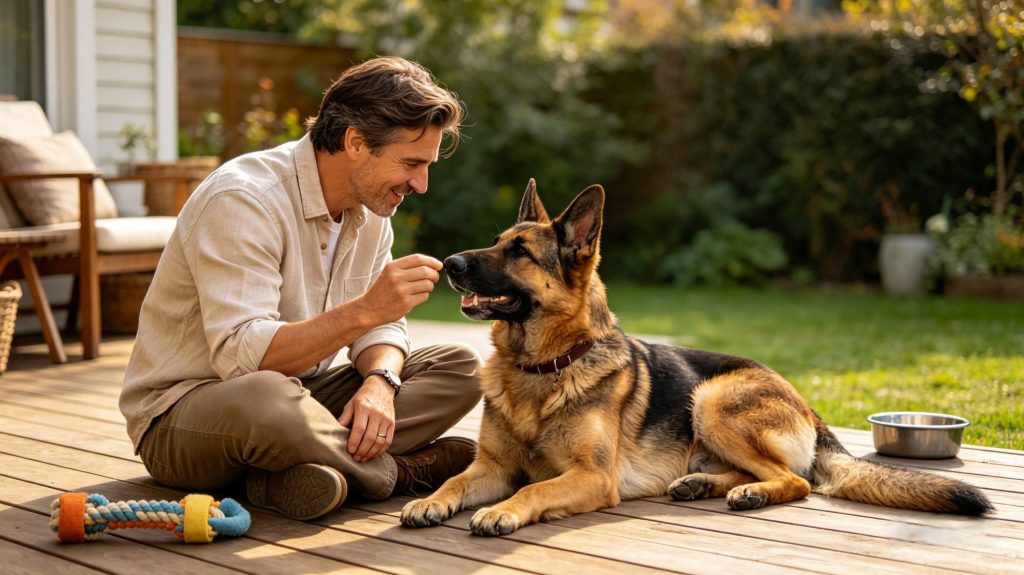
Depending on your dog, the reward could be food, praise, access to the toy again or another short game.
Step 5: Repeat
Repeat several short times, then finish the session before your dog becomes frustrated or overexcited.
The dog should learn that releasing the toy is part of the game rather than the end of the relationship or interaction.
Should I Use Food to Teach a Dog to Release a Toy?
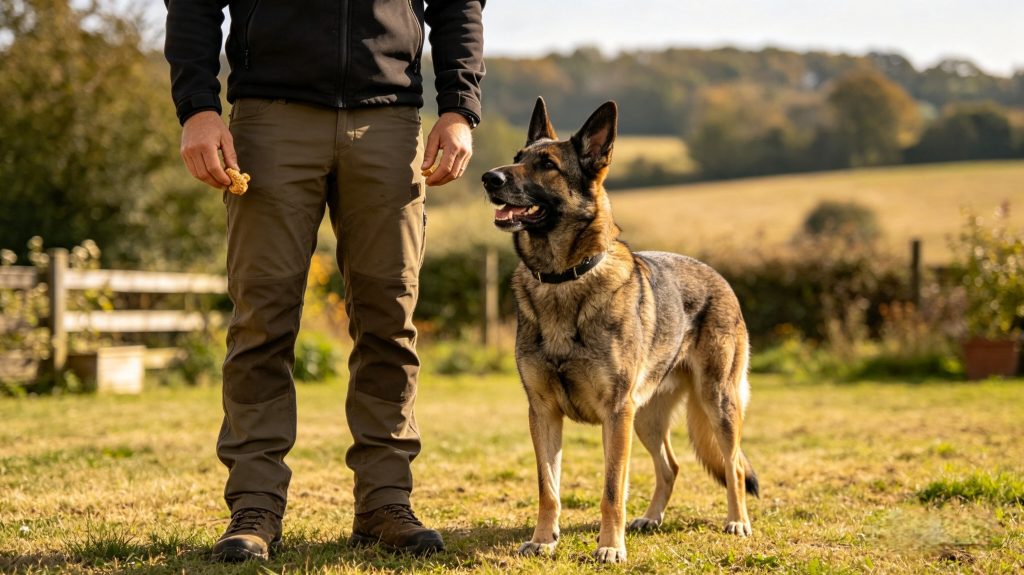
Food can make the exercise easier initially.
Give the release cue and use food to encourage your dog to let go. As soon as the toy is released, reward the behaviour.
However, avoid showing food before every release.
The long-term goal is for your dog to respond to the release cue because they understand what it means, rather than only releasing when they see food.
You can gradually replace food with other appropriate rewards, including restarting the game.
Should I Give the Toy Back After My Dog Releases It?
Often, yes.
Giving the toy back can be particularly useful when teaching the release because your dog learns that letting go does not automatically mean losing the toy.
The sequence can be:
Play → release → reward → play again.
Once your dog understands the cue, you can also use it to finish the game:
Play → release → toy away → settle.
This teaches your dog both how to release the toy and how to stop playing.
What If My Dog Holds the Toy Tightly?
Do not pull harder or turn the exercise into a tug-of-war.
Stop moving the toy and wait for your dog to loosen their grip.
If necessary, make the game easier or use a suitable reward to encourage the release.
Reward the moment your dog lets go.
If your dog becomes increasingly frustrated or excited, stop the exercise and allow them to settle before trying again.
What If My Dog Runs Away With the Toy?
Avoid chasing your dog for the toy.
Chasing can turn releasing the toy into another exciting game and may teach your dog that running away is rewarding.
Instead, practise in a controlled environment and make returning to you and releasing the toy rewarding.
You can also use two suitable toys, allowing your dog to exchange one for another.
Once your dog understands the release cue, gradually reduce your reliance on the second toy.
How Do I Teach a Puppy to Release a Toy?
Puppies can learn the same basic process.
Keep sessions very short and use an appropriate puppy-safe toy.
Allow your puppy to engage with the toy, stop its movement, give the release cue and reward the release immediately.
Do not repeatedly pull a toy from a puppy’s mouth or turn the exercise into a struggle.
The puppy should learn that releasing the toy is a normal part of play.
How Do I Stop My Dog Becoming Overexcited When Releasing a Toy?
Control the intensity of the game.
If your dog becomes frantic, starts jumping, grabs your hands, refuses to release or stops responding to familiar cues, the game is too exciting at that point.
Pause the game and allow your dog to settle.
Shorter games with clear starts and endings can help your dog learn to switch between excitement and calmness.
How Do I Teach the Release Cue Around Distractions?
Start somewhere quiet before introducing distractions.
Once your dog can reliably release the toy at home, gradually practise in more difficult environments.
Increase difficulty one step at a time.
For example:
Quiet room → garden → quiet outdoor area → more distracting environment.
If your dog stops responding, reduce the difficulty rather than repeatedly giving the cue.
What Equipment Do I Need?
You do not need special equipment to teach a dog to release a toy.
You need:
- A suitable toy
- A consistent release cue
- Appropriate rewards
- A safe training area
A short line or harness may be useful for general control during suitable training exercises, but equipment should not be used to force the toy from your dog’s mouth.
The release should be taught through communication and reinforcement.
What Should I Avoid When Teaching a Dog to Release a Toy?
Avoid:
- Pulling the toy out of your dog’s mouth
- Chasing your dog for the toy
- Repeating the release cue continuously
- Punishing your dog for holding the toy
- Showing food before every release
- Playing until your dog becomes frantic
- Taking the toy away every time your dog releases it
- Increasing distractions too quickly
These mistakes can make the release cue less reliable or make your dog reluctant to give up toys.
What If My Dog Guards Toys?
Toy guarding is different from simply refusing to release a toy.
If your dog becomes stiff, growls, snaps, lunges or shows other signs of guarding when you approach a toy, do not force the toy away.
Create appropriate distance and seek professional behavioural advice.
Safety should come before trying to practise the release cue.
How Long Does It Take to Teach a Dog to Release a Toy?
There is no fixed timeframe.
Some dogs understand the basic exercise within a few sessions, while others need longer practice.
What matters is building the behaviour gradually and maintaining consistent reinforcement.
Practise frequently in short sessions rather than repeatedly testing the dog for long periods.
Conclusion
Teaching your dog to release a toy is easiest when releasing is made rewarding and predictable.
Use one clear release cue, stop the movement of the toy, reward the moment your dog lets go and gradually practise around greater distractions.
Most importantly, do not make releasing the toy feel like losing something every time. Your dog should learn that releasing means the game can continue, another reward can happen, or play can calmly finish.