Why Is My Dog Behaving Badly?
Why is my dog behaving badly? Dogs usually behave in ways that meet a need, respond to their environment or reflect what they have learned. What looks like “bad behaviour” may be caused by excitement, fear, frustration, confusion, lack of training, insufficient rest, environmental triggers or behaviour that has accidentally been rewarded.
The first step is to identify what your dog is doing, when it happens and what happens immediately before and after the behaviour.
What Does “Bad Behaviour” Mean in Dogs?
“Bad behaviour” is a general description rather than an explanation.
Jumping, barking, pulling, chewing, mouthing, stealing objects, ignoring commands or running away can all have different causes.
For example, a dog that jumps at visitors may be excited and seeking interaction, while a dog that barks at strangers may be worried or trying to create distance.
The behaviour needs to be understood before you can choose the right training approach.
Why Has My Dog Started Behaving Badly?
A change in behaviour can have several possible causes.
Consider:
- Has something changed at home?
- Has your dog’s routine changed?
- Is your dog getting enough rest?
- Has the behaviour been accidentally rewarded?
- Is your dog getting enough appropriate exercise and mental stimulation?
- Has the environment become more distracting?
- Is your dog frightened, frustrated or overexcited?
- Is your dog struggling to understand what you want?
If the behaviour has appeared suddenly or changed significantly, consider whether there could also be an underlying health problem.
How Do I Find Out Why My Dog Is Misbehaving?
Look at the entire situation rather than focusing only on the behaviour.
Observe:
What happens before the behaviour → what your dog does → what happens afterwards.
For example, if your dog jumps up when someone arrives, the arrival of the person may trigger excitement and jumping may then result in attention.
This gives you useful information about what is maintaining the behaviour.
How Do I Stop My Dog Behaving Badly?
First, prevent the unwanted behaviour from being repeatedly practised.
Then teach your dog what you want them to do instead.
For example, if your dog jumps at people, manage the greeting so jumping does not automatically produce attention, then reward your dog for keeping four paws on the floor.
The basic training process is:
Identify the behaviour → identify the trigger → prevent unnecessary repetition → teach an alternative → reward the correct response → gradually increase difficulty.
Should I Punish My Dog for Bad Behaviour?
Punishment is not the best way to teach your dog what you want them to do.
Instead, focus on understanding the reason for the behaviour and reinforcing a suitable alternative.
If your dog is barking because they are frightened, for example, simply punishing the barking does not address the underlying emotional response.
Training should make the correct behaviour clear and rewarding.
What If My Dog Ignores Me?
A dog ignoring a cue does not automatically mean the dog is being stubborn or deliberately disobedient.
The environment may be too distracting, the behaviour may not be sufficiently trained, the reward may not be valuable enough, or your dog may be too excited, nervous or tired to respond effectively.
Make the exercise easier and practise in an environment where your dog can succeed.
Then gradually increase distractions.
Why Is My Dog Good at Home but Bad Outside?
The behaviour may not be fully generalised.
A dog that responds perfectly in a quiet room may struggle in a busy park because there are significantly more smells, sounds, people, dogs and movement.
Start with easier environments and gradually introduce distractions.
Do not assume that learning a behaviour in one location automatically means your dog understands it everywhere.
Why Is My Dog So Excited?
Excitement can make it difficult for a dog to think, listen and respond.
Play, visitors, walks, other dogs, people, food and environmental activity can all increase arousal.
Watch for early signs such as:
- Increased movement
- Jumping
- Barking
- Pulling
- Mouthing
- Fixation
- Difficulty responding
- Inability to settle
Intervene before the excitement becomes overwhelming by reducing stimulation and increasing distance from the trigger where appropriate.
What If My Dog Is Behaving Badly Around Other Dogs?
First determine whether the behaviour is excitement, frustration, fear or another response.
If your dog is pulling, barking, lunging or staring at another dog, create enough distance for your dog to become responsive again.
Reward calm behaviour and appropriate disengagement.
Do not force your dog closer to another dog simply because you want them to socialise.
If your dog regularly reacts strongly or there is a risk of biting, seek professional behavioural assessment.
How Do I Stop My Dog Repeating Unwanted Behaviour?
Look at what your dog gets from the behaviour.
If barking results in attention, jumping results in interaction or stealing an object results in a chase, the behaviour may become more rewarding through repetition.
Where possible, prevent the unwanted behaviour and make the alternative behaviour more rewarding.
For example, teach your dog to sit or remain calmly on the floor before receiving attention from visitors.
How Important Is Consistency?
Consistency helps your dog understand what behaviour produces a particular outcome.
If jumping is ignored one day but rewarded with attention the next, the dog receives mixed information.
Everyone interacting with the dog should aim to respond consistently to the behaviours being trained.
Consistency does not mean repeating the same command endlessly. It means making the expected behaviour clear and reinforcing it reliably.
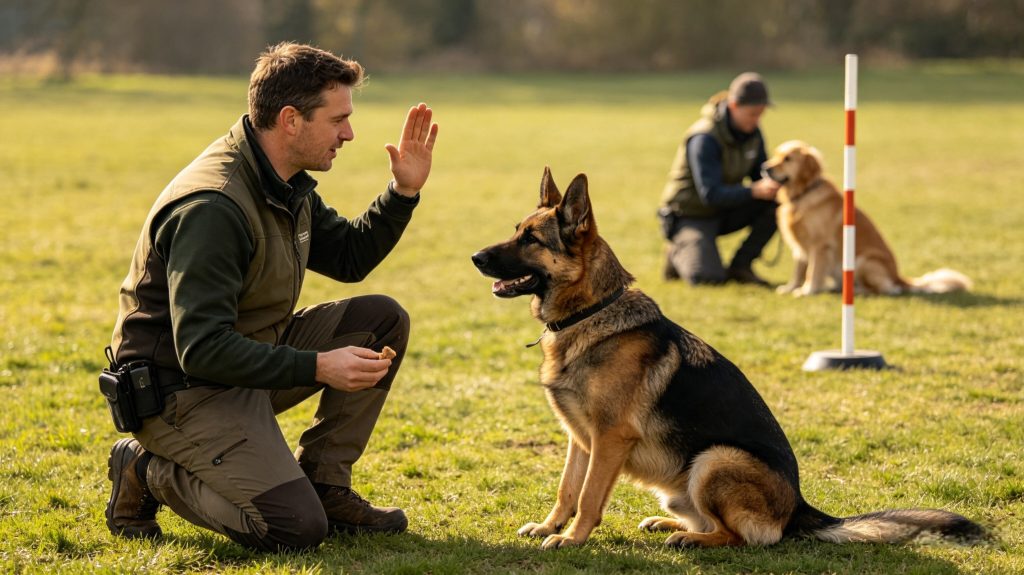
How Do I Train Better Behaviour?
Choose one behaviour at a time and make the training achievable.
For each exercise:
- Decide what behaviour you want.
- Remove unnecessary distractions.
- Give your dog an opportunity to perform the behaviour.
- Mark the correct response.
- Reward immediately.
- Release or reset.
- Gradually increase the difficulty.
If your dog repeatedly fails, make the exercise easier rather than simply repeating the cue.
Does My Dog Need More Exercise?
Exercise is important, but more exercise is not always the answer.
Some dogs become more aroused through constant high-energy activity.
A balanced routine should include appropriate physical exercise, mental stimulation, training, exploration and sufficient rest.
Your dog’s age, breed, health and individual needs should all be considered.
Could My Dog Be Behaving Badly Because They Are Tired?
Yes.
Dogs that are overtired can become more excitable, restless, irritable or unable to concentrate.
Puppies in particular may struggle to regulate their behaviour when they need sleep.
If your dog becomes increasingly difficult to manage after prolonged activity, provide an opportunity to rest rather than continually adding more stimulation.
What If My Dog’s Behaviour Suddenly Changes?
A sudden or significant change in behaviour should not automatically be treated as a training problem.
Pain, illness, discomfort or other health issues can affect behaviour.
If your dog suddenly becomes unusually aggressive, withdrawn, restless, fearful or difficult to handle, speak to your vet.
This is particularly important when the change occurs without an obvious environmental or training explanation.
When Should I Get Professional Help?
Seek professional help if the behaviour is severe, persistent, worsening or creates a safety concern.
Professional assessment is particularly important for:
- Aggression
- Biting
- Lunging
- Severe fear
- Resource guarding
- Dangerous chasing
- Behaviour that cannot be safely managed
A professional can help identify the cause and create an appropriate training and management plan.
Conclusion
Your dog is not simply “being bad” because they behave in a way you do not want.
Look at what happens before the behaviour, what your dog is communicating or trying to achieve, and what happens afterwards.
Prevent unnecessary repetition, teach a clear alternative and reward the behaviour you want. If the behaviour is sudden, severe or unsafe, involve your vet or a qualified professional rather than trying to solve the problem through punishment alone.