FEATURED IMAGE — DALL·E DESCRIPTION
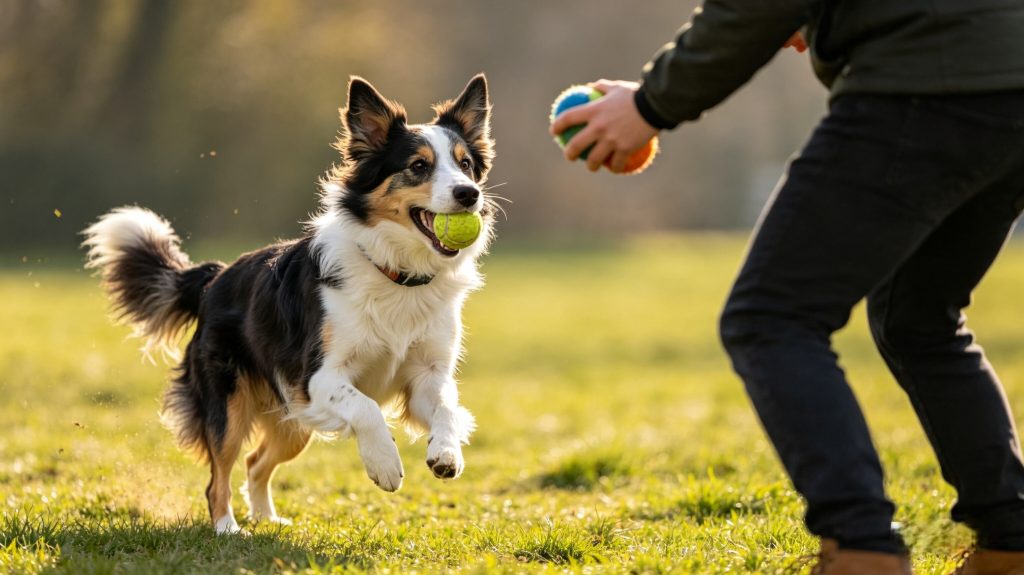
Professional cinematic dog-training scene featuring the established South Asian female professional trainer calmly working with the black-and-white English Cocker Spaniel wearing a simple correctly fitted collar. A suitable lead and discreet reward pouch are visible as the trainer prepares the dog for a calm obedience exercise. Modern GPK9 training facility with dark-grey flooring, rich red-brick detailing, black metal fencing, industrial glass panels and dark structural beams. Realistic dog anatomy, detailed black-and-white feathered coat, natural floppy ears and expressive eyes. Professional cinematic lighting, realistic materials, balanced exposure and detailed shadows. No text, logo or watermark.
Thank you for reading this post, don't forget to subscribe!Dog Training Collars: Types, Uses & Choosing the Right Collar
WHY COLLAR SELECTION MATTERS
Dog Training Collars: Types, Uses & Choosing the Right Collar begins with a simple principle: a collar should have a clear purpose, fit correctly and be appropriate for the individual dog. A dog collar can serve several everyday functions, including identification, controlled handling, attaching a lead and supporting structured training. The correct choice depends on the dog’s age, size, behaviour, environment and the activity being undertaken.
Dog Training Collars: Types, Uses & Choosing the Right Collar is particularly important for puppies because a puppy collar needs to accommodate growth without becoming loose enough to slip over the head or tight enough to restrict normal movement. Puppies also change rapidly, meaning collar fit should be checked regularly rather than treated as a one-time decision.
A correctly fitted collar should sit comfortably around the neck without excessive pressure. As a practical starting point, owners should be able to place appropriate fingers between the collar and the dog’s neck while ensuring the collar cannot easily slide over the head. The exact fit depends on the collar design, the dog’s anatomy and manufacturer guidance.
FLAT COLLARS
Dog Training Collars: Types, Uses & Choosing the Right Collar explains why the flat collar remains one of the most familiar choices for everyday dog ownership. A flat collar generally consists of a continuous band with a buckle or quick-release fastening and a dedicated attachment point for a lead and identification information.
For everyday use, Dog Training Collars: Types, Uses & Choosing the Right Collar highlights the importance of simplicity. A flat collar can provide a convenient place for identification and can be useful during routine walking when correctly fitted. It should not interfere with breathing, swallowing, normal head movement or ordinary activity.
A puppy collar should be checked frequently because puppies can outgrow equipment surprisingly quickly. A collar that fitted correctly several weeks earlier may become restrictive, while excessive looseness can create a risk of escape.
Identification and Everyday Handling
Dog Training Collars: Types, Uses & Choosing the Right Collar also considers identification as an important practical function. An ID collar can carry information or complement a legally required identification system, but owners should ensure that tags and attachments do not create unnecessary weight, noise or snagging risks.
For dogs that spend considerable time outdoors, visibility may also matter. Reflective materials or high-visibility features can make a collar easier to see during low-light conditions, although visibility equipment should complement rather than replace responsible handling.
RECOMMEND PRODUCT
Dog Walking Essentials: Equipment for Safe Outdoor Adventures
Dog Training Collars: Types, Uses & Choosing the Right Collar connects directly with safe outdoor handling because a collar rarely operates in isolation. Understanding how collars interact with leads, harnesses, identification and other walking equipment helps owners create a complete and practical setup rather than choosing individual items without considering their purpose.
MARTINGALE COLLARS
Dog Training Collars: Types, Uses & Choosing the Right Collar introduces the martingale collar as a design intended to provide controlled tightening within a defined limit when correctly fitted. Martingale collars are sometimes selected for dogs whose head and neck proportions make slipping from certain conventional collars more likely.
The important distinction in Dog Training Collars: Types, Uses & Choosing the Right Collar is that a martingale collar should not be viewed simply as a stronger version of a flat collar. Its construction changes how the collar behaves when tension is applied, so correct sizing and responsible handling are essential.
A martingale collar should be adjusted according to the manufacturer’s instructions and the dog’s anatomy. Owners should regularly inspect the collar, attachment points and stitching for wear. The dog should also be monitored while wearing it, particularly during situations where equipment could become caught.
Supervision and Fit
Dog Training Collars: Types, Uses & Choosing the Right Collar emphasises that equipment should never substitute for training. A collar can assist with controlled handling, but the dog’s understanding of communication, reinforcement and environmental expectations remains central to successful training.
SLIP COLLARS
Dog Training Collars: Types, Uses & Choosing the Right Collar also covers slip collars, which operate by passing through a loop so that the collar can tighten when tension is applied. Their use requires particular care because incorrect positioning, excessive tension or inappropriate handling can create unnecessary pressure around the neck.
A slip collar should therefore be understood as specialist handling equipment rather than an automatic solution for pulling or difficult behaviour. The handler’s timing, knowledge and ability to maintain appropriate control are more important than simply putting a particular collar on a dog.
For owners learning structured handling techniques, Dog Training Collars: Types, Uses & Choosing the Right Collar should always be approached alongside appropriate professional instruction where necessary. Equipment should support communication rather than become the primary mechanism for controlling the dog.
TRAINING COLLARS
Dog Training Collars: Types, Uses & Choosing the Right Collar uses the term training collar broadly because there are many different collar designs marketed for training purposes. These can differ substantially in construction, function and the level of handler skill required.
A responsible approach begins with asking why a particular collar is being considered. Is the goal identification? Everyday walking? Controlled handling? Working activity? Specific training? Once the purpose is clear, the handler can assess whether the equipment is actually appropriate.
Training Should Come First
Dog Training Collars: Types, Uses & Choosing the Right Collar should never be interpreted as suggesting that a more specialised collar automatically produces better training. Effective dog training depends on timing, consistency, reinforcement, communication and understanding the dog’s behaviour.
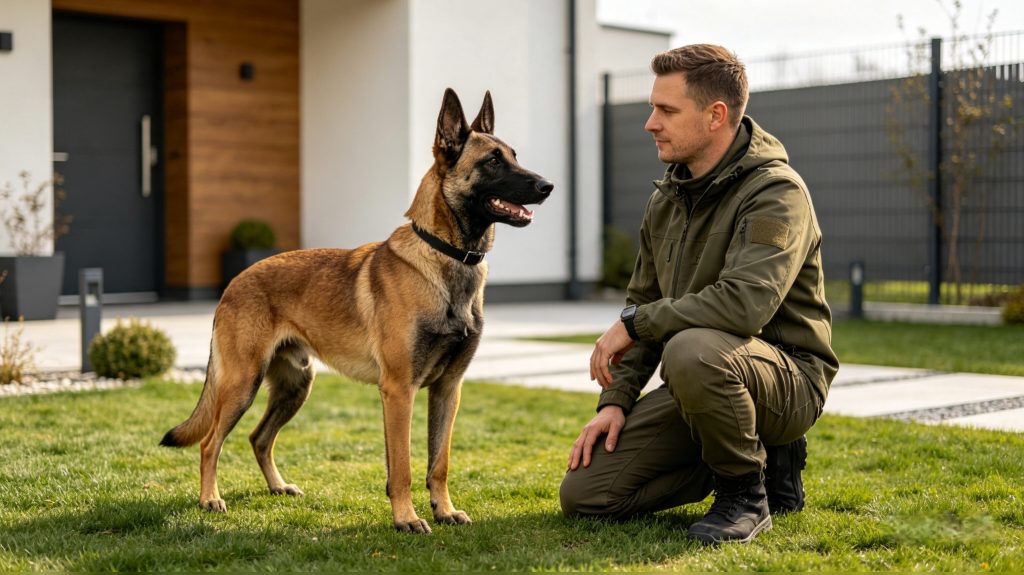
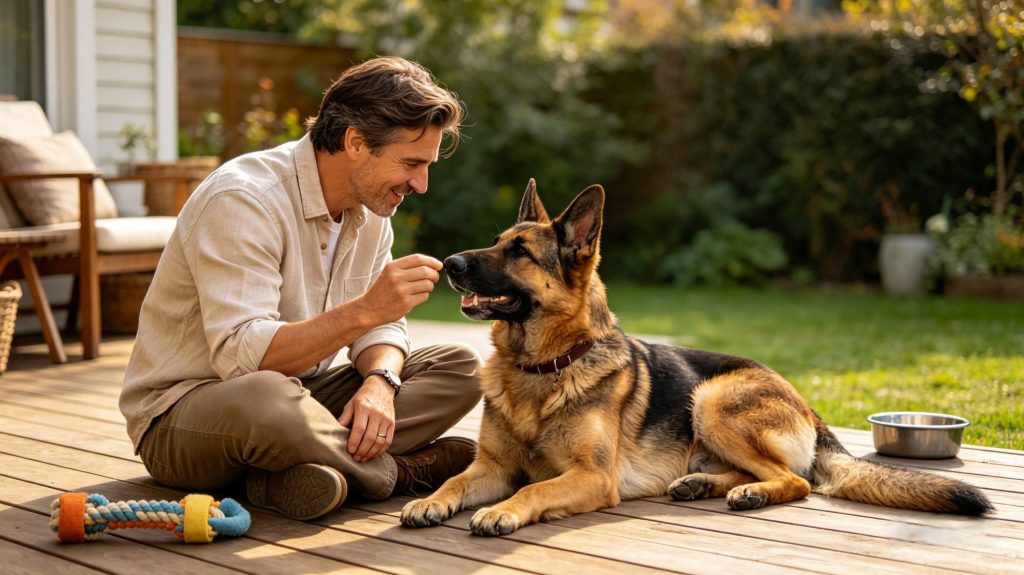
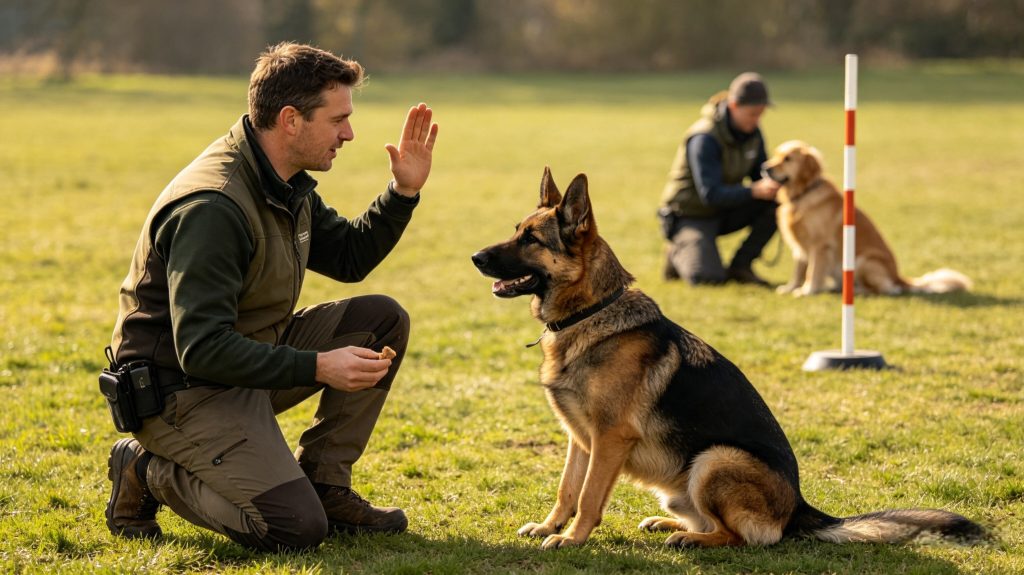
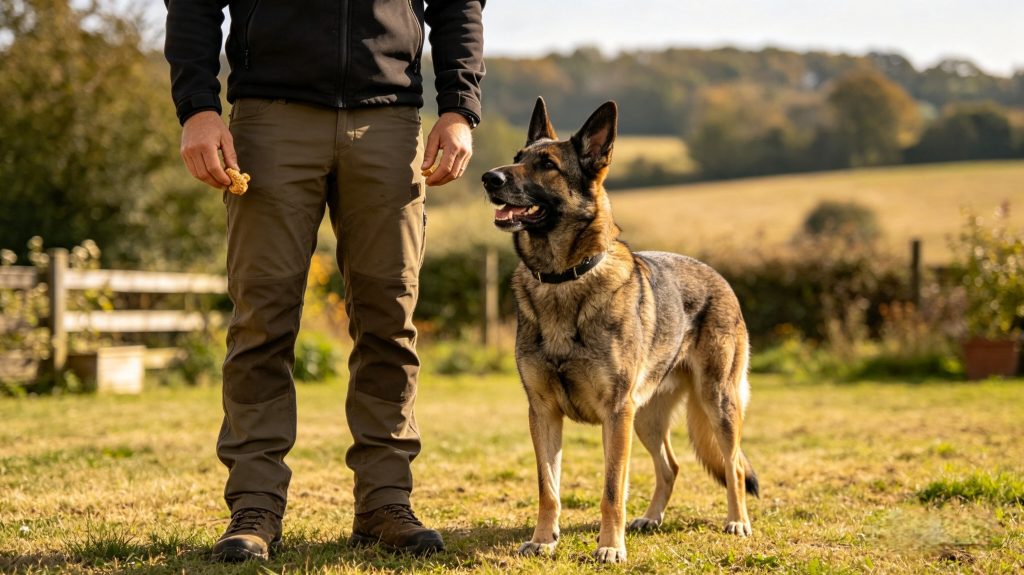
For example, during a calm obedience exercise, a trainer may use a simple collar and lead while rewarding the dog for maintaining an appropriate position. The equipment is simply part of the communication system; the learning comes from the interaction between handler, environment and dog.
RECOMMEND COURSE
Fundamentals 1
Dog Training Collars: Types, Uses & Choosing the Right Collar naturally connects with Fundamentals 1, particularly when a puppy or young dog is learning the foundations of attention, engagement, handling and basic obedience. Learning these foundations can help an owner understand why equipment selection should support training rather than replace it.
WORKING-DOG COLLARS
Dog Training Collars: Types, Uses & Choosing the Right Collar becomes particularly important when discussing working dogs because working environments can place greater demands on equipment. A working dog collar may need durable materials, strong attachment hardware, secure stitching and an appropriate design for the specific task.
A working-dog collar should be selected according to the activity rather than appearance alone. Search work, controlled training, outdoor exercises and specialist protection work can involve different equipment requirements.
Dog Training Collars: Types, Uses & Choosing the Right Collar therefore encourages handlers to inspect equipment regularly. Look closely at buckles, stitching, D-rings, adjustment points and material for signs of wear. Equipment failure during a working session can create an avoidable safety problem.
ID COLLARS
Dog Training Collars: Types, Uses & Choosing the Right Collar also gives the ID collar an important place within everyday dog management. Identification should be practical, readable and securely attached, while the collar itself should remain comfortable and correctly fitted.
An ID collar can provide useful visible information if a dog becomes separated from its owner, although responsible owners should also ensure that the dog’s identification and contact information are maintained through the appropriate official systems.
Visibility is another consideration. Dog Training Collars: Types, Uses & Choosing the Right Collar explains why reflective or high-visibility materials can be useful for outdoor environments, particularly where lighting conditions change.
RECOMMEND PRODUCT
Dog Training Harnesses: Types, Uses & How to Choose
Dog Training Collars: Types, Uses & Choosing the Right Collar should always be considered alongside harness selection. Dog Training Harnesses: Types, Uses & How to Choose provides useful guidance for owners deciding when a harness may be more appropriate for a particular walking or training situation.
COLLAR OR HARNESS?
Dog Training Collars: Types, Uses & Choosing the Right Collar does not treat a collar or harness as universally superior because the correct choice depends on the dog, activity and handling requirements.
A collar may be useful for identification and certain forms of controlled handling, while a harness can provide an alternative point of attachment and may be useful for particular dogs or activities. Some owners may use both, with each serving a different purpose.
Dog Training Collars: Types, Uses & Choosing the Right Collar therefore encourages owners to think in terms of function rather than fashion. A piece of equipment should earn its place because it solves a genuine handling or management requirement.
RECOMMEND PRODUCT
Dog Training Leads & Long Lines: What to Choose & Why
Dog Training Collars: Types, Uses & Choosing the Right Collar works naturally with Dog Training Leads & Long Lines: What to Choose & Why because the collar is often only one component of the handling system. Understanding how lead length, attachment points and intended training environment affect equipment selection can help create a more controlled and practical setup.
RECOMMEND COURSE
Fundamentals 2
Dog Training Collars: Types, Uses & Choosing the Right Collar also relates to Fundamentals 2, where developing obedience and handling skills can make equipment choices more meaningful. As the dog progresses, the handler can assess equipment based on the behaviour being trained rather than relying on equipment as a shortcut.
SUPPORTING IMAGE — DALL·E DESCRIPTION
Professional cinematic close-up of the established South Asian female professional dog trainer calmly checking the fit of a simple flat collar on the black-and-white English Cocker Spaniel before beginning a controlled obedience exercise. Trainer’s hands positioned gently and professionally, showing appropriate collar adjustment without tension. Suitable lead and reward pouch visible. GPK9 environment with dark-grey flooring, rich red-brick detailing, black metal fencing, industrial glass panels and dark structural beams. Realistic feathered coat, natural anatomy, detailed collar materials and professional cinematic lighting. Balanced exposure, realistic shadows, no text, logo or watermark.
FAQ
How should a dog collar fit?
Dog Training Collars: Types, Uses & Choosing the Right Collar explains that the collar should be secure without being excessively tight. The correct fit depends on the design and the individual dog, so owners should follow manufacturer guidance and regularly check the fit.
How often should a puppy collar be checked?
Dog Training Collars: Types, Uses & Choosing the Right Collar recommends frequent checks for puppies because growth can quickly change the fit. Check after periods of noticeable growth and as part of normal handling routines.
Is a flat collar suitable for everyday use?
Dog Training Collars: Types, Uses & Choosing the Right Collar explains that a correctly fitted flat collar can be suitable for many everyday situations, particularly identification and routine handling. Its suitability still depends on the individual dog and activity.
Are martingale collars suitable for every dog?
Dog Training Collars: Types, Uses & Choosing the Right Collar explains that martingale collars have a specific design and should be selected because their function is appropriate for the individual dog. Correct adjustment and supervision are important.
Should a collar be used to solve pulling?
Dog Training Collars: Types, Uses & Choosing the Right Collar emphasises that equipment should not be treated as a substitute for teaching appropriate walking behaviour. Training, consistency and suitable handling remain central.
What collar is suitable for a working dog?
Dog Training Collars: Types, Uses & Choosing the Right Collar explains that working-dog equipment should be selected according to the specific activity, environment and demands placed on the equipment. Durability, secure construction and appropriate fit are important considerations.
RECOMMEND PRODUCT
Obedience Dog Training: Equipment, Commands & Techniques
Dog Training Collars: Types, Uses & Choosing the Right Collar is closely connected to obedience because equipment selection becomes much easier when the handler understands what behaviour they are trying to teach. Obedience Dog Training: Equipment, Commands & Techniques can help place collars, leads and other equipment into the wider context of structured training.
RECOMMEND PRODUCT
Dog Walking Essentials: Equipment for Safe Outdoor Adventures
Dog Training Collars: Types, Uses & Choosing the Right Collar also connects with outdoor management through Dog Walking Essentials: Equipment for Safe Outdoor Adventures. A safe walking system considers the collar, harness, lead, identification, visibility and the environment rather than treating any single item as the complete solution.
CONCLUSION
Dog Training Collars: Types, Uses & Choosing the Right Collar demonstrates that choosing a collar is fundamentally about purpose, fit, handling and the individual dog. Flat collars, martingale collars, slip collars, training collars, working-dog collars and ID collars each have different characteristics that should be understood before use.
Dog Training Collars: Types, Uses & Choosing the Right Collar should ultimately encourage owners to look beyond appearance and ask what the equipment is designed to achieve. Correct fit, regular inspection, responsible handling and appropriate training provide the foundation for safe and effective use.
For owners continuing their education, Dog Training Collars: Types, Uses & Choosing the Right Collar works alongside Puppy Training: Essential Skills, Equipment & Techniques, Dog Training Leads & Long Lines: What to Choose & Why, Dog Training Harnesses: Types, Uses & How to Choose, Dog Walking Essentials: Equipment for Safe Outdoor Adventures and Protection Dog Equipment: Essential Working-Dog Equipment, depending on the dog’s age, training stage and intended activity.
The central lesson of Dog Training Collars: Types, Uses & Choosing the Right Collar is simple: equipment should support good handling, not replace it. When the collar is correctly selected, correctly fitted and used for an appropriate purpose, it becomes one useful component within a wider system of responsible dog ownership and training.